
Tasting the diversity of Rioja terroir
Tasting the component wines destined for blending highlighted the diversity of sites in Rioja, as Simon Field MW discovered at a recent event hosted by Ramón Bilbao’s winemaker, Rodolfo Bastida...


Rioja is an extremely well-known brand in its own right, in a sense not dissimilar to Champagne: they both produce a little over 300 million bottles per annum and are often the ‘go-to’ in terms, respectively, of Spanish and sparkling wine.
There’s much more to Rioja than this as any visitor will soon discern. Its landscape recalls Burgundy in terms of topography, and it is this sheer diversity which Rodolfo Bastida, Ramón Bilbao’s engaging winemaker, is keen to underline during this seminal tasting.
Bordeaux, he tells us, is only slightly larger than Rioja and yet is made up of 60 different appellations…Rioja only has one. For all the intrinsic merits attached to the strong recognition of ‘brand Rioja’, the time is right to stress variety and complexity.
‘I like to paint with a small brush’ says Rodolfo, and very intricate and impressive are his vinous paintings.
Divisions
Rodolfo stresses two things: firstly, that Rioja should be analysed along a west-east (rather than a north-south) axis, and secondly that the key to quality is fundamentally equated to altitude and, tangentially, relative proximity to the River Ebro.
Climate change has brought the harvest date forward by up to 20 days over the last two decades and has prompted the development of vineyards located at higher altitudes, where the husbandry can be at its most challenging. The west-east division mirrors styles referred to as Atlantic and Mediterranean, both climate and soils appreciably different as one moves away from the protective lee of the Cantabrian Mountains.
The tasting
Rodolfo’s tasting visits seven specific crus located across the region, all sharing altitudes of 400-700 metres and contributing – to a greater or lesser degree – to the two key Ramón Bilbao labels, Vinedos de Altura and Reserva Original (also tasted). It’s a truly fascinating exercise to disseminate the style of the blended wine from its components. Rodolfo will one day, I am sure, be encouraged to bottle at least one of these superb crus on its own.
The diversity of Rioja terroir:
The two commercially available blended wines are followed by the seven individual cru wines, which are not available to buy.
About Ramón Bilbao
Ramón Bilbao was founded in 1924 and is now a significant name in Spain. Its 4 million bottle production may still be dwarfed by the likes of Campo Viejo (30 million) and even CVNE (8 million) but it’s now regarded as a highly influential torchbearer for the region, both in terms of quantity and quality.
The winery is located in the town of Haro, with most of the 250 hectares of owned vineyards in the western ‘Atlantic’ sector of Rioja Alta. There are also contracts covering a further 900 hectares, spread across the entire region, including both Rioja Alavesa and Rioja Oriental, previously known as Rioja Baja.
You may also like:
Quality Rioja 2010: Panel tasting results
Comparing Artadi terroirs: Single vineyard wines
The push for Rioja crus
Bodegas Ramón Bilbao, Reserva Original, Rioja, Northern Spain, Spain, 2014
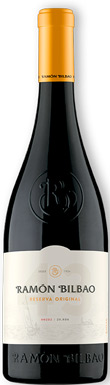

There are only 3,000 bottles of this superb wine made. It's so good in fact that it used to all be held back for The...
2014
Bodegas Ramón BilbaoRioja

Bodegas Ramón Bilbao, Vinedos de Altura, Rioja, Northern Spain, Spain, 2016
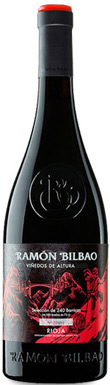
Altura is the Ramon Bilbao flagship, a 50/50 blend of Tempranillo and Garnacha - the former from the Abalos cru and the latter from the...
2016
Bodegas Ramón BilbaoRioja
Bodegas Ramón Bilbao, Cuzcurrita Tank Sample, Rioja, Northern Spain, Spain, 2017
Cuzcurrita is the most westerly of the crus, located just outside Haro at an altitude of 450 metres. Its soils are mainly alluvial with limestone...
2017
Bodegas Ramón BilbaoRioja
Bodegas Ramón Bilbao, Villalba Los Valles Young Vines Tank Sample, Rioja, Northern Spain, Spain, 2017
Villalba, along with Abalos, is a key component in the top wine, Mirto. It's a magical site surrounded by a pine forest and located at...
2017
Bodegas Ramón BilbaoRioja
Bodegas Ramón Bilbao, Tudelilla La Pedriza Tank Sample, Rioja, Northern Spain, Spain, 2017
Located deep in the Oriental sub-region, this vineyard is a superb source of Garnacha, its soils combining warm sand and large pebbles in a manner...
2017
Bodegas Ramón BilbaoRioja
Bodegas Ramón Bilbao, Monte Yerga Tank Sample, Rioja, Northern Spain, Spain, 2017
The most easterly of the crus tasted, Mont Yerga is also the highest, located at nearly 700 metres on the edge of the Oriental region....
2017
Bodegas Ramón BilbaoRioja
Bodegas Ramón Bilbao, San Asensio Aguilones Tank Sample, Rioja, Northern Spain, Spain, 2017
Located relatively close to the River Ebro, at a contextually modest 400 metres of altitude, this vineyard has alluvial and sedimentary soils and has yielded...
2017
Bodegas Ramón BilbaoRioja
Bodegas Ramón Bilbao, Abalos Tank Sample, Rioja, Northern Spain, Spain, 2017
Although close to San Asensio, six miles away, Abalos is actually located on the other side of the River Ebro and is therefore technically in...
2017
Bodegas Ramón BilbaoRioja
Bodegas Ramón Bilbao, Villalba Los Valles Old Vines Tank Sample, Rioja, Northern Spain, Spain, 2017
The other side of the coin, as one might expect, is more restrained, cerebral and measured, impressive old-vine concentration notwithstanding. This Tempranillo from old vines...
2017
Bodegas Ramón BilbaoRioja
