The Douro Boys: 20th anniversary tasting & 15 Ports tasted
Since 2003, the Douro Boys have, most successfully, made it their business to put Douro DOC wines on the map. However, heritage, let alone the siren call of Port, is impossible to resist.
Get our daily fine wine reviews, latest wine ratings, news and travel guides delivered straight to your inbox.
You are now subscribed
Your newsletter sign-up was successful
All five producers have a longstanding family tradition of making Port, even if – with the exception of Niepoort (a sixth generation Port shipper) – it was sold to shippers who, until 1986, enjoyed a monopoly over export sales.
Nowadays, the other members of this famous five – Quinta do Vallado, Quinta do Crasto, Van Zellers & Co and Quinta do Vale Meão – proudly append their own name to top flight Ports too. And they are ramping up fortified wine production.
To mark their 20th anniversary, the Douro Boys kicked off a two-day celebration with a once-in-a-lifetime tasting (for them and us) of fine and exceedingly rare Ports dating back to the 1860s.
Scroll down to see tasting notes and scores for 15 Ports from the Douro Boys’ 20th anniversary tasting
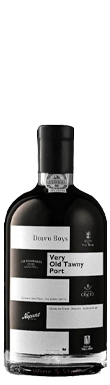
The arch collaborators also each contributed a soupçon from precious pipas (casks) for a moreish 950-bottle limited edition Douro Boys’ Anniversary Very Old Tawny Port. ‘You add a tiny amount of one wine, maybe one percent only, but this may dramatically change the character of the final blend,’ explained Cristiano van Zeller.
Since selling Quinta Vale D. Maria in 2017, he invested heavily in relaunching Van Zellers & Co as an independent Port shipper, having acquired an eye-popping collection of Very Old Tawny Ports from long-standing contacts. The black book is not so little when your family has been linked to the Douro since 1620 and once owned Quinta do Noval.
Claiming similarly distinguished roots, cousins Francisco Ferreira (Quinta do Vallado) and Francisco Olazábal (Quinta do Vale Meão) are descended from Dona Antónia Adelaide Ferreira who, respectively, owned and established their quintas during the 19th century.
For many years, grapes and Port wine were sold under the family’s Ferreira (Port shipper) brand and, famously, in Meão’s case, additionally for one of Portugal’s most renowned table wines, Barca Velha. Following Ferreira’s sale in 1987, both quintas switched their focus to Douro DOC wine.
Get our daily fine wine reviews, latest wine ratings, news and travel guides delivered straight to your inbox.
But Port was not forgotten. Quinta do Vallado swiftly made its mark with mellifluous Tawny Ports with an indication of age (10, 20, 30 or 40-year-old) and impeccably sourced ultra-rare Very Old (19th century) Tawny Ports.
‘It has been a good decision to focus more and more on Port wine, because it is unique and the base of our region,’ said Ferreira; ‘Vallado was among the first to release a 50-year-old Tawny Port [the category was introduced last year],’ he added, proudly.
Once the Olazábal family took control of the property at Quinta do Vale Meão, they wasted no time making a Port with the extra grapes; fortuitously, 2000 was a terrific (generally declared) vintage.
Olazábal has set aside Tawny Port each year and Meão’s recently launched 10-Year-Old, will soon be joined by 20-year-Old and Colheita (single vintage) Tawny Ports. ‘Everything is from our own vineyard; we are one of the few producers who do that,’ he observed.
When he acquired Quinta do Crasto in 1918, Constantino de Almeida – founder of Constantino Port house – brought stock with him. Not even Miguel Roquette, his great grandson, has yet tasted the 1886 Colheita, of which just five bottles remain.
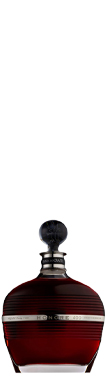
However, in commemoration of 400 years of wine production, precious 19th century Ports from de Almeida’s stock were blended to produce Quinta do Crasto Honore Very Old Tawny Port.
Roquette showed it alongside Quinta do Crasto Colheita 1997. ‘It was an important year because the family started to bottle Tawny Port again,’ said Roquette. Crasto will launch 30 and 40-year old Tawny Ports this year.
Being a shipper, Niepoort boasts a continuous Port winemaking tradition since 1842. During this time, successive generations of Niepoorts have worked alongside the Nogueira family, the shipper’s Master Blenders, forging a fine reputation for wood-aged Ports.
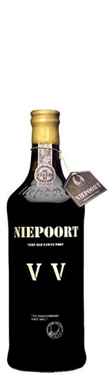
With its antique 19th century pipas and glass demijohns of aged stock, the company’s lodge in Vila Nova de Gaia provided an atmospheric setting for the tasting, it providing particularly handy when Dirk Niepoort decided, spontaneously, to fish out his grandfather’s earlier bottling of Niepoort VV Very Old Tawny for comparison with his own.
Both Ports were based on Niepoort’s magnificent 1863 pipa which produced a 2018 Lalique bottling (the world’s most expensive Port ever sold) and the outstanding bottling we tasted from 1992, Dirk’s eldest son’s birth year.
If you have followed the Douro Boys, new releases usually mean just that: young Douro DOC wines. But with the luxury of time to build stock, and now that Douro DOC wines are firmly on the map, all five Douro Boys are producing must-try mature Ports. Is there a better way to commemorate an anniversary?
15 Ports from the Douro Boys tasted and rated
Related articles
Niepoort: Producer profile and 10 top wines to try
Know your Port styles – The Decanter guide
Port vintage guide: 2000-2022
Van Zellers & Co., Colheita White, Port, Douro Valley, Portugal, 1940

Intense, well-structured and coming from an exceptionally dry, low-yielding year. Lengthy time in barrel puts the emphasis firmly on tertiary complexity. Savoury nam pla and pickled walnut undertones, volatile acidity lends lift and length to the bony palate. Trace of barley-sugar sweetness maintains balance. The finish is resonating, with a touch of wood, dusty ‘white noise’ and warmth. Bottled September 2022.
1940
Douro ValleyPortugal
Van Zellers & Co.Port
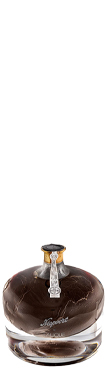
Niepoort, Very Old Tawny Pipa, Port, Douro Valley, Portugal, 1863

Rich, spicy, yet elegant of delivery, with rolling, seamlessly integrated acidity and a judicious 144g/L of residual sugar. Notes of cedar, tamarind and jaggery unfurl, with a delicate parry of salinity, green tomato and chutney-like volatile acidity. Sublime length and line. Utterly harmonious. Bottled in Lalique decanters, this is the most expensive Port ever sold. This magnificent bottling was transferred to glass demijohns in 1970, then bottled in 1992 (Daniel Niepoort’s birth year).
1863
Douro ValleyPortugal
NiepoortPort
Niepoort, 170th Anniversary VV Tawny, Port, Douro Valley, Portugal, 1863

The base wine here (a pre-phylloxera 1863 Tawny) provides the core and notes of concentrated, spicy, rich Bolo de Mel (Madeiran honey cake). The youngest components are an 18-year-old Tawny plus a splash of White Port for good measure, they informing the terse backbone of acidity and delivering a subtle green edge. This vinho velho ('old wine') showcases Dirk Niepoort’s precise, balanced style to great effect, with a long, laser-focused, fresh finish. Intensity not density. Highly drinkable, highly cellar-worthy. Residual sugar is 135.3g/L and bottled in 2012.
1863
Douro ValleyPortugal
NiepoortPort
Quinta do Vallado, Very Old Tawny, Port, Douro Valley, Portugal
This mahogany-coloured, uber-concentrated blend of 40- to 140-year old wines is a feast in a glass. With burned toffee and a tantalising hint of mint to the nose, it is rich and round on entry. Then the acidity takes hold, seamlessly animating a cascade of black cardamom, caraway, liquorice, espresso, raisin, prune and almond flavours. Velvety, lingering, this sumptuous Port is a wine of contemplation and wonder. Residual sugar is 190g/L and bottled in 2023.
Douro ValleyPortugal
Quinta do ValladoPort
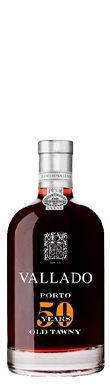
Quinta do Vallado, 50 Years Old Tawny, Port, Douro Valley, Portugal

Mellifluous, refined, with outstanding purity of expression. Blend components include an 1880 Tawny (8%) and a 70-year-old Tawny (2%). Translucent topaz in hue, with fragrant, spicy orange peel, silky caramelised orange and more complex crème catalana citrus, vanilla, cinnamon and fennel. Melt in the mouth milk chocolate praline flavours chime in. The sweetness is balanced by persistent acidity. Residual sugar is 137g/L and bottled in 2022.
Douro ValleyPortugal
Quinta do ValladoPort
Van Zellers & Co., Very Old Tawny, Port, Douro Valley, Portugal

Sampled from cask, this pre-phylloxera Tawny from 1860 was aged in Baixo Corgo’s Lamego area, which perhaps accounts for its remarkable delicacy and restraint. It reveals fine filigree scents and flavours of esteva, black pepper, lavender and cardamom, with cedar, pine needle, saffron and liquorice emerging in the mouth, together with suggestions of Madeleines - brown butter, vanilla, citrus and egg - apricot-glazed pain au raisin and milk chocolate noisette. Cleansing, mineral acidity makes for a lingering finish.
Douro ValleyPortugal
Van Zellers & Co.Port
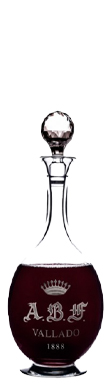
Quinta do Vallado, ABF Porto Muito Velho, Port, Douro Valley, Portugal, 1888

Sourced from a Baixo Corgo cellar, this 933-bottle release is unctuous and extremely intense, with molasses-like lubrication to the medjool date and dried fig core. Black cardamom, bitter chocolate, espresso, spicy pear skin and juicier, tangier tamarind fruit gamely affect to counter this hedonistic Port’s 296g/L of residual sugar, as do antique wood, furniture polish and pot pourri notes. Generous, with an indelible finish, it is truly epic in proportion. Bottled in 2016.
1888
Douro ValleyPortugal
Quinta do ValladoPort
Quinta do Crasto, Honore Very Old Tawny, Port, Douro Valley, Portugal

First, all sumptuous medjool dates, with intense black cardamom spice, smoky clove and lavender. Next, swirling, dark sugar swizzle stick and quince jelly before the high-toned acidity unleashes honeyed, spicy and nutty wave after wave of flavour. An inexorable dance of spiralling residual sugar (304g/L) and acidity which may beat some into submission. From a blend of Ports believed to be 127-135 years old and bottled in 2015.
Douro ValleyPortugal
Quinta do CrastoPort
Douro Boys, Anniversary Very Old Tawny, Port, Douro Valley, Portugal

Superbly moreish, as befits a Tawny from many ‘cooks', or vintages, which range from 1860 to 2000 and were sourced from many locations. Rich, spicy and generous, this masterful 950-bottle blend is a Hansel and Gretel house of goodies, with rich, spicy gingerbread, milk chocolate, praline, dried fruit, orange peel, amaretto and honey. Though generous, sweet and smooth, harmonious acidity maintains balance and line. Naughty, but ever so nice. Bottled in 2023.
Douro ValleyPortugal
Douro BoysPort
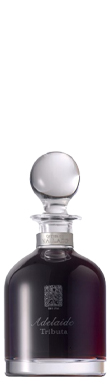
Quinta do Vallado, Adelaide Tributa, Port, Douro Valley, Portugal, 1866

Dark mahogany in hue, with densely concentrated molasses, raisins and spice box, this Port started out life as a batch of five casks. Left on ullage for at least 40 years, just two casks (1,300 bottles) remained. Slightly bitter black cardamom, aged balsamic and woody, lavender and furniture polish notes provide balance and lift. Indeed, despite its 283g/L of residual sugar, there is a dry, savoury quality to the long, viscous finish. Bottled in 2012.
1866
Douro ValleyPortugal
Quinta do ValladoPort
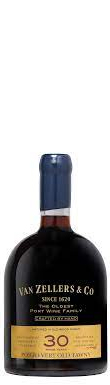
Van Zellers & Co., 30-Year-Old Tawny, Port, Douro Valley, Portugal

A ruddy, toffee-apple hue, with toasted hazelnut, milk chocolate praline and honeyed, stewed, juicy Hunza apricots. Silky, elegant going through; a touch of green tomato and wood to the finish remind you that it incorporates a dash of 1958 (Cristiano van Zeller’s birth year) and was aged in Port casks over 100 years old. Sourced from the Cima Corgo (mainly the Rio Torto and Pinhão valleys). Bottled in February 2023.
Douro ValleyPortugal
Van Zellers & Co.Port
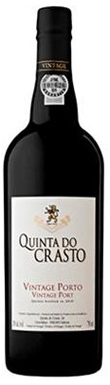
Quinta do Crasto, Vintage, Port, Douro Valley, Portugal, 2000

With bergamot and orange peel to both nose and palate, and a concentrated, velvety swathe of supple blackcurrant, redcurrant and berry fruit, this shows its mettle, plus an abundance of concentration, body and structure. Gently tactile iron-filing tannins maintain line, length and balance. Delicious drinking now, with moreish milk chocolate nuances to the finish.
2000
Douro ValleyPortugal
Quinta do CrastoPort
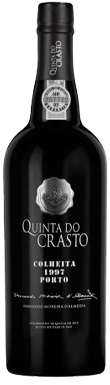
Quinta do Crasto, Colheita, Port, Douro Valley, Portugal, 1997

Bottled after 18 years in Port pipes, this inaugural Colheita is a ruddy hue with, as if informed by the colour, a lick of toffee apple caramel and cedar to the dried pear and peppery pear-skin fruit. Coursing, almost crunchy acidity, makes for a long, clean finish. Surprisingly youthful.
1997
Douro ValleyPortugal
Quinta do CrastoPort
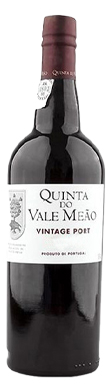
Quinta do Vale Meão, Vintage, Port, Douro Valley, Portugal, 2000

From the cream of the crop (averaging just 300g per vine) in a generally declared vintage, this Douro Superior, estate-grown Vintage Port retains lovely vibrancy in both hue and fruit, with elegant concentration to the liquorice-edged kirsch and red cherry fruit. Touriga Franca forms the backbone. Long, with dried herb and graphite riffs to the persistent finish. An impressive debut!
2000
Douro ValleyPortugal
Quinta do Vale MeãoPort
Quinta do Crasto, Vintage, Port, Douro Valley, Portugal, 1999

Following a wet and humid growing season, the tannins ripened during fine weather. However, the nose has a salty, green edge and, whilst there is pleasant plum and red berry fruit to the mid-weight palate, it is underpowered compared with a good year. From Crasto’s most prized, oldest parcels, Maria Teresa and Vinha da Ponte, the usual fruit intensity or structure is missing in this difficult year. 92.7g/L residual sugar.
1999
Douro ValleyPortugal
Quinta do CrastoPort