
The making of a megastar: Masseto
Behind the slick branding, there's a very human story to be told. Italy editor James Button delves into the making of Masseto.


Masseto has spent nearly four decades in the top echelon of the wine world, carving out a space for itself in millionaires’ cellars alongside first-growth Bordeaux and garagiste Pomerol, grand cru Burgundy, top-end Napa Valley Cabernet, and the other great Super Tuscans.
Its success is no mean feat if you consider that, at the time of its launch in the 1980s, the coastal Tuscan region of Bolgheri was better known for the quality of its fruit and vegetables than for its red wines.
Notes and scores for 10 vintages of Masseto (and one of Massetino) are listed below
First there was one
There was one exception, a Bordeaux blend, which had, until that point, been reserved for private consumption: Tenuta San Guido’s Sassicaia. Owned by Mario Incisa della Rocchetta, uncle of Lodovico Antinori and his older brother, Piero, he had offered the distribution of his wine, to his nephews.
In return, Piero Antinori offered Mario the services of his oenologist, Giacomo Tachis, who honed the wine into a commercially viable wine. The first release was the 1968 vintage in 1971.
Spurred on by this project, as well as the Antinori projects of the 1970s, Tignanello and Solaia, Lodovico strove to create a wine of his own that could compete with Sassicaia on its own terms.
In 1981, he founded Tenuta dell’Ornellaia and released the estate’s maiden 1985 vintage several years later.
While Ornellaia had been a predetermined business decision, the pure-Merlot Masseto was more the result of good fortune combined with sound judgement. The Ornellaia estate was largely planted to Cabernet Sauvignon and Cabernet Franc, with some Petit Verdot and Merlot making up the blend.
A small portion of Merlot was planted in 1984 on a hill of Pliocene-era blue clay, the site of an old brick factory, which Lodovico’s Russian-American winemaking consultant, André Tchelistcheff identified as ideal for the cultivation of Merlot.
From Antinori to Frescobaldi via Mondavi
Just two years later, the Merlot grapes grown on the hill were deemed to be of such impressive quality that the decision was made by Lodovico and his Russian-American winemaking consultant, André Tchelistcheff, to bottle a wine separately, labelled as ‘Merlot dell’Ornellaia’.
The following year, 1987, it was simply labelled ‘Masseto’, underlining the faith Lodovico and his team had in this new project. The wine, made in small quantities, not only achieved overnight success but continued to gain plaudits through the 1990s.
‘And so was complete the transfer of one of Italy’s finest estates from one historic winemaking family to another’.
In 1999 – in a move which he later went on record as saying was a big mistake – Lodovico Antinori sold a minority stake of Ornellaia to Robert Mondavi, perhaps to raise funds for the Tenuta di Biserno project in Bibbona, which was launched in collaboration with Piero in 2001.
Mondavi purchased the remaining shares in 2002 and subsequently sold half to Antinori’s rivals, the Frescobaldi family.
The Frescobaldis bought the remaining shares in 2005, following the sale of the Robert Mondavi company to Constellation Brands, taking full ownership of the property, and so was complete the transfer of one of Italy’s finest estates from one historic winemaking family to another.

Why Masseto?
It’s the temperature excursions between the heat of the day and the coolness of the evenings – influenced by the proximity to the coast in front and the Metalliferous Hills behind – that make the wines of Bolgheri so exciting.
Wines made here are ripe yet balanced, typically with bright freshness and leafy, balsamic tones despite the summer heat. It’s a haven for Cabernet Sauvignon, Merlot, Cabernet Franc, Syrah and more.
Especially important for early-ripening Merlot, the cool evenings and gentle breeze slow down the pace of sugar ripening, while the blue clay found in the Masseto vineyard ‘pushes the moment of maturity later in the season’, according to production director Marco Balsimelli.
This ensures that phenolic ripeness is achieved in harmony with sugar ripeness, producing tannins that are perfectly ripe at the time of picking. The tannins, velvety and at times almost imperceptible, are a key signature of Masseto.
How they manage to stay out of the limelight while giving enough structure to support the wine for decades in the cellar is a beautiful paradox.
But it’s not just terroir that has made Masseto into a megastar; without Lodovico and Tchelistcheff, the star qualities of the wine would never have been recognised in the first place.
And following the Frescobaldi acquisition, it was CEO Giovanni Geddes da Filicaja who masterminded its La Place distribution in 2009. Only the third wine outside of Bordeaux to be distributed in this way, its tiny allocations soon reached every corner of the globe and elevated Masseto to a true luxury brand.

Tasting Masseto
An evening with Frescobaldi president, Lamberto Frescobaldi and production director Marco Balsimelli, overseeing both Ornellaia and Masseto, at Raffles London at The OWO in November 2024 was a rare opportunity to taste several vintages of Masseto side by side.
The current release, the 2021, was sublime, as was the cool 2013 vintage. The 1995 and 1996 were captivating, but for me, the 2006 was impeccable.
It would be extremely difficult to find disappointment in any vintage of Masseto, but 2006 confirms itself as a momentous Italian wine for the 21st century.

Masseto in 10 vintages
(Plus Massetino 2022)
Related articles
- Bolgheri 2021: Overview of a milestone vintage and top-scorers
- Super Tuscans 2.0: Meet the innovators behind the stylish new wave
- Brunello di Montalcino 2020: Vintage report and 20 top picks
Masseto, Massetino, Toscana, Tuscany, Italy, 2022
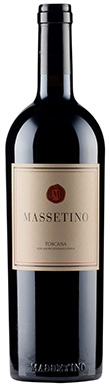

Massetino 2022 is a stunning wine. It doesn't quite have the concentration of Masseto, but offers a beautiful nose of youthful dark cherry and florals....
2022
MassetoToscana

Masseto, Toscana, Tuscany, Italy, 2021
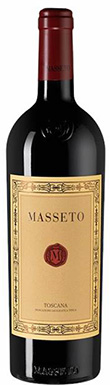
2021 was a hot vintage, but you can feel plenty of freshness in this wine. It has a lovely perfume of crushed hedgerow berries and...
2021
MassetoToscana
Masseto, Toscana, Tuscany, Italy, 2016
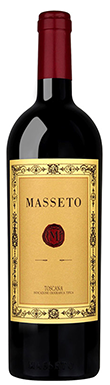
Blackcurrant and balsamic herb aromas with hints of meat, iron and leather introduce an effortlessly fresh and spicy palate of moreish cherry and plum fruits....
2016
MassetoToscana
Masseto, Toscana, Tuscany, Italy, 2015
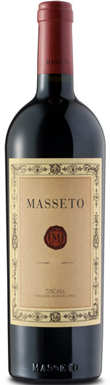
A denser, more compact style of Masseto which still feels quite youthful, this is ripe and slightly chocolatey, opening with tobacco, black tea and mint...
2015
MassetoToscana
Masseto, Toscana, Tuscany, Italy, 2013
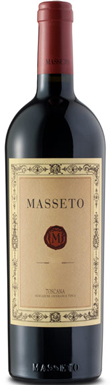
2013 was a cooler, late vintage and this long growing season shows in Masseto's generosity of aroma and richness of fruit in the mouth. Some...
2013
MassetoToscana
Masseto, Toscana, Tuscany, Italy, 2009
A perfumed Masseto, expressing fresh and dried dark berry aromas along with some violet. In the mouth it's vertical, saline and intense, with some black...
2009
MassetoToscana
Masseto, Toscana, Tuscany, Italy, 2006
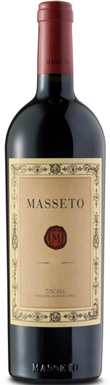
‘A great wine is not only concentration, it is balance, elegance’, remarks Marco Balsimelli, Masseto's new production director, and Masseto 2006 delivers the trifecta of...
2006
MassetoToscana
Masseto, Toscana, Tuscany, Italy, 2005
Sottobosco, tobacco and tea interlace with chocolatey dark fruits and creamy cherry. The tannins are still a bit grippy, and the acidity is fresh and...
2005
MassetoToscana
Masseto, Toscana, Tuscany, Italy, 1999
This is very much a ‘traditional’ Masseto – less overtly ripe and with a cooler profile. Combined with its tertiary character, the 1999 proves to be a...
1999
MassetoToscana
Masseto, Toscana, Tuscany, Italy, 1996
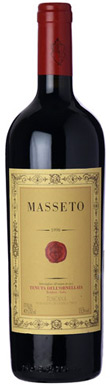
A beautifully aromatic wine, with pronounced scents of balsamic herbs, leather and black tea: wow! In the mouth, succulent cherry is accompanied by hedgerow berries,...
1996
MassetoToscana
Masseto, Toscana, Tuscany, Italy, 1995
1995 experienced a cool, rainy summer which is reflected in the balsamic herb aromatic profile here, with chocolate and mint scents. In the mouth it's...
1995
MassetoToscana
