
The rich history of California’s Louis M. Martini including a vertical tasting
Italian immigrant Louis M. Martini was a visionary who helped create the climate for the revival of winemaking in the Napa and Sonoma Valleys after Prohibition. Charles Curtis MW takes a look at the iconic producer's history through a deep vertical tasting.

‘I don’t put much stock in these wines you buy and wait 20 years to drink. I don’t buy them to wait 20 years; I buy them to drink now.’ This quote from Louis P. Martini appeared in Robert Benson’s 1977 book Great Winemakers of California.
Louis P. would have been bemused and perhaps proud to know that I discovered this quote after drinking some of the wines he had made not 20 but nearly 60 years after bottling.
Scroll down to see tasting notes and scores from a Louis M. Martini vertical tasting
I admit to a general fascination with old wines. I have been delighted with Madeira from the 18th century, Bordeaux and Burgundy from the 19th century, Champagne from the 1920s, and Italian wine from the 1950s.
The oldest California wine that has given me this thrill was a 1961 Louis M. Martini Special Selection Cabernet Sauvignon that I ordered from the wine list at Bern’s Steakhouse in Tampa, Florida.
I don’t drink old wines simply because they are old, but I am always surprised and excited when wine is delicious in addition to being mature. Since that dinner at Bern’s 10 years ago, I have particularly admired the old wines from Louis M. Martini.

Family foundations
Louis M. Martini was born in 1887 in Liguria, Italy, not far from Genoa. In 1899, he travelled to San Francisco to meet his father, Agostino, who had established a business selling fish and shellfish. The two made wine together. Louis eventually returned to Genoa to study winemaking before returning to work with his father in the US. Martini became a partner in a winery outside Fresno making sacramental wine in 1922 and founded a winery in Napa Valley at the end of prohibition.
In 1938, Martini purchased the Goldstein Ranch, which he rechristened the Monte Rosso vineyard for its red soil. The vineyard was planted with Folle Blanche, Semillon, Zinfandel, and Sylvaner after his purchase. He began to plant more grapes in 1939, including Cabernet Sauvignon and Barbera. The vineyard is located in today’s Moon Mountain AVA at the top of the Mayacamas slope, bordered by Sonoma Valley to the west and Carneros to the south.
The vines face southwest at an elevation of up to 1,300 feet (400 metres), which means that it is cool but generally above the fog line. The combination of location, elevation, and the site’s loamy soils with a volcanic subsoil deliver structured, tannic grapes with abundant freshness.
In 1943, the winery expanded, with Martini purchasing more land and planting vineyards in Carneros. Martini’s son, Louis P, studied at Berkley and UC Davis. He returned to work in the winery after his military service in the Second World War. By 1954, Louis P. had taken over winemaking responsibilities, although he continued to work alongside his father for many years.

Mountain wines
The Martini family did not feel compelled to be overly specific about the geographical labelling of their wines. Louis P. explained that they considered all the north coast counties mountainous. Since they owned vineyards in Sonoma County and Napa County, they wanted to be able to blend as needed, hence the labelling of their wines as ‘California Mountain’.
They often, but not always, denoted the variety, but they also produced ‘Chablis’, Claret’, ‘Chianti’, and ‘Burgundy’, which Louis P. described to Robert Benson as ‘often 55-60% Petite Sirah’ (aka Durif). The wines were blended to fulfil their vision, as Martini said: ‘We try to make [our wine] quite distinct, primarily by keeping the Petite Sirah out of the Claret and the Zinfandel out of the Burgundy.’
Modern Martinis
The winemaking could be surprisingly modern. The Martini family installed temperature-controlled concrete tanks in 1936 and later stainless steel. Pneumatic presses were used for the white wines, although a plate press was used for the reds. Most of the range was fined and filtered, except the Special Selection wines, which were not fined since they received extended bottle ageing before release.
Louis P. discussed the maturation of the wines with Robert Benson: ‘We try to bottle Cabernet after three to four years, Zinfandel and Pinot Noir after two and a half years, and Barbera after about three years…It has been in all kinds of wood: part in 50-gallon American oak barrels (189 litres), part in 500—and 1,000-gallon casks (1,892l and 3,785l) , and part in redwood, and then it’s all blended together.’
Mike Martini joined his father, Louis P., in 1974 and took over winemaking responsibilities in 1977. He oversaw a gradual lengthening of the maceration and a move away from redwood casks. His style moved the winery into the modern age. The family sold the property to E. & J. Gallo in 2002, but Martini remained a winemaker.
He finally retired in 2015 after working alongside Mike Eddy, who enjoyed the consistent renown of the critics. Eddy was succeeded in 2021 by today’s winemaker, Mark Williams, who continues the tradition.

An evolution of style
In addition to the undeniable luxury of the modern offerings, there is an immense, if very different, charm to the old vintages of Louis M. Martini wines (and to California wines in general). One crucial difference between old and new is that in the 1960s and early 1970s, the wines were invariably labelled as 12.5% abv.
Several authorities assure me this is an approximation at best; even today, US labelling laws allow a tolerance of ± 1.5% for wines under 14%. However, the wines from the 1960s and 1970s taste lighter and fresher. This is partly due to global warming, but grapes were also picked earlier. The vines were different and planted on different rootstocks than they are today.
These old wines have incredible longevity. One cannot help but wonder if the wines being produced today will age as gracefully, given the changes we have seen in style and technique.
Surprisingly, little information is available about the older vintages of California wine, and even less unanimity. Unlike Bordeaux, Burgundy, and Champagne, we are far from consensus about which years were the best. It is a truism that there is less vintage variation in Napa, but certain vintages have stood out in my tastings.
Here is a quick guide to some of my favourites:
The vertical vintages
1961: This vintage provided a watershed experience for me. Michael Broadbent relates in The Great Vintage Wine Book that growers suffered frost damage (as they had in Bordeaux). The frost kept yield in check and contributed to some lovely wines, although few authorities appreciate them as much as I have.
1964: Another vintage in which yields were held in check by frost. I have enjoyed a marvellous Inglenook cask selection from this period.
1966: A vintage that stands out in my tasting experience. Broadbent relates that the season was arid, again limiting yields. The Louis M. Martini Zinfandel tasted last month is still holding remarkably well.
1968: Has the reputation as the best year of the decade. The Cabernets I have had, particularly, have held very well and continue to impress.
1970: Another frost year in Napa Valley. Broadbent relates that the summer was scorching, reducing the yields. I had the good fortune to buy a quantity of BV Georges de Latour 1970, and every bottle held well until I finished them in 2020.
1973: The 1973 Chardonnay from Montelena was the belle of the ball at the famous ‘Judgement of Paris’ tasting. I have never had a white of this age, but the Barbera from Martini tasted last month was intriguing.
1974: This is the most well-known of the mature California vintages and the one with which I have the most experience, including notes from BV, Ridge, Mondavi, and others. The Martini California Special Selection Mountain Zinfandel described here is still charming, if now fully mature.
1975: The third strong vintage of a trio (1973-1975 – neither the 1972 nor the 1976 are as well-regarded). My experience of it was from a Diamond Creek Red Rock Terrace drunk recently that was almost shockingly youthful.
1978: I have few details about the growing season in 1978. Still, I have always sampled the wines with delight, including bottlings from Mondavi (on several occasions), Conn Creek, and the inaugural vintage of Shafer, which was delightful.
Louis M Martini: A vertical from the classic California producer
Wines are listed youngest to oldest
Related articles
- Producer profile: Hundred Acre plus 18 great wines to try
- Napa Valley’s Darioush: Producer profile plus 10 wines tasted
- Oregon’s 00 Wines: Producer profile and 18 wines to try
Louis M Martini, Lot No. 1, Napa Valley, California, USA, 2018
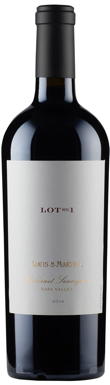

Seriously rich at more than 16% ABV, the 2018 Lot No. 1 Cabernet has an immense quantity of sweet blackberry and mulberry fruit with notes...
2018
Louis M MartiniNapa Valley

Louis M Martini, Lot No. 1, Napa Valley, California, USA, 2013
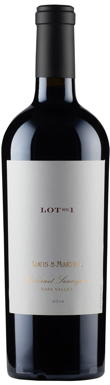
This landmark Napa vintage has delivered a powerful, concentrated wine that will make fans of modern Napa Cabernet swoon with joy. It features pronounced aromas...
2013
Louis M MartiniNapa Valley
Louis M Martini, Vineyard Selection Monte Rosso, Sonoma County, Sonoma Valley, California, USA, 1989
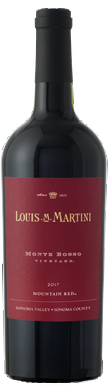
The 1989 Monte Rosso Cabernet is surprisingly youthful at thirty-five years of age. The colour is still inky black, and the wine boasts pronounced aromas...
1989
Louis M MartiniSonoma County
Louis M Martini, Vineyard Selection Monte Rosso, Sonoma County, Sonoma Valley, California, USA, 1979
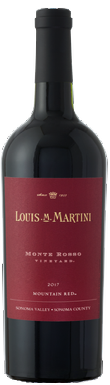
Mike Martini’s influence is felt in this Cabernet from early in his tenure as winemaker: it is Sonoma appellation and marked as Monte Rosso. The...
1979
Louis M MartiniSonoma County
Louis M Martini, Special Selection Mountain Zinfandel, California, USA, 1974
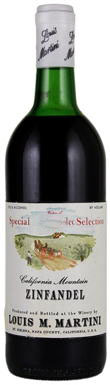
The 1974 ‘Special Selection’ Zin from Louis M. Martini is less freshly fragrant than the 1966 and instead has an impressive gravitas. The colour is...
1974
Louis M Martini
Louis M Martini, Private Reserve Mountain Barbera, California, USA, 1973
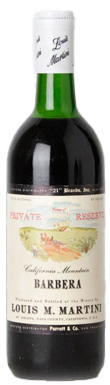
Although younger than the 1970 tasted at the same time, this is more mature, with decidedly tertiary aromas of truffle, cedar, smoke, and earth. There...
1973
Louis M Martini
Louis M Martini, Private Reserve Mountain Barbera, California, USA, 1970
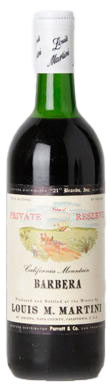
The 1970 Barbera boasts a compelling array of aromas, from red fruit to fig, fresh and dried flowers, wild herbs and earth, and a suggestion...
1970
Louis M Martini
Louis M Martini, Private Reserve Mountain Cabernet Sauvignon, California, USA, 1967
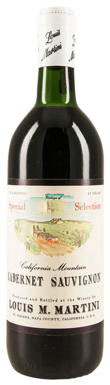
1967 is not widely recognised as a great vintage. Still, this Private Reserve Cabernet from Louis M. Martini showed very well recently, with notes of...
1967
Louis M Martini
Louis M Martini, Special Selection Mountain Cabernet Sauvignon Lot no. 5, California, USA, 1968
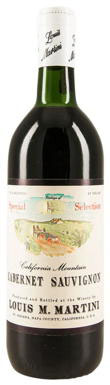
This renowned vintage for Cabernet has provided a wine that is still vital and lively. Inky and dark in colour, it has blackcurrant fruit, a...
1968
Louis M Martini
Louis M Martini, Private Reserve Mountain Zinfandel, California, USA, 1966
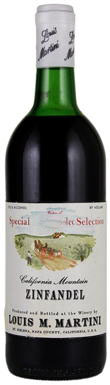
A bottle of 1966 Zinfandel from Louis M. Martini was bright, with surprisingly youthful raspberry and mulberry fruit, hints of pepper, and a bouquet of...
1966
Louis M Martini
Louis M Martini, Special Selection, California, USA, 1961
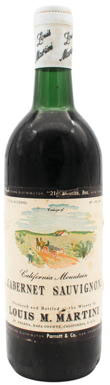
<p>A bottle of 1961 Louis Martini Cabernet ‘Special Selection’ from the wine list at Bern’s Steakhouse in Tampa, Florida in 2013, was spectacular — a...
1961
Louis M Martini