
‘There was nothing’: How the Okanagan Valley survived and thrived after a devastating frost event
Over the last few vintages, the Okanagan Valley’s producers have survived trials by frost and fire by embracing the unconventional – partnering with other regions while their homegrown grapevines recovered. Kate Dingwall tells the story of resilience and partnership grown in America and made in Canada.

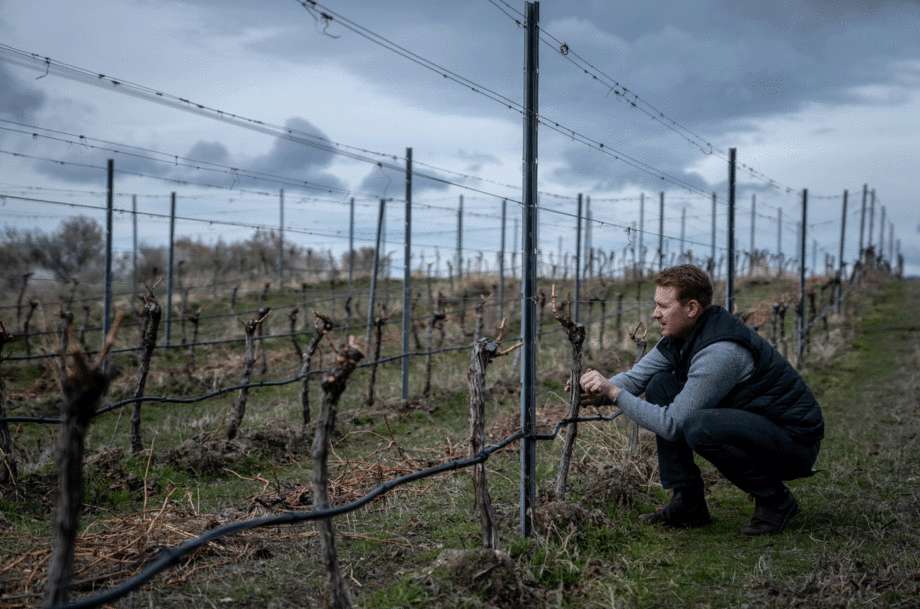
In January 2024, a cold snap hit the Okanagan Valley. The Canadian region’s temperatures dropped to below -26°C (-15°F) for three days straight.
Vine loss was widespread. 90% of the valley’s grape production disappeared. ‘There was nothing,’ says Taylor Whelan, chief winemaker at Mission Hill. ‘We had no harvest.’
What unfolded was a weird, wonderful exercise in resilience.
Chardonnay makers went to Sonoma, Pinot Noir producers to the Willamette Valley. Syrah winemakers decamped for the Rhône, Sauvignon Blanc experts to New Zealand.
Other vintners partnered with Washington growers, which helped alleviate the state’s oversupply issues.
The big freeze
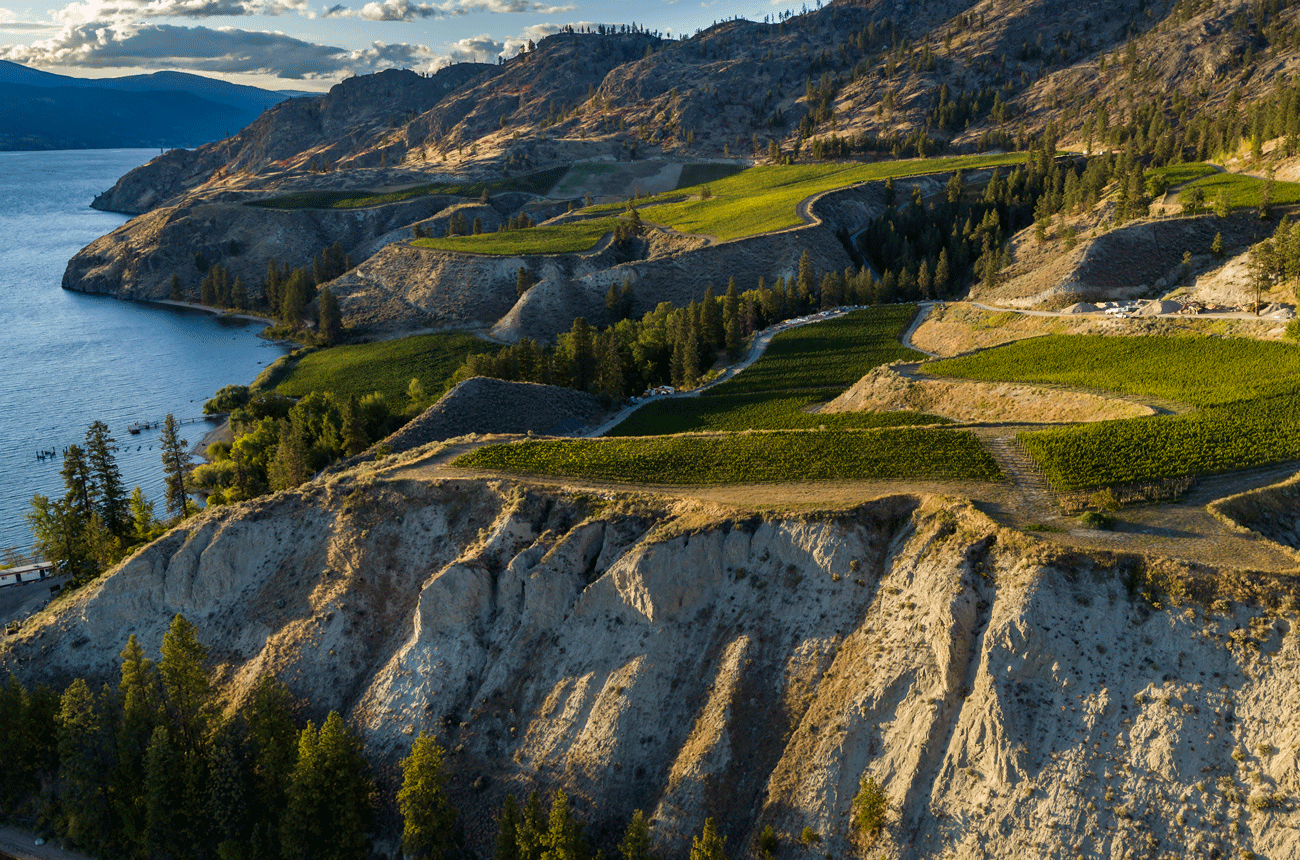
‘What the hell do we do?’ was a question Shane Munn, winemaker at Martin’s Lane, asked a lot following the frost.
Replanting takes time – what do they do while vines mature? What will they sell? Do they skip a vintage? Do they have the inventory to do so?
When the one-time government allowance – authorising growers to source grapes or wine internationally, as long as it’s bottled in BC, without losing local benefits – came into play, winemakers realised the catastrophe could have silver linings.
Munn, who works with Pinot Noir and Riesling, started by making a list of famous vineyards he loved. It was a bit blue sky, he’ll admit. ‘We went door knocking,’ he laughs. ‘We basically said, “Hello, we’re from Canada.” Can we get some fruit?’
His canvassing was met with, ‘Who the hell are you guys?’
Once they explained their story (‘and people realised we’re serious winemakers’), those doors opened.
‘When you talked about the damage and how many vineyards died, people understood,’ says Whelan.
What they went through was a grower’s worst nightmare. ‘No one could imagine going through that – people were generous, from a fruit, wine, and human perspective.’
In came a new kind of flying winemaker. Whelan attended Wine Paris and met with growers from Bordeaux and the Rhône. Munn, to Oregon.
Tantalus looked locally in Ontario and sourced Riesling from Grimsby Hillside and Picone Vineyards, both planted with the same clones.
Le Vieux Pin, JoieFarm, and Fort Berens jumped the border into Washington.
Supply chain headaches
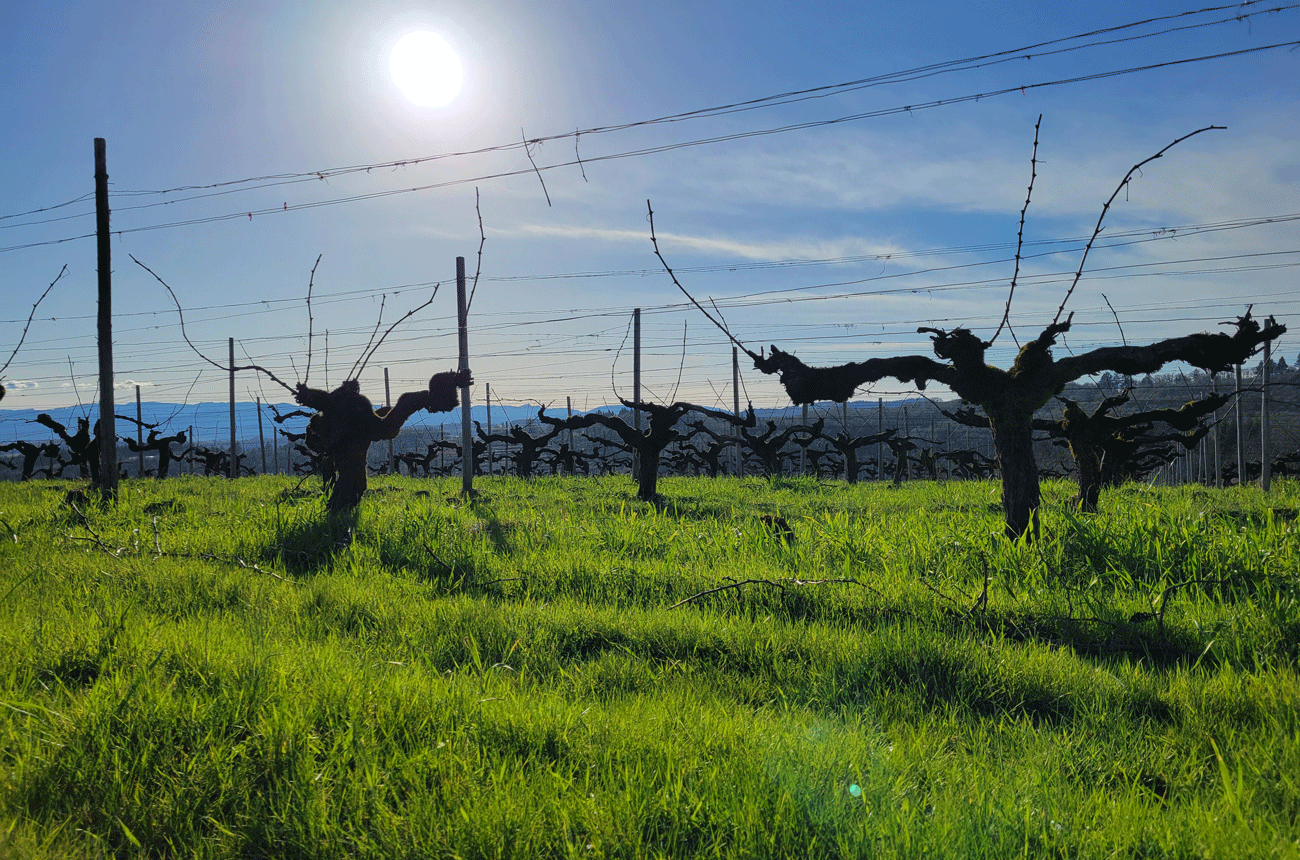
Opening up a globe of sourcing possibilities wasn’t without issues. It was a crash course in the global supply chain – where do you go first? If you’ve spent your career working in the confines of the Okanagan Valley, how do you learn the viticultural intricacies of a new region, and in only a few months? How do you get a 500-ton harvest across the world?
Whelan had to navigate reverse harvests and shipping bladders of Sauvignon Blanc from New Zealand. Munn and his team were in Oregon every week, checking fruit. ‘I didn’t want the fruit coming back like a Chopped mystery box challenge, like what do we do with this?’
There are more philosophical questions. BC is just starting to gain traction as a wine region. Will wines from elsewhere dilute that message?
Quail’s Gate launched a subline, Plume, in 2009 to explore new regions. Which came in handy – they were able to release wines from abroad without confusing regular consumers.
1 Mill Road, a Pinot Noir and Chardonnay house, skipped both grapes for the 2024 vintage. ‘We’re young, and dedicated to BC,’ says owner-winemaker Ben Bryant. ‘We didn’t want to blur those lines.’
Other winemakers welcomed the opportunity to play with once-in-a-lifetime grapes. ‘I’ve never made Cabernet Sauvignon,’ says Richard Charnock of JoieFarm. ‘All of a sudden, I have the opportunity to source from incredible vineyards managed by really talented teams.’
Munn was excited about working with esteemed Oregon vineyards – his vinemates are 00, Antica Terra, and Nicholas Jay. ‘I think it will be fascinating to try those wines side-by-side in a few years,’ says Munn.
It’ll be a stylistic departure – his Rieslings are typically powerful with lots of acidity. In Oregon, they’re botrytis-kissed, opulent, honeyed, and hyper-floral.
‘We have an austere climate here, with granite soils, while they have these lush, iron-rich soils that turn your boots red,’ shrugs Munn.
Playing politics
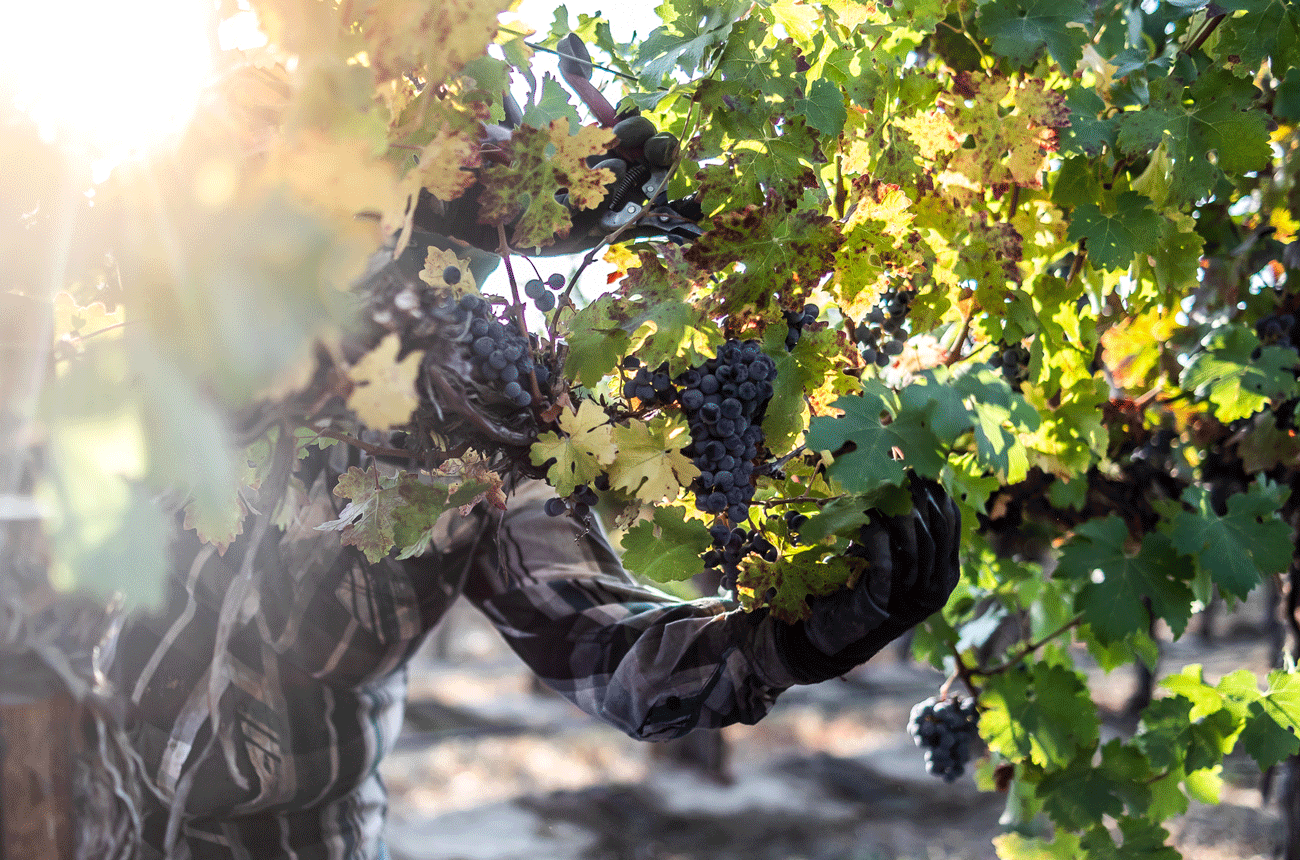
When the frost first hit, the United States was led by a different administration. Cross-border sentiments were positive. Trump’s tariffs were not on the table.
‘It was an incredible experience,’ says Charnock, who headed to Washington. ‘The quality of the fruit was so high. The growers and winemakers are so talented and seasoned. It was like having an incredible new sub-G.I. just south of the border.’
4,500 tons of Washington grapes crossed the B.C. border in 2024.
Jeff Andrews, owner of Trothe in Horse Heaven Hills AVA, had Canadian wineries come down, walk their rows, and taste their grapes. Friendships bloomed – they ended up not only selling grapes up North, but working on a collaborative wine with Clos du Soleil in the South Similkameen Valley. ‘There’s just so many really good, sensible winemakers up there,’ says Trothe winemaker Ray McKee.
But, to pile onto the plight of BC winemakers, US-Canada relations have soured. Pro-Canadian movements and retaliatory American boycotts have led the Okanagan’s countrymen to shun their American-grown wines.
‘We did a tasting with the LCBO (Liquor Control Board of Ontario),’ says Charnock. ‘Zero interest. They’re only interested in wines actually made in Canada.’
Which worries him. He’s got big reds from Washington sitting in his cellar, developing flavours. ‘We’re going to be releasing Malbec, Syrah, and Cabernet Sauvignon made with Washington grapes in 2027 or 2028. Will people still care?’
Cross-border collaborations are now advertised with, well, caution. SpearHead Winery’s Dual Citizen line, sourced from Washington’s Yakima Valley and vinified in Kelowna, is labelled with ‘Made Before the Madness’ stickers. Lightning Rock Winery’s Cross Border Collection is marketed with #MakeWineNotWar.
‘People are a little cynical when you put an American wine in front of them,’ says Whelan. ‘But if you start with the story of what happened. The fact that we don’t have anything else to sell. We need to keep the lights on, keep people employed. It clicks for them.’
Building a better BC wine country
One year later, vines are recovering. There’s fruit in the valley. But the frost event bubbled up bigger questions. What varieties should the valley be working with? Are they planted in the right locations? What does the B.C. need to survive the future?
When growers and winemakers started getting wise to the province’s viticultural potential in the ‘80s and ‘90s, they planted everything. Sangiovese vines beside Riesling, Pinot Blanc and Pinot Gris beside Semillon and Chardonnay.
As the vines came up in 2024, growers approached replanting with a more strategic, surgical approach.
‘We’re reconsidering what grows well and where,’ says Munn. ‘If something is tough to grow in a frost bucket, why replant? We could plant other varieties, or keep cattle.’
‘It’s an opportunity to get rid of varieties that probably shouldn’t have been planted in the Okanagan – refocus on what does best from a quality perspective,’ says Whelan.
There are more conversations around climate-proofing, clonal selection, and water availability. Cold-resistant hybrid grapes are on the table. Retrunking and hilling up is now the norm.
‘We still have to step through some barriers and pain thresholds,’ says Bryant. ‘Sadly, some businesses won’t survive. But we will have healthier vineyards, better clones, and the right varieties in the right locations. When we get there, BC’s wine country will be a much better place.’
Okanagan’s Redemption: 17 wines to try
Related articles
- North & South America Pinot Noir: Panel tasting results
- Ontario Chardonnay: 20 cool-climate buys from Canada
- Discovering Canada’s Similkameen Valley
Martin's Lane, Miranda Vineyard Riesling, Willamette Valley, Dundee Hills, Oregon, USA, 2024
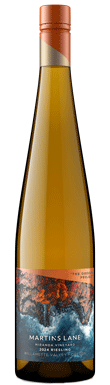

If 2024 didn’t have enough challenges for British Columbia’s winemakers, Shane Munn, who used the opportunity to source fruit from the Willamette Valley’s Miranda Vineyard,...
2024
Martin's LaneWillamette Valley

Martin's Lane, Hyland Vineyard Riesling, Willamette Valley, McMinnville, Oregon, USA, 2024
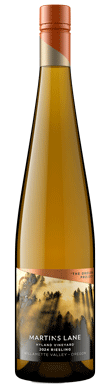
Working in Oregon during 2024 threw a curveball at Riesling head Shane Munn: botrytis. The Okanagan Valley is cool but dry, and it’s never been...
2024
Martin's LaneWillamette Valley
Clos du Soleil, Sauvignon Blanc, Columbia Valley, Horse Heaven Hills, Washington, USA, 2024
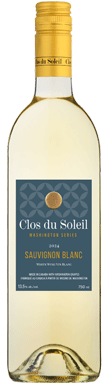
The product of a braintrust, of sorts–The Similkameen Valley’s Clos du Soleil teamed up with Andrews Family Vineyards, of Washington, for the 2024 vintage and...
2024
Clos du SoleilColumbia Valley
Cedar Creek, Pinot Gris, Willamette Valley, Oregon, USA, 2024
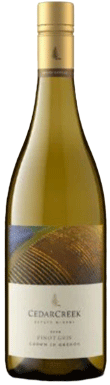
Lushly fruited and enticingly aromatic, Cedar Creek’s cross-border Pinot Gris makes a case to spend more time and attention on the typically easy-going grape variety....
2024
Cedar CreekWillamette Valley
Fort Berens Estate Winery, Here & There Chardonnay, Columbia Valley, White Bluffs, Washington, USA, 2024
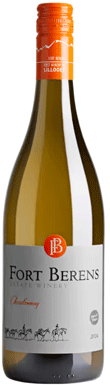
A deeply Canadian Chardonnay, despite its Washington grapes. Persistent freshness and a focused sapidity move into lemon drop candies, fresh-squeezed nectarine, and a kiss of...
2024
Fort Berens Estate WineryColumbia Valley
Joie Farms, A Noble Blend, Okanagan Valley, British Columbia, Canada, 2024
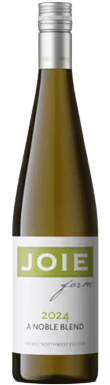
A cross-continent blend of fruit from Washington’s Coventry Vale Farms and the South Okanagan’s Summerland and Naramata. American Riesling and Gewurztraminer were fermented separately and...
2024
Joie FarmsOkanagan Valley
Joie Farms, Unoaked Chardonnay, Columbia Valley, Yakima Valley, Washington, USA, 2024
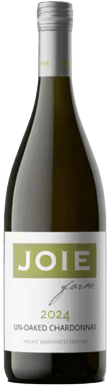
The sun-drenched vineyards of the Yakima Valley is a big departure from the Naramata Bench, where JoieFarms is located. So this vintage packs on the...
2024
Joie FarmsColumbia Valley
Nk'Mip Cellars, Story Teller's Chardonnay, Washington State, Washington, USA, 2024
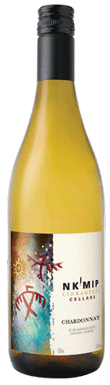
From North America’s first indigenous-owned winery. Grapes sourced from Washington, where their Syilx people once sourced food. Grapes in Washington ripen earlier than in the...
2024
Nk'Mip CellarsWashington State
Plume, Chenin Blanc, Columbia Valley, Horse Heaven Hills, Washington, USA, 2024
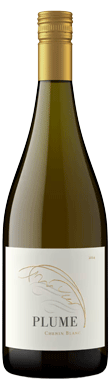
A breathy, icy Chenin Blanc fermented and aged in concrete eggs (40%), neutral French oak (30%) and stainless steel (30%) to balance the bright, dewy...
2024
PlumeColumbia Valley
Fort Berens Estate Winery, Here & There Rosé, Columbia Valley, Wahluke Slope, Washington, USA, 2024
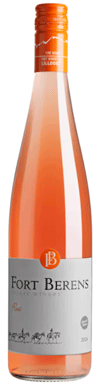
<p>Picked from the Wahluke Slope in Washington and finished in Lillooet by the very first winery in the region. Shiraz lends a distinct fruitiness followed...
2024
Fort Berens Estate WineryColumbia Valley
1 Mill Road, Grenache Rosé, Columbia Valley, Horse Heaven Hills, Washington, USA, 2024
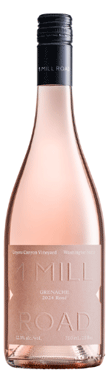
A rosé of Pinot Noir from partners-in-life-and-wine Ben and Katie Bryant, which delivers freshness and fruit, plus subtly savoury undertones. Salty watermelon, blood orange, and...
2024
1 Mill RoadColumbia Valley
Mission Hil, Rosé, Sonoma County, Petaluma Gap, California, USA, 2024
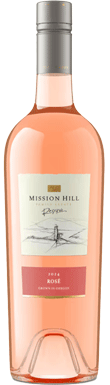
A quintessential rosé from one of the Okanagan’s benchmark producers—vibrantly juicy, concentrated fruit, pleasantly packed with blood orange, strawberry and mango. Gilded pink in colour...
2024
Mission HilSonoma County
Martin's Lane, Open Claim Vineyard Pinot Noir, Willamette Valley, Mount Pisgah, Oregon, USA, 2024
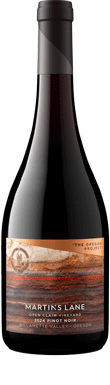
Shane Munn has built his career by proving to both supporters and sceptics that the Northern Okanagan is a prime place to grow Pinot Noir....
2024
Martin's LaneWillamette Valley
1 Mill Road, Grenache, Coyote Canyon Vineyard, Columbia Valley, Horse Heaven Hills, Washington, USA, 2024
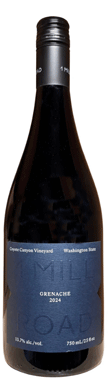
While this 100% Grenache wine was made from grapes grown in Washington’s Horse Heaven Hills AVA, its freshness and streaks of minerality showcase its cool-climate...
2024
1 Mill RoadColumbia Valley
1 Mill Road, Syrah/Pinot Noir, British Columbia, Canada, 2024
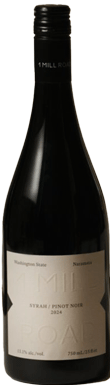
A passion project from Ben Byrant—formerly the Chief Winemaker at Pernod Ricard Australia—and his wine writer wife Katie, who quit their corporate gigs to take...
2024
1 Mill Road
Clos du Soleil, Artésien, Columbia Valley, Horse Heaven Hills, Washington, USA, 2022
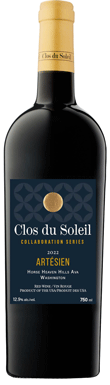
2022 was a cool vintage in Washington state, which was a stylistic match for the Similkameen Valley’s Clos du Soleil, which outsourced its 2024 vintage...
2022
Clos du SoleilColumbia Valley
Cedar Creek, Miranda Vineyard Pinot Noir, Willamette Valley, Dundee Hills, Oregon, USA, 2024
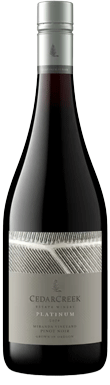
A joyful, playful Pinot Noir from a Kelowna winery, made with grapes from the Miranda Vineyard in Dundee Hills and aged in B.C. for 9...
2024
Cedar CreekWillamette Valley
