
Timorasso: Piedmont’s new flagship white?
An obscure, almost extinct white grape grown in one corner of Piedmont has re-emerged in just a few decades and is now gearing up to be the next star name of Italy’s northwest, with a new DOC sub-zone of Derthona set to receive the official stamp of approval.


Walter Massa knows no half-measures, and his enthusiasm is well known among fellow wine producers. After all, without his passion Timorasso could not be considered a great white wine today, just one step away from obtaining its own named sub-zone of production. To be honest, without personal enthusiasm, and a certain amount of temerity, Timorasso simply wouldn’t exist.
Scroll down to see tasting notes and scores for Gaia’s eight excellent Timorasso whites
The Colli Tortonesi (‘hills of Tortona’) rise from the Po valley in the southeastern corner of Piedmont, in the province of Alessandria, where the region meets Liguria, Lombardy and Emilia Romagna. Their strategic position was already well known to the Romans, who founded Tortona at the crossroads of two important consular roads.
Thanks to the excellent microclimate and availability of water, agriculture can flourish; the peaches and strawberries grown here are renowned beyond the hills. The area, dotted with peaceful villages surrounded by greenery, is known for being the birthplace of two celebrities: painter Giuseppe Pellizza da Volpedo (1868-1907), one of the masters of Divisionism; and cyclist Fausto Coppi (1919-1960), known as Il Campionissimo – ‘Champion of Champions’. Yet there’s no doubt that another local glory is the wine.
From the brink
At the beginning of the 20th century, some two million litres of wine were reportedly shipped from the Tortona railway station every year; above all, white wine directed to Switzerland and Germany. Timorasso, probably a native variety of eastern Piedmont, was widely used in winemaking. Then red wines, easier to make and favoured for their higher calorific value, regained popularity among the farmers and Timorasso lost ground. By the 1980s, the variety covered just half a hectare and was effectively extinct.

‘Timorasso is a demanding grape: it loves the heat, but at the same time it prefers high altitudes; it requires a lot of work in the vineyard and does not guarantee constant production,’ says Massa. ‘Older farmers used to say that it is better to have a barn full of straw than half full of hay.’ However, Massa was not satisfied with just the ‘straw’, and in 1986 he harvested just a few bunches of Timorasso in the Monleale countryside, his birthplace, to the east of Tortona. The following year, he managed to fill ‘as many as’ 560 bottles – enough to say that Timorasso had been reborn.
One of a kind
The problem with a new wine is that it’s impossible to tell how it will evolve. Massa’s first Timorasso was regarded, once bottled, as unexceptional. ‘Within a few harvests, I realised that the new wine was less and less good than the previous ones, which had been left [in storage] to refine. So, when I went around selling the 1989 vintage, I took back the unsold bottles and let it age some more.’ Walter had unlocked the secret.
Over the years, Timorasso builds on its youthful citrus and floral aroma notes to develop a riot of medicinal herbs, candied fruit and hydrocarbons, while in the mouth it acquires sapidity, elegance and length. Countless comparisons with other great wines have been attempted, bringing into play the tertiary bouquets of Riesling, the body of Chardonnay and the soft finish of Sauvignon. However, no genetic relationship has been discovered – Timorasso seems to remain the only child of its territory.
The Colli Tortonesi emerged millions of years ago from an ancient inland sea and the soils are full of mineral-rich sediments. The marls of Sant’Agata – a mixture of clay and limestone with a typical grey-blue colour that wine enthusiasts readily associate with the most famous Langhe terroir to the west – take their name from Sant’Agata Fossili, a village in the Colli Tortonesi area. Additionally, the Tortonian geological sequence derives its name from the town of Tortona, where the original stratotype was found. For both geologists and wine-growers, this land is a paradise.
Irrepressible character
In the 1990s, word of a rediscovered wine began to spread in the Tortona valleys. ‘I was young at the time and uncertain of what to do,’ recalls Elisa Semino of La Colombera. ‘The idea of continuing the family wine business didn’t appeal to me, but Timorasso changed all my perspectives; it represented an exciting challenge.’ She was one of the first to respond to Walter Massa’s ‘call to arms’, along with Paolo Poggio, Andrea Mutti, Claudio Mariotto and Luigi Boveri. From a ‘monopole’ grape, Timorasso was about to become the emblem of this territory.

Now the wine had to be ‘framed’, like the oil paintings of Pellizza da Volpedo. ‘The old Colli Tortonesi DOC, from 1973, did not include the Bianco type!’, exclaims producer and president of the local consorzio Gian Paolo Repetto. ‘It was recognised in 1996, then, in 2005, it was the turn of Colli Tortonesi Timorasso.’
But at that point, the thinking around the local white wine had gone far beyond the initial priority of saving the variety from extinction. Producers realised they had to highlight the terroir rather than the grape itself. ‘Among the great international wines, there are none that are named after the grape variety,’ emphasises Massa.
Paradoxically, a moment after having unearthed Timorasso from the mists of time, the Tortonese winemakers wanted to hide it again. Thus the ‘Derthona’ project developed (the name taken from the ancient name for the town of Tortona), which, leveraging territorial identity – much like Barolo, Valpolicella or Chablis – links the Timorasso grape to its production area within the Colli Tortonesi. ‘Any grape variety can be transplanted almost everywhere; the territory cannot,’ comments Semino.
The ‘appellation’ Derthona – currently seen on labels only as an optional ‘brand name’ that can be added alongside the official Colli Tortonesi denomination, when the Timorasso variety is used in purezza – ended up paving the way for a proposed Derthona Colli Tortonesi DOC, which is now heading towards achieving official recognition. New regulations for a Derthona Colli Tortonesi DOC have already been put forward to the relevant government body, and formal sign-off and approval is anticipated in time for the bottling of wines from the 2024 harvest, if not indeed backdated to this year.
‘The new denomination will only be applied to wines originating from the hilly territory of 45 municipalities,’ Repetto specifies. The legislation will also provide that the maximum yield per hectare must be 52hl, and the minimum dry extract of the wine 18 grams per litre – the latter among the highest in Italy.
With regard to the ageing factor, Repetto underlines: ‘We will go out on the market with [wines classified as] Piccolo Derthona, from 1 March of the year following the harvest; Derthona from 1 September of the year following the harvest; and Derthona Riserva authorised from 1 March of the third year following the harvest.’ It will be an ambitious wine, served in light bottles weighing no more than 600 grams. ‘Wine must contribute to saving the environment, not ruin it,’ concludes Massa, proud of this further stipulation. The proposed Derthona Colli Tortonesi DOC is configured as a sub-zone of the Colli Tortonesi DOC, but its energy appears irrepressible. Derthona will shine with its own light, all the protagonists assure.

Attracting the big names
While awaiting the launch of the new DOC sub-zone, the Tortona valleys have already changed gear. According to the consorzio, as of 2022 the area of Timorasso vineyards had risen to 330ha, producing a million bottles a year from 100 companies: miraculous numbers. And the most noble names of Piedmontese wine production are now arriving on these verdant hills, attracted by the idea of a white recalling the famous reds of their region in terms of ambition and personality, despite being contemporary in its drinkability, minerality and versatility.
These peculiarities are mostly achieved thanks to soft pressing of the grapes, short macerations, fermentation in stainless steel or cement, and long refinement in the bottle. Of course, some winemakers lengthen the maceration times or experiment with fermentation in wood or ceramic containers, but Derthona lets the terroir do the talking: a wise and forward-looking choice.
Gaia’s pick: Eight excellent Timorasso whites to try
Related articles
- Decanter travel guide: Piedmont
- Timorasso: Piedmont’s rediscovered white
- Ageworthy Italian whites: 10 to try
La Colombera, Il Montino, Colli Tortonesi, Timorasso, Piedmont, Italy, 2021
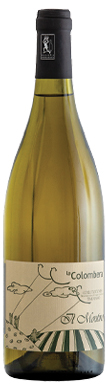

This wine, produced for the first time in 2006 by Elisa Semino, comes from the clay soils of a single vineyard in the hamlet of...
2021
La ColomberaColli Tortonesi

Vigneti Massa, Derthona, Colli Tortonesi, Timorasso, Piedmont, Italy, 2021
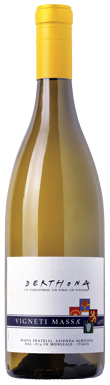
A seductive, fragrant and mineral wine that undergoes 45-hour cold maceration with fermentation for 12 months in stainless steel tanks and periodic batonnage. The nose...
2021
Vigneti MassaColli Tortonesi
Oltretorrente, Derthona, Colli Tortonesi, Timorasso, Piedmont, Italy, 2021
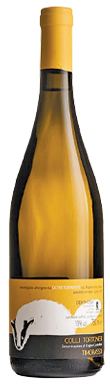
Chiara Penati and Michele Conoscente are two young agronomists from Milan, who settled in the Tortona hills in 2010. Their organic Derthona, from north-facing, clay-limestone...
2021
OltretorrenteColli Tortonesi
Vietti, Derthona, Colli Tortonesi, Timorasso, Piedmont, Italy, 2021
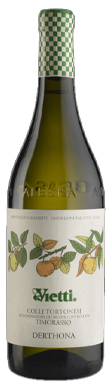
This big-name producer from Barolo hit the mark right from its first Timorasso in 2018. This Derthona ferments mostly in ceramic vessels and some stainless...
2021
ViettiColli Tortonesi
Claudio Mariotto, Bricco San Michele Derthona, Colli Tortonesi, Timorasso, Piedmont, Italy, 2021
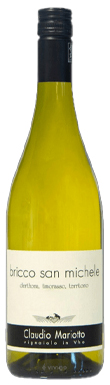
One of the ‘colonels’ of the Timorasso revolution, Claudio Mariotto has been making tasty, expressive wines for more than 25 years. Following soft pressing of...
2021
Claudio MariottoColli Tortonesi
Giacomo Boveri, Derthona Muntà l'è Ruma, Colli Tortonesi, Timorasso, Piedmont, Italy, 2020
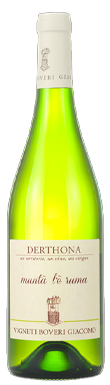
This small family-run company operates in the Tortona hills. The wine is the result of soft pressing, controlled temperature fermentation, ageing in steel, and patience....
2020
Giacomo BoveriColli Tortonesi
Borgogno, Derthona, Colli Tortonesi, Timorasso, Piedmont, Italy, 2021
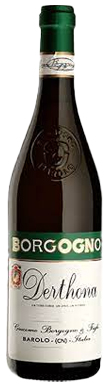
In 2015, Borgogno was among the first Langhe wineries to bet on Timorasso, and it paid off with this intense and complex organic wine, fermented...
2021
BorgognoColli Tortonesi
Paolo Poggio, Ronchetto Derthona, Colli Tortonesi, Timorasso, Piedmont, Italy, 2021
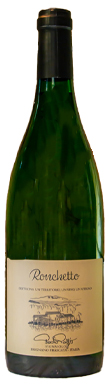
Paolo Poggio, together with Walter Massa, is responsible for the first trials of refining Timorasso over the medium-long term. His small winery is located in...
2021
Paolo PoggioColli Tortonesi
