
Timorasso: Piedmont’s rediscovered white
Michaela Morris uncovers the rare Timorasso grape in Piedmont, labelled by the producers as 'Derthona', and tastes six leading examples...


It is not easy keeping up with Italy’s litany of rediscovered grapes. Their storylines, however, are similar – an indigenous variety falls out of favour, dwindling to the brink of extinction before being revived by a single crusading producer. In this narrative, Timorasso is the grape and Walter Massa is its saviour.
An ancient white variety, Timorasso is native to Piedmont’s southeast province of Alessandria. At the turn of the 20th century, it covered an estimated 2,000 hectares in the hills surrounding the town of Tortona. It began to wane as demand for red varieties grew, and was supplanted by Barbera. Even when white varieties rebounded, producers chose the more reliable Cortese grape, which underlies the wines of neighbouring Gavi.
‘Compared to Timorasso, Cortese guarantees more generous yields, is less demanding in the vineyard, and boasts greater availability of cuttings,’ explains Massa.
Timorasso’s fate changed when Massa took over his family’s property in the village of Monleale in the Colli Tortonesi. Abutting Lombardy, this little-known region is made up of six valleys in the foothills of the mountains that separate Piedmont from Liguria. In 1987, Massa vinified his first 100% Timorasso, painstakingly selected from individual vines he found scattered throughout his vineyards. ‘I wanted to use native vines to produce a white of great personality,’ he says.
Persistent as he is charismatic, Massa began coercing neighbouring growers to plant Timorasso. ‘It’s all Walter’s fault,’ jokes Elisa Semino of La Colombera. ‘Everyone is here because of him.’ She is referring to a troupe of 20 rounded up by Massa in July 2018. They gathered to provide me with a full Timorasso immersion, including older vintages going back to 1992.
‘It’s spelt Timorasso but reads as Timo-rosso,’ quips Massa, describing this white grape’s tendency to perform like a red wine. It is firm, full, substantially structured and sometimes even slightly tannic. Youthful versions show floral, herbal, citrus and stone fruit notes against a backdrop of Timorasso’s intense flinty minerality. Over time, it develops smoky, nutty and – above all – petrol nuances. This is said to be accentuated by ageing on the lees, which many producers favour. Battonage, or stirring of the lees, lends a creaminess to this already textural wine. Oak notes, on the other hand, are typically eschewed and most Timorassos mature in stainless steel or cement.
With comparable racy acidity, Timorasso is often likened to dry Riesling, though weightier and heftier in alcohol than most Alsace or Austrian examples of the latter. In that regard, I find it reminiscent of the dry, powerful Chenin Blancs of Savennières in the Loire. Timorasso also sports a chalky backbone that recalls Chablis. Like all the aforementioned, Timorasso is also ageworthy – a rare trait among Italy’s whites. In fact, it can be austere in its youth only to reveal its wonderous complexities after a few years in the bottle: I find myself referencing Burgundy or Northern Rhône with aged examples.
Clearly Timorasso has its own personality, and lots of it. It is not easy going but is fascinating and compelling. Besides, with palate-cleansing structure, enough weight to stand up to substantial fare, and aromatic complexity for exotic pairings, it is a superb food wine.
Much credit must be given to Walter Massa, but Timorasso is no longer reliant on a single advocate. While it is still dwarfed by the likes of Barbera and Cortese, there are now a total of 174ha of Timorasso planted in the Colli Tortonesi, grown by an estimated 50 estates.
As well as Walter Massa, names to look out for are La Colombera, Ezio Poggio, Marina Coppi, Boveri Giacomo, Boveri Luigi and Claudio Mariotto.
The producers of Colli Tortonesi are a collective force. ‘We want to strengthen the link between Timorasso and its region of origin – Tortona,’ says Semino. For this reason, they have adopted the historical Roman name of the region – Derthona – including it on label alongside Timorasso. They have even requested that Derthona become an official DOC exclusively for the Timorasso grape cultivated within the zone.
The region’s renown will surely be helped by the arrival of producers from the Langhe. Thanks largely to cajoling by Massa, some of the most prestigious Barolo and Barbaresco producers have invested in vineyards in Colli Tortonesi. They include Giacomo Borgogno, Roagna, Vietti, Oddero Poderi e Cantine, La Spinetta and Pio Cesare.
‘What made us fall in love with Timorasso is certainly its great potential for ageing and profound sensorial complexity,’ says Maria Cristina Oddero.
She also points out a common thread between the two regions: both Barolo and Colli Tortonesi boast soils dating back to the Tortonian era featuring calcareous clay with Sant’Agata marl. So why not plant Timorasso in the Langhe? ‘The climate is different,’ replies Semino. She describes the Colli Tortonesi as the warmest and least rainy area of Piedmont. It is even touched by sea breezes. ‘Nebbiolo planted in Tortona doesn’t give the same results as in the Langhe. The same is true for Timorasso,’ she states.
Oddero concurs. ‘We think that Timorasso can express itself best in the Alessandria zone where it is born.’
So while Barolo has its Nebbiolo, Derthona has its Timorasso. This is a wine to watch.
Six Timorasso wines to try:
You may also like:
Pelaverga Verduno: Piedmont’s hidden treasure
Alto Piemonte latest releases: 12 top picks
Resurrecting Monferace Grignolino in Piedmont
Borgogno, Derthona, Colli Tortonesi, Piedmont, Italy, 2018
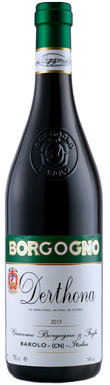

Andrea Farinetti ages this on the lees for just five months, favouring a clean, elegant expression. It is powerful and vertical in style, with restrained...
2018
BorgognoColli Tortonesi

Ezio Poggio, Archetipo, Colli Tortonesi, Terre di Libarna, Piedmont, Italy, 2014
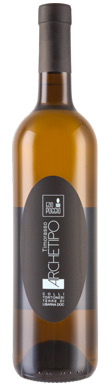
Ezio Poggio's vineyards are among the highest in the region. They are located in the cool Borbera Valley within the subzone known as Terre di...
2014
Ezio PoggioColli Tortonesi
La Colombera, Derthona, Colli Tortonesi, Piedmont, Italy, 2017
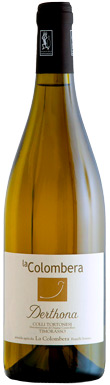
An early adopter, Elisa Semino has been making Timorasso for 20 years. This example hails from vineyards at altitudes of between 270 and 300 metres,...
2017
La ColomberaColli Tortonesi
Vigneti Massa, Derthona, Colli Tortonesi, Piedmont, Italy, 2017
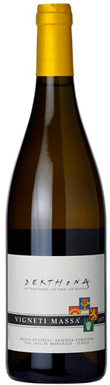
Massa likes to say that Timorasso is ready to drink when its green hue has dissolved to gold like the Brazilian flag. Already gilded, his...
2017
Vigneti MassaColli Tortonesi
Vietti, Derthona, Colli Tortonesi, Piedmont, Italy, 2018
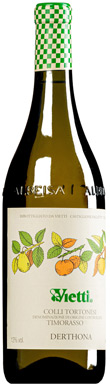
Vietti is off to a good start with the estate's first vintage of Timorasso, sourced from vineyards around Monleale. Ageing on the lees for 10...
2018
ViettiColli Tortonesi
Boveri Luigi, Derthona, Colli Tortonesi, Piedmont, Italy, 2016
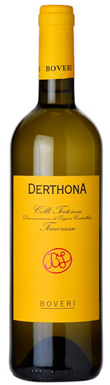
With 6ha of Timorasso, Luigi Boveri crafts this wine from his youngest vines planted in 2006 at 250 metres on limestone-rich marls. It is linear...
2016
Boveri LuigiColli Tortonesi
