
Top 10 Spanish whites for your cellar
Best known for its fresh young whites, Spain also produces more serious styles that need time in bottle to reveal their full potential. Sarah Jane Evans MW picks her top 10 styles from across the country that deserve a place in your cellar and will reward ageing


Summertime – and that means white wine. It’s something that Spain does so well. Crisp, chilly Verdejos and Albariños, salty manzanilla Sherries, these are the mainstay of a summer lunch. Yet when the sun shines we should remember that along with these vibrant young whites, Spain makes wines worth cellaring and rediscovering after several years or more in the shade.
There’s a view that Spain has two great cellar-worthy white wines: Castillo Ygay, by Marqués de Murrieta; and López de Heredía’s Viña Tondonia Gran Reserva. Both Riojas, they have become deeply fashionable. However their very success obscures the exciting reality of what is happening today in Spain. Nowadays there are a number of wines which need time in the cellar to reach their top character. Not as long-lived as Ygay, but determined escapees from the ‘buy today, drink today or tomorrow’ treadmill.
That these two long-lived icons are made predominantly from Viura (with Malvasía, 3% in the former case and 10% in the latter) is notable. For Viura, known elsewhere as Macabeo, can be disappointing and drab. This underlines a key feature to remember if you are keen to buy wines for cellaring: so much depends on the vineyard, the climate, and the producer. Even after the wine has spent years in the cellar, the influence and judgement of the people behind it remain discernible.
Wine writer and DWWA judge Cristina Alcalà spells this out: ‘Spain was a traditional red wine country in production and consumption. It turned towards white wine when it discovered the power of certain native varieties. Furthermore it had producers with sensitivity, who weren’t worried about experimenting or losing face, who were able to make white wines with cellaring potential.’
A great white wine starts in the vineyard. In the bottle, over time, fruit fades and tertiary characters develop. What comes to the fore is freshness, a backbone of acidity. At the outset some of the wines may seem lean, but in the manner of Semillons and Rieslings they can blossom over time and come into balance.
Atlantic whites
Where better to find that freshness than the Atlantic coast surrounding Galicia? Rías Baixas, with its varying maritime exposures, has long proved its worth. One of the classics is the Selección de Añada Albariño from Pazo de Señorans. There’s no oak on this Albariño. The key is the 30 months it spends on lees. The result is a wine that changes from the apple and peach freshness of Albariño into something more approaching the style of a serious Chardonnay.
One fan of the style is Pierre Mansour, head of wine at The Wine Society, who recently created a case for a customer of a vertical of three vintages of the Selección to showcase their development. Such is the damage done by the recent rush to produce cheap, cheerful Albariños, that there are still experienced drinkers who believe that Albariño can only be drunk young. Selección de Añada proves that view is wrong. Other Rías Baixas greats include Gerardo Méndez of Do Ferreiro, who has vines that are up to 200 years old. I’d cheerfully wait 10 years for his Cepas Vellas, though I couldn’t wait 20.
Eulogio Pomares of Bodegas Zárate, one of the key producers in Rías Baixas, and blessed with exceptional family vineyards, recalls the birth of the DO in 1988. ‘It always focused on the primary, aromatic aspect of Albariño, making “technological” wines, New World-style, and with great commercial success. But this style was and is criticised by the pioneers, “the oldies” – and I’m one of those,’ he says. (Though I should add that he is not in the least antique in age, or ideas.) His focus remains on the vineyard, ‘low yields and massal selection of old clones’. He explains: ‘The clones in use today were selected in the 1980s because producers were looking for higher yield and higher alcohols. The old clones I use have much smaller bunches and a much lower yield.’
Pomares stresses that acidity is fundamental to ageability. ‘With [our] granitic and sandy soils of pH 4.5 and 5, the vine has very low vigour, and low yields, but the must is aromatic and has high acidity, especially malic acid. That’s why these wines made with the old clones need to rest for a time for the acidity to integrate and to gain complexity.’
He adds: ‘I don’t think it’s a question of needing time on lees. In fact I shun bâtonnage. Traditionally Albariño had long ageing without racking, something I do myself.’

Spain’s greatest white?
Furthest inland of the Galician DOs is Valdeorras, where Rafael Palacios has focused intently on Godello. I was going to say that he had focused ‘simply’ on the variety, but there’s nothing simple about the way he works.
A vertical tasting at the winery, which went back more or less to the beginning, was one of the greatest experiences of my travels in wine. Surely Spain’s greatest white, or one of them, is here. However, it would be a pity, as with so many of these great wines, just to hide them away, or resell for auction. In due time enjoy them. It would be a crime not to.
Palacios settled in Valdeorras, leaving the family winery in Rioja, where he had won recognition for the white wine Plácet. ‘From the first moment that I decided to come to Galicia, my desire was to make whites with a capacity to age,’ he says.
Remembering the fine new oak in his pristine winery, and the reputation of grand international whites structured around oak, I ask if oak is important to him for building a white for ageing. Definitely not: ‘But the oak helps us to stabilise and clarify the wines in a more natural way. It also frees very concentrated wines, such as O Soro, from reduction, or very cold vintages such as 2004, 2010, 2012, 2016… This is the correct way, the use of the oak as a bridge to help the wine, not the market profile,’ he adds.
Palacios also has a little Treixadura in his vineyards. Does 100% Treixadura have the same capacity to mature as Godello? ‘It is not a matter of variety, it is the ability of each variety to adapt to a geo-climate,’ he says.
‘There are wonderful examples of Treixadura that evolve very well, such as Viña de Martín Escolma [from Luis Anxo Rodríguez Vázquez in Ribeiro], Emilio Rojo and others.’ I’m delighted he references Emilio Rojo, who produces a Treixadura multi-variety blend in Ribeiro. This is the unforgettable wine that stopped me in my tracks during a Decanter panel tasting in November 2017. It is an exceptionally penetrating wine with a clear mineral profile, determinedly developing complexity with the years.
Verdejo and Viura
Travelling south from Galicia, passing some very promising Godello in Bierzo, the vast lands of Castilla y León offer many treats. Verdejo stars here, though there are crimes committed in its name. Young Verdejo was discovered to have a Sauvignon Blanc-like (and hence a commercial) charm, and is being spoiled by high yields and low prices to feed the demand, much as Albariño now faces that risk.
Don’t let that deter you. There are old, dry-farmed bush vines, some pre-phylloxera, making Verdejos of stunning intensity and ageability. You will find the wines of Marqués de Riscal, especially Barón de Chirel; José Pariente, and its neighbour across the road, Belondrade; and Ossian with its top wine Capitel, among others. Not all of these have chosen to be DO Rueda.
It was Riscal from Rioja, advised by Emile Peynaud, who drove the foundation of Rueda. In Rioja, white wines remain a small part of total production. Viura – 69% of the whites – is just 6% of the Rioja vineyard. In total, white grapes are only 9% of Rioja’s vineyard. Yet that statistic hides some very fine wines.
Behind each of these wines there’s a person, and a particular approach. Remelluri, for example, is the distinctive white blend created by Telmo Rodríguez, a blend that could only have come from one person. At Bodegas Bhilar, David Sampedro has created Phinca La Revilla as his ‘sexto año’ – a deliberate link to the classical Riojas aged for six years in oak (though he uses French rather than American).

Mediterranean Spain
Across to Mediterranean Spain with some striking Garnacha Blanca. There are also two very remarkable Chenin Blancs, both on very distinct soils. The first comes from Can Ràfols in Penedès and the second from Priorat, high above Scala Dei, where it’s a lesser partner to Garnacha Blanca. Pedro Ballesteros Torres MW and I were astonished to taste the 1991 in 2019 for Decanter, and celebrate its apple and spice longevity. The ‘remake’ is available as Scala Dei Massipa.
This rapid journey across Spain has had no space for so many other great wines for your cellar. Catalonia, Ribera del Duero and Toro are missing. So too are the great sparkling wines of Spain and plenty of Sherries from Jerez. My selection of just 10 also ignores the exciting work of a new generation of young producers (or established winemakers with new projects) who don’t yet have enough vintages in the cellar to speak confidently of ageing potential. These are all to come.
Let’s leave the last word to Rafael Palacios as he reflects on the winemaker’s role in 2020. ‘That is the pending challenge now, to have the economic capacity and the patience so that these wines can be released later. Perhaps with this new situation, it is the perfect time.’
Evans’ picks: Spanish whites to age
Rafael Palacios, As Sortes Godello, Valdeorras, Galicia, Spain, 2017
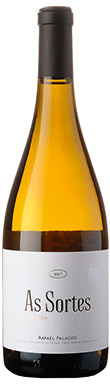

Work by Rafael Palacios since 2004 on his plots or sortes – traditionally inherited by growers by lot – has blossomed to a model pyramid...
2017
Rafael PalaciosValdeorras

Remelluri, Blanco, Rioja, Spain, 2016
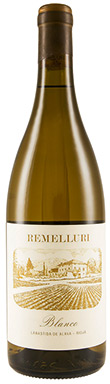
A modern classic: a nine-variety white Rioja blend which, apart from the local varieties, also has some southern French ingredients. An original, which gets ever...
2016
Remelluri
Suertes del Marques, Vidonia, Valle de la Orotava, Tenerife, Spain, 2018
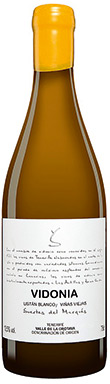
The winery that led the way in building Tenerife’s international reputation. Mainly a red producer, but here showing the brilliance of Listán Blanco (the Palomino...
2018
Suertes del MarquesValle de la Orotava
Can Ràfols dels Caus, La Calma, Penedès, Spain, 2016
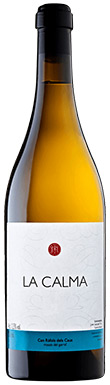
Can Ràfols is an exceptionally interesting property, also known for its uncommon (to Spain) plantings of Chenin Blanc and Incrocio Manzoni. The 40-year-old Chenin Blanc...
2016
Can Ràfols dels Caus
Zarate, Albariño, Rías Baixas, Galicia, Spain, 2019
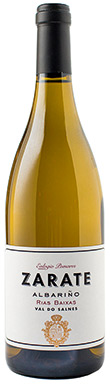
Textbook Albariño grown on the traditional parral canopy over decayed granite soil. Vines are 35 years old and tend more to fresh minerality in character...
2019
ZarateRías Baixas
Castell d’Encús, Ekam, Costers del Segre, Catalonia, Spain, 2018
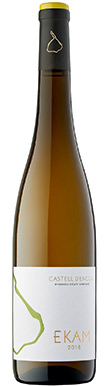
Mouthwatering blend of Riesling with a little Albariño, grown at 800m-1,000m in the Pyrenean section of the Costers del Segre DO. Both may seem...
2018
Castell d’EncúsCosters del Segre
Chivite, Colección 125 Blanco, Navarra, Spain, 2016
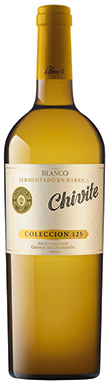
The consultant, the late Denis Dubourdieu, turned a producer’s unlikely dream of a top Chardonnay in Navarra into a wine that became one of Spain’s...
2016
Chivite
Bodegas Palacios Remondo, Plácet Valtomelloso, Rioja, Spain, 2018
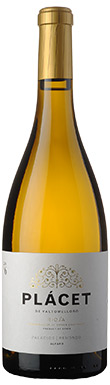
Plácet is the producer’s only white from a winery in Rioja, as well as wineries in Bierzo and Priorat that star with reds. Because of,...
2018
Bodegas Palacios Remondo
Vidal Soblechero, Finca Matea Verdejo, Castilla y Léon, Spain, 2012
This wine comes from Rueda, but the producers, like a number of winemakers across Spain, prefer not be part of the region’s DO. This is...
2012
Vidal Soblechero
Pazo Barrantes, Albariño, Rías Baixas, Galicia, Spain, 2018
Super-young and fresh: this could be a classic tasting note for Albariño. But this is a fine example of where it’s worth buying another bottle....
2018
Pazo BarrantesRías Baixas
