
Top Barolo 2008 wines: Panel tasting results

The best wines showed a distinct personality, and there were few disappointments in this 63-strong panel tasting. Subscribe to Decanter Premium to read the full report, including tasting notes & scores from our three judges...
Sixty-three Barolo 2008 wines tasted, with five rated Outstanding by our panel of Stephen Brook, Michael Garner and Susan Hulme MW
Read the full report by signing up to Decanter Premium below
Go straight to the wines: See all 63 tasting notes & scores from this panel tasting
Summary
Somewhere between bashful and truculent in their early years, these 2008 Barolos are now revealing a high standard of complexity and character, says Stephen Brook…
The tasting suggested that the wines from the Barolo 2008 vintage are maturing quite quickly, developing secondary aromas and gaining in weight of fruit.
As Michael Garner put it: ‘They’re reaching that plateau stage where the wines will continue to evolve but more slowly. There is no rush to drink the best wines.’ The word ‘classic’ was used by all the tasters, in contrast to vintages such as 2007 or 2009 which had more opulence and were user-friendly from the outset. The 2008s needed time to shed their initial austerity, but that is true of many great Barolo vintages.
Scroll down to see the top wines from the panel tasting
Garner added: ‘2008 was relatively cool, but it had also had longer hang-time and was picked late. That’s ideal for Nebbiolo, as it helps the grapes acquire aromatic complexity.’
For all the tasters this vintage character was entirely positive, and the tasting itself met their high expectations.
Susan Hulme MW detected a slightly green character in some wines, though it was welcome in both adding complexity and offering a contrast to the more obvious opulence of hotter years. She added: ‘The vintage is clearly underestimated, probably because it’s less voluptuous; what we have are wines that are balanced and harmonious.’
The tasters found excessive tannins in only a handful of wines. Few had been over-extracted and the tannins, while present, were well integrated. The same was true of acidity. Barolo needs both, but the task of winemakers is to keep them in check – by and large they succeeded.
Some earlier assessments of the vintage argued that many wines were too oaky, deforming Barolo’s authentic character. But this was not the panel’s conclusion. A few wines seemed marked by barriques, but not in an exaggerated way.
Garner had no quarrel: ‘You may lose some of the meatiness of Nebbiolo by using barriques, but you can also gain sweeter tannins. You may like or dislike that character, but it seems to me to be an entirely legitimate choice on the part of winemakers.’
Although there were some excellent examples in the riserva category, only one made it into the tasting’s top 10. Overall they showed no evident superiority to the best regular Barolos in this vintage. In some cases the long wood-ageing had tired the wine. Garner observed that few producers are skilled enough to manage very long wood-ageing without losing freshness.
Nor were early suggestions that La Morra had delivered the best wines borne out by the tasting. The tasters did not know the communal origin of the wines but, based on the results, Serralunga, La Morra and Barolo all appear to have performed well. But a more comprehensive tasting may have given different results.
The profusion of high scores confirms that the tasters were greatly impressed by most of the wines. Nebbiolo is notoriously difficult to vinify and age, even in its Barolo heartland, so it was gratifying to find so many excellent wines. They are evolving in different ways: some still rather brawny and reserved, others nearing their peak, others on a plateau on which they are destined to remain for many more years. The best wines showed a distinct personality, and while some were more successful than others, few were bland, overripe, or lacking in character.
This is a vintage that can be bought with confidence, although as always with Barolo, there are variations in style as well as quality. Some wines are opening up, but there is no rush to consume them, and the majority may well improve with further cellaring.
The scores
63 wines tasted
Entry criteria: Producers and UK agents were invited to Barolo 2008 wines, including riservas
Exceptional 0
Outstanding 5
Highly Recommended 35
Recommended 22
Commended 1
Fair 0
Poor 0
Faulty 0
See all 63 wines from this panel tasting
Our tasters each pick their top three wines from the tasting:
Stephen Brook
Brook has been a contributing editor to Decanter since 1996 and is Regional Chair for Piedmont at the Decanter World Wine Awards. He is a widely published wine writer and educator, and has authored more than 40 books, largely in the fields of wine and travel, for which he has won numerous awards.
Ettore Germano, Cerretta 2008
Serralunga is packed with good producers, and Sergio Germano is among them (terrific Riesling too). This wine dazzled here. Aged in 700-litre barrels, it’s a compromise between traditional and modern styles and none the worse for it. 98 Drink 2019-2031
Marcarini, Brunate 2008
Marcarini’s Baroli from La Morra are first-rate. Unswervingly traditional, given a long fermentation and then at least two years in large casks, often combining floral aromas with an imposing tannic structure. 96 Drink 2018-2029
Silvio Grasso, Ciabot Manzoni 2008
This barrique-aged Barolo from La Morra is a wine that always needs time to become harmonious, and is now achieving its balance. One of six Baroli made by Federico Grasso and his family. 96 Drink 2018-2029
Michael Garner
Garner lives in rural Devon and has worked in the wine business for more than 30 years, specialising in Italian wine for more than 25 of them. He is a regular contributor to Decanter and DWWA Regional co-Chair for Italy. He is author of Amarone and the Fine Wines of Verona and co-author of Barolo: Tar and Roses.
GD Vajra, Bricco delle Viole 2008
The same wine showed wonderfully well at Decanter’s recent Italy Fine Wine Encounter Barolo Masterclass and it didn’t disappoint here. A wine of tremendous balance and style, the combination of freshness and opulence is quite outstanding. 98 Drink 2019-2029
Terre del Barolo, Cannubi 2008
Usually known as the source of bargain basement Barolo, the area’s largest cooperative also produces a range of premium wines. This is an impeccably crafted example which shows off the distinctively aromatic character of Barolo’s most famous vineyard. 98 Drink 2019-2030
Ettore Germano, Cerretta 2008
Sergio Germano’s wines are always worth looking out for and epitomise the rich, powerful style the valley is reputed for. Beginning to drink beautifully and will last. 96 Drink 2019-2031
Susan Hulme MW
Hulme is a wine writer specialising in Italian wines. Since 2016 she has written regularly for Decanter and Decanter.com. Hulme has lived and worked in Italy and regularly travels through its wine regions. She became a Master of Wine in 2005, winning the Madame Bollinger medal for outstanding performance in the tasting exam.
Ettore Germano, Cerretta 2008
Sergio Germano’s favourite Barolo from his portfolio is the quintessence of Serralunga – power and intensity without being heavy, with a shock of electric energy to balance the concentration and depth. 97 Drink 2019-2031
Poderi Aldo Conterno, Cicala 2008
One of the great names who helped to revolutionise the quality and image of modern Barolo. The 2008 Cicala truly reflects some of the cool, green, balsamic qualities of the vintage; edgy, tightly structured but generous and approachable. 93 Drink 2019-2029
Bruna Grimaldi, Badarina 2008
This producer was an exciting discovery for me at the 2018 Nebbiolo Prima. The quality impresses, as does the enthusiasm and commitment of Simone Grimaldi, involved since 2015. One to watch. 92 Drink 2019-2030
About Barolo 2008
If the public perception of the 2008 vintage in Barolo is somewhat blurred, that is probably because the producers’ own experience of the vintage is inconsistent. Local microclimates and the range of exposures and elevations mean that growers can encounter considerable variations.
In a climatically uniform and acclaimed vintage, or conversely in a rainy, rot-infused vintage, all growers will have lived through much the same conditions, but that is the exception rather than the rule.
In 2008 the spring was cool and wet, and outbreaks of mildew and oidium, although treatable, did result in crop reductions. August was characterised by both wind and hail (again localised), but conditions improved in September. Nonetheless some individual vineyards had been damaged by adverse weather and needed to be harvested with care.
One characteristic shared by most wines was that the tannins were firm and the wines would need time to mature. There were undoubtedly problems with other varieties such as Barbera in 2008, but Nebbiolo coped better.

Slow starters
Overall, 2008 was a cooler year, so overripeness and high alcohol were not major issues. However, the pronounced tannins made the wines difficult to appreciate and assess when young: an occasional herbaceousness and rigidity, while characteristic of Barolo in such a year, could give the impression of austerity. The wines are now revealing their full potential, and many of them will offer good value compared to more acclaimed vintages such as 2009 and 2010.
Enrico Rivetto in Serralunga was not that happy with the vintage, but other growers such as Luciano Sandrone and Pio Boffa were more enthusiastic, describing it as classic and pure. Some find a resemblance to 1998, others to 1978. Some consider it relatively accessible, others, such as Pietro Ratti, as more acidic but also more profound. As for communes, La Morra seemed to have fared best, followed by Barolo itself.
Such assessments were made when the wines were young, and one would expect a decade to have smoothed out any rough edges. Diverging assessments may also reflect the success of each estate. A handful decided not to produce any single-vineyard (cru) wines, though these were in the minority.
One consistent thread in appreciations of the vintage is that tannin levels were high, and the management of those tannins proved crucial in the ability of each wine to evolve. This is the right moment to see how they are developing, although the best will surely have a long life ahead of them.
Barolo: the facts
Surface area 2,161ha
Growers 770
Sole permitted grape variety Nebbiolo
Maximum yield 56hl/ha
Minimum alcohol 12.5%
Both regular Barolo and Barolo riserva must spend a minimum of 18 months in wood, and the total ageing period for regular Barolo is 38 months, and 62 months for the riservas.
Barolo: know your recent vintages
2017 Hail in April, sporadic rainfall, and a long, dry summer with heat spikes. Small berries, concentrated wines that may lack perfect balance.
2016 Fine summer weather continued into September, with cool nights giving prolonged hang-time. Potentially superb. Drink 2021-2038
2015 July was hotter than 2003, but it cooled off in late August. Early-drinking vintage, resembling 2007 and 2009. Drink 2019-2030
2014 Early summer was wet with sporadic hail, but sunny days from mid-September. October weather worsened, leading to some variable quality. Drink 2018-2028
2013 Wet spring but good flowering, some mildew in a fairly cool summer. Generous crop, and a wet September gave less rich wines, but the best are perfumed, elegant. Drink 2019-2030
2012 Complicated by hailstorms, heat spikes, and sunburn, but there are some excellent wines. Drink 2018-2025
Top Barolo 2008 wines from the panel tasting:
You might also like:
Premium: Barolo 2009 panel tasting results
Premium: Barolo 2010 panel tasting results
Premium: Tasting Borgogno Barolo Riserva back to 1937
Travel: Eight of the best wine destinations to visit in October
Ettore Germano, Cerretta, Barolo, Serralunga d’Alba, Piedmont, Italy, 2008
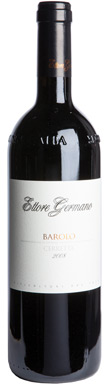
97
Under the ownership of the Germano family for five generations, this estate currently spans 18ha of vineyard. This Barolo is sourced from one of Serralunga d’Alba’s most important crus, Cerretta, an expansive hill facing south/southwest. While adopting modern techniques – stainless steel is much in evidence – the winemaking is rooted in tradition: fermentation is short, around 12-15 days, in open wooden fermenters and maturation is completed in a variety of barrel sizes. The Cerretta spends 24 months in 700-litre French oak barrels, 15-20% new, and then a further 15-18 months in bottle before release. Stephen Brook: Hefty nose of smoky bacon but with ample plummy fruit too. Very rich and forthright, highly concentrated, with firm acidity and tannins. Still youthful and almost raw, as the alcohol is a bit too apparent, but it’s still harmonious and voluptuous with admirable length; will go the distance. Michael Garner: Firmly structured, with a core of sweet fruit encircled by notes of liqueur cherry, almond and charred spice; some freshness still, with plentiful tannins to finish. Good. Susan Hulme MW: High-toned, smoky, iodine aromas. Darkly powerful, intensely concentrated palate with very firm tannins closing the fruit down right now, but this has huge concentration, energy and drive.
2008
Ettore GermanoBarolo
Silvio Grasso, Ciabot Manzoni, Barolo, La Morra, Piedmont, Italy, 2008
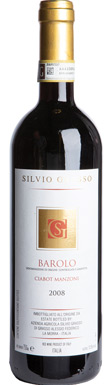
96
The Grasso family have been winemakers since 1927, but have only been bottling all their production themselves since the mid-1980s. Their vineyard holdings add up to 14ha, of which they own 6ha while leasing the rest. Federico Grasso is in charge of the winemaking here and has, in the words of Robert Parker, ‘produced a bevy of sensational efforts’. A bottling from a single vineyard in La Morra from vines dating back to 1968, this wine’s name was changed to Bricco Manzoni in 2010. Fermentation takes place in steel tanks for 15 days before maturation in French oak barriques for 24 months, with less than 30% new oak. Stephen Brook: Meaty, savoury nose, a bit charred, yet it’s aromatically vibrant. Nicely concentrated, ripe and silky with a seamless quality to the texture, while it shows sufficient but not dominating acidity and well-integrated tannins. Harmonious, long and lively. Michael Garner: Bright and fresh red fruit aromas with hints of liquorice and clove. Full, round and juicy with superb flesh and lavish, mineral-toned fruit. Really good. Susan Hulme MW: Cool, menthol top notes with creamy spice, dark cherry and sous-bois flavours; very harmonious, melded and velveteen, with a lingering, juicy finish.
2008
Silvio GrassoBarolo
Ascheri, Sorano Coste & Bricco, Barolo, Serralunga d’Alba, Piedmont, Italy, 2008
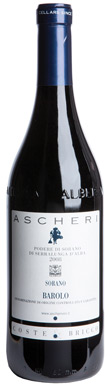
95
Established in La Morra in the early 19th century, Ascheri moved to the town of Bra in 1880, and the original La Morra vineyards were added to purchases of individual estates in Serralunga d’Alba, Verduno and Bra. Grown on selected plots of the Sorano vineyard in Serralunga d’Alba, this is made by Matteo Ascheri and produced in only the best vintages. Coste & Bricco is known to be very long-lived, yet Ascheri remains ever-vigilant in avoiding the extraction of harsh tannins. Stephen Brook: Muted, leathery nose. Very rich and sumptuous, a full-bodied style with an imposing depth of fruit, but not ungainly or overwrought. Michael Garner: Full and frank, bramble fruit aromas with faintly herbal notes. Juicy and ripe, pretty red fruit flavours – stylish, charming, and nearly ready. Susan Hulme MW: Liquorice, molasses and tar on the nose, firmly austere but very concentrated. Traditional, uncompromising style with intense liquorice-toned dark fruit, very firm tannins and bright acidity, with a very long, sinewy finish. Powerful and impressive.
2008
AscheriBarolo
Bovio, Arborina, Barolo, La Morra, Piedmont, Italy, 2008
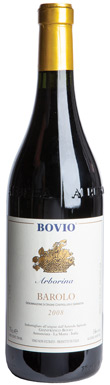
95
Run by the third generation, Bovio is a small producer with 6.5ha spread across La Morra, Barolo and Castiglione Falletto. Their philosophy is strongly embedded in tradition, with lengthy maceration on skins and ageing in big oak casks. Arborina, in La Morra, is one of Bovio’s two single-vineyard Barolos made by winemaker Matteo Franchi. After fermenting in steel for 12-15 days, the wine remains on the skins for 30-40 days before ageing for 24 months in barriques, followed by six months in concrete tanks and six months in bottle. 3,500 bottles produced. Stephen Brook: Subdued nose, with a hint of oak. Freshness and concentration; the tannins are perhaps too pungent now, but they give the wine its drive, aided by good acidity. A bit gawky, but intensity and persistence here. Michael Garner: Luscious black fruit aromas. Full, ripe and juicy with lively fruit, cultured tannins and a notable freshness and lift. Will develop further. Susan Hulme MW: Dried fruit nose, with attractive dried cherry and balsamic notes on the palate, bolstered by firm, muscular tannins. A chunky, forceful style but well managed, with great vibrancy.
2008
BovioBarolo
Terre del Barolo, Cannubi, Barolo, Barolo, Piedmont, Italy, 2008
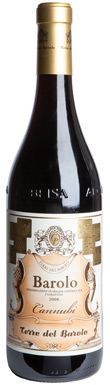
95
Founded in 1958 by Arnaldo Rivera, the son of a smallholder, Terre del Barolo is a cooperative based in Castiglione Falletto, growing from 21 founding members to 300 today. The company maintains a philosophy based on quality, local provenance and commercial reliability, including a technical assistance programme that encourages growers to pursue quality and environmental sustainability. The winery uses modern technology while following traditional procedures. This wine undergoes maturation in both French and Slavonian oak casks. Cannubi lies on a small hill and is one of the most famous and sought-after Barolo crus. Stephen Brook: Rich, smoky cherry and raspberry nose. The attack is fresh and limpid and this shows purity of fruit, though there is no lack of tannin to give structure, with acidity bringing out the sweetness of the fruit. Michael Garner: Ripe and spicy rose and cherry aromas. Round, fresh and juicy, with notable sweetness of bright red fruit partnering notes of liquorice and tobacco. Lively and youthful; a lot more to give. Susan Hulme MW: Complex nose of sous-bois, dark cherry, creamy spice. Rounded and harmonious with fine, gravelly tannins; attractive weight and balance.
2008
Terre del BaroloBarolo
Amalia, Barolo, Piedmont, Italy, 2008
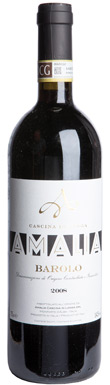

Impressively fresh throughout, with scented bramble and loganberry aromas welcoming a juicy palate with bright, lively fruit. Long and beautifully balanced, a really impressive effort.
2008
AmaliaBarolo

Damilano, Barolo, Barolo, Piedmont, Italy, 2008
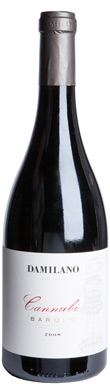
Beefy, leathery nose. Rich and sumptuous, with a fine depth of fruit and an unusually creamy texture - it's big-framed and bold, yet voluptuous and...
2008
DamilanoBarolo
Marcarini, Brunate, Barolo, La Morra, Piedmont, Italy, 2008
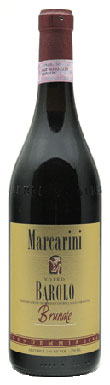
Raspberry nose with a hint of tea. Rich, suave and very concentrated, with robust yet integrated tannins that give it swagger and drive. In its...
2008
MarcariniBarolo
Pianpolvere Soprano, Bussia, Barolo, Monforte d’Alba, Piedmont, Italy, 2008
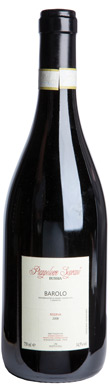
Smoky black fruit and seasoned oak aromas. Rounded, full and still juicy, with developed bramble and liquorice flavours. Though fully mature, this should continue to...
2008
Pianpolvere SopranoBarolo
Aldo Conterno, Bussia Cicala, Barolo, Monforte d’Alba, Piedmont, Italy, 2008
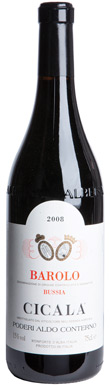
Still remarkably fresh, with cassis, mint and black cherry aromas ushering in bright and juicy berry fruit within a finely balanced structure. Plenty of life...
2008
Aldo ConternoBarolo
Bruna Grimaldi, Badarina, Barolo, Serralunga d’Alba, Piedmont, Italy, 2008
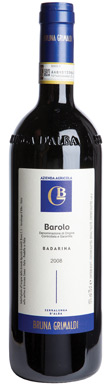
Warm, inviting nose of spicy red fruit and cherry menthol. Long but elegant and poised, with beautifully precise red fruit. Impressive stuff, with lots of...
2008
Bruna GrimaldiBarolo
Ca' Rome, Cerretta, Barolo, Serralunga d’Alba, Piedmont, Italy, 2008
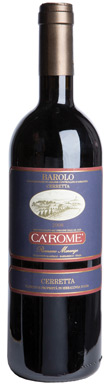
Fragrant red fruit and floral aromas. Medium-bodied and graceful, with a fine intensity and purity of fruit, and marked acidity. Charming wine which will develop...
2008
Ca' RomeBarolo
Dosio, Fossati, Barolo, Barolo, Piedmont, Italy, 2008
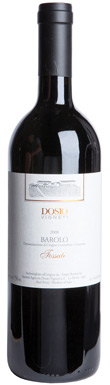
Voluptuous ripe fruit and floral aromas, almost exotic. Long-lingering, impressively clean and fresh-tasting with a lovely fruit profile, generous tannins and exuberant acidity.
2008
DosioBarolo
Fratelli Alessandria, Gramolere, Barolo, Monforte d’Alba, Piedmont, Italy, 2008
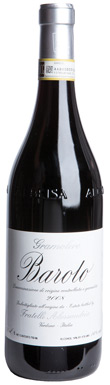
Meaty, savoury nose, but not too evolved. Softer than expected on the attack, with a welcome juiciness and upfront fruit yet with no lack of...
2008
Fratelli AlessandriaBarolo
