
Understanding Hermitage
Hermitage is one of the northern Rhône’s most exclusive appellations. James Lawther MW reveals its secrets below...

The hill of Hermitage is a splendid sight, one which takes the breath away. A high-reaching island realm, it towers above the Rhône at a point where the mighty river meanders east, its folding slopes grey and austere in winter but uplifted by summer light and vegetation. Along its flanks, a stairway of terraced vineyards and dry-stone walls descend to the town of Tain below.
In terms of surface area, Hermitage is tiny – a mere 140 hectares of predominantly Syrah grapes with about a quarter of the vineyard planted to the white Marsanne and Roussanne. From these varieties, sturdy, long-ageing wines are produced.
Origins
Hermitage has been recognised as one of France’s great wines for a considerable time. The origins of the vineyard are said to be Roman, the name derived from a hermit who, according to legend, cultivated the vine on the hill in the Middle Ages.
By the 17th century, red and white Hermitage was being served in aristocratic circles around Europe, the white often more highly prized than the red, which was used for bolstering quality Bordeaux in the 18th and 19th centuries. Early 20th-century gloom and disinterest allowed the vineyards to lapse but the reputation of the wine was reborn in the late 1970s.
Cool Climate Syrah
Hermitage stands on the 45th parallel and is bound by a continental climate. In other words it’s on the northern limits for ripening Syrah. The appellation’s generally southern aspect is a critical factor, allowing grapes to mature to a certain level of sugar ripeness.
Those with well-maintained vineyards who harvest late look for phenolic ripeness to curb herbaceous notes and a hard-edged feel to the wines. The balance, if anything, is more Médoc than Châteauneuf-du-Pape.
Terroir
There’s a misconception that the hill of Hermitage is just one massive granite block. The western side of the hill is indeed granitic, linked at one time to the Massif Central. But in the centre and east, other soil patterns can be found.
Each site is known locally as a climat and offers a varying nuance to the wine. Broadly speaking, there are three families of soil type, each with variants in composition, slope and altitude (120–300m).The western granitic band contains the climats, Les Bessards and Les Grandes Vignes. The slopes are steep, the soils poor and ferruginous. The resulting wines display backbone, structure, power and intensity and the longest ageing red Hermitages will have a percentage of wines from these soils.The high terraces in the centre and east are composed of silty loess. The soils here are deeper and cooler, well suited to Marsanne and Roussanne, although Syrah is also planted. The climats include L’Homme, Maison Blanche and L’Hermite. The latter adjacent to Les Bessards has a zone with a granitic top soil. Syrah cultivated here produces a lively wine with fine tannins.
The third group on the mid and lower terraces contains alluvial material deposited by the Rhône. Generally speaking, the soils can be designated as limestone-clay, the resulting red wines rounder and aromatic, with tannins that are perhaps a little coarser.
Variability, though, can be found in the different climats. Stony Le Méal, well exposed on the mid slope next to Les Bessards, produces the most complete red – full, generous, fragrant with good tannins. Pudding stone-covered Beaume offers a tight but fine tannic frame, the sandy clay of Le Péléat elegance and finesse, the brown limestone-clay of Les Gréffieux reaps wines of supple fruit and weight while Diognières has a more robust style. Rocoule with a higher percentage of limestone is better suited to the white varieties.
Winemaking
Ideally, and traditionally, Hermitage should be a blend of wines from a variety of climats. In reality it depends on the range and size of the producer’s vineyard holdings. The largest by far, in ascending order, are Delas (10ha), Domaine Jean-Louis Chave (14.5ha), Paul Jaboulet Ainé (25ha), Cave de Tain l’Hermitage (32ha) and Chapoutier (32.5ha). Combined, they represent a good 80% of the appellation.
Delas’ vineyards are located mainly in Les Bessards, providing grapes for its single-vineyard wine (Les Bessards) and a good percentage of Marquise de la Tourette. Another major player in Les Bessards is Chapoutier, whose biodynamically cultivated grapes are used for the single-vineyard Le Pavillon and blended with those from Le Méal and Les Gréffieux for Monier de la Sizeranne.
A similar mix, but with greater emphasis on Le Méal, can be found in Jaboulet’s La Chapelle, while Cave de Tain l’Hermitage uses Le Méal, L’Hermite and Les Bessards for top cuvée Gambert de Loche and a greater range of climats for the good-value Nobles Rives.
True champion of the blended wine, though, is Domaine Jean-Louis Chave. The parcels of vines are spread through eight different climats, including Les Bessards and Le Méal, and the grapes from each are harvested and aged separately before being blended with a skill that can only be described as an art form.
The dozen or so other producers that bottle their own wines are more restricted in size, the vineyards rarely more than a couple of hectares. As examples Philippe Desmeure’s Domaine de Remizières, Cuvée Emilie is produced largely from Les Grandes Vignes while Yann Chave vinifies the smattering of Le Péléat he owns together with majority Beaume.
Winemaking styles may vary but there have been two main changes over recent years. Most producers now destem their grapes; and older barrels are being replaced with newer stock (though the choice varies between the 228l Burgundian pièce and 600l demi-muid). The newer barrels and destemming have helped produce cleaner wines with more precision to the fruit.
In essence, though, Hermitage remains a wine that requires patience. Winemaking skills and work in the vineyards have taken the harder edges off the wine and let vintage play its part. But the full delights of both red and white Hermitage are only revealed with time.
A selection of Hermitage wines tasted by Decanter’s experts:
You may also like:
Getting to know white Hermitage
Best French wines: 100 point scores
Best Penfolds wines: A selection of our top scorers
M Chapoutier, L'Ermite, Hermitage, Rhône, France, 2016
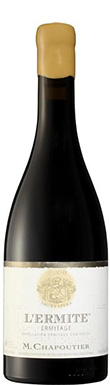

Aged in 30% new oak for 20 months. A highly aromatic nose, showing blackberry, blackcurrant and mineral hot slate aromas. It's very full-bodied and very...
2016
M ChapoutierHermitage

Domaine JL Chave, Ermitage Cuvée Cathelin, Hermitage, Rhône, France, 2009
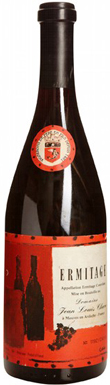
Wonderful wine: combines richness and decisive cut. A heroic, true Hermitage based on Bessards' smoky, close-knit intensity.
2009
Domaine JL ChaveHermitage
Domaine Marc Sorrel, Le Gréal, Hermitage, Rhône, France, 2015
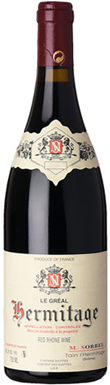
Profound, perfumed, softly deep nose. Fine, juicy, sultry and clear palate. Nature’s child.
2015
Domaine Marc SorrelHermitage
Domaine JL Chave, Blanc, Hermitage, Rhône, France, 2017
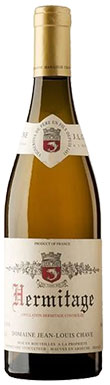
Jean-Louis' 2017 white Hermitage is a rich, almost buttered style with considerable fat and an opulent texture, but remains fresh. A tasting of four component...
2017
Domaine JL ChaveHermitage
Maison Les Alexandrins, Hermitage, Rhône, France, 2017
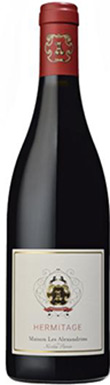
Darkly coloured, with savoury, brambly aromatics, measured and precise. A medium-bodied wine with a very dry impression on the palate and balanced acidity. Good, but...
2017
Maison Les AlexandrinsHermitage
Bernard Faurie, Bessards Méal, Hermitage, Rhône, France, 2009
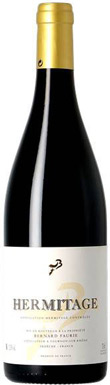
Hermitage is known for its power and depth, and here the palate of dark grippy fruit shows flavours of succulent blackcurrant, dried herbs, black pepper...
2009
Bernard FaurieHermitage
E Guigal, Hermitage, Rhône, France, 2011
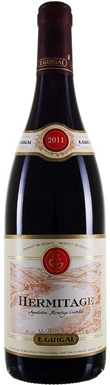
Some tertiary characteristics are coming through after six years, with some turned earth and fallen leaves amongst the rich dark fruits. Full-bodied and rich in...
2011
E GuigalHermitage
Paul Jaboulet Aîné, La Maison Bleue, Hermitage, Rhône, France, 2015
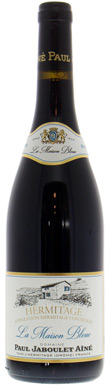
A little reduced at first, but the palate is plush full of red cherries. There is a youthful energy here but it is quite lean.
2015
Paul Jaboulet AînéHermitage
