Understanding Pomerol at three price points
Despite its small size and lack of a classification system, Pomerol can be a complicated region to get to grips with. So here’s our expert guide to all you need to know, along with recommendations at three different price levels that you’ll be keen to get your hands on (if you can).


Pomerol is a paradox. Its famous plateau terroir is hallowed; it produces (in Petrus, Le Pin and Château Lafleur) three of the most expensive wines in the world; demand is so high and quantities so small that it is very difficult to source back vintages; and its mere mention sends the pulses of Bordeaux aficionados racing.
Scroll down for Colin Hay’s three-step Pomerol selection
Yet the landscape of the appellation itself appears flat and uninspiring (a stark contrast to the calcareous contours of its immediate neighbour St-Emilion), there are no grand châteaux here, no visitor centres, no hotels, no cavistes and scarcely a restaurant.
It would be utterly forgettable were it not for the quality of its wines, and it belies entirely the adage that beautiful wines come only from beautiful places.
It is the only appellation of Bordeaux’s ‘top five’ to have no system of classification and it was scarcely known before the post-war period, though it was in fact one of the original appellations to be created by France’s National Institute for Origin and Quality (INAO) in 1936. It is arguably the most intimate and welcoming of Bordeaux’s great appellations, but to the uninitiated it is also the most intimidating. It is, to misquote Churchill, a riddle, wrapped in a mystery, inside an enigma.
In short, Pomerol takes some understanding. And to understand it best one needs first to appreciate a little of its history.
Bordeaux’s market garden
Pomerol almost certainly takes its name from pomarium, the Latin for orchard. And for a long time Pomerol was, in effect, the orchard and market garden of the nearby town of Libourne. If the Romans grew vines here, as they almost certainly did, the grapes they produced were intended for eating, not for drinking.
Pomerol’s tradition of polyculture continued long after the Romans left. It was sustained through many of the ensuing centuries by the good fortune of being on one of the pilgrimage routes to Santiago de Compostela in Spain. Indeed it was really only in the 16th and 17th centuries that wine started to become important to the economy of the area. A geographical division of labour had begun to develop between Dutch traders, concentrated in the Dordogne, and their British counterparts based in and around Bordeaux. The former increasingly used Libourne as their distribution hub – and Pomerol was well placed to satisfy at least some of their demand in the markets they served for wine.
But the Dutch penchant of the time was for white, not red. So it was in fact only in the second half of the 18th century (in 1761) that the first Merlot was planted in Pomerol. It would take a further century and, above all, the recognition of its greater resistance to phylloxera, for it to become the dominant grape variety in the area.
Pomerol’s reputation, however, was somewhat slow to develop. Until the 1920s it was still regarded, in effect, as an extension of St-Emilion. Yet it was nonetheless one of the first crop of appellations to be created by the INAO in 1936.
By the 1940s – while Petrus was already selling for the price equivalent of a Médoc second growth, and Vieux Château Certan and Château La Conseillante for that of a third growth – the remaining wines within the appellation remained largely unknown. Pomerol was, in short, the last appellation to join the ‘super five’ – a reputation that was arguably only finally secured with critic Robert Parker’s adulation for its wines in the exceptional 1982 vintage.

Pomerol: the facts
Appellation established 1936
Area planted (2020) 786ha (smaller even than St-Julien)
Grapes Exclusively red: Merlot, Cabernet Franc, Cabernet Sauvignon, Malbec, Petit Verdot (since 2009)
Producers About 140
Average vineyard size 5.6ha
Classification None
Superstar vineyards Petrus, Lafleur, Le Pin, Vieux Château Certan (‘VCC’), La Conseillante, L’Eglise-Clinet, Trotanoy, La Fleur-Pétrus, L’Evangile
Rising stars Enclos Tourmaline, Guillot-Clauzel, Hosanna, Porte-Chic, Séraphine
Nota bene Though Petrus has no accent on its ‘e’, Château La Fleur-Pétrus does
Great recent vintages 2020, 2019, 2018, 2016, 2015, 2010, 2009, 2005
Under appreciated vintages (where excellent value can be found) 2017, 2014, 2012, 2008, 2007, 2001
Source: CIVB
The clay factor
Pomerol is the smallest of the great appellations of Bordeaux, with a little less than 800ha under vine. There are, today, about 140 producers and the average vineyard size is a paltry 6ha (with most much smaller than that and several below 0.5ha).
The appellation is situated on a gravel bank, rising from southwest to northeast over the famous plateau where the very best terroirs are to be found. In the south and west the soil is sandier, typically producing less profound wines; but in the north and east, above all on the plateau itself, there is more of the clay that is key to the identity and reputation of Pomerol; in the best terroirs of the plateau this is layered with gravel.
The subsoil here, importantly, is a dense and dark clay with a typically high iron content.
Though it is difficult to discern from the ground, the contours rise from the sandy edge of Libourne itself, close to sea level, to a peak of 39m (at Petrus) and just above 40m at Château Gazin. There are two pockets (or bouttonières) of Pomerol’s famous blue clay – the first (of about 20ha) over an iron-rich sand at and around Petrus itself, and the second, without the iron subsoil, around Châteaux L’Eglise-Clinet and Trotanoy.
Pomerol is planted at approximately 80% Merlot, 15% Cabernet Franc and the remaining 5% a mix of Malbec, Petit Verdot and, increasingly, Cabernet Sauvignon. The key to the appellation’s identity is the predominance of an early-ripening variety, Merlot, and the florality, freshness and complexity brought to Pomerol by Cabernet Franc in particular.
Look out for floral notes (above all violet, peony and mimosa), plum, damson and blueberry fruit, a gentle natural sweetness and, with age, truffle, graphite and cedar.

Eight to try, four to covet
Colin Hay’s Pomerol in three steps
More affordable Pomerol (£20-£50)
It is very difficult, indeed practically impossible, to find ‘cheap’ Pomerol – and prices typically rise quickly after release, so it is a good idea to purchase early, ideally en primeur. Second wines are a good affordable option, particularly in good vintages (and there have been many in recent years). Look out especially for La Petite Eglise (from L’Eglise Clinet), Duo (from La Conseillante) and La Gravette de Certan (from Vieux Château Certan).
Château de Sales 2019
Château Mazeyres 2018
Sacré Coeur 2018
Clos René 2018
Mid-range quality (£50-£100)
While all of the above wines (and plenty more in the same price bracket) are excellent, this is where things start to become really interesting – as wines from the heart of the Pomerol plateau come into range. These may not be cheap, but they are special and iconic wines that, in my view, represent good value for their quality in the international fine wine market.
Château Latour à Pomerol 2018
Château Porte Chic 2016
Château du Domaine de L’Eglise 2012
Château Montviel 2018
Superstar Pomerol (£100-don’t ask)
These are all, for me, incredible wines of staggering quality and complexity – wines that I feel privileged to have had the chance to taste. The 2012 vintage, in particular, is very strong in Pomerol (see Sebastian Payne MW’s ‘2012 revisited’ selection of 40 wines) – it is rather under appreciated, making it somewhat more affordable.
Even the very best wines, such as La Conseillante, below, are very accessible already. The other three wines listed are now each significantly more expensive than they were en primeur (Lafleur most of all). Top Pomerol increasingly needs to be purchased early.
Château Lafleur 2019
Château L’Eglise-Clinet 2019
Vieux Château Certan 2019
Château La Conseillante 2012
Understanding Pomerol: Colin Hay’s 12 wine picks
Related articles
- St-Emilion: Worthy candidates for classification promotion
- Bordeaux 2021 wines: Our en primeur verdict
- St-Emilion & Pomerol: Six big name side projects worth knowing
Château Lafleur, Pomerol, Bordeaux, France, 2019
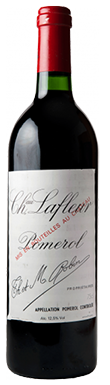

Fresh berries, plums, damsons, sloes, a touch of spice and irises and peonies. But that’s just the start. For as this gathers in the air, breathes, relaxes and then exhales just a little it releases more floral notes, almonds too, pain d’épices, cassis and then, eventually, graphite and cedar. Quite ethereal. But what is most amazing about this wine is its structure and the dynamism in the mouth that it imparts. The potential here is quite staggering. One of the most remarkable tasting experiences of my life.
2019
Château LafleurPomerol

Château L'Eglise-Clinet, Pomerol, Bordeaux, France, 2019

Profoundly fascinating on the nose. Very floral. Irises and violets first, then hints of blossom and a whiff of graphite minerality – and then the fruit starts to appear. Damsons and blueberries, brambles and both black and red cherries. Truffles, too. This has a gorgeous texture. Broad and intense, yet deep and brooding and so soft it’s almost difficult to discern at first the considerable structure. A very fitting if exceptionally poignant tribute to the genius who created it (the late, great and much lamented Denis Durantou – this was his last vintage).
2019
Château L'Eglise-ClinetPomerol
Vieux Château Certan, Pomerol, Bordeaux, France, 2019
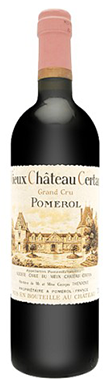
This is glorious. Damsons and sloes, black and red cherries, violets, dried petals and saffron, cumin and curry leaf too – and then cedar and graphite from the Cabernet. Cool and fresh, lifted with cashmere tannins and a plunge-pool depth and elegance. Wonderfully harmonious, it flows across the palate in the most luxuriant way. The latest in a succession of great wines from VCC and probably the best of them all.
2019
Vieux Château CertanPomerol
Château La Conseillante, Pomerol, Bordeaux, France, 2012
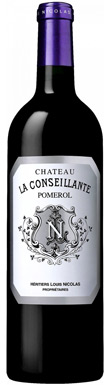
This has always been one of my favourite vintages of La Conseillante. Here a little Cabernet Franc (11%) goes a long way. Ethereal and utterly beautiful on the nose. Soft, delicate, elegant and subtle. Intensely floral, with violets and little hedgerow spring flowers, freshly cut. Has an exquisite balance and harmony, even if it might be said to lack some of the density of ostensibly greater vintages. I can live happily with that; though I’d drink this sooner. Very attractive and the very essence of plateau Pomerol for me. Soft and seductive, with those little truffle notes, blueberries and raspberries; tender and lithe, nicely compact and juicy on the finish.
2012
Château La ConseillantePomerol
Château Latour à Pomerol, Pomerol, Bordeaux, France, 2018
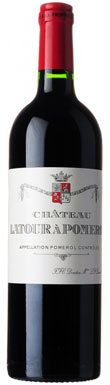
Reliably excellent, as it is here. Deep, rich, plunge-pool cool dark fruit – black berries, damsons, brambles and raspberries; a touch of very dark chocolate and even freshly ground coffee. Mint leaf (just a hint), and hints of subtle spice – clove and nutmeg, even fennel seed. Earthy and loamy. Very complex and beautifully refined. Another superb wine from this estate.
2018
Château Latour à PomerolPomerol
Château Porte Chic, Pomerol, Bordeaux, France, 2016
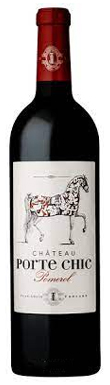
A wine that gets better and better with each vintage – arguably the 2018 and 2019 are better still. It comes from a tiny vineyard of about 2ha on what used to be the horse racing track very close to the village of Pomerol itself and is named after a race horse. Quite light and very limpid and glossy in the glass. An engaging and quite complex nose – rich, dark berry and stone fruit, garrigue herbs, but also cinnamon and nutmeg, violet and vanilla, and baked earth. Rich and spicy on the attack, but also gentle with incredibly soft and enticingly seductive tannins that build in texture and power as this unfurls.
2016
Château Porte ChicPomerol
Château du Domaine de L’Eglise, Pomerol, Bordeaux, France, 2012
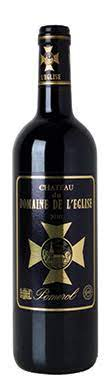
For top plateau Pomerol (situated between Châteaux Le Gay and L’Eglise-Clinet) and from this very accessible and seductive, if somewhat underappreciated Pomerol vintage, this is superb value (as it often is). A hauntingly beautiful nose, combining cedar, ripe, rich blueberry and black cherry fruit with wild floral notes and baking spices. Soft and caressing on the palate, this is elegant, delicate and refined. Perfect drinking now.
2012
Château du Domaine de L’EglisePomerol
Château de Sales, Pomerol, Bordeaux, France, 2019
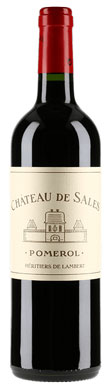
Aromatically expressive and authentically Pomerol on the nose, with lavender and violet, cedar and graphite, blueberries and brambles and a delightful herbal note of thyme and rosemary. The progression here in recent vintages is exceptional and this is the best yet (though look out for the 2020, too).
2019
Château de SalesPomerol
Château Montviel, Pomerol, Bordeaux, France, 2018
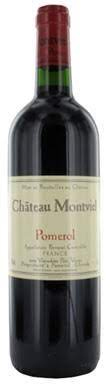
From Vignobles Péré-Vergé and, like the same group's Châteaux Le Gay and La Violette, now made using 100% micro-vinification, Montviel is close to achieving the same effect texturally. Intense and expressive on the nose – baked plums, cinnamon spice, but with a lovely dark herbal element from the Cabernet Franc. Lithe, dynamic and quite sinuous for the vintage, with very soft and fine-grained tannins. Top-end winemaking at a relatively affordable price for the appellation.
2018
Château MontvielPomerol
Château Mazeyres, Pomerol, Bordeaux, France, 2018
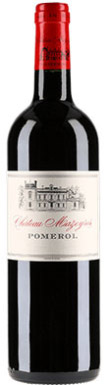
Vibrant, vital and beautifully glossy in the glass. This is a wine I used to find somewhat heavy, burly and rustic; it is now the very antithesis and the transformation is an excellent advert for the biodynamic winemaking here. Wild, lively, bright and dynamic, this has lovely zingy fresh fruit and herbal notes, with an intense dark crushed berry fruit – brambles, blackberries and loganberries.
2018
Château MazeyresPomerol
Château Sacré Coeur, Pomerol, Bordeaux, France, 2018
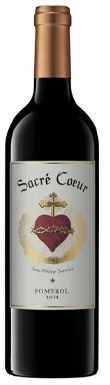
From a tiny vineyard of 1.5ha on a mix of fine gravel and sand. Red cherries, redcurrants and loganberries, with a hint of rosemary. I like the saline minerality here that seems to weave itself into the fine grains of the tannins. It is the key to this wine, reinforcing its sappy juiciness. Excellent value.
2018
Château Sacré CoeurPomerol
Clos René, Pomerol, Bordeaux, France, 2018
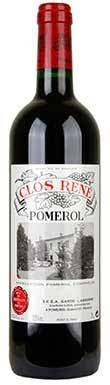
A distinct and very evocative Pomerol nose. Dark berry fruit with a delicious herby earthiness that I really like, a touch of woodsmoke, cinnamon, a little hint of ferrous minerality, a natural sweetness and a suggestion of cedar. Plump, rich and quite glossy on the palate, too, with reasonably fine-grained but assertive tannins. This should age very gracefully.
2018
Clos RenéPomerol
