
US West Coast: The new vanguard
Wine regions in the western coastal states of the US are home to an emerging crop of creative young winemakers who are pushing the American wine scene in exciting new directions. We focus on four key names to know.


For many years now, America’s fine wine epicentre has been in that special valley between the Vaca and Mayacamas mountain ranges that we all know as Napa. First established in the 19th century, the Napa Valley’s quality and reputation are known throughout the world of wine.
But as crucial as Napa is to America’s wine identity, it doesn’t capture the totality of what is a very large and dynamic place. America’s west coast is far from being a monoculture of Cabernet.
Beyond that famous valley and up and down the country’s western coast, a new vanguard of American winemakers ply their skills and creativity, pushing their respective regions and, by extension, American wine in new directions.
Scroll down to see notes and scores for nine wines from four of the US west coast’s most dynamic producers
The western states of California, Oregon and Washington share nearly 2,100km of coastline (roughly the distance from London to Gibraltar), and are wildly varied and distinctive in their climate, topography and geology.
Many of these regions are perfectly positioned to craft wines of elegance and sophistication – wines that communicate their terroir with poise to capture the imagination of fine wine collectors and a new generation of wine enthusiasts.
Alban Debeaulieu
Abbott ClaimWillamette Valley, Oregon
Alban Debeaulieu grew up in France. He wasn’t born into a multi-generational wine estate, but wine was always around. Growing up in the Rhône valley and with relatives in the Loire, the young Debeaulieu learned to appreciate wine rather than how to make it.
Upon completing his master’s degree in oenology at Dijon’s Université de Bourgogne, the first steps in his journey to Oregon began, unbeknown to him. In 2012, he started out in Beaune, working with Véronique Drouhin. She then convinced Debeaulieu to go to Oregon to work at Domaine Drouhin in the Dundee Hills for harvest in 2013. He never left.
Debeaulieu believes the arc of his young career was uniquely American. ‘The opportunities I was given wouldn’t have come to me so quickly in France,’ he states. After completing harvest at Drouhin’s Oregon estate, he worked for two years as Jesus Guillén’s assistant winemaker at the unique, somewhat mysterious, family-run White Rose Estate. Then, in 2016, he went to 00 Wines, where he was reunited with the man who would become his mentor, Burgundy consultant Pierre Millemann, who had been one of his teachers at the university in Dijon.
Antony Beck, son of the South African wine magnate Graham Beck, lured Debeaulieu to his current estate, Abbott Claim, in the Yamhill-Carlton AVA. The two of them built the project together, with Millemann continuing to consult through the 2022 vintage.

Debeaulieu is a big believer in whole-cluster winemaking, and is inclined to use as much of the lees as he possibly can, an approach he learned from Millemann and has fully embraced. He takes almost opposing approaches to the Chardonnays, which come from a variety of vineyards within the Eola-Amity Hills AVA, and the estate Pinot Noirs, which come from the Yamhill-Carlton AVA. ‘We believe in making wines of place first. And nearly as important, they must be ageable wines,’ he says.
‘A lot of the subtleties of place for white wine come from the wine’s texture, depth, length, umami, minerality and body. These are all details of place in wine. You can’t get those nuances in Chardonnay with a delicate press. We go very deep with our pressing. We want lees and tannins, which give the wine depth and life. We ask everything of the fruit and then let it sort itself out through oxidation. It’s more natural this way as well. The lees do a lot for us.’
The Pinot Noir, in contrast, is made quite delicately. ‘We manage a combination of low-yielding parcels with high tannin loads from the soils and climate of the Yamhill-Carlton,’ Debeaulieu says. ‘We’ve always been picking much earlier. In my first vintage, some of the appellation’s more experienced winemakers even told me I was making a mistake. I said, “We’ll see.”’
Debeaulieu’s natural aptitude and instinct, as well as a formidable winemaking education, have come together in one of America’s most talented young winemakers. A sense of purpose is blended with his Burgundy-taught commitment to terroir and deference to tradition, married to American pragmatism and an appreciation for that special place, the Willamette Valley.

Abbott Claim, Due North Pinot Noir, Yamhill-Carlton, Willamette Valley, Oregon, USA 2021 99pts

Chris Peterson
Avennia and LiminalWashington State
Chris Peterson is unquestionably one of Washington’s most gifted winemakers. He crafts wines that embrace what the state’s warm growing regions give him, but has an uncanny talent for coaxing refinement and sophistication from wines sourced from the state’s top vineyards.
Peterson embraces a pursuit of balance and elegance that remains largely elusive in the winemaking styles of many of his Washington contemporaries – making wines of mineral and savoury expression, eschewing monochromatic declarations of New World fruit.
He graduated with a liberal arts degree from the University of Washington in Seattle. Working as a FedEx driver, he decided that was not the career he was looking for. ‘I had grown up in Yakima Valley and was aware of the developing Washington wine industry when I was younger,’ Peterson explains. ‘As an American in my twenties, I was more interested in beer. What fascinated me, though, as I went tasting in the Yakima Valley, were the questions I developed about wine. Why is this one different to that one, and why is this completely different to that?’
His FedEx job ended around the fortuitously timed launching of the Walla Walla Community College oenology and viticulture programme. He was one of 10 students in the programme’s inaugural class, graduating in 2003. Then, just as Peterson finished his studies, an opportunity at the burgeoning Woodinville winery DeLille Cellars came up. There, founding and executive winemaker Chris Upchurch gave Peterson plenty of room, and he went from enjoying some of the mundane elements of the daily work, such as topping barrels, to exploring wine and its artistry.

‘As I started tasting and learning more, particularly about French wine, I really found myself drawn to the guys who were doing things on the artistic side. Maybe one of my most influential experiences was reading Andrew Jefford’s book The New France.’
Peterson honed his skills early. In blending trials with Upchurch, he was directed that a particular wine might be made from six barrels of Cabernet from the Klipsun vineyard, but Upchurch wouldn’t specify which barrels. Tasting them consistently, Peterson found nuances in each, so he would ultimately start crafting wines based on the intricacy of each barrel, as opposed to taking a broader approach. The wines got better.
‘I took full advantage of the room he gave me to manoeuvre and learn as I went,’ Peterson says. ‘As we increased the number of bottlings we made, there wasn’t a recipe, so I got to have a significant role in crafting those wines.’
Peterson met Marty Taucher at DeLille Cellars in 2009, and when Taucher shared his plans to launch Avennia, Peterson saw an opportunity to move towards artistry. ‘We talked about sourcing from the best, and often not the warmest vineyard sites. I’ve zeroed in on a few coopers that worked with our desired style. I wanted that kind of New France approach. I was thinking maybe those older ways could be new again – that it’s not about technology. It’s about making wines that are reflective of Washington but may express some of the style that they’re inspired by.’

Avennia, Gravura, Columbia Valley, Washington, USA 2021 95pts


Samra Morris
Alma Rosa Winery & VineyardSanta Barbara County, California
At 80 years old, Richard Sanford – one of the founders of the Sta. Rita Hills AVA, planting some of its first Pinot Noir vines back in 1971 – beams when he’s thinking of Samra Morris, the winemaker chosen to lead Alma Rosa, a winery he founded in 2005. ‘Having grown up in war-torn Bosnia,’ Sanford explains, ‘she has no fear! With a gentle hand, she has been masterful in crafting wines of finesse, balance and place from a new vineyard planting at the Alma Rosa estate.’
Morris arrived in the US in 2012 from Sarajevo. She comes from a family of scientists; her father was a professor of agriculture. While studying for her bachelor’s degree, she wanted to be a brewmaster. ‘After I finished my bachelor’s degree, I took an internship at a brewery, and it turns out, I really don’t like the smells that come out of the brewing process. I hate them, actually,’ Morris explains. Pivoting, she began her graduate studies focused on winemaking.
Morris left Bosnia for the US after marrying an American airman. She was fortunate to discover that her new husband was stationed at Travis Air Force base, near Fairfield, about 40 minutes’ drive from Napa.

Morris started working in Hestan Cellars’ Napa Valley tasting room. She recalls asking the winemaker, Thomas Rivers Brown, about working a harvest shortly after she joined the team. Following a vineyard internship at St Supery, she did three harvests as a cellar intern with Brown at Mending Wall. More cellar and tasting roles followed, as did some very technical work at a wine-kegging company in Sonoma.
When Debra Eagle, who had hired her at Hestan, relocated to the Sta. Rita Hills in 2018, Morris said ‘keep me in mind’. The following year, a call came with an offer to become the assistant winemaker at Alma Rosa. Shortly after Morris arrived, the winemaker quit; she was quickly promoted.
The Sta. Rita Hills represent a viticultural playground. The proximity to the ocean, long growing season and soil variability, including diatomaceous earth (fossilised skeletal remains of tiny aquatic plants), allow varieties such as Pinot and Chardonnay to grow alongside Grenache and Syrah.
All of this creates conditions for Morris to play with. Her wines marry bold umami flavours and ripe fruit with delicate acidity and balance. Bright candied fruits, savoury, herbaceous flavours and an ever-present oceanic salinity create contemplative wines in all grape varieties used. Ripeness is balanced brilliantly with ocean-side freshness.
Alma Rosa, Radian Pinot Noir, Santa Rita Hills, Santa Barbara County, California, USA 2021 95pts


Ross Cobb
Cobb WinesSonoma Coast, California
Ross Cobb is the most decorated of the four winemakers we’re meeting in this article. For me, his wines represent the pinnacle of American Pinot Noir. The wines are ethereal, aromatically beguiling, delicately textured and worthy of any superlative you want to throw at them.
Cobb has serious credibility in the sommelier community, too, as perhaps evidenced by his Pinot Noir’s mention in the 2022 film The Menu. He attributes a large part of his success with sommeliers and collectors to calibrating the wines he’s making to the best Pinot Noirs and Chardonnays in the world.
‘I’ve gone to Burgundy 14 times since just before I started Cobb Wines in 2000, and each time I’ve taken my wines and other California Pinot Noirs,’ he says, ‘I’ve tasted these wines relative to some of the legendary wines of Burgundy, which has impacted the evolution of my wine and my choices in winemaking. That’s been a big part of my success in reaching this kind of style.
‘After tasting $20,000 of Morey St-Denis wines with collectors in Miami, I opened a couple of my 2019s – the Doc’s Ranch Chardonnay and the Diane Cobb Pinot Noir. The wines held up. These kinds of tastings, though, have really helped me refine my winemaking style, and it has certainly evolved towards a Burgundian approach.’

Cobb’s wines are distinctive. He believes they stand out on the West Sonoma Coast because of his use of whole clusters and restraint in the use of new oak, though he opts for a lengthy élevage – he usually releases his wines three years after vintage. ‘Lots of winemakers talk the talk of a more restrained style, but they still go for ripeness, and the wines tend to rely on new oak,’ he says.
Cobb’s parents Diane and David planted Coastlands vineyard in 1989. They were among the first to establish vineyards in the western reaches of Sonoma, including a vineyard nursery with 18 different clones of Pinot Noir. Cobb went to UC Santa Cruz and studied agroecology, with a focus on soil science, while his parents were breaking new ground on the Sonoma Coast.
After graduating from college, he arrived at Williams Selyem in 1998, where he learned winemaking with Burt Williams and Bob Cabral. He’s made wines at Flowers and Hirsch, among others. ‘Ross made some of the most beautiful wines that have ever been made at Hirsch,’ says general manager and winemaker Jasmine Hirsch.
For Cobb, it all goes back to his parents’ work at Coastlands. The vineyard was planted on the vines’ own roots, dry-farmed; there have been no herbicides and no tilling in 25 years. It calls to mind the tortoise and the hare. That farming approach has become fashionable, much like Cobb’s style of Pinot Noir and Chardonnay, which remains elusive to many, but he has mastered.
Cobb, H Klopp Vineyard Chardonnay, Sonoma Coast, California, USA 2021 97pts

Cobb, Emmaline Ann Vineyard Pinot Noir, Sonoma Coast, California, USA 2021 98pts

See notes and scores for nine wines from four of the US west coast’s most dynamic producers
Related articles
- DFWE NYC 2024 Grand tasting: The world of fine wines awaits you
- Americas Pinot Noir: Panel tasting results
- Over the line: The complexities of US cross-state-border AVAs
Abbott Claim, X Omni Vineyard Chardonnay, Willamette Valley, Eola-Amity Hills, Oregon, USA, 2021
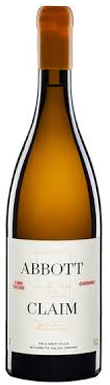

From right next to Drouhin's Roserock site, the vineyard is a massale selection of clones collected over the years by Craig Williams, owner of both...
2021
Abbott ClaimWillamette Valley

Cobb, H Klopp Vineyard Chardonnay, Sonoma Coast, California, USA, 2021
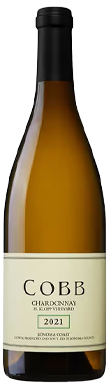
H Klopp is nestled in the foggy lower Sebastopol Hills, on the Goldridge series loam soils, and is dedicated to Chardonnay for the Cobb portfolio....
2021
CobbSonoma Coast
Abbott Claim, Due North Pinot Noir, Willamette Valley, Yamhill-Carlton, Oregon, USA, 2021
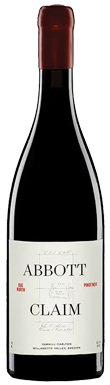
From Pommard clone vines on a north-facing block cooled by a wind that blows through the site; only about 7% whole-cluster fermentation in an oak...
2021
Abbott ClaimWillamette Valley
Cobb, Emmaline Ann Vineyard Pinot Noir, Sonoma Coast, California, USA, 2021
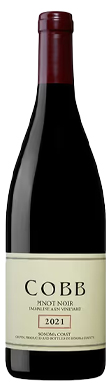
A little more than 1ha at up to 250m, the Emmaline Ann vineyard is surrounded by redwood forest. Made with 40% whole clusters and aged...
2021
CobbSonoma Coast
Avennia, Champoux Vineyard Cabernet Franc, Columbia Valley, Horse Heaven Hills, Washington, USA, 2021
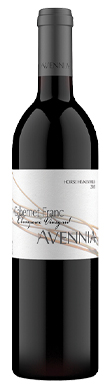
A stellar Cabernet Franc. Gorgeous, effusive aromas of roasted hatch pepper, smoked sea salt, dried violets and candied red fruit. The palate is nicely integrated...
2021
AvenniaColumbia Valley
Liminal, WeatherEye Vineyard Block 47 Cabernet Sauvignon, Columbia Valley, Washington, USA, 2021
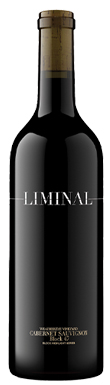
Rich and opulent nose, mineral intensity of crushed basalt, pencil shavings, hot stone and anise mingle with an effusively fragrant note of wild desert sage...
2021
LiminalColumbia Valley
Alma Rosa, Radian Pinot Noir, Santa Barbara County, Santa Rita Hills, California, USA, 2021
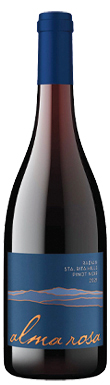
A raucous, superb, saline and mineral Pinot Noir from Radian vineyard's diatomaceous soils, only about 16km from the Pacific ocean. Spicy aromatics with chicory root...
2021
Alma RosaSanta Barbara County
Alma Rosa, Rancho La Viña Pinot Noir, Santa Barbara County, Santa Rita Hills, California, USA, 2021
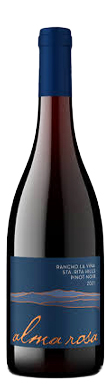
Fruit from two blocks of the Rancho La Viña vineyard. Whimsical aromatics of smoky violets, soy and a tangy black bramble berry fruit finish with...
2021
Alma RosaSanta Barbara County
Avennia, Gravura, Columbia Valley, Washington, USA, 2021
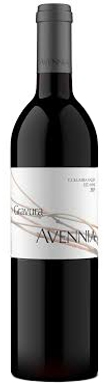
Sophisticated aromatics of violets, rose petals, and smoky hints of frankincense and cloves. The palate is well-knit and poised, and will only evolve further. Thought-provoking,...
2021
AvenniaColumbia Valley
