Vignobles Cruse-Lorenzetti: producer profile & 12 wines tasted
Vignobles Cruse-Lorenzetti may seem to be a new name on the Bordeaux scene, but its classed growth estates are anything but, and the venture's only aim is to further elevate the reputation of its properties.


Vignobles Cruse-Lorenzetti may not immediately spring to mind as a significant player in the world of Bordeaux wines. Yet this newly formed company, officially launched in 2022, includes names which will be very familiar to lovers of wines from the Left Bank.
Scroll down to see tasting notes and scores for 12 Vignobles Cruse-Lorenzetti wines
The new company brings together four estates; St-Estèphe is represented by Château Lilian Ladouys, Cru Bourgeois Exceptionnel, and fourth growth Château Lafon-Rochet. The fifth growth Château Pedesclaux ticks the Pauillac box with Margaux covered by the addition of third growth Château d’Issan.
Vignobles Cruse-Lorenzetti represents a merger of two influential families – one with two centuries of tradition in the region, the other a more recent arrival exuding dynamism (balanced with a healthy interest in rugby).
The former is represented by Emmanuel Cruse, the third-generation proprietor of Château d’Issan, whose grandfather acquired roperty in 1945. Adjoining Château Margaux, Rauzan-Segla and Palmer, there is no doubting the quality of the terroir and potential here, yet this third growth estate has been a bit of a sleeping giant for many years.
D’Issan claims to be one of the two oldest sites in Bordeaux, with wine from the vineyards served at the marriage of Eleanor of Aquitaine and King Henry II of England in 1152. The almost unique clos (one of just four in the Médoc) dates back to the 17th century, with the estate today having 53 hectares in production.

The soil here is marked by gravel outcrops and alluvial hills. The château extended beyond the walls of the clos with the purchase of some old-vine plots in 2020 sitting next to Château Margaux. With the recent expansion, Cabernet Franc, Petit Verdot and Malbec are now being introduced to enhance the blend.
The Lorenzettis have a very different background to that of the Cruse family. Jacky Lorenzetti developed a passion for Bordeaux wines while at college in Lausanne before setting up a highly successful property company.
After marrying Françoise – born in the Gironde from a family of vinegrowers – the new team made its first acquisition, Lilian Ladouys, in 2008. Lorenzetti is a fanatical rugby fan and owner of the famous Racing 92 rugby team based in Paris.
In 2009, the Lorenzettis purchased the fifth growth Pauillac estate Château Pedesclaux. Significant investment was made in the form of a new, gravity-fed winery (opened in 2014) and important studies into the terroir.

The latter project was led by Emmanuel Cruse and identified 19 different soil types within the 52ha estate. As a result, the percentage of Cabernet Sauvignon has been substantially increased at Pedesclaux in recent years – 59% today compared to 43% in 2010 – with the proportion of Merlot reduced.
Pedesclaux was granted organic certification in 2022 and the estate is at the forefront of ecological practices. This is undoubtedly a château to watch, particularly given its lower profile within the classed growths of Pauillac, and less challenging prices.
Having worked together, Lorenzetti acquired a 50% stake in Château d’Issan in 2013. The Lorenzetti family purchased Château Lafon-Rochet in 2021, before the creation of Vignobles Cruse-Lorenzetti in 2022.
The combined estates now comprise over 240ha of vineyards. Lafon-Rochet is now managed by Christophe Congé (ex-Château Lafite Rothschild) with the intention of continuing the environmental and biodiversity approaches championed by previous owners, Guy, Michel and Basile Tesseron.

Cruse and Augustin Lacaille, commerical director for the group, led the masterclass. Lafon-Rochet, Pedesclaux and d’Issan were tasted with the same vintages shown for each château: 2020, 2015, 2014 and 2010.
There were no disappointing wines, with the trio of 2020s in particular hinting at a great future – full of pristine fruit, ripe tannins and lively acidity.
The greatest surprise was the strong showing of 2014 which is often a very underrated vintage. In all three cases, the wines delivered ahead of expectations and represent good value in comparison to 2010, 2016 and 2019.
Perhaps most exciting is the revitalisation of properties such as d’Issan and Pedesclaux, while continuing to build on the great foundations at Lafon-Rochet and Lilian Ladouys (both set to receive organic certification in 2024).
Investment in the winery, respect for the environment, maximising biodiversity and an even greater focus on terroir certainly seems to be delivering in terms of wine quality. These are wines to follow.
See Andy Howard MW’s notes and scores for 12 Vignobles Cruse-Lorenzetti wines:
Wines are listed in score order per estate
Related articles
Bordeaux court convicts suspects in major wine fraud case
Château Branaire-Ducru: producer profile
Bordeaux winemakers protest and seek aid to pull up vines
Château d'Issan, Margaux, 3ème Cru Classé, Bordeaux, France, 2020
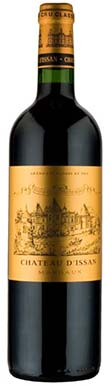

Wonderfully intense on the nose, so ripe and concentrated with some toasted oak aromas. Supple and vibrant on the palate, the fruit is clean and crisp with tannins that are fine but firm, just giving the expression some tension and linearity. Cinnamon and clove edge the bright blackcurrant and black cherry fruit with lovely acidity. This is plush, and firm at the same time, clean and clear, fragrant and ripe. Lots going on here with bitter dark chocolate too. It’s all happening. Needs time to relax but this is wonderfully nuanced and really quite captivating. Grippy and refreshing, leaves a lingering impression.
2020
Château d'IssanMargaux

Château d'Issan, Margaux, 3ème Cru Classé, Bordeaux, France, 2010
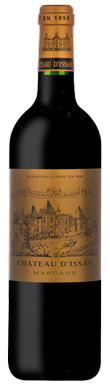
Deep, expressive nose of dark fruits. Full and round, smooth yet filling. Has both weight and a sense of direction, with tannins giving density. Cool, clean fruit provides linearity. Classical, confident and nicely weighted, subtle power from start to finish. Not very layered and a tad dry on the finish, but there's lots to like here.
2010
Château d'IssanMargaux
Château d'Issan, Margaux, 3ème Cru Classé, Bordeaux, France, 2014
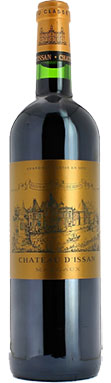
Freshness is the key here, with black cherry and berry fruit, as well as violets on the nose. Filigree tannin and crisp acidity keep the palate lively and refreshing. Still quite a lot of oak on the finish, this would benefit from a few more years ageing. A great success in this cooler, 'maritime' vintage, with a high proportion of Cabernet Sauvignon in the blend. Harvested between 25 September and 15 October.
2014
Château d'IssanMargaux
Château d'Issan, Margaux, 3ème Cru Classé, Bordeaux, France, 2015
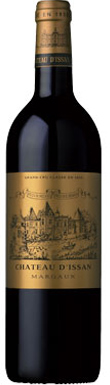
Developed nose, with a touch of brick red on the rim in the glass. Plenty of oak in evidence on a palate which is rather drying. Chunky red fruit, good acidity and ready now. Lacks the more modern style of 2020 and the freshness of 2014. Harvested 21 September to 6 October.
2015
Château d'IssanMargaux
Château Lafon-Rochet, St-Estèphe, 4ème Cru Classé, Bordeaux, France, 2020
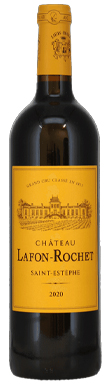
Crafted by former owner Basile Tesseron, the wine has a pleasingly silky, polished and smooth aspect, reflecting irresistible Cabernet-driven graphite and bright red and black fruit. Sheer pleasure! What I like most is the ripe polish without the modern gloss. Enjoy with baked aubergine or roast chicken.
2020
Château Lafon-RochetSt-Estèphe
Château Lafon-Rochet, St-Estèphe, 4ème Cru Classé, Bordeaux, France, 2014
I feel like this is the kind of vintage that really suits Lafon Rochet. It sometimes does not possess the weight of some of its neighbours in richer vintages, but in 2014 it has such a lovely finesse and epitomises the more elegant side of St-Estèphe. Lovely black fruit driven nose with ethereal top notes that give it an extra dimension. This is drinking beautifully now but will continue to improve and evolve for another two decades at least.
2014
Château Lafon-RochetSt-Estèphe
Château Lafon-Rochet, St-Estèphe, 4ème Cru Classé, Bordeaux, France, 2010
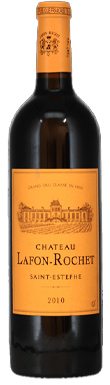
Fragrant and herbal, with blackberry aromas. Plush and fleshy. Fruit and tannins carry the texture and weight, with almost chewy yet cool blueberries, black cherries and blackcurrants. Intensity drops on a focused finish with hints of liquorice, graphite and cola. Has grip and interest; a bigger character than some, with imposing tannins. Elements of dry wood, cinnamon and tobacco on the finish.
2010
Château Lafon-RochetSt-Estèphe
Château Lafon-Rochet, St-Estèphe, 4ème Cru Classé, Bordeaux, France, 2015
Softer, more rounded and complete, this is a generous Lafon-Rochet with a bit less focus on the mid-palate. Plenty of lift, not at all heavy in the mouth. There is a prominent baked fruit character but also enough acidity to balance. Firm tannins and notable oak on the finish. Harvested between 22 September and 9 October.
2015
Château Lafon-RochetSt-Estèphe
Château Pédesclaux, Pauillac, 5ème Cru Classé, Bordeaux, France, 2014
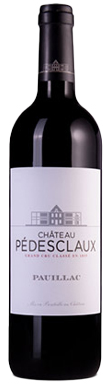
Very good balance between Cabernet and Merlot with violets on the nose. Quite warming and savoury on the palate. Dark berry fruit, weighty in alcohol but a little light in concentration. Good but not outstanding. At the time, 2014 was the hottest summer since 1900. 89% new oak, harvested between 30 September - 17 October. 16 months in barrels, of which 89% were new.
2014
Château PédesclauxPauillac
Château Pédesclaux, Pauillac, 5ème Cru Classé, Bordeaux, France, 2020
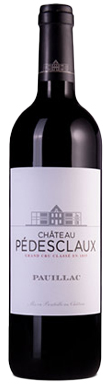
Still very youthful with firm tannin and, seemingly, more evident acidity. Plump fruit notes but with a distinct mineral thread and some leafy tannin. Needs a year or two, but lots of promise with attractive red, Merlot fruit at the fore. Marked by an extremely hot August, the quality of the Merlot was very high. Harvested between 14 - 29 September. 16 months in oak, 60% new, 3.88pH. 34% Merlot utilised in the blend.
2020
Château PédesclauxPauillac
Château Pédesclaux, Pauillac, 5ème Cru Classé, Bordeaux, France, 2015
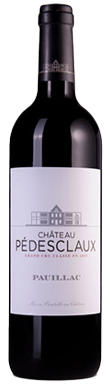
Much more restrained and tighter on the nose than 2014, with concentration and leafy blackcurrant/blueberry fruit. Decidedly more Pauillac in character with fine tannin and an alluring, spice-driven finish. Harvest 18 September - 3 October. 14 months in oak with 50% new, this marked the first appearance of the estate's Petit Verdot (6%).
2015
Château PédesclauxPauillac
Château Pédesclaux, Pauillac, 5ème Cru Classé, Bordeaux, France, 2010
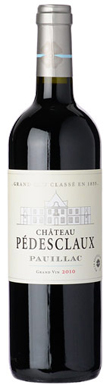
Lacks the density, concentration and precision of more recent vintages, with a broader, weighty style and a hint of green on the edge. Tannins are a little strident and grippy. A more old-fashioned Pauillac. Harvested between 18 September and 3 October.
2010
Château PédesclauxPauillac
