Walls: A Côte-Rôtie with a Burgundian flourish
In a region that will continue to suffer from rising alcohol levels as a result of a warming climate, one winemaker is adjusting both viticultural and winemaking practices to bring them down, with startling results, ‘somewhere between Burgundy’s Morey-St-Denis and Côte-Rôtie,’ says Matt Walls.


Tall and slim, with bright, expressive eyes, Julien Barge has something of the mad scientist about him. His family has lived in the same street in Ampuis for 200 years, but the impression of permanence this offers is illusory. This is a Côte-Rôtie estate in constant evolution.
Julien took over from his father Gilles in 2019, and immediately made significant modifications to the way the estate worked. After converting the estate to organic viticulture in 2018 – still relatively uncommon in Côte-Rôtie – Julien decided to address the rising alcohol levels brought on by a warming climate.
Scroll down for tasting notes and scores for 15 Domaine Barge wines
A novel method
His method is simple but effective – it’s basically a late green harvest.
Green harvesting is when a winemaker cuts off and discards a proportion of the baby bunches from his vines before they’ve fully ripened, around the time they change colour from green to purple. The aim is to concentrate ripening in the bunches that remain.
Yet what Julien has been doing for the past few vintages is slightly different; he waits longer, until just four weeks before picking, to perform a green harvest. Sugars build up as normal during ripening and are shared between bunches.
Some of the partly-ripened bunches are then snipped off and discarded – thereby disposing of some of the sugars that would have ended up in the juice.
In the last four weeks before picking, Julien says that grapes generate sugars more slowly, so when he finally picks the grapes, they have lower potential alcohol – around 12%.
He first tried this method with the 2021 vintage, and since then, ‘it’s become a vision,’ says Julien, ‘something we’re confident in’.
Getting technical – an updated process in the cellar
Barge has made some complementary changes in the cellar to accommodate this new approach. Before 2021, his wines were made using whole bunches, but he’s had to reduce the number of stems he uses to find a new balance, and now uses around 50%.
His ferments are much shorter than they once were, now just 12-18 days. He no longer opts for a cold maceration before fermentation; ‘it’s not interesting, because there’s no life activity,’ he says – in other words, no living organisms like yeast working on the juice.
He ferments with a submerged cap, and doesn’t use temperature control. Then he ages the wines in small foudres – made by the highly-respected Stockinger cooperage – for two years.
An original style
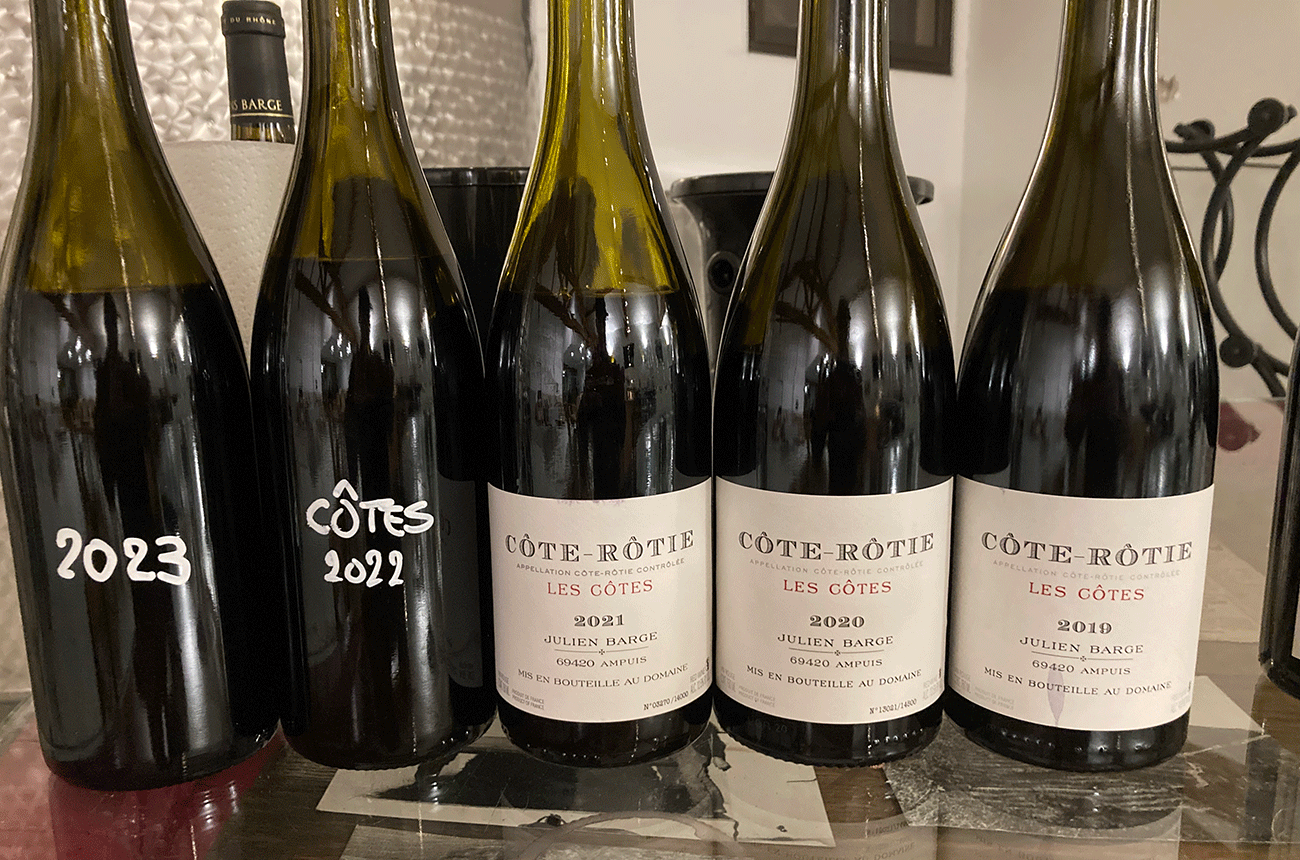
The lower alcohol levels aren’t the only way in which the wines have changed – there is a marked stylistic change here between the richer, riper wines of 2020 and before, and the finer, more delicate Côte-Rôties of 2021 and after.
Though delicious expressions of Côte-Rôtie, the alcohol is perceptible in his 2019 and 2020 Les Côtes. They are rich, velvety and potent.
From 2021 onwards, they are more fragrant, displaying an abundance of herbs and flowers. They are noticeably lighter in alcohol – and therefore body – with stricter acidity and less fruit sweetness.
Julien has stepped back from the increasingly ripe, powerful Côte-Rôties that have proliferated since 2015 – and you really feel the difference. ‘It’s a risk,’ he says. ‘When I believe in something, I just do it.’
These taste like Côte-Rôties from an earlier era; savoury and ethereal, somewhere between Burgundy’s Morey-St-Denis and Côte-Rôtie. When matching with food, it might be better to think about what works with Pinot Noir rather than Syrah.
History of invention
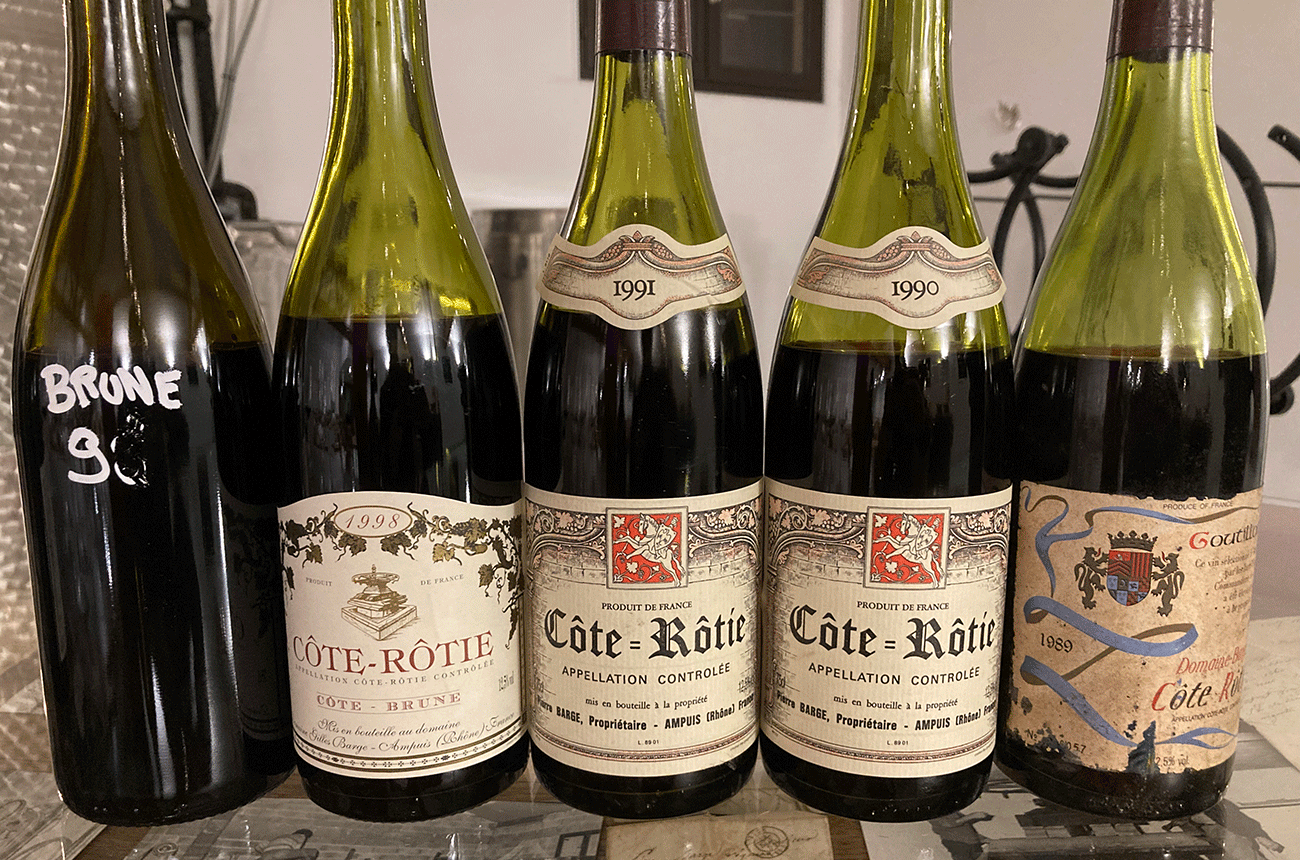
Julien isn’t the first Barge to affect change in Côte-Rôtie. One of his forefathers, Pierre Barge, was one of the founding members of the popular Marché aux Vins d’Ampuis wine fair that still runs today.
The family first started bottling its wines as far back as 1929. His father Gilles even installed a mini rack railway in one of their steeper vineyards to help bring the grapes in at harvest.
So it’s no surprise to see this estate continuing to evolve and innovate in the face of climate change.
This new direction has produced elegant and complex wines, but with less concentration, alcohol and richness. These are all elements that can help sustain a wine over time. So some uncertainty remains over the longevity of these new wines.
Julien’s Les Côtes 2021 is particularly lean – but it was a difficult, frosted vintage for everyone. In Les Côtes 2022, the technique feels more mastered. As alcohol levels continue to rise in the region, the eyes of an appellation will be watching to see where this experiment takes him.
Domaine Barge wines to try
Wines are listed by vintage youngest to oldest
Related articles
- A most curious variety: Roussanne around the world
- Walls: A vertical of a great Cornas cuvée
- Walls: Chasing freshness in Ventoux
Domaine Barge, Le Combard, Côte-Rôtie, Rhône, France, 2023

Quite closed for now, with a deep savouriness that evolves into menthol and rose with air. This has width and breadth but is fairly light in body. The acidity is really quite marked, and the tannins are fine. The alcohol doesn't feel particularly low, it doesn't lack generosity, but it's still on the lean side, almost Burgundian. Enjoyably fresh, with fine but grippy tannins. An unusual style, that's best described as lean, savoury, gently herbal and serious. It doesn't have the sweetness of fruit that has become common in Côte-Rôtie, and for that reason it feels curiously old-fashioned. Should age with interest, but will also drink young. 50% destemmed. This had only been in barrel for three weeks at the time of tasting, so an early barrel sample, and the score is to be taken as a rough guide only.
2023
Domaine BargeCôte-Rôtie

Domaine Barge, Les Côtes, Côte-Rôtie, Rhône, France, 2022
Aromas of flinty graphite, violet and rose, with some herbal notes, like thyme. Light-bodied with light extraction and very fine tannins. It’s really quite feathery, but has good intensity nonetheless, and a saline finish. Delicate for a 2022, but it has good length. Very Burgundian, between Morey-St-Denis and Côte-Rôtie. You'd have to pair this carefully with food, lighter dishes with subtle flavouring. 50% destemmed. Les Côtes is a blend of different parcels: Côte Blonde, Le Combard, Lancement and Côte Brune. Bottled the day before tasting.
2022
Domaine BargeCôte-Rôtie
Domaine Barge, Les Côtes, Côte-Rôtie, Rhône, France, 2021
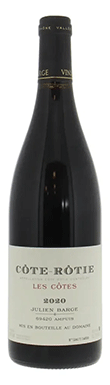
Really quite closed, showing just subtle hints of flowers and alpine herbs. This needs a little time to open up. It’s certainly fresh, with good acidity and fine pixelated tannins. But it’s very delicate. 50% destemmed. Les Côtes is a blend of different parcels: Côte Blonde, Le Combard, Lancement and Côte Brune.
2021
Domaine BargeCôte-Rôtie
Domaine Barge, Les Côtes, Côte-Rôtie, Rhône, France, 2020
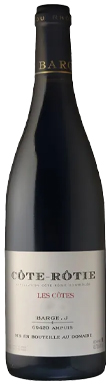
A fresh nose before a plump, juicy expression on the palate. The alcohol is just a little on the high side, but this is nonetheless very appealing, generous, ripe and expressive.
2020
Domaine BargeCôte-Rôtie
Domaine Barge, Les Côtes, Côte-Rôtie, Rhône, France, 2019
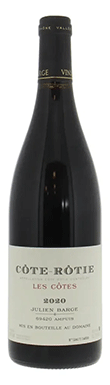
Lovely violet-scented style, very pure and gentle on the palate, rich and velvety. The alcohol is a little warming however. Needs to be tempered with some rich, flavoursome dishes. Les Côtes is a blend of different parcels: Côte Blonde, Le Combard, Lancement and Côte Brune.
2019
Domaine BargeCôte-Rôtie
Domaine Barge, Cuvée du Plessy, Côte-Rôtie, Rhône, France, 2015
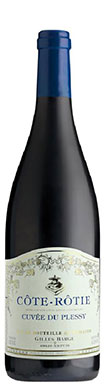
Meaty, deep and fruity, this is intense and opening up. It’s full-bodied, concentrated, and young. Some little gamey notes are coming through, and the tannins are quite bold still. There’s a ferrous note, a tinge of blood. Just a bit lacking in focus and definition, the tannins are quite furry, but there's lots to enjoy here
2015
Domaine BargeCôte-Rôtie
Domaine Barge, Le Combard, Côte-Rôtie, Rhône, France, 2014
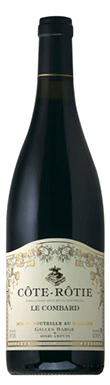
Gorgeous nose, incredibly open and aromatic, with notes of oregano, pink peppercorns and rose. Light-bodied and very fresh, this has light concentration but is so joyful and fine. Not hugely long, but so delicate and expressive. Drink now, but there’s no huge hurry.
2014
Domaine BargeCôte-Rôtie
Domaine Barge, Cuvée du Plessy, Côte-Rôtie, Rhône, France, 2009
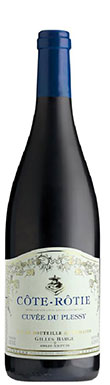
Smoky, sappy and juicy, with raspberry and blackberry notes. Open and expressive. This really has everything you could look for in a mature Côte-Rôtie, with no excess oak or green notes. Very long and satisfying. Lovely wood smoke notes throughout. Perfectly balanced.
2009
Domaine BargeCôte-Rôtie
Domaine Barge, Le Combard, Côte-Rôtie, Rhône, France, 2008
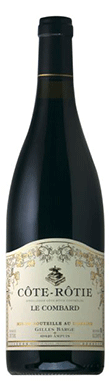
Quite gamey and animal in style, which dominates the fruit somewhat. There’s high acidity, and it’s quite thin on the palate. Some raspberry fruit remains, but after 16 years it's time to drink up.
2008
Domaine BargeCôte-Rôtie
Domaine Barge, Le Combard, Côte-Rôtie, Rhône, France, 2007
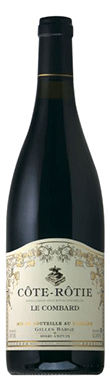
The whole-bunch fermentation has given this wine amazing floral characteristics, with dried rose coming through now. Fairly light in body, with lovely freshness, and a saline finish. Smoky thyme, still quite grippy tannins, and good energy.
2007
Domaine BargeCôte-Rôtie
Domaine Barge, Côte Brune, Côte-Rôtie, Rhône, France, 1999
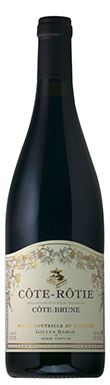
Really quite earthy, with some tarry and balsamic notes. A touch of paprika and fresh soil on the palate. Very dry, deeply savoury, with good acidity and surprisingly grippy tannins.
1999
Domaine BargeCôte-Rôtie
Domaine Barge, Côte Brune, Côte-Rôtie, Rhône, France, 1998
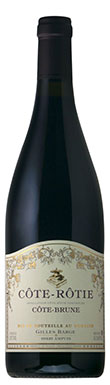
Going strong at 26 years old, with gorgeous rose petals on the nose. Still with a lovely smoothness on the palate, gently sweet fruit and succulent gentle tannins. So fresh and light, but with great intensity. Tingles with subtle acidity, with a very long finish. Really exceptional, still expressive, delicious and harmonious.
1998
Domaine BargeCôte-Rôtie
Domaine Barge, Côte-Rôtie, Rhône, France, 1991
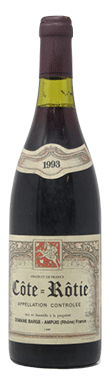
All about smoke and spices now. Curry leaf and sage. Still amazingly harmonious, with a touch of rose and bitter orange. Into its third phase of maturity now, as the fruit drops away, but it's far from dead, though its voice is quieter now. Time to drink up, but amazing how fresh and lovely this still is.
1991
Domaine BargeCôte-Rôtie
Domaine Barge, Côte-Rôtie, Rhône, France, 1990
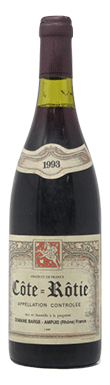
Soft now, satin textured, beginning to drop away. Good acidity, with a whiff of roasted spices rising up, and remaining into the length. Still charming, though beginning to fade.
1990
Domaine BargeCôte-Rôtie
Domaine Barge, Goutillonnage, Côte-Rôtie, Rhône, France, 1989
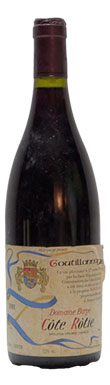
Amazingly deep colour still. Flavours are starting to fade a little, though still has a remarkably fresh finish, with good acidity. Old leather, old books, there's a touch of the antique shop about the flavours here, and with dried rose and leaf tea.
1989
Domaine BargeCôte-Rôtie
