
Walls: Brézème and Seyssuel – sleeping beauties of the Northern Rhône
Beyond the big-name appellations in the Rhône are a number of smaller, previously dormant areas that are starting to make a name for themselves once more. In the north, Brézème and Seyssuel are shining examples to look out for.


By 1965, the vineyards of Condrieu had largely been abandoned – phylloxera and two world wars had decimated the place and its people. There were just 8ha of vines remaining on these granite slopes.
If it weren’t for the hard work of a few steadfast vignerons, the appellation might have disappeared entirely, reclaimed by the forest. Thankfully, Condrieu survived and has since flourished – but great appellations have been lost before.
We know this because some have recently been rediscovered. In fact, there are two very special terroirs at either end of the northern Rhône that are gradually returning to their former glory.
These aren’t the only appellations making a comeback, but for now, Brézème to the south and Seyssuel to the north are the ones you need to know about. Their renaissance has begun.
Scroll down for tasting notes and scores for Matt Walls’ top Brézème and Seyssuel wines

Brézème
It wasn’t until Yves Mengin had retired from his accountancy role and moved to the village of Livron-sur-Drôme in the early 1990s that he first saw the hill of Brézème.
A lifelong wine lover, it was immediately clear that, despite its overgrown state, this south-facing slope had magnificent potential. Establishing a vineyard wasn’t his original retirement plan, but, ‘I saw the abandoned hill,’ he says, ‘and I thought – why not me?’
Clambering up the slope, he found old stone terraces from previous vineyards, but the terrain was completely overgrown. It took him four years to clear the ground, rebuild the walls and replant vines.
He named his estate Domaine des Quatre Cerises after the wild cherry trees he tore out to create his vineyard, and in tribute to his four children.
His first vintage was 1998. Mengin was by no means the first to recognise Brézème’s potential. Written references to its wines date back to 1422, and by 1813 there were 40ha of vineyards.
By 1827, wine prices were approaching those of Hermitage. When phylloxera ravaged the Rhône vineyards towards the end of the 19th century, Hermitage was replanted fairly rapidly. Brézème took longer to bounce back. It was only in the 1940s that a few rows of vines were replanted by the Pouchoulin family, followed by Mengin and others.

Points of difference
When it comes to comparisons with Hermitage, it doesn’t stop at prices; the terroir itself bears some similarities, albeit on a smaller scale.
Brézème is a long hill that stands proudly alone on the east bank of the Rhône. Its western flank rises to 256m, then gradually tapers down to the east.
Unlike Hermitage however, the river that flows at its foot isn’t the Rhône itself but the Drôme, a blue-green tributary that flows down from the foothills of the Alps.
Another difference is that there is no granite here; the hill of Brézème mostly comprises clay limestone and alluvial deposits from the Rhône and the Drôme. Grape varieties, however, are largely the same: the reds are made from Syrah, the whites mostly from Marsanne and Roussanne, joined here by Viognier.
Not that there’s anything stopping local growers from planting any of the 23 varieties allowed in the Côtes du Rhône rulebook. It’s something of a historical anomaly, but even though growers here can use the name Brézème on their labels, the land is only graded AP Côtes du Rhône.
They’re hoping that the powers that be will promote Brézème to the same level as crus such as Cornas and St-Joseph, but the process takes years, if not decades, and there is little sign of any imminent changes.
Mengin says the current situation is illogical and that being promoted would give this terroir the recognition and visibility he thinks it deserves.
Standing proud
He’s right: it does deserve it. Though there is some diversity in the reds and particularly the whites of Brézème, there is a stylistic thread that runs through them, and some of these wines are thrillingly good.
What unites them is a sense of energy, tension and rising freshness. Aromatically I often find a subtle spicy char and a touch of menthol in the reds. They are only medium bodied, but have remarkable intensity.
If compared with neighbouring appellations, they bear some similarity to St-Joseph, particularly those that hail from the central section around St-Jean-de-Muzols. But Brézème is a distinct part of the northern Rhône region with its own style; the terroir these wines originate from may be more to the south, but the wines are brisk and light in alcohol.
The whites, although less common, can be just as good. They have a broader range than the reds, from tense and vibrant to full-bodied and lush. I’ve tasted older wines of both colours dating back to the 1990s that prove their ability to develop and improve in bottle.
Today, there are eight producers bottling Brézème. Those of particular interest are Domaine des Quatre Cerises, Domaine Martin Texier, Domaine Lombard (although this is currently being restructured) and Domaine Charles Helfenbein, along with Domaine de Bréseyme not far behind.

Texier and Helfenbein are two winemakers exploring another forgotten terroir. St-Julien-en-St-Alban is at the same latitude as Brézème, but on the other side of the Rhône, and represents the meeting point of the limestone of the Ardèche and the granite of the Massif Central.
Along with the classic grapes of the northern Rhône, there’s some Grenache and Clairette planted here, too. While not yet as exciting as Brézème, it’s another promising new development to keep an eye on.
Seyssuel
While Brézème is at the very south of the northern Rhône, Seyssuel is at the region’s northern frontier. Its rediscovery is more recent than Brézème’s, but its history stretches back even further.
The city of Vienne is just a stone’s throw north of Côte-Rôtie, sitting on the opposite bank of the Rhône river. It was the capital of the Allobroges, a Gallic tribe who were famed for the quality of their wine as far back as Roman times, when it was praised by Pliny the Elder.
By the 19th century there were 100ha of vines planted, and by 1883, wine was the main source of revenue for the town. But shortly after this, it suffered the same fate as Brézème, its vineyards razed by phylloxera.
In the early 1990s, local winemaker Pierre Gaillard happened to be leafing through the works of French agronomist Olivier de Serres (1539-1619), in which de Serres compares the wines of Vienne favourably to Côte-Rôtie. Gaillard spoke to two winemaking friends, François Villard and Yves Cuilleron, about the possibility of replanting some vines there.
‘It was just curiosity to start with,’ says Gaillard, ‘throwing ourselves into the archives.’ In 1996, the trio bought a south-facing piece of land from a local sheep farmer and planted a hectare of Syrah, naming their new venture Les Vins de Vienne.
On tasting their first wine, they realised their gamble had paid off. Since then, they have been joined by more than 20 other vignerons who are equally hungry for a slice of this rediscovered terroir.
Quality is high across the board, but other names to look out for are Christophe Billon, Christophe Pichon, Domaine Bott, Domaine Eymin-Tichoux, Domaine Garon, Hervé et Nathalie Avallet, Julien Pilon, Lucidi et Chapoutier, Pierre-Jean Villa and Stéphane Ogier.

Seeking recognition
In 2016, Graeme and Julie Bott of Domaine Bott planted 3ha of Syrah in Seyssuel, which Graeme describes as ‘a seriously amazing mica-schist terroir’.
In much of this proto-appellation, the soils are very similar to those found in the northern part of Côte-Rôtie. He points out that Seyssuel is a slightly warmer terroir, however; Côte-Rôtie faces southeast, whereas Seyssuel faces southwest, catching the afternoon sun.
I say ‘proto-appellation’, because for now this stretch of land lies within the huge IGP Collines Rhodaniennes, and that is the only official designation that they are allowed to use.
Similar to the winemakers of Brézème, those of Seyssuel are lobbying for this specific terroir to be given its own appellation. And they’re doing all the right things. IGP rules give producers huge leeway when it comes to choice of grapes and production methods, but here they’re sticking rigidly to Syrah for reds and Viognier for whites, and striving for the best possible quality.

A working group has demarcated areas within three communes (Chasse-sur-Rhône, Seyssuel and Vienne) that they believe best represent the spirit of Seyssuel. The result is wines of a consistently high quality and an identifiable style and sense of place.
For now, it’s an appellation in all but name, and they’re hoping for some good news from the appellation authorities in the next year or two.
From the 50ha now planted, about 80% of the wines are red. The quality is definitely a distinct step up from a typical IGP Collines Rhodaniennes, and wines are stylistically similar to Côte-Rôtie in some respects. These are pure, elegant Syrahs which have seamlessly fine tannins, often with fresh raspberry and blackberry aromas and a piquant raspberry acidity.
Most of the vineyard area has been planted very recently; there are no old vines here. This might explain the lack of depth and complexity compared with the finest Côte-Rôtie. For Julie Bott, however, vine age isn’t a big issue – she argues that young vines on good terroir make better wines than old vines on less favoured sites. And as the vines age, the quality here will only improve.
The price factor
The majority of planting might be red, but Seyssuel can produce whites that are just as impressive. The Viogniers from Seyssuel would be hard to tell apart from most Condrieu in a blind tasting, and have a similar stylistic spread.
The slight sticking point for me is the price. If the best IGP Collines Rhodaniennes are priced at about £20, perhaps a price of £30-£40 for a Seyssuel is fair. But at this price, they’re up against some exceptional St-Josephs and even some Condrieu and Côte-Rôtie. For me, there are many Seyssuel wines that feel correctly priced at the lower end of this range, although not so many at the top.
But this is a new terroir with a fascinating history, and no doubt lovers of the northern Rhône will make up their own minds about value.

It transpires that Seyssuel is just one of many terroirs in the Isère department destroyed by phylloxera. As you travel east towards the Alps, several other small terroirs are coming back to life.
François Villard is in the process of buying 3ha in La Côte-St-André, a south-facing limestone slope about 40km east of Condrieu, where he plans to plant northern Rhône varieties along with Alpine grapes Verdesse, Persan, Mondeuse and Etraire de la Dui.
Will the wines ever rival the more famous names of the Rhône? With Villard’s track record, I wouldn’t bet against him.
See tasting notes and scores for Matt’s picks of Brézème and Seyssuel wines:
Wines are in order white then red by score with the first six from Brézème and the second six from Seyssuel
Related content:
Walls: My top 10 Rhône wines of 2021
Rhône 2020 En Primeur: full vintage report and top-scoring wines
Walls’ hidden gems: Clos de la Bonnette, Condrieu
Domaine des Quatre Cerises, Blanc, Côtes du Rhône, Brézème, Rhône, France, 2019
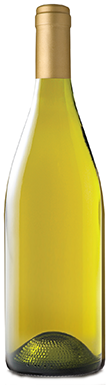

Still very young, this Marsanne-Roussanne-Viognier blend is more about texture and structure than exuberant flavour for now. It has a pleasing freshness and is light-bodied...
2019
Domaine des Quatre CerisesCôtes du Rhône

Domaine de Bréseyme, Côtes du Rhône, Brézème, Rhône, France, 2018
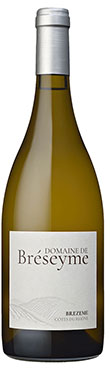
There's orange blossom and subtle lime. The oak is bold but well integrated and lends a little cashew and silkiness to the palate, as well...
2018
Domaine de BréseymeCôtes du Rhône
Domaine des Quatre Cerises, Côtes du Rhône, Brézème, Rhône, France, 2020
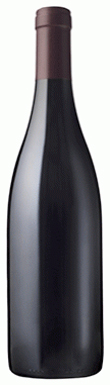
Enticing smoky char – from the terroir, not oak. A savoury nose, reminiscent of a good St-Joseph. Light- to medium-bodied, this has a thrilling impact,...
2020
Domaine des Quatre CerisesCôtes du Rhône
Martin Texier, Vigne de la Carrière, Côtes du Rhône, Brézème, Rhône, France, 2018
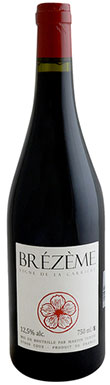
This unfiltered wine has a complex nose, with a touch of dried meat and a little struck flint. Full-bodied, but not heavy, it is soft...
2018
Martin TexierCôtes du Rhône
Domaine Lombard, Brézème Rouge, Côtes du Rhône, Brézème, Rhône, France, 2020
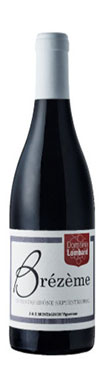
Intense violets and liquorice, very fresh and aromatic, with blueberries and a touch of lavender. Medium-bodied, this has some satisfying weight on the palate. The...
2020
Domaine LombardCôtes du Rhône
Charles Helfenbein, Brézème, Côtes du Rhône, Brézème, Rhône, France, 2018
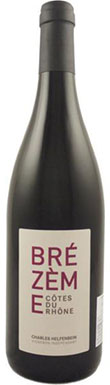
This is a soft and juicy style of Brézème, with some cinnamon and orange peel underneath the plummy black fruits. It has a nice weight...
2018
Charles HelfenbeinCôtes du Rhône
Domaine Pierre-Jean Villa, Esprit d'Antan Seyssuel, Collines Rhodaniennes, Rhône, France, 2019
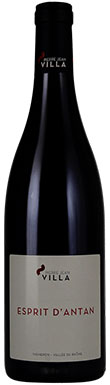
Pierre-Jean Villa was an early pioneer of Seyssuel, and his Esprit d'Antan white is just as good as his red of the same name. It...
2019
Domaine Pierre-Jean VillaCollines Rhodaniennes
Pierre Gaillard, Asiaticus Seyssuel, Collines Rhodaniennes, Rhône, France, 2019
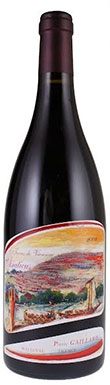
Displays the roasted spices on the nose that are so characteristic of this cuvée: cardamom, cumin, hot sand. Medium- to full-bodied, it has presence and...
2019
Pierre GaillardCollines Rhodaniennes
Yves Cuilleron, Ripa Sinistra Seyssuel, Collines Rhodaniennes, Rhône, France, 2018
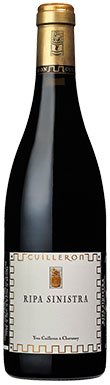
Has depth and intensity on the nose, with pure blackberry fruit and blackberry sauce – almost plum sauce. More concentrated than most Seyssuels, but it...
2018
Yves CuilleronCollines Rhodaniennes
Stéphane Ogier, L'Ame Soeur, Collines Rhodaniennes, Rhône, France, 2018
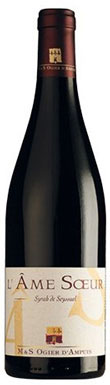
I love the nose – blueberries and lilies in a vivid floral display; the 4% Viognier really works well. It has concentration and weight on...
2018
Stéphane OgierCollines Rhodaniennes
Domaine Bott, Kamaka Seyssuel, Collines Rhodaniennes, Rhône, France, 2019
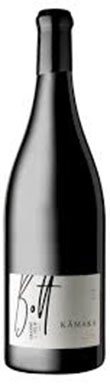
There's a good sense of purity, with aromas of liquorice, graphite and blackberry. Medium-bodied, not overly ripe. A well-balanced and elegant 2019 Seyssuel with a...
2019
Domaine BottCollines Rhodaniennes
François Villard, Seul en Scene Seyssuel, Collines Rhodaniennes, Rhône, France, 2018
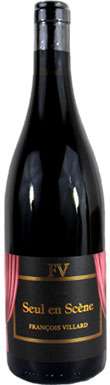
Gives off a deep, intense cloud of Syrah spice. There's a pronounced stemmy element here. Fuller in body than a typical Seyssuel, with gently warming...
2018
François VillardCollines Rhodaniennes
