
Walls’ hidden gems: Domaine La Ferme St-Martin, Beaumes de Venise
In a remote corner of the southern Rhône, where temperatures are rising and traditional varieties are struggling, Matt Walls finds a forward-thinking winemaker crafting authentic, weightless wines at incredible value.


Onwards, upwards. The roads get narrower, the corners get tighter. I step out of the car when I finally reach the winery and the air is so much fresher here. I go to take a sip from my water bottle and a gust of wind makes it whistle.
I stand with Thomas Jullien and we look over the vineyards. It’s not yet spring, and the vines look little more than sticks.
‘It’s a lunar landscape at the moment,’ he says, as a friend’s flock of 300 sheep has just passed through to graze on every scrap of green between the rows.
Thomas is something of a mountain goat himself; wiry, energetic and youthful but whiskery.
The town of Beaumes de Venise gives its name to two appellations. Muscat de Beaumes de Venise is made at the foot of the mountain, but Beaumes de Venise tout court refers to the dry red wines made higher up – this is where Domaine La Ferme St-Martin can be found.
Scroll down for notes and scores for 11 Domaine La Ferme St-Martin wines

With panoramic views like the one above, you can see why Thomas’ grandfather, Aimé Jullien, first bought this farm with his wife Yvonne back in 1955. They must have felt proud and optimistic, surveying their orchards of cherry trees, apricot trees, olive trees, and vines.
That winter, a devastating frost killed all their trees and vines.
To replant the fruit trees, they would have had to wait 10-15 years for a crop. The other option was to replant the entire estate with vines, which take just three or four years to produce. Financially speaking, there was no real decision to make.
In 1980, Thomas’ father Guy joined the estate aged just 20, and it was he who took the estate down a more non-interventionist path, starting by working organically. Thomas joined in 2005, and they worked together until Thomas and his wife Sophie took over fully in 2020.
Adapting to the heat
It might be cooler up here, but like everywhere else, it’s hotting up. ‘Vignerons must adapt,’ says Thomas, and his response is to plant late-ripening varieties with low potential alcohol, such as Counoise, Terret Noir, Aramon, Piquepoul Noir, Piquepoul Blanc and Carignan Blanc.
Of Terret Noir, he says ‘they’re the grapes I like to eat; crunchy, fresh, with a fine skin and lots of personality.’ It ripens three weeks later than Grenache, but with the same acidity, and at much lower alcohol levels. He’s also a big fan of Counoise, which is ‘spicier, with good colour, and is very resilient.’
The result is that his main red cuvée, Terres Jaunes, now typically comes in at 13.5% alcohol, instead of the 14.5% it did before.
He recognises that Grenache is ‘the greatest grape we have in the Rhône Valley, but we need other things’. As for Syrah, the prospect is daunting: ‘in parts of the southern Rhône, in 10 years it will be finished.’

Creating a ‘transparent, authentic and drinkable style’
He doesn’t use synthetic products in the vineyard or the winery; he doesn’t add cultured yeasts, tartaric acid, or even water. Some cuvées get small doses of sulphur at bottling, others don’t; he says he sometimes prefers those with, rather than without.
‘That’s what interests me, making a wine that is enjoyed as much by the natural wine lover as someone who buys wine from the supermarket.’
The way he works in the cellar helps to channel this transparent, authentic and drinkable style throughout his range – gentle extraction, limited use of oak, and filtering only the bottom section of his tanks.
Thomas has also introduced a négociant range, identifiable by the stick man on the labels. His thoughtful approach is carried through to these wines too. He buys only organic, hand-picked grapes, grown from the same plots each year, all of which are less than 1.5km from his winery, and he makes these wines without artificial products.
Like the rest of his wines, they display great winemaking proficiency, and are designed above all to be drunk.
That said, it’s his Beaumes de Venise reds that make the most profound impression. All are worth buying, and most are under £20 a bottle. They are undeniably Rhône, but Thomas somehow makes weightless wines from this other-worldly terroir.
Matt Walls’ notes and scores for 11 Domaine La Ferme St-Martin wines:
Related content:
Walls’ hidden gems: Mas de Libian, Ardèche
Walls: Tavel and its unexpected revolution
Lilian Bérillon: vine supplier to the stars
Domaine La Ferme St-Martin, Austral, Côtes du Rhône, Rhône, France, 2020
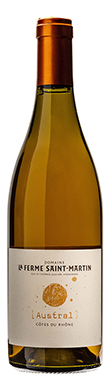

Copper-tinged in the glass, there’s dried orange peel and a touch of heather honey. Honeydew melon on the palate. Medium- to full-bodied in style, with...
2020
Domaine La Ferme St-MartinCôtes du Rhône

Domaine La Ferme St-Martin, Costancia, Beaumes de Venise, Rhône, France, 2020
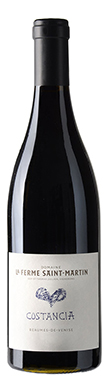
I love the rising freshness in this wine, you really get the sense of altitude from the aerial, perfumed red fruit aromas. Light and fresh...
2020
Domaine La Ferme St-MartinBeaumes de Venise
Domaine La Ferme St-Martin, St-Martin, Beaumes de Venise, Rhône, France, 2018
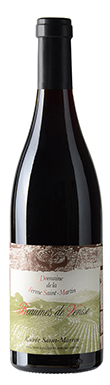
More vinosity and depth of aroma, with a touch of blackberry eau-de-vie. Lovely herbal scents: thyme, rosemary, green olive. Not heavy. Rounded, medium- to full-bodied....
2018
Domaine La Ferme St-MartinBeaumes de Venise
Domaine La Ferme St-Martin, Carlina, Côtes du Rhône, Rhône, France, 2020
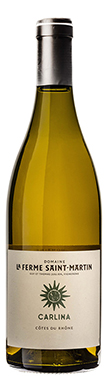
Soft, easy-going, juicy and expressive. Not excessively full, this is very well balanced, with good acidity and a little mineral nip on the finish. Fresh...
2020
Domaine La Ferme St-MartinCôtes du Rhône
Domaine La Ferme St-Martin, Sur Le Nuage, Ventoux, Rhône, France, 2021
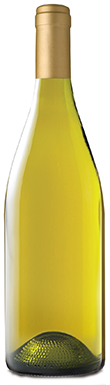
Copper tinge to the colour. On the nose there's quince, honeyed pear, saffron, and a touch of positive oxidation. It’s medium-bodied and rounded but not...
2021
Domaine La Ferme St-MartinVentoux
Domaine La Ferme St-Martin, Terres Jaunes, Beaumes de Venise, Rhône, France, 2020
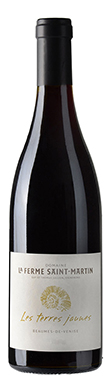
Ruby coloured, not opaque, and brightly tinted. Certainly fuller, rounder and concentrated than this producer’s Ventoux wines. Perfect balance, with lovely bright acidity and a...
2020
Domaine La Ferme St-MartinBeaumes de Venise
Domaine La Ferme St-Martin, Sur Le Caillou, Ventoux, Rhône, France, 2020
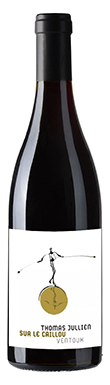
Expressive and enticing nose, plenty of juicy fruit, but no heaviness or major extraction. Well balanced acidity and alcohol - quite low in fact for...
2020
Domaine La Ferme St-MartinVentoux
Domaine La Ferme St-Martin, La Gérine, Ventoux, Rhône, France, 2020
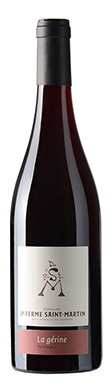
Pale purple colour. Cranberry and plum, with a touch of spice on the mid-palate. Some volume and tension, a touch of welcome tannin neatens up...
2020
Domaine La Ferme St-MartinVentoux
Domaine La Ferme St-Martin, Les Romanins, Côtes du Rhône, Rhône, France, 2020
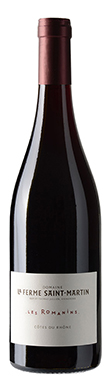
Towards the reductive side, with black and red cherry. A light-bodied, juicy, fruity style with a cranberry finish. Good sense of energy and freshness, no...
2020
Domaine La Ferme St-MartinCôtes du Rhône
Domaine La Ferme St-Martin, Sur La Rose, Ventoux, Rhône, France, 2021
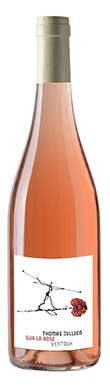
Bubblegum pink in colour. Attractive, bright, subtle red-fruited aroma - no unwelcome banana aromas. Easy-drinking and well balanced. A straightforward early-drinking rose, but one with...
2021
Domaine La Ferme St-MartinVentoux
Domaine La Ferme St-Martin, Sur Le Fil, Ventoux, Rhône, France, 2021
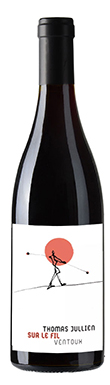
Pale purple in colour. Zesty, crunchy berries and bright acidity. ‘Glou glou’ in style, but there's some substance and local character here.
2021
Domaine La Ferme St-MartinVentoux
