Walls: The importance of drinking windows over scores
Scores are the obvious shorthand when it comes to choosing wine. However, Matt Walls argues the drink to and from dates are the numbers that really matter.


When choosing a wine, consulting tasting notes can offer some valuable insight. We can all be guilty of just scanning for scores, but when picking a wine to drink now, there’s a more important number to look at – the ‘drink from’ date.
A question of pleasure
When I visited Jean-Louis Chave last October I was lucky enough to taste something very special: his 2020 Cuvée Cathelin. It’s a Hermitage bottling he makes only in the best years. I also tasted a mature vintage of his classic Hermitage, the 2001, a less vaunted year.
Which was better? No question – the 2020 Cuvée Cathelin. Which would I like to drink? That’s easy – the 2001 classic Hermitage.
Scroll down to see notes and scores (and drinking windows) for 10 wines that are ready to drink now
The Cuvée Cathelin was a beautiful combination of density and finesse. You could see its potential, but tasting the wine offered no hedonistic delight. Professionally it was fascinating, a valuable insight into the vintage, the place and the quality of the wine. But it didn’t offer any pleasure – not yet.
It might come from an inferior vintage, but the 2001 Hermitage was aromatically explosive, texturally harmonious and still fresh. It had taken on all the unmistakable gamey, smoky markers of an authentic Hermitage, with layers of thrilling complexity. It was just a mouthful in a dark cellar, but it was a moment of sheer pleasure – because the wine was open and ready to drink.
Inconvenient truths
‘Sauvignon Blanc with steak? It’s not wrong if you like it!’ the populists proclaim. Just as they say that there’s no wrong time to drink a bottle of wine. Demystifying wine is a noble aim, but oversimplification doesn’t help anyone.
It’s undeniable that all wines have a lifespan – whether it’s two, 20 or 200 years. And different types of wine simply taste better at certain periods rather than others. Just as it’s true that steak goes better with Syrah.
Some wines famously improve with age. This confers on them a certain lustre; but it can be commercially frustrating. Take vintage Port, the best of which can evolve for a century or more. The problem for Port makers is that wine lovers know how well it ages, so have no hurry to drink it – and with cases lying deep in their cellars, there’s little incentive to buy more. Perhaps that’s why I recently saw a Port producer declare that young vintage Port goes well with steak. I’ll stick to the Syrah.
Drinking a wine too young is like watching the rehearsal of a play rather than waiting for the show to open. It might make for an enjoyable evening, and you can tell if it will make for a good production or not. But given the choice, it’s still worth waiting for the finished thing.
If not now, when?
Knowing when to pull the cork isn’t always obvious. Some red wines, like top Bordeaux, are built for the long-haul, padded out with sustaining tannins that will have slimmed down by the time its flavours have evolved. Others, like great Châteauneuf-du-Pape, entice with a youthful deliciousness from the start.
The arc of a wine’s maturity isn’t always smooth or linear. Like Châteauneuf, many wines have an early peak, a couple of years after bottling, when they’re exuberant and vital. Then they will go through a more muted stage before opening up again with a more complex, earthy, mineral manifestation. Syrah is notorious for going through these closed periods; I’ve often wished I could give wines two drinking windows rather than one.
But it’s the second phase, or when the wine is fully mature, where we’re rewarded with a wine’s fullest expression. Harmony and complexity principally, but, as Jean-Paul Jamet often says, terroir expression – a wine’s uniqueness – sometimes only reveals itself with time.
Until we get a feel for the circadian rhythms of each style, the best way to know when to broach a bottle is to check the all-important numbers at the end of each tasting note – the drinking window.
Ready is better than great
When reading restaurant wine lists, I used to simply focus on wines I know to be excellent. But I’ve changed my strategy. Now I scan for wines I know will be open and ready. Because in this scenario, I want to prioritise pleasure.
I don’t want to have to wait for the wine to show up, peering into the bottle trying to coax it out. Pick the wrong moment and tasting wine – even the greatest wines – can be a struggle. Get it right, and the wine jumps enthusiastically out of your glass.
If the wine is moody, you can always try decanting it. In my experience however, it rarely makes much difference. It might help young wines to open up, or to blow away the cobwebs of older ones. But you can’t accelerate maturity with aeration.
When reading a tasting note, too many of us concentrate solely on the score. But if you’re looking for a bottle to drink now, the drinking window is arguably more important. After all, a good wine that’s ready to drink is preferable to a great one that isn’t.
Ten top wines ready to drink now:
Related articles
- Walls: How to find value in the Rhône
- Walls: M Chapoutier Hermitage Monier de la Sizeranne vertical
- Walls: 26 value Châteauneuf-du-Pape wines to try
Clos des Papes, Châteauneuf-du-Pape, Rhône, France, 2009
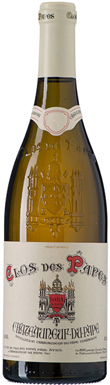

Taking on golden hints now, this is clearly mature, with notes of baked quince, lanolin, barley sugar, macadamia nut and hazelnut. On the palate it's broad and generous, with mouth-coating glycerol. Welcome acidity rises on the finish, and it ends dry, with a little burnt sugar. The alcohol is gently warming on the long finish, but this has all the length, breadth, depth and resonance of great white Châteauneuf. A blend of Roussanne, Clairette, Grenache Blanc, Bourboulenc, Picardan and Piquepoul Blanc. No malolactic.
2009
Clos des PapesChâteauneuf-du-Pape

Domaine Georges Vernay, Coteau de Vernon, Condrieu, Rhône, France, 2014
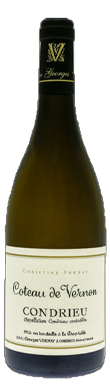
Lively, nutty, with a touch of butter and popcorn over smoky apricot. Full-bodied, rich but not heavy, with a touch of sweetness at its core. Intense and saline, like salted butter over stones. It's lost the first flush of peach and apricot and is really showing its mineral side now, with a long finish. Partly planted by Christine's grandfather before the appellation was first established. From two mid-slope parcels, one planted in the 1960s and one before 1940, amounting to 4ha. Served from magnum.
2014
Domaine Georges VernayCondrieu
Pierre Amadieu, Domaine Grand Romane, Côtes du Rhône, Rhône, France, 2018
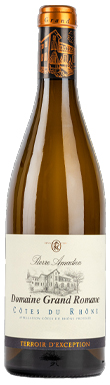
A touch of honey and beeswax makes for a lovely nose, followed by fennel and aniseed, with a hint of grapefruit bitterness. Effectively a pure Clairette grown in Gigondas terroir, but can't be bottled under the Gigondas appellation as it's for reds and rosés only – until the 2023 vintage, when the laws will change to allow Gigondas blanc. This goes to show how well Clairette can perform here.
2018
Pierre AmadieuCôtes du Rhône
Paul Jaboulet Aîné, La Chapelle, Hermitage, Rhône, France, 1985
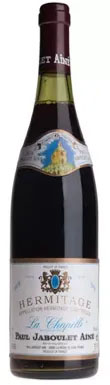
A gathering of smokes – cold fireplace, extinguished cigar, smoked meats, fireworks. Hot granite and petrichor. It still has weight and breadth, with a great spread of tannin still. Well-balanced acidity and alcohol, and a long, smoky finish. Not as refined as the 1990 but still very good indeed.
1985
Paul Jaboulet AînéHermitage
Château de Beaucastel, Châteauneuf-du-Pape, Rhône, France, 1998
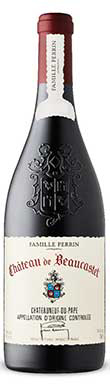
Comfortably still in its mature window, with old leather, blackberry jam and some whiffs of hung game. Enjoyably chewy tannins still, this is still powerful, with good length. Time to drink up now, but no hurry.
1998
Château de BeaucastelChâteauneuf-du-Pape
Domaine des Bosquets, Réserve, Gigondas, Rhône, France, 2007
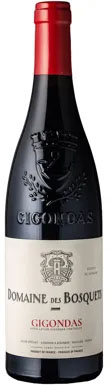
Gorgeously open, so ready and giving. Still dark in the glass. Smells like a warm damson and plum crumble – a few sticky burnt bits, some roasted nuts in the topping. Full-bodied, so concentrated still, with great intensity and drive. The alcohol is generous but it works with the style of wine. A bubbling cauldron of roasted berries and herbs. A hedonistic treat. So smooth and sweetly fruited.
2007
Domaine des BosquetsGigondas
Lionel Faury, La Gloriette, St-Joseph, Rhône, France, 2015
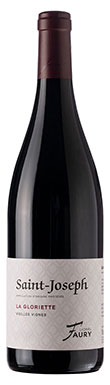
A wonderful nose of cardamom, wood smoke and charcoal. It’s light- to medium-bodied, with a touch of sweetness to the fruit left at its heart. Very dry, still with some intensity, focus and fine tannin. Finishes fresh and long in smoky berry fruit. Really delicious, drinking perfectly, incredible value for money. Burgundian finesse, but more reliable and expressive. Perfect time to drink it, just shows how good the 2015 vintage is, which is beginning to come round now.
2015
Lionel FaurySt-Joseph
La Pèira, Terrasses du Larzac, Languedoc-Roussillon, France, 2008
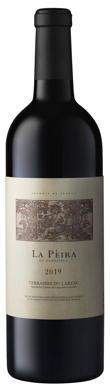
Enjoyably open and taking on some secondary notes now, there's a hint of mushroom and leather to the stewed berry fruits. Still fresh and harmonious, this has lovely acidity and a very natural-feeling balance and length. Sleek and polished but not overly oaky. Very elegant and highly impressive.
2008
La PèiraTerrasses du Larzac
Martine & Christian Rouchier, Luc, St-Joseph, Rhône, France, 2018
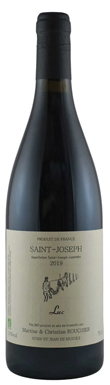
Deep herbal and liquorice scents over a warm fug of blackberry. Not full-bodied but has a furry, dense texture. Ends on soft tannin and blackberry-skin fruit, very dry. A wine with strong character, unusual in its tannic spread and herbal display. Acidity is low, but the fruit is fresh, and it ends in a pool of dense blackberry compote.
2018
Martine & Christian RouchierSt-Joseph
Alain Graillot, La Guiraude, Crozes-Hermitage, Rhône, France, 2016
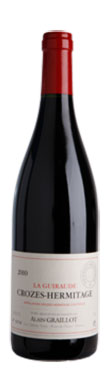
Just starting to drink well now, really fresh, defined and precise. Blood, iron and juniper on the nose, with some oregano on the finish; good acidity, enjoyably grainy tannins and a medium-length finish. Not the longest or most concentrated northern Rhône, but a serious wine nonetheless that's complex and savoury. Whole-bunch fermented.
2016
Alain GraillotCrozes-Hermitage
