
Welcome to the dark side: Champagne’s Rosé de Saignée
Although a style seen less frequently on shop shelves, Champagne's darker-coloured rosés are worth seeking out and have a firm place at the dinner table, argues Tom Hewson, offering unique expressions of Pinot Noir and Meunier.


‘I want the explosion of the year! I want the madness of the year!’
This is what Jean-Baptiste Geoffroy, winemaker at Champagne Geoffroy, says to me on a sunny morning in Aÿ as he pours a wine that, to many casual Champagne drinkers, might ring a few alarm bells.
It’s a deep pomegranate pink, almost red, the foam itself gently tinged with colour as it rises up the sides of the glass.
Explosion is the word, too; just standing over the glass is enough to get a hit of Pinot Noir’s joyous side from the sunny 2018 vintage: cherries, oranges and tropical fruits race their way out of the glass.
Scroll down for tasting notes and scores for eight rosé de saignée Champagnes to try
Busting the dark rosé myths
The perception that dark rosé equals sweet still lingers around rosé Champagne. It’s not true, of course, but it’s something that still makes Champagne’s rosés made using a very particular method – maceration, often called saignée – a slightly harder sell.
Nicolas Dupuis, export manager at Champagne Alexandre Bonnet in the Côte des Bar, confirms this as he pours the domaine’s Les Contrées, a prodigiously dark and expressive rosé made with 90% macerated Pinot Noir and 10% Pinot Blanc.
‘Our standard rosé is paler, easier, and everyone understands it,’ says Dupuis, ‘whereas Les Contrées needs someone like a sommelier to tell the story of the wine.’

Making rosé Champagne
Most of Champagne’s rosés are produced using the assemblage method, whereby a carefully calibrated amount of specially made Pinot Noir red wine is added to a still white base wine before bottle fermentation.
This allows a very controlled amount of colour and red fruit characters. Lighter rosés will see between 5%-10% red wine addition, while darker, fruitier styles may see 15% or more.
Champagne’s much darker rosés, on the other hand, are made by maceration: the grape skins and pips are kept in contact with the juice during the first stages of the winemaking process. (Strictly speaking this isn’t the saignée method, which is usually a by-product of a red wine production).
Risky business
Maceration is risky; if you’ve ever had a rosé that feels grippy, drying or aggressive, the chances are that you’re tasting one that has extracted a lot of tannin from grape skins and pips.
This is something that Champagne, with its delicate body and high acidity, certainly doesn’t want in abundance, which is why the assemblage method, with its inherent control, is generally more popular.
The maceration production process is completely different to other kinds of Champagne because it involves destemming the grapes. This avoids too much green tannin – or stemminess – being extracted from the grape stems during maceration. By contrast, for other Champagne styles the grapes are left as whole bunches.
The choices made in this rosé production process are therefore more akin to the choices made during red winemaking: around temperature, crushing, pressing and fermentation.
After a period of fermentation, the free run juice is drawn off the tank without being pressed. The skins are then pressed, and this press juice contains more tannin and structure.
‘It is important to have the press fraction to complete the blend,’ says Irvin Charpentier, winemaker at Alexandre Bonnet, ‘but we don’t press strongly, and the wine is still 85% free fun juice.’
Nomenclature is a bit of a sticky topic – Dupuis points out that they can’t call Les Contrées a true saignée because it has an addition of 10% still white base wine, even though the colour and style is very much there.
Laurent-Perrier even adds Chardonnay grapes directly into the Pinot Noir maceration for its premium Cuvée Alexandra rosé, a process that is also used by in-demand growers such as Maxime Oudiette in Beaunay. When it comes to rosé, creativity is the name of the game.

Rosé winemaking trends around Champagne
At Geoffroy in Aÿ, the grapes are kept whole, saturated with carbon dioxide (to protect from oxygen) and left for up to 84 hours before the skins are removed, yielding a deep colour.
It might surprise some to learn that even relatively pale rosés – and even prestige cuvées such as Louis Roederer’s Cristal Rosé – are made via a type of maceration too, in this case a cold soak.
This is when grapes are macerated at cold temperatures before fermentation begins, to extract colour and flavour but not too much else.
‘We don’t push the maceration,’ explains Jean-Baptiste Lécaillon, cellar master at Louis Roederer, ‘we don’t want tannin.’
At Roederer, as at a number of small producers such as JM Sélèque in the Coteaux Sud d’Épernay, this method is called infusion.
It is Laurent-Perrier, though, who is by far the most prominent advocate for maceration rosé among the main houses. It achieves the impressive technical feat of producing one of Champagne’s most widely recognised, globally successful rosés entirely by this tricky maceration method.
Cellar master Michel Fauconnet says that the method is unforgiving: ‘We have specific plots of Pinot Noir that allow us to obtain a perfect maturity and concentration, and we have to sort each single grape manually before the maceration in the tank begins,’ he explains.
Because of the extended skin contact, any imperfections – underripeness or rot – will severely taint the wine. It’s for this reason that the rare sight of sorting tables in the cellars of Champagne is usually related to either red wine production or rosé de saignée.
Rosé Champagne for the adventurous
There’s no need to fear the dark side of Champagne rosé, then. Rather than being sweet or simply fruity, rosés from maceration are often the most structured, food-friendly and deeply flavoured of all, able to take on settings where light red wines might ordinarily be called for.
Perhaps they’re not wines to pour for the unprepared, but in the right context, they represent a love letter to Pinots Noir and Meunier that is uniquely Champenois.
Eight rosé de saignée Champagnes to try:
Related articles
- First taste: Dom Ruinart Blanc de Blancs 2013
- Champagne report 2024: Latest releases from the Côte des Blancs
- Independent Champagne: Top trends & key names to know in 2024
Rémi Leroy, Les Crots Rosé de Saignée, Champagne, France, 2018
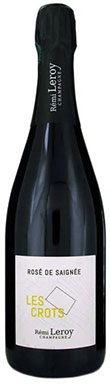

Star grower Remi Leroy turns out one of Champagne's most remarkable rosés from a single plot of Pinot Noir in Meurville, and it’s now at...
2018
Rémi Leroy

Alexandre Bonnet, Les Contrées, Champagne, France, 2019
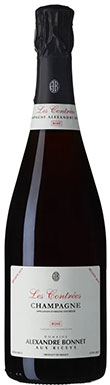
There's so much juicy, peppery fruit here, bursting with black cherry and strawberry in both aroma and appearance, that this intense rosé made with 90%...
2019
Alexandre Bonnet
Geoffroy, Rosé de Saignée Premier Cru Brut, Champagne, France
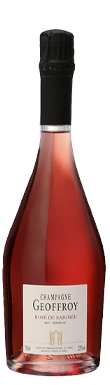
Jean-Baptiste Geoffroy wanted the 'explosion' of the 2018 vintage (on which this wine is based) in this deep, vivacious rosé from sunny Cumières in the...
Geoffroy
Leclerc Briant, Rosé de Saignée, Champagne, France, 2014
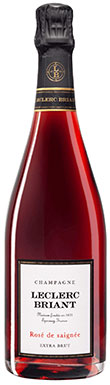
A rare example of one of Champagne's dark rosés presented with serious lees ageing, this 2014 Pinot Noir from biodynamic specialists Leclerc Briant has developed...
2014
Leclerc Briant
Laurent-Perrier, Cuvée Rosé, Champagne, Champagne, France
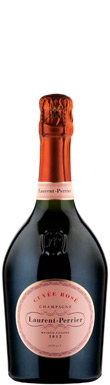
92
Cuvée Rosé is in fine, rich form, helped by some outstanding harvests for ripe Pinot Noir, including 2019 and 2018 which form the backbone of the releases on the market during 2025. It's immediately effusive with red plum, macerated strawberry and cherry flavours, always pure and fresh without becoming too heavily fruity. The 2019-based blend hitting shelves toward the end of 2025 is a little juicier and rounded, while the 2018-based example is more citric and restrained. The palate is surprisingly delicate, tapered and refreshing for a maceration style, polished and gently creamy through its five years (at least) on lees. A model non-vintage rosé.
Laurent-PerrierChampagne
Jeaunaux-Robin, Rosé de Saignée, Champagne, France, 2020
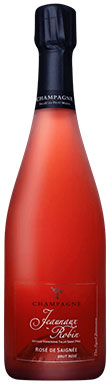
This fine small producer in the Petit Morin region just to the southwest of the Côte des Blancs turns the prevalent Meunier into a perfectly...
2020
Jeaunaux-Robin
Champagne Perrine Fresne, Les Noues Rosé de Saignée, Champagne, France
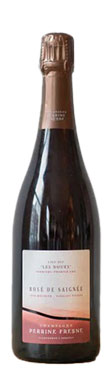
It's not just Pinot Noir that can be turned into darker rosés by maceration in Champagne, but Meunier too – this young grower in Sermiers...
Champagne Perrine Fresne
Drappier, Drappier Rosé de Saignée, Champagne, France
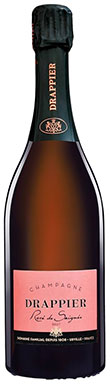
Coming from the hot and dry 2020 vintage, Drappier's rosé de saignée sits in the middle of the style spectrum, dark but not ultra-dark. The...
Drappier
