
What will we be drinking in 2025: Trend watch
As the new year begins to unfold, it’s time to gaze into the crystal ball and look ahead at what we’ll be drinking in 2025.


It’s the iconic greeting you get when you walk into The Varsity, a hotdog and milkshake joint in Atlanta: ‘What’ll ya have?’
It’s a mix of southern US charm and the casualness of a friend: it lets you drop your shoulders and relax – no pressure or judgement. And this is the question, with all its warmth, that I pose to you.
A fortune teller I am not, but the answer, I predict, will revolve around creativity and social impact. Whether it’s choosing wines from war-torn regions, bringing ancient, forgotten grapes into the fold or championing organic and biodynamic practices, drinkers will prioritise uniqueness over tradition.
Pét-nats, natural wines and orange wines have experienced a huge boom in the last few years and we’ll continue to ride the aftershocks. Non-alcoholic beverages will remain popular among the sober-curious, though NA cocktails and beer will have better luck than NA wine – a category that has hitherto had a hard time nailing taste.
Emerging wine markets and increasing interest in sake, cocktails made with sweet wines, and sparkling wines will reshape what it means to enjoy a drink in 2025.
Notes and scores for wines accompanying the text are listed below
Organic, biodynamic and off-the-beaten-path wines
Bulk wine isn’t in vogue, but you knew that. Large-production wines, made from vast monocultural plots, that taste the same year after year are equivalent to eggs from chickens that spend their lives in cages.
When it comes to all things food – including beverages – smart consumers want ethics, creativity and a small environmental footprint.
In a time of farmers’ markets and seasonal sourcing, wine made using organic and biodynamic practices will continue to rise. Moreover, drinkers will be open to experimentation.
‘I think at the local level, we are seeing a cool duality between an educated consumer who is interested in and open to tasting off-the-beaten-path wines – Gemischter Satz, Romorantin, Auxerrois and Chasselas,’ says sommelier Tim Willard of Dive Wine, a popular pop-up operation in Atlanta.
‘But they’re also open to paying more for great examples of the classics – Chablis, Savennières, Grosses Gewächs Riesling, Sancerre, grower Champagne and library-release wines by the glass.’
War-zone wines
Faced with the all-consuming news of conflict around the world, many people want to find ways to help, even if it’s something as seemingly insignificant as a drink order.
People are ordering wines from regions affected by war to support winemakers caught in what can be very difficult circumstances, which are likely to continue this year.
‘The demand for a lot of our wines, specifically from Palestine and Lebanon, was much higher in 2024,’ says Zachary Engel, executive chef and owner of Galit, a Michelin one-star restaurant in Chicago. ‘It seemed like people were not really interested in many of these wines until the war started.
Then people were like: “What can we do to show solidarity with the Palestinians in Gaza?”’
Wines from the region, including natural and orange wines, can offer high quality and ageability. Look for smaller producers such as Dar Richi, Heya, Laila Maghathe, Mersel Wine and Philokalia.
Meet: Eddie Chami, Mersel Wine, Bekaa Valley, Lebanon

Eddie Chami is the owner and winemaker of Mersel Wine. He grows indigenous, old-vine grapes including Merwah, Daw Al Amar and Marini in vineyards at altitudes up to 2,400m. Chami makes low-intervention and natural pét-nats (cheekily named LebNats), a piquette (a low-alcohol beverage made by adding water to the pomace left over after winemaking) and orange sparkling and still wines.
Born in Australia, he learned winemaking from local producers and studied viticulture and oenology at the University of California Davis.
His wife Michelle runs a woman-led label called Heya Wines. Currently, Chami has faced impossible circumstances in winemaking with an active war in the region. During the most recent harvest, in October, he says, one of the roads that lead to his vineyard was bombed. He continued to make wines despite the loss of electricity and reliable water.
Chami’s rise in popularity through the quality of his wines landed him listings in several Michelin-starred restaurants, including Galit in Chicago and Albi and Maydān in Washington DC.
More Muscadet
High-quality Muscadet from the Loire may be the new Chablis – much like the boom in Aligoté from Burgundy. On-par in terms of quality, the wines are far more affordable than traditional Burgundy.
‘Loire wines are booming,’ says Romain Alaphilippe, shop manager at The Oxford Wine Company.
‘Among the top names in Muscadet Sèvre-et-Maine are Chéreau Carré, Domaine de la Pépière, Domaine de l’Ecu and Sauvion. These producers offer wines with pronounced minerality and impressive length.
Domaine de la Sénéchalière, in particular, performs malolactic fermentation on its Muscadet, which is a technique that’s comparable to Sylvain Pataille’s work with Aligoté in Marsannay, Burgundy.’
Seeking sake
Japan is a large consumer of global fine wine. I predict that this exchange will increasingly move in the other direction, and we’ll see more fine sake on wine lists beyond Japanese restaurants.
Take Richard Geoffroy, founder of IWA Sake (Iwa 5, £140-£145 Harvey Nichols, Hedonism), as an example. Geoffroy was the fifth chef de cave for Dom Pérignon Champagne, a role he held for 28 years, but he’s now making fine sake in Japan.
These can be found at the French Laundry, Atelier Crenn, Per Se and Eleven Madison Park in the US, La Table d’Olivier Nasti and Le Louis XV in France, The Fat Duck and Zuma in the UK, as well as restaurants in Singapore, China and Thailand, showing how popular the fermented-rice beverage is becoming worldwide.
Geoffroy says he views sake as a good means of introducing wine as an accompaniment to Asian cuisines beyond Japanese. Rice is clearly already a staple in the region; sake becomes another way to celebrate rice.
In the US, the advent of specialty grocery stores such as HMart stocking sake has also led to more demand.
Meet: Brian Polen & Brandon Doughan, Brooklyn Kura x Hakkaisan

Brooklyn Kura, New York City’s first sake brewery, was opened by Brian Polen and Brandon Doughan in 2018.
In 2021, they partnered with acclaimed Japanese sake brewery Hakkaisan, founded more than a century ago. The partnership involves expanding education and promotin sake as a global beverage.
In 2024, Brooklyn Kura opened a much larger brewery, increasing production capacity tenfold. Polen and Doughan use only US products for their sakes, including Brooklyn water. They serve their Junmai Nama Blue Door (US$30-$39 Brooklyn Cellars, Scotto’s, Sherry’s, The Town Cellar, Zula) and Junmai Ginjo Number Fourteen (US$30-$34 Addy’s, Blue Streak, Bowery & Vine, Porter Square, True Sake), among other small-batch sakes, at the brewery.
They also serve Hakkaisan’s sake (the Yukimuro three-year snow-aged sake is worth the hunt; US$60-$77 Widely available) in the taproom. The bridge between the two breweries – one set in the lush Uonuma area of Niigata, Japan, the other in industrial Brooklyn – is one of opposites attracting, with a shared philosophy of making sake accessible and understandable beyond Japan.
Bubbling up
Champagne isn’t going anywhere. That was evident from the palpable energy at the tenth anniversary of La Fête du Champagne in New York City in October. Smaller producers making single-grape and -vineyard wines, such as Adrien Renoir’s brilliant Le Cépage (£62.50 The Whisky Exchange), made from 100% Pinot Noir, and Les Vignes Goisses 2019, made from 100% Meunier, will see a rise in popularity.
The other, minor grapes permitted in the Champagne AP (beyond Chardonnay, Pinot Noir and Meunier) will also be worth the hunt. Look for Arbane, Petit Meslier, Pinot Blanc, Pinot Gris and, most recently, the mildew-resistant hybrid Voltis in Champagne blends.
‘Traditionalists will pass, but people looking for originality and taste will go for it,’ says Alaphilippe. Plantings of these grapes, though minuscule (less than 1% of overall plantings in Champagne), are an effort to combat the rising temperatures from climate change, helping to retain acidity and resist disease pressure.
Sparkling wines from other regions will also thrive, thanks to changing temperatures. Keep an eye on excellent English sparkling wine producers such as Artelium, Chapel Down, Domain Hugo, Gusbourne and Rathfinny.
Additionally, biodynamic and organic Cava will be a great value-for-quality buy – look for producers such as Alta Alella, Mascaró and Parés Baltà for fine and ageworthy examples.
The same goes for crémant styles, Franciacorta and South African sparkling wine.
Meet: María Elena Jiménez & Marta Casas, Parés Baltà, Penedès, Spain

Two winemakers who married into the third-generation family of wine-growers at Parés Baltà. Both scientists (chemical engineer and pharmacist, respectively), the sisters-in-law trained as oenologists to lead the winemaking at the estate. Their husbands – (respectively) Joan and Josep Cusiné – encouraged them to take on the winemaking process more than 20 years ago.
Parés Baltà’s first vineyards were planted in 1790. Jiménez (who started in 1999) and Casas (2002) brought new ideas when they took over, between them achieving organic certification in 2002 and introducing biodynamic practices (certified from 2012). The result: ageworthy and terroir-driven Cava.
The pair use the traditional Xarel.lo, Macabeu and Parellada for their Cavas, and make a cuvée blended from Xarel.lo, Chardonnay and Pinot Noir. They also make still wines, from Xarel.lo, Gewürztraminer, Sauvignon Blanc, Syrah and Sumoll, among others.
Whites from red regions
Heavy reds at 14% alcohol and above just aren’t what the modern drinker enjoys on an average Tuesday. Places such as Sicily and Umbria in Italy, known for reds such as Nerello Mascalese and Sangiovese, are making more white wines than ever.
Producers such as Ansaldi, in the western Sicily region of Marsala, are zeroing in on Sauvignon Blanc and ageworthy Grillo and Zibibbo, including a sparkling Grillo.
In France, Bordeaux blanc is another example. Keep an eye out for spectacular white wines emerging from regions traditionally focused on red.
Meet: Nicola Chiucchiurlotto, Madrevite

When you consider that Umbria, Italy’s landlocked central region, produces one of the most tannic reds you can find (Sagrantino from DOCG Montefalco Sagrantino), it’s difficult not to marvel at the elegant white wines coming from Nicola Chiucchiurlotto’s winery in the DOC Colli del Trasimeno between lakes Trasimeno and Chiusi.
His star grape is Gamay del Trasimeno (Grenache), but his whites made from Grechetto and the resurrected Trebbiano Spoletino also shine. ‘I grew up drinking red wine,’ he says. ‘I will die in love with white wine.’
Chiucchiurlotto caters to younger consumers at this winery. There are picturesque hillside picnics on the property, rustic food and a selection of olive oils, the local dried beans called Fagiolina del Trasimeno and pasta.
The wine labels are vibrant and colourful. Chiucchiurlotto has a sense of ease, humour and visible passion for this small region nestled among hills and lakes, and he’s brought it into the 21st century.
Lighter reds & rosés
Lighter styles of red with lower alcohol will continue to prevail. The traditional autumnal darling, Beaujolais, will push ageworthy examples from its cru sub- regions meant for any time of the year. Light-bodied and refreshing Frappato from Sicily is rare in some export markets, but is worth the hunt.
‘Rosso di Montalcino is Italy’s answer to Pinot Noir,’ says Ryan Manna, New York City-based sommelier. ‘It’s an easy wine to list, and it fits in so many different ways. It’s what all the cool kids are drinking.’
Rosso di Montalcino is released sooner, more youthful and less extracted than Brunello di Montalcino. Could it be the new Beaujolais? Manna thinks so.
Similarly, rosés will continue to enjoy greater popularity beyond the summer months. Natural winemaker Martha Stoumen’s Negroamaro and Nero d’Avola rosatos from Mendocino County, California, are great examples that pair well with many cuisines.
Sweet treats
Sweet wines are being given new billing as cocktail mixers. The Dead Rabbit in New York City makes a Steakhouse Martini with late-harvest Chenin Blanc; the Super Cold Martini at Talat Market in Atlanta is made with Madeira; and the Union des Vins Doux de Bordeaux is pushing the region’s affordable and versatile sweet wines as tonic mixers.
Sweet wines will see their moment in the sun, although not on their own. Chartreuse, absinthe and mezcal will be key spirits and liqueurs for experimentation.
Meet: Ian Alexander, GM and bartender at The Dead Rabbit, New York, USA

‘I don’t know much about wine,’ says Ian Alexander when he hands me one of the best Martinis in New York City, made with vodka, charred lemon, rosemary and a splash of late-harvest Chenin Blanc by Joostenberg (2022, £15.95/37.5cl Corney & Barrow).
Alexander has worked at The Dead Rabbit, an acclaimed bar with a sophisticated cocktail program, for eight years. He says he was looking for a peachy undertone for his signature Steakhouse Martini and syrups felt tired. So he began to experiment with sweet wines, which offered both subtlety and complexity, as a backbone for cocktails.
Alexander tasted Bénédicte et Stéphane Tissot’s Macvin du Jura Rouge (£50 The Wine Society, WoodWinters) after dinner at Bar Bête in Brooklyn. ‘It was like a PX Sherry but not as cloyingly sweet,’ he says. ‘It was just so beautiful in the glass.’
He bought four cases of the rouge and two cases of the blanc and now serves a new cocktail called the Sir Isaac, made with Irish whiskey, plum, Macvin du Jura blanc and cacao butter. ‘It tastes like a fig roll,’ he says.
10 wines we’ll be drinking in 2025
Related articles
Drappier, Père Pinot 2 NV, Aube, Champagne, France
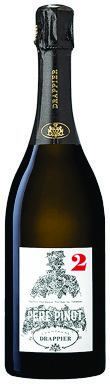

Made with a blend of equal parts of four Pinots from 2020 (Pinot Noir, Pinot Meunier, Pinot Gris, and Pinot Blanc), this Champagne is a...
DrappierAube

Artelium Wine Estate x Vagabond, Nature Series Cuvée, Sussex, England, United Kingdom, 2018
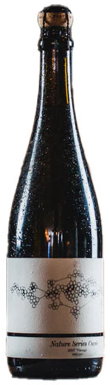
An orangesicle in a glass, with notes of ripe white peaches, bruised green apples, and a burst of pithy orange peel with cream. And then...
2018
Artelium Wine Estate x VagabondSussex
Parés Baltà, Blanca Cusine, Penedès, Penedès, Spain, 2016
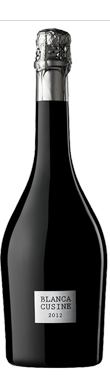
This biodynamic Gran Reserva Guarda Superior Cava is laced in umami notes of sesame oil, stewed jackfruit, nuts, saffron, and apple sauce. A deep golden...
2016
Parés BaltàPenedès
Famille Lieubeau, Château-Thébaud, Muscadet de Sèvre-et-Maine, Sur Lie, Loire, France, 2018
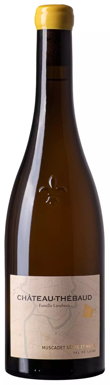
Famille Lieubeau’s Château-Thébaud demonstrates what a great Muscadet with plenty of lees aging (three years here) can do. It is a luscious wine with plenty...
2018
Famille LieubeauMuscadet de Sèvre-et-Maine
Madrevite, Il Reminore, Umbria, Italy, 2023
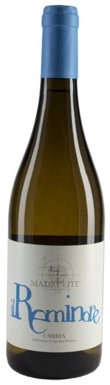
This Trebbiano Spoletino from the Umbria IGP is fresh and deceptively complex. It smells like a pineapple upside-down cake, which is to say plenty of...
2023
Madrevite
Philokalia, Grapes of Wrath, Bethlehem, West Bank, Palestinian Territories, 2021
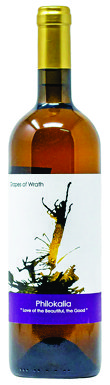
Spend time with this wine. It benefits from an unrushed tasting, for it unfurls slowly and beautifully. It is an amber wine made with a...
2021
PhilokaliaBethlehem
Le Ragnaie, Rosso di Montalcino, Tuscany, Italy, 2020
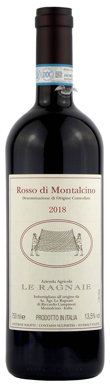
This rosso from a highly-respected Brunello producer is proof that even the most serious of wine can hang loose. It is an approachable, well-structured wine...
2020
Le RagnaieRosso di Montalcino
Valle dell’Acate, Il Frappato, Sicilia, Sicily, Italy, 2023
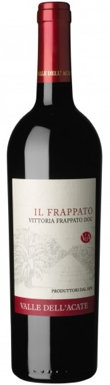
A medium ruby in the glass, the nose opens up with vibrant red fruit, including fresh pomegranate, cherries, and plums. A saline backbone carries the...
2023
Valle dell’AcateSicilia
Mersel Wine, Elevate Marini, Blouza, Blouza, Lebanon, 2021
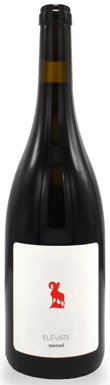
A pale ruby in the glass, there are abundant notes of red fruits – strawberries, raspberries, and cranberries – with herbs like thyme and sage,...
2021
Mersel WineBlouza
Château Crabitan-Bellevue, Sainte-Croix-du-Mont Cuvée Spéciale, Sainte-Croix-du-Mont, Bordeaux, France, 2015
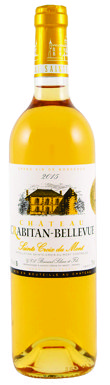
<p>This Semillon sweet wine from the Sainte Croix du Mont appellation is a gorgeous ginger snap with honey in a glass. It has vibrant acidity...
2015
Château Crabitan-BellevueSainte-Croix-du-Mont
