Jefford on Monday: Ontario’s wild ride


Andrew Jefford returns to the Niagara Escarpment...
Jefford on Monday: Ontario’s wild ride
Human beings love to simplify. All simplifications, though, are fallible; they sacrifice nuance on the altar of clarity. A recent visit to the vineyards of Canada’s Ontario, back in early October, made this point several times over.
Scroll down for a Andrew Jefford’s pick of Onatrio wines
Winemaking in Ontario is considered (for example) to take place in the extreme north, and to be a radical example of cool-climate viticulture. Given that the province produces 80 per cent of the world’s Icewine, that has to be true, right?
‘We’re not a northerly region,’ points out Angelo Pavan of Cave Spring. ‘We’re on the same latitude as Florence.’ (Actually a slightly lower latitude: Florence is 43.77˚N whereas Niagara Falls is 43.06˚N.)
‘And I don’t like the ‘cool-climate’ tag,’ he continues, ‘because we’re very warm in summer. That’s one reason why we’re the biggest wine region in North America east of the Rockies.’
Again, he’s right. The daily mean July temperature is 21.3˚C in Niagara, and in August 20.4˚C (according to www.climate-data.org). That’s hotter than Beaune, for example, whose equivalent figures from the same source are 19.7˚C and 19.2˚C. Not only that, but it’s warmer than Bordeaux, too (19.8˚C and 20˚C).
A better way of summarising Ontario would be to say that it’s a mid-latitude location with warm summers – but extreme continentality, hence its deep-freeze winters. The result of this is the ‘wild ride’ through spring and autumn which every Ontarian winegrower will tell you about. ‘Volatility in the shoulder seasons,’ says Stratus’s Suzanne Janke, ‘is our biggest challenge.’
In truth ‘wild’ is an adjective which can apply to almost any moment of the year in Ontario — but since that seems to be increasingly true of most vineyard zones, this may be the climate-change joker at play.
Ontario, for example, was unlucky enough to have to endure two periods of extraordinary cold during the successive winters of 2014 and 2015, when temperatures dropped to -30˚C or so (formerly considered a ‘once in a 100 year’ event).
‘In February 2015,’ recalled Pavan, ’93 per cent of the surfact of the Great Lakes froze. The only place it didn’t freeze was the western end of Lake Ontario. That’s why we’re still here.’
Indeed vineyards in the higher parts of Niagara, like the Chardonnay of Queylus up at the top of the Escarpment, were destroyed. This is the only global vineyard region I have ever visited where there are braziers at winery entrances and stacks of blankets in the tasting rooms.

In 2017, by contrast, it rained every three days between April and August, threatening a different sort of disaster. Then the weather changed; sunshine lit the vineyards until November, and the harvest was, in the end, a fine one. The 2016 season even flirted with drought. Ontario growers never know quite what’s coming – except that the changes brought by spring and autumn will be dramatic, stark and rapid, and that the seasons between can be extreme.
Another simplification whose neat outlines look, on closer inspection, at bit smudgy concerns what we might call the vocation of Ontario’s vineyards, together with its ideal varieties and its overall wine style.
Icewine aside, all resist easy summary. Ontario’s wines are not in any way forceful, bright, overt, ‘fruit-driven’, large-boned or generous. Not classically ‘New World’, in other words. (Such descriptions do, by contrast, sometimes fit the wines of British Columbia – wines with a clear North American stamp to them.)
‘We’re mid-Atlantic,’ says Ontario-based French winemaker Sébastien Jacquey of Meglomaniac, and with reason. Successful Ontario wines (there are still many failures) have a subtlety, an attractive quietness, a grain and a poise to them which makes them, like European wines, attractive food partners. They would make treacherous blind-tasting bottles for the MW exam.
Ontario’s genres and varieties, too, defy easy categorization We’re familiar with fanfares for English sparkling wines – but it can’t be long before the world wakes up to the potential of Ontario’s equivalents.
‘Give us another decade,’ says Marty Werner of Ravine Vineyard Estate, ‘and we will make some of the best traditional-method sparkling wine on the planet. I’m betting my eggs on it.’
Backing up his claim is the Platinum medal Ravine pocketed for its NV Brut in this year’s Decanter World Wine Awards. Nor was that Ontario’s only success in this class: Trius also unhooked a Platinum for its Rosé Brut. Production of sparkling wines in Ontario has tripled since my last visit almost five years ago.
Niagara did, though, manage something even better: a wine in top-tier ‘Best in Show’ category of this year’s DWWA, from the Beamsville Bench winery Thirty Bench – and it was based on the variety local insiders have been tipping over the last decade: Cabernet Franc. There aren’t many Cabernet Francs at this level yet, but the best really can front up to Bourgueil and Chinon.
When you taste the quality of Pinots and Chardonnays of wineries like Tawse, Hidden Bench, Pearl Morissette and Queylus, you begin to wonder why Burgundian families, so stymied back home for ways to expand and invest their new-found wealth, haven’t yet found their way to Ontario. White blends of Sauvignon and Semillon convince, too. And just when you think you’ve got the bases covered, a sniff and a sip of one of the great Rieslings from Cave Spring has you re-setting the cultural dial all over again.
This is all as it should be, given the youthfulness of Canada’s wine-making ambitions (only two percent of Ontario’s wines were made from vinifera varieties back in 1976). Wild weather permitting, we can look forward to more classification-challenging years ahead.
Andrew Jefford’s Ontario wines to try
Read all Andrew Jefford columns on Decanter.com
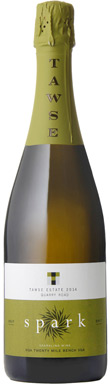
Tawse, Spark Quarry Road Chardonnay, Niagara Peninsula, Vinemount Ridge, Ontario, Canada, 2014
90
Most of the limey clay-loam soils of the Vinemount Ridge Vineyard are planted to Chardonnay, and that’s the fruit source of this impressive sparkling wine. It has restrained, refined fruits alongside non-fruit flavours which seem closer to stone than to yeast-derived autolytics. Pure, long and subtle.
2014
TawseNiagara Peninsula
Cave Spring Cellars, CSV Riesling, Niagara Peninsula, Beamsville Bench, Ontario, Canada, 2016
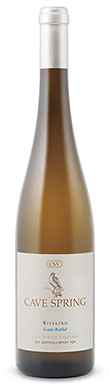

This fine Riesling comes from the two oldest blocks in the Cave Spring Vineyard in Beamsville Bench. The vines are aged 39 and 43 years,...
2016
Cave Spring CellarsNiagara Peninsula

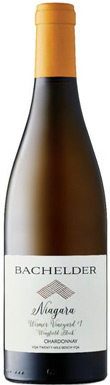
Bachelder, Wismer Vineyard Wingfield Block Chardonnay, Niagara Peninsula, Twenty Mile Bench, Ontario, Canada, 2015
91
Yellow-gold in colour with shy seashore scents of moist sand and a faint leesy sweetness. <br>On the palate this is a mellow, nutty and succulent Chardonnay, soft and undemonstrative in flavour but structured, vinous and compelling.
2015
BachelderNiagara Peninsula
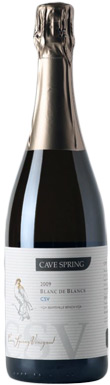
Cave Spring Cellars, CSV Traditional Method Blanc de Blancs, Niagara Peninsula, Beamsville Bench, Ontario, Canada, 2009
91
With six years of lees-ageing prior to disgorgement, this traditional-method, single-vineyard Chardonnay has classically teasing scents of bready citrus. On the palate there’s huge drama here with its plunging, searching acidity and driving apple and lemon flavours (malolactic was blocked). This vintage is only available at the winery, but one must hope the cultured Cave Spring team have been secreting away larger quantities of subsequent vintages.
2009
Cave Spring CellarsNiagara Peninsula
Hidden Bench, Nuit Blanche, Niagara Peninsula, Beamsville Bench, Ontario, Canada, 2016
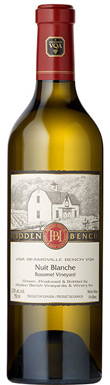
91
Nuit Blanche blends barrel-fermented Sauvignon and Semillon, with both varieties grown in the Rosomel Vineyard, first planted by Roman Prydatkewicz 40 years ago. Most of the oak is neutral, though 13% is new and 13% is first fill. The wine is pale gold in colour, with creamy pear, dessert-apple and beeswax scents. The palate is subtle, delicate and layered, without any rawness or overtly green flavours; gentle citrus fruits now combine with the apple and pear. The legacy of the oak is the wine’s soft textures more than any palpable sweetness of flavour.
2016
Hidden BenchNiagara Peninsula
Stratus, White, Niagara Peninsula, Niagara Lakeshore, Ontario, Canada, 2014
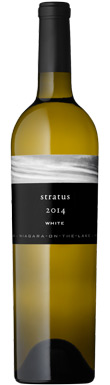
90
Complex blends are the Stratus speciality, and this textured, medium-bodied white brings together 54% Chardonnay and 35% Sauvignon Blanc, with 5% each of Semillon and Viognier and just 1% Gewurztraminer. It’s green-gold in colour with fresh yet creamy scents and finely balanced flavours, both juicy and soft, combining understated green and yellow fruits. It's harmonious, food-friendly and satisfying. I also had a chance to taste the now-golden 2007 vintage. The blend changes from vintage to vintage, and 2007 brought together 46% Sauvignon with 28% Chardonnay. It illustrates how nuttiness comes to this wine with time.
2014
StratusNiagara Peninsula
Hidden Bench, Locust Lane Pinot Noir, Niagara Peninsula, Beamsville Bench, Ontario, Canada, 2015
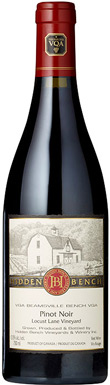
93
Locust Lane is the home vineyard for Harald Thiel’s Hidden Bench, stretching away on gentle slopes from the winery and tasting rooms. The vines were planted in 1998 and are green-harvested. In the winery, the wine’s cultural contours are provided by destemming and a cold soak, followed by hand-plunging during fermentation then ageing in mainly neutral oak. This translucent Pinot Noir has both plum and raspberry fruits as well as a sweet, floral note to the aroma. The palate, meanwhile, has surprising depth and intensity of fruit with some palpable tannins, in a satisfyingly firm, searching style. Few Ontarian Pinots can match the finesse and assurance of the Hidden Bench wines.
2015
Hidden BenchNiagara Peninsula
Tawse, David's Block Cabernet Franc, Niagara Peninsula, Twenty Mile Bench, Ontario, Canada, 2015
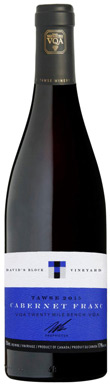
93
The best Cabernet Franc I tasted during my recent visit to Ontario was this unblended version grown in a small vineyard block on the propitious Twenty Mile Bench, producing just three to five barrels per vintage. It’s a dark black-red in colour, with perfumed red fruit scents. Not for the first time, it struck me that Cabernet Franc can perform in a Pinot-like way in Niagara: the palate is poised and elegant, and Burgundy-style tannins combine with Bordeaux-like flavours of curranty fruits without any hint of greenness. The finish is silky-soft.
2015
TawseNiagara Peninsula
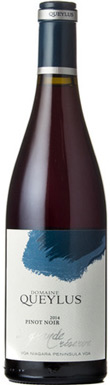
Domaine Queylus, Grand Reserve Pinot Noir, Niagara Peninsula, Ontario, Canada, 2014
92
This Pinot is blended from fruit grown in two of the Lake Ontario Shoreside appellations: Lincoln Lakeshore and Creek Shores. Thomas Bachelder consults. The wine is pale in colour but satisfyingly meaty in scent. The fruits are richly defined on the palate, with glowing plum, cherry and raspberry in evidence. Its autumnal ripeness is supported as much by glycerol as tannin. It's a full-flavoured and gastronomic wine. The 2013 vintage was served at the G7 summit held in Quebec in June 2018.
2014
Domaine QueylusNiagara Peninsula
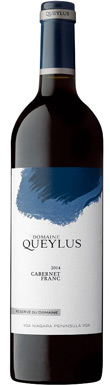
Domaine Queylus, Reserve Cabernet Franc, Niagara Peninsula, Ontario, Canada, 2014
92
This impressive Cabernet Franc blends the main grape variety with 14% of the more cold-sensitive Merlot. As with Queylus' 2014 Pinots, the levels of ripeness are impressive here: the wine is poised, full and resonant, combining the flavour refinement and depth of a Cabernet with textures more akin to those of a Pinot. It's mellow, vivid, warm and very satisfying.
2014
Domaine QueylusNiagara Peninsula
