Anson: Tasting historic Lynch-Bages wines


Jane Anson reports on an extraordinary tasting of aged Lynch-Bages wines in Bordeaux and includes plenty of tales from the Cazes family that has owned this estate since the late 1930s.
Scroll to bottom to see tasting notes and ratings
An evening where Château Lynch-Bages 1961 was the youngest wine in the room was always going to be special.
The tasting was held at Café Lavinal in the village of Bages, Pauillac, with most of the bottles coming from owner Jean-Michel Cazes’ cellar, coupled with two vintages (the 1945 and 1947) generously donated by collector Professor Bipin Desai.
These had been stored in Copenhagen since bottling at the Château and then making their way back to Pauillac to be shared with us.
‘Of the 18 classified châteaux in Pauillac, a full 15 of them were declared bankrupt in the 1930s’
We started with the 1924 – the first year that Château bottling took centre stage in Bordeaux after being championed by Baron Philippe de Rothschild at Mouton Rothschild.
Over at neighbouring Lynch-Bages, General Félix de Vial was owner, grappling with a financial situation that was to become ever more fragile and would finally tip over into bankruptcy during the economic mess of the 1930s.
Lynch-Bages was not alone in this. The Economic Crash was exacerbated by a run of difficult harvests in 1930, 1931, 1932 and 1934 and of the 18 classified châteaux in Pauillac, a full 15 of them were declared bankrupt in this decade.
But in proof that one man’s famine is another man’s feast, it was this that gave Jean-Michel Cazes’ grandfather, Jean-Charles Cazes, the opportunity to take over.
‘Cazes offered what General de Vial thought was a derisory sum.’
He had been working as the local baker but in 1933 was given the job of running the Lynch-Bages vineyard for General de Vial – meaning that 14 of the 15 vintages we tasted were made by either Jean-Michel’s grandfather or father. He himself took over in the 1970s.
As we tasted through the wines, we were plied with family stories. For much of the 1930s, Cazes paid no rent for the land but promised to keep the wine production going without it costing its owner a penny – and for the General at the time, offloading the running costs of a large Pauillac Château was extremely pressing.
Eventually in 1937 Lynch-Bages was put up for sale but when no outside buyers were forthcoming, Cazes offered what General de Vial thought was a derisory sum for it.
Two years later his finances meant that he had no choice but to agree.
Jean-Michel tells us that he has letters between the two men that suggests these two very different characters never did find any middle ground and parted company as something less than friends.
‘The 1950s was the decade that put Lynch-Bages on the map.’
From 1939 Lynch-Bages became officially owned by the Cazes family, and slowly but surely Jean-Charles and then his son André were able to not just invest in the wine but contribute to its growing renown.
‘The 1950s was the decade that put Lynch-Bages on the map,’ is how Jean-Michel Cazes remembers it – with particular credit going not only to the winemaking but to American writer and fellow Château owner Alexis Lichine, who championed the excellent wines being made by André Cazes.
Lichine organised a series of blind tastings of 1855 Châteaux for the general public, and Lynch-Bages regularly showed extremely strongly.
From our tasting here, there is little doubt that Lynch-Bages deserves its reputation as one of the true great wines of Bordeaux.
Around half the wines had been recorked in 2007, being topped up with the same vintage as in the bottle, but those with their original corks were also extremely impressive.
How the wines tasted in general

A few things in particular stood out. We had three wines out of half bottles, and even at this illustrious age they were among the most enjoyable bottles on display.
All 15 vintages were opened just before tasting, as the delicate aromatics of old wines can so quickly evolve once poured.
Most in fact held their own and even opened further in the glass, and proved a masterclass in how older Bordeaux, with its tannins tamed and melted but its fruit still intact, is just a brilliant choice for food matching.
The chef at Café Lavinal did an incredible job of choosing dishes that were subtle enough to keep the focus on the delicate flavours of the old wines – a room-temperature mushroom velouté, a veal carpaccio, a stunning Bayonne ham and poached egg dish followed by Pauillac lamb once the wines got younger and a little more structured.
We only had one corked wine. Although very sadly it was the brilliant 1955 vintage, that was really not a bad result at all in a flight of such old wines.
To drink these alongside Jean-Michel Cazes’ memories was amazing, but the wines would have spoken even if tasted alone.
Some advice on buying old bottles
‘Never go for the cheapest that you can find.’
A few years ago I translated the book Lynch-Bages & Co from French to English, and these wines reminded me of a quotation Jean-Michel used from the writer Georges Duhamel.
It talked about how old bottles of wine are like Aladdin’s lamp: ‘Pulling the cork frees the genie from its bottle, and calls forth actors from a forgotten world’.
And the beauty of Bordeaux is that you can still buy many of these.
My advice with older wines is to never go for the cheapest that you can find.
Storage and provenance are just so vitally important. But don’t think they are going to be prohibitively expensive, especially when you compare them to the prices of some of the more recent years.
I found some 1945 Lynch-Bages from reputable sources at around £400 per bottle (most seem to be in France or Belgium).
Compare this to prices for 1945 Mouton – upwards of £6,000 in almost every case I could find – and it seems worth a try.
Of course there will be bottle variation, but if you fall on a good one, you’ll be smiling for the rest of the year.
The wines: Tasting Lynch-Bages history
Château Lynch-Bages, Pauillac, 5ème Cru Classé, Pauillac, Bordeaux, France, 1961
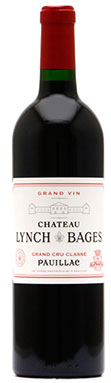

It's incredible how good this still is, the product of a year with tiny yields after a spring frost and a dry August and September....
1961
Château Lynch-BagesPauillac

Château Lynch-Bages, Pauillac, 5ème Cru Classé, Pauillac, Bordeaux, France, 1960
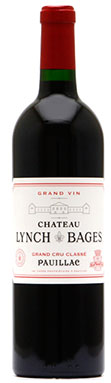
A late frost followed by a cool, wet summer meant the wines from 1960 were light right from the start. The general view back then...
1960
Château Lynch-BagesPauillac
Château Lynch-Bages, Pauillac, 5ème Cru Classé, Pauillac, Bordeaux, France, 1958
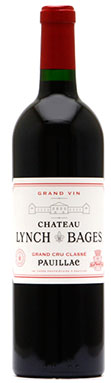
One of the more evolved of the lineup, but still extremely attractive. This year saw a cold spring but a hot summer, and there are...
1958
Château Lynch-BagesPauillac
Château Lynch-Bages, Pauillac, 5ème Cru Classé, Pauillac, Bordeaux, France, 1957
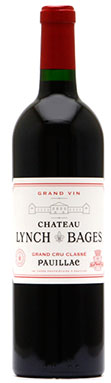
Recent analysis showed that this vintage never underwent malolactic fermentation (it took until the 1970s for this to be carried out systematically), but it has...
1957
Château Lynch-BagesPauillac
Château Lynch-Bages, Pauillac, 5ème Cru Classé, Pauillac, Bordeaux, France, 1954
1954 saw the introduction of the first ever oenology degree in France, which was much needed because a cold, wet summer meant problems with mildew...
1954
Château Lynch-BagesPauillac
Château Lynch-Bages, Pauillac, 5ème Cru Classé, Pauillac, Bordeaux, France, 1952
Good flowering in this vintage meant the yields were generous, followed by a hot summer but a cold September that stopped the grapes reaching their...
1952
Château Lynch-BagesPauillac
Château Lynch-Bages, Pauillac, 5ème Cru Classé, Pauillac, Bordeaux, France, 1949
A half bottle, which once again doesn’t seem to hold it back at all. A dry winter was followed by a cold and rainy spring...
1949
Château Lynch-BagesPauillac
Château Lynch-Bages, Pauillac, 5ème Cru Classé, Pauillac, Bordeaux, France, 1947
A late budding was followed by a hot summer that was practically tropical right up to the harvest. A famously successful vintage on the right...
1947
Château Lynch-BagesPauillac
Château Lynch-Bages, Pauillac, 5ème Cru Classé, Pauillac, Bordeaux, France, 1945
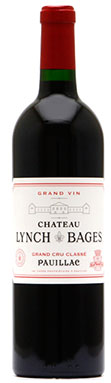
The first of my favourite trilogy of the tasting, a remarkable series of post-war wines that blew us all away, and for me it stands...
1945
Château Lynch-BagesPauillac
Château Lynch-Bages, Pauillac, 5ème Cru Classé, Pauillac, Bordeaux, France, 1940
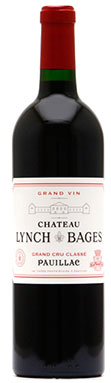
We drank this out of a clear bottle, unusual for Pauillac but reflective of the war years when sourcing glass was tough. This was bottles...
1940
Château Lynch-BagesPauillac
Château Lynch-Bages, Pauillac, 5ème Cru Classé, Pauillac, Bordeaux, France, 1938
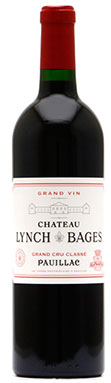
A reminder that great vintages used to be the exception, not the rule. This was a cool year without enough sun to fully ripen the...
1938
Château Lynch-BagesPauillac
Château Lynch-Bages, Pauillac, 5ème Cru Classé, Pauillac, Bordeaux, France, 1937
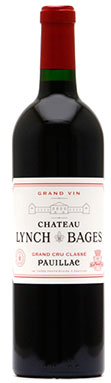
The standout wine of this initial pre-1940s flight of four wines. It's from a year that saw a cool but dry spring and summer, and...
1937
Château Lynch-BagesPauillac
Château Lynch-Bages, Pauillac, 5ème Cru Classé, Pauillac, Bordeaux, France, 1936
1936 was the first year of AOC Pauillac as an official appellation, although unfortunately the wet summer meant the wines didn't quite live up to...
1936
Château Lynch-BagesPauillac
Château Lynch-Bages, Pauillac, 5ème Cru Classé, Pauillac, Bordeaux, France, 1924
Général Felix de Vial was the owner of Lynch Bages at this point, son in law of Jérôme Cayrou who had bought the property in...
1924
Château Lynch-BagesPauillac
