Cloudy Bay: a Sauvignon Blanc success story
At the launch of the 2022 vintage of Cloudy Bay’s iconic Sauvignon Blanc, winemaker Daniel Sorrell chats with Natasha Hughes MW about what makes the wine as popular today as it was when first released almost 40 years ago – and why it can age.


It’s not often that you can say that one estate has been largely responsible for launching a wine region onto the world stage, but if any single winery could be said to have sparked a global demand for Marlborough Sauvignon Blanc, that producer would have to be Cloudy Bay.
While wines were already being made in Marlborough in the early 1980s, before David Hohnen joined forces with winemaker Kevin Judd to launch Cloudy Bay in 1985, it’s just that they hadn’t yet had much of an impact beyond New Zealand’s borders.
Scroll down to see tasting notes and scores for six Cloudy Bay wines, including the 2022 Sauvignon Blanc
Yet within a couple of years of Cloudy Bay’s launch, the country had gained a worldwide reputation as the go-to source for zesty, fruity premium Sauvignon Blanc – and Cloudy Bay had become its standard bearer. Nearly 40 years on from then, and Cloudy Bay is as much in demand as ever.
So what is it that Cloudy Bay has been doing so right for all these years? And, just as important, perhaps, what is it that they do that has helped them maintain their reputation as producers of one of the world’s best Sauvignon Blancs over the course of four decades?
Unlike many Marlborough producers, Cloudy Bay has remained relatively small, sourcing its Sauvignon Blanc grapes from three valleys in the Wairau sub-region. The area enjoys a mild maritime climate, with the heat of the summer sunshine tempered by the cooling breezes blowing in from the Pacific Ocean. Perhaps surprisingly the temperatures here are around half a degree lower, on average, than those of Sancerre.
Greywacke sandstone
While the valley’s soils are quite variable in geological character, Cloudy Bay’s vineyards are largely planted on free-draining alluvial soils with a good scattering of greywacke sandstones. ‘These rocks help to bring yields down,’ says operations winemaker Daniel Sorrell, ‘And this in turn helps us to build concentration and substance in our wines.’
Along with concentration and freshness, Sorrell aims to build a specific fruit profile in his Sauvignon Blancs. ‘We’re not looking for thiols,’ he says ‘as these fall over quickly – within six months of bottling they will have turned into flavours like canned asparagus and cat’s pee. These are definitely characters we’re not looking for in our wines, but we don’t want the other extreme either – that oily, fat style of Sauvignon Blanc with that tropical fruit character.’
Instead, what Sorrell and his colleagues seek out are bright citrus characters, with plenty of citrus and stone fruit notes and a refreshing streak of acidity. Not only do these characters make the wines attractive in their youth, the balance inherent in this profile lends the wines a surprising capacity to age (see the tasting notes below). The Cloudy Bay team are prepared to be pretty ruthless in order to achieve their aims – in some years up to 30% of the fruit harvested doesn’t make the cut and is sold off to be bottled under someone else’s label.
Climate change
One challenge Sorrell and his team are having to meet with increasing frequency is the compression of the harvest cycle in Marlborough. ‘We used to have a far bigger spread in picking dates than we do now,’ explains Sorrell, ‘but now harvest begins earlier because of climate change. We used to start picking Pelorus in March and now we begin in mid-February.
‘And,’ he continues, ‘bad weather now sets in towards the end of harvest, bringing heavy rains with it, so we have to make sure everything is picked beforehand.’
Nevertheless, the Cloudy Bay team are becoming adept at fine tuning both their viticultural techniques and their winemaking to address the exigencies of the changing climate while maintaining the wines’ hallmark elegance.
If there’s one thing wine buffs know about ageing capacity, it’s that Sauvignon Blanc doesn’t make old bones. But while that may be true of the vast majority of cheap, cheerful Sauvignon Blanc on the market, closer examination reveals that under the right conditions, the grape can age – just think of high-quality white Bordeaux, for instance, or the very best wines of Sancerre or Pouilly-Fumé.
‘Most Sauvignon Blancs are drunk within a year of bottling,’ Sorrell confirms, ‘but we wanted to show the pedigree of these wines and prove that they really can age.’
To prove it, alongside the new release 2022 (as well as oaked Te Koko and sparkling Pelorus Chardonnay-Pinot Noir), Sorrell opened three other Sauvignon Blancs that, by coincidence were all the winery’s earliest and warmest vintages: 2003, 2006 the current ‘record holder’, the 2019.
Cloudy Bay Sauvignon: new releases and some older vintages
Related articles
- New Zealand vineyards work towards achieving carbon neutrality
- Craggy Range: producer profile plus 12 wines to try
- New Zealand Pinot Noir: 20 premium wines to try
Cloudy Bay, Sauvignon Blanc, Marlborough, New Zealand, 2022
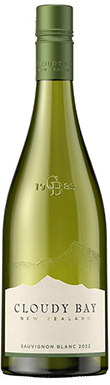

A pungent, punchy nose with plenty of Sauvignon Blanc character. Peach, blackcurrant leaf and kaffir lime leaves are blended with grapefruit zest and tarragon. Linear and bright with a ramrod-straight acidity and a long finish.
2022
Cloudy Bay

Cloudy Bay, Te Koko, Marlborough, New Zealand, 2019
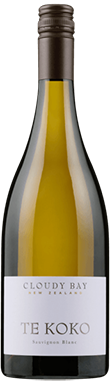
Although the nose is overtly oaky, the palate shows more restraint, with the oak integrating nicely into the rounded, creamy mid-palate. The flavours show layers of zesty pink grapefruit and tangy apricot stone with a richer, riper layer of stone fruit and pears. Juicy, elegant, well balanced with enough depth of fruit to allow for ageing.
2019
Cloudy Bay
Cloudy Bay, Sauvignon Blanc, Marlborough, New Zealand, 2006
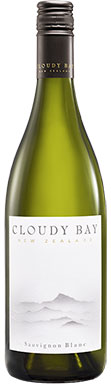
Showing a slightly more subdued nose than the 2006, but the waxy, textural palate has plenty of zippy lemon zest and lime character, along with a tangy oyster shell minerality and a hint of a residual peapod and elderflower character held over from its youth. Layered and complex, with a resonant finish.
2006
Cloudy Bay
Cloudy Bay, Sauvignon Blanc, Marlborough, New Zealand, 2003
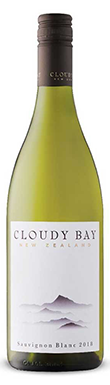
The nose of this wine is incredibly deep and rich, more akin to a smoky Riesling than a conventional Sauvignon Blanc. The palate shows an almost caramelised tarte tatin character, enlivened by notes of white peach, citrus and honeysuckle. The acidity still provides a framework for the richness of the fruit, and there’s a waxiness to its texture. Long and surprisingly vibrant.
2003
Cloudy Bay
Cloudy Bay, Sauvignon Blanc, Marlborough, New Zealand, 2019
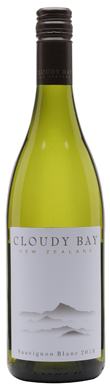
My least favourite wine of the line-up, with a slightly gawky character suggestive of a dumb phase between bright primary fruit and the evolved complexity of the older vintages. There’s a roundness to the palate that may suggest some lees contact or ageing in old oak. Some bright elderflower, lemongrass and guava notes on the nose and palate. Drink now to 2030 (assuming it follows the same developmental path as its predecessors).
2019
Cloudy Bay
Cloudy Bay, Pelorus, Marlborough, New Zealand
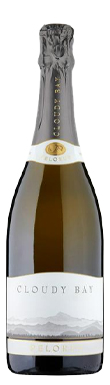
One of the original Marlborough sparkling wines, Pelorus was first produced in 1987 and named for a famous local dolphin, Pelorus Jack, who used to visit boats in the late 19th century. A blend of 70% Chardonnay and 30% Pinot Noir, it spends 24 months on lees. Fresh apples and savoury biscuitty autolysis mingle with lemon zest and almond. There’s a touch of berry fruit on the palate, which is generous and easy drinking. Elegant with a crisp finish, this is a great aperitif style.
Cloudy Bay
