What’s the difference between talented grape farmers and visionary entrepreneurs?
The ‘what next?’ question comes once a winery has reached the pinnacle of success – unanimous critical praise, financially thriving and widely considered a benchmark for its region – and it’s then that the differences show.
The former prefers to stand still and consolidate their hard-won legacy, while the latter feels the urge to embark on new adventures.
Italian wine superstars typically have a strong tie to a specific place, which means they can’t replicate their winning formula elsewhere as easily as wine producers in other countries might.
Yet that doesn’t always prevent them from investing beyond the boundaries of their home appellations, or creating second projects from scratch; they’re simply accustomed to doing it differently.
Logics of scale go out the window and instead, the focus is on terroir – these boutique side gigs are frequently tiny but endowed with a groundbreaking vision.
While these ventures may never become as renowned or prized as the ‘mother’ estates, they enable the cult figures at the helm to continue moving forward, taking risks and seeking new solutions rather than simply resting on past achievements.
Decanter newsletter
Get our daily fine wine reviews, latest wine ratings, news and travel guides delivered straight to your inbox.
And from a wine lover’s perspective, they can offer an opportunity to experience a taste of the premier estate’s signature style, but perhaps with an innovative twist – and occasionally at a lower price point.
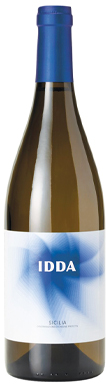
Idda, Sicily
Gaja & Graci
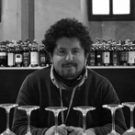
From left: Alberto Graci and Angelo Gaja
(Image credit: Idda winery)
One of the great visionaries of Italian wine, Angelo Gaja was also among the first wine producers in the country to expand beyond the family estate.
After gaining renown for his Barolo and Barbaresco, he anticipated a bright future for Tuscan wine, establishing two new wineries: Pieve Santa Restituta in Montalcino in 1994 and Ca’ Marcanda in Bolgheri two years later.
These investments proved trailblazing, as both appellations subsequently soared in popularity and prestige.
In 2017, Gaja turned to Etna, another area undergoing a significant upheaval. ‘We as a family – and especially my father – are optimistic by nature yet deeply concerned about global warming,’ explains Gaia Gaja. ‘Hence we chose a mountainous area that can defy climatic challenges for our next adventure.’
Aware of the complexity of Etna’s patchwork of old vines and lava flows, they set aside their usual highly personal, brand-driven approach, opting instead for a joint venture with renowned local producer Alberto Aiello Graci.
For Idda (Sicilian for ‘her’ – the volcano is attributed a feminine, maternal nature by the locals), they selected vineyards on Etna’s southwestern flank, a largely untravelled area.
‘There was no point in investing in the north, where most top sites had already been taken,’ Gaja explains.
‘So we chose an untouched area, partly outside the appellation and including some of the volcano’s highest reaches. There, the harvest often begins just as Nebbiolo picking [in Piedmont] is finishing.’
It’s a prime spot for the Carricante grape, which accounts for 80% of the roughly 50,000 bottles produced annually.
‘Carricante is an exceptional variety, so no wonder Etna’s vineyard surface went from 80% red and 20% white when we founded Idda to roughly 50-50 today.’
Tasted alongside Gaja’s Piedmontese wines, Idda Bianco and Idda Rosso both share the same surgical precision and weightless complexity.
‘What unites Etna and the Langhe is the almost mysterious nature of the wines,’ Gaja says. ‘They are deep rather than show
Tenuta del Nicchio, Tuscany
Lodovico Antinori
Lodovico Antinori
(Image credit: Tenuta del Nicchio)
Unlike many Italian aristocrats in wine, who devote their careers to preserving a fixed legacy, Lodovico Antinori has consistently embraced reinvention.
After bringing Ornellaia to international prominence, he sold his stake and shifted his focus to Bolgheri’s outer reaches, co-founding Tenuta di Biserno with his brother Piero and nephew Niccolò Marzichi Lenzi in 2001.
‘I am not really fond of constant expansion,’ Antinori explains. ‘When projects become too large and structured, I prefer to pass the baton.’
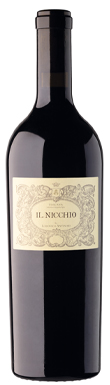
Today, Antinori is honorary president at Biserno, but the day-to-day running is in the capable hands of CEO Marzichi Lenzi, allowing time for Antinori to focus on two new ventures: Lodovico, a high-end Cabernet Franc-based wine, formerly labelled under the Biserno banner but now technically separate – although still vinified at Tenuta di Biserno; and Tenuta del Nicchio, a new estate with its own winery and stylistic identity, centred on the same grape.
‘Cabernet Franc is demanding, but delivers wines of unparalleled purity,’ Antinori says. ‘That’s why it’s soaring in popularity.’
Tenuta del Nicchio is a long-term legacy for his daughter Sophia. ‘It must be small enough for her to manage it smoothly. We currently make only a few thousand bottles, and production will be capped at 33,000, even when all 12 hectares are in production,’ Antinori explains.
While Sophia takes care of sales and marketing, winemaking is entrusted to 27-year-old Andreas Fuchsberger, with the late superstar consultant Michel Rolland previously advising at the final blending stage.
‘The evolution of taste has taken a strong drift, and we need to give space to young professionals to stay on track,’ says Antinori.
‘While Lodovico remains classic, Il Nicchio must be fully contemporary, focused on finesse and delicacy.’
That philosophy begins in the vineyard, with early harvesting and meticulous parcel-by-parcel work.
‘The Lodovico vineyard, also giving grapes for Il Nicchio, faces north, while the other plot is steep and terraced.’
In the cellar, refinements are underway, including shorter macerations from 2025.
Though stylistically still embryonic, Il Nicchio already proves considerably slimmer and more restrained than most equally ambitious SuperTuscans.
The same style also defines the estate’s entry-level wine, Le 2 Ville, blending Cabernet Franc and Merlot with Ciliegiolo.
‘Who says we must always stick to Bordeaux varieties in Bolgheri and its surroundings?’ Antinori asks, another convention quietly set aside.
‘When projects become too large and structured, I prefer to pass the baton’
Lodovico Antinori
Serra Ferdinandea, Sicily
Planeta
Serra Ferdinandea’s vineyards, located on the western edge of the Sicani mountains
(Image credit: Serra Ferdinandea)
The Planeta family has been driving the Sicilian wine renaissance since the early 1990s.
From its historic base in Menfi, it expanded across the island, establishing estates in Vittoria, Mamertino and Noto, and on Etna.
Yet Serra Ferdinandea – an estate founded in 2021 and managed together with the Oddo family, owners of several estates across France and South Africa – is entirely different from any other branch.
Though adjacent to Planeta’s core Menfi property, it conveys an impression of seclusion, the winding access road creating a separate microcosm.
‘This project isn’t merely productive, but also cultural,’ affirms Costante Planeta. ‘It’s an open-air laboratory where agronomic experimentation, sustainability and Mediterranean identity engage in dialogue.’
Much of the land – forsaken in the centuries before its acquisition – rises above 400m, offering a steeper, rockier landscape than the rest of Menfi, one of Sicily’s major viticultural hubs with 3,600ha under vine.
The name derives from Isola Ferdinandea, a volcanic island that briefly emerged in front of Menfi’s coast after a submarine eruption in 1831 before vanishing just months later.
During its short life, it became a geopolitical curiosity and was even claimed by several European powers.
International grape varieties sit alongside indigenous ones – a typical choice in this part of Sicily – while viticulture is guided by the island’s SOStain sustainability protocol and a strict biodynamic regime, including livestock integration and on-site composting.
‘Biodynamic agriculture is a response to climate change: it safeguards biodiversity, regenerates soils and yields wines that express place with greater precision,’ says Planeta.
Only part of the estate’s 17ha under vine is in use, producing around 40,000 bottles annually.
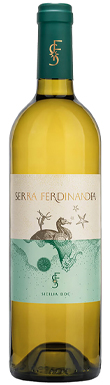
Its three wines remain a work in progress, with Serra Ferdinandea Bianco standing out in this early phase.
Grillo’s natural salinity and aromatic lift are sharpened by Sauvignon’s brightness, resulting in a white that favours clarity and precision over density.
Cascina Penna-Currado, Piedmont
Elena Penna & Luca Currado Vietti
The 16th-century farmhouse on the ridge of Serralunga d’Alba in Piedmont that houses Cascina Penna-Currado
(Image credit: Cascina Penna-Currado)
Elena Penna and Luca Currado (pictured, top) spent most of their careers transforming Vietti into one of the Langhe’s most influential estates.
After selling their stake in the winery in 2016, they remained at the helm until 2023, ensuring stylistic continuity.
‘At that time we were still too young and energetic to retire,’ Penna explains. ‘Plus, our children, Giulia and Michele, showed a deep interest in wine.’
So instead of retiring, they established Cascina Penna-Currado, a project rooted in a restored 16th-century farmhouse overlooking Serralunga d’Alba.
Rather than replicate past success, the family questioned assumptions about the Langhe amid rapid climatic change.
Central to that vision is San Sebastiano in Monforte d’Alba, where they acquired 7ha just outside the Barolo appellation.
Sitting at 470m, the site was once deemed unsuitable for quality production. ‘Yet in these torrid vintages, it benefits from constant winds and surrounding woodland – a rarity in the area,’ Penna says.
Through long-term leases, they also manage Barolo vineyards, including in the historic Monvigliero site, with first releases expected over the coming years.
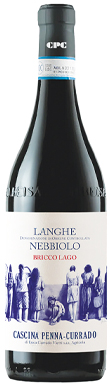
Right now, they focus on strikingly delicate, cool-climate expressions of Langhe’s entry-level wines.
‘We want to exploit the freedom that comes with lower volumes,’ Penna concludes.
‘Annual production is limited to roughly 40,000 bottles, allowing customisation that wasn’t feasible at greater scale. For instance, we use a relevant proportion of whole clusters for most reds.’
That same spirit of experimentation carries through to their only white, which is made from Timorasso, a grape that they had already championed at Vietti.
Vinified and matured in a mixture of Clayver ceramic vats, stainless steel and acacia barrels, EP (mirroring Elena’s initials) shows the same emphasis on finesse as the reds.
‘We harvest our 2.5ha rented plot in Colli Tortonesi slightly early,’ Penna says, ‘to keep alcohol around 13% and enhance longevity – so the typical gasoline notes emerge slowly with cellaring, rather than dominating from the start.'
Andriano/Andrian, Alto Adige
Cantina Terlano
Cantina Andriano’s winery in Andrian, Alto Adige
(Image credit: Cantina Andriano)
Terlano is Italy’s – if not the world’s – most critically acclaimed wine cooperative.
Under Sebastian Stocker, head winemaker from 1955 to 1993, this revered winery put Alto Adige on the fine wine map, especially after the launch of the 1979 Rarity in 1991 – the country’s first late-release white wine.
His successors, Rudi Kofler and Klaus Gasser, have since carried that legacy forward, refining a style built on finesse, precision and uncanny ageworthiness even beyond top-shelf offerings.
In 2008, that philosophy found a new testing ground with the formation of an alliance with Cantina Andriano, Alto Adige’s oldest cooperative.
Founded in 1893, by the mid-2000s it was struggling to define its identity amid a period of radical transformation in the region.
Though quite a bit smaller than Terlano (its members farm roughly 100ha, compared to Terlano’s 190ha), Andriano still represented a substantial commitment rather than a marginal add-on.
The township’s growers remained independent, but all winemaking operations were transferred to Terlano’s main facility and viticulture was progressively aligned with its famously strict standards.
Eighteen years later, Andriano offers a distinct reading of a different – if geographically adjacent – terroir through the same lens.
‘The vineyards of Andriano lie across the valley from Terlano on its east-facing flank, falling into shade by the afternoon. The soils are predominantly limestone- rather than quartz-rich, and the more direct influence of the Dolomites creates a cooler environment,’ explains Manuel Maderle, hospitality manager for both estates.
These variations dictate the core differences: while Terlano’s production is defined by the textural richness and understated complexity of Pinot Bianco, Andriano commits to higher-pitched grapes that benefit from slower ripening, particularly Chardonnay and Sauvignon Blanc.
The resulting wines are more perfumed than their cross-valley counterparts, yet share the same precision and mineral-driven restraint.
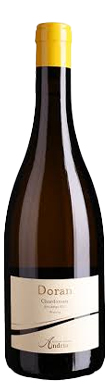
This approach culminates in the Doran Riserva, an unequivocally alpine Chardonnay that eschews opulence for delicacy.
Conti Marone Cinzano, Tuscany
Santiago Marone Cinzano (Col d’Orcia)
Santiago Marone Cinzano
(Image credit: Stefano Casati)
Santiago Marone Cinzano isn’t afraid to challenge the status quo.
Shortly after joining Col d’Orcia in 2017 – one of Montalcino’s most classical and largest estates, which his father Francesco had brought to fame following the sale of the family’s Cinzano beverage empire in 1993 – he launched his own parallel project: Conti Marone Cinzano.
‘One of the things I wondered before working full time at Col d’Orcia,’ he recalls, ‘was why we couldn’t make Poggio al Vento, our flagship single-vineyard Brunello, from a different plot instead of skipping lesser vintages.’
While he later understood the importance of preserving the link with that site, the question became the foundation for his new venture: each year, a parcel is selected from Col d’Orcia’s 108ha of Sangiovese based on factors such as skin to juice ratio in the berries.
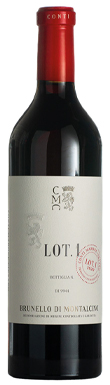
Despite being a single-vineyard Brunello at heart, labelled as Lot 1 across six vintages – only two released so far – the same vineyard has only been chosen twice.
‘Paradoxically,’ he explains, ‘this method turned out to be the most reliable way to maintain consistency in times of climatic uncertainty.
Just to give an example, in 2020 – a hot but also humid vintage – the sandier, wind-exposed Fontillatro vineyard performed best, while in 2021, the highest one just below the village of Sant’Angelo in Colle avoided frost and fared best.’
The innovation is as much in site selection as it is in the process.
‘Younger wine lovers tend to dislike excessive tannin, so we focus on the plot where the grapes have the analytically most polymerised tannins,’ Marone Cinzano explains.
Macerations are slightly shorter and extraction very gentle, with minimal pumpovers.
The two vintages released so far show subtle differences: 2019 quite reserved, 2020 more immediate. Both, however, stand apart from Col d’Orcia’s more classically styled core offerings.
‘There’s a younger generation of producers driving change in Montalcino,’ Marone Cinzano remarks.
It’s their duty to ensure the appellation, especially its southern reaches long known for muscular Brunello, keeps pace with evolving tastes.
Lot 1 points out a guiding path, emphasising precision over sheer power.
Six brilliant, new-project wines from Italy's finest
Fruit from vineyards lying at 600m-800m yields a quintessential expression of Carricante, aged in a mix of oak and stainless steel. Sweet orchard fruits, lanolin...
The house’s signature reductive flintiness segues into notions of acacia honey, camomile and alpine herbs, framed by subdued oak spice. Chalky salinity complements an elegant,...
Yellow peach, airy florals, grapefruit jam and a touch of cinnamon mingle with refreshing herbal touches, underscored by a smoky hint. The palate boasts vivid...
Tenuta del Nicchio, Il Nicchio, Toscana, Tuscany, Italy 2022
My wines
The understated nose opens on confit redcurrants, wild violets and signature Cabernet Franc Mediterranean shrubland notes, with tangy hints of cumin and a soy sauce-like...
Conti Marone Cinzano, Lot 1, Brunello di Montalcino, Tuscany, Italy 2020
My wines
Smoky accents lead into iron and grilled herbs, backed by earth-tinged red fruits. A shorter, 28-month oak ageing allowed the vintage’s generous fruit to remain...
Cascina Penna-Currado, Bricco Lago Nebbiolo, Langhe, Piedmont, Italy 2024
My wines
Whole-berry fermented and aged in oak cask, this displays supple aromas of yellow peach and candied raspberry lifted by potpourri and oriental spice. The midweight...
Raffaele Mosca is an independent wine writer based in Rome and Abruzzo. He holds a master’s degree in Wine Culture and Communication from the University of Gastronomic Sciences in Pollenzo and an advanced sommelier certification from Fondazione Italiana Sommelier. In Italy, he collaborates with leading food and wine publications, Lucianopignataro.it and Gambero Rosso, and manages a personal website, Sommelierlife.it.