New ’50-year-old’ Port category: wines rated
The creation of a '50-year-old' Port category has given producers scope for new bottlings. Richard Mayson assesses the development, with scores and tasting notes of the new releases...


In July this year the Douro and Port Wine Institute (IVDP) announced the creation of a new Port wine category: ’50-year-old’. This comes as an addition to the existing 10-, 20-, 30- and 40-year-old categories and applies to both red (ie tawny) and white Ports.
It’s fair to say that there hasn’t been a rush among the shippers to bottle 50-year-old Port (not many shippers have the wines to draw on). But Kopke, with its relatively large stocks of well-kept, aged tawnies is the first Port house to launch wines in the 50-year-old category. I was fortunate to taste both the white and tawny Ports prior to their launch at the end of vintage this year.
The art of blending
Both Kopke 50-year-olds are expressions in the art of blending and fine tuning. As Carlos Alves, head winemaker at Kopke, pointed out at a blending workshop for the 50-year-old White Port, the youngest wine in the blend is about 48 years old and the oldest is 60. The youngest wine with its aromatic greengage freshness is complemented by the heady, honeyed richness and the quiemada (singed) character of the older wines in the blend. With a certain amount of alchemy, at the end of the blending process the final wine is considerably greater than the sum of its parts.
The wines that go into these 50-year-olds originate from an enviable portfolio of cask-aged wines that is unique to Kopke, especially the whites. Dating back to 1638, Kopke is the oldest of all the Port wine houses and has built up a fine reputation for its barrel-aged Ports.
Vinho dos anjos
The costs involved in keeping these wines in cask for such a long amount of time are significant. It’s not just the capital tied up in the wine itself but also the labour involved in racking and nurturing the wines in barrel – as well as the considerable amount of wine lost to evaporation. In the case of these 50-year-olds, Alves estimates that about two-thirds of the initial stock has been lost to the atmosphere (the so-called vinho dos anjos or angel’s share).
Prior to the final blending, it is this oxidative ageing process that shapes both of these wines. It is responsible for the amber-tawny to olive green hues, the concentration and subtlety of flavour, the mellifluous sweetness and sublime length.
These 50-year-old Ports are not cheap, but like other wines subject to prolonged oxidative ageing (a Madeira for example) you can revisit the bottle over quite a long period of time – happily for six weeks or more if you keep them in the fridge. There can be no finer way to celebrate Christmas and the New Year than with one of these new 50-year-olds. They are wines that will just keep on giving.
50-year-old Port: Tasted
Related content:
Seasonal Ports: 15 to try this winter
My top 10: single-quinta Ports
Great value Christmas Ports to try
Kopke, 50 Year Old White Port, Douro Valley, Portugal

Deep amber-mahogany in colour – tasted blind it would be hard to say if this started out as red or white Port given the deep...
Kopke

Kopke, 50 Year Old Tawny Port, Douro Valley, Portugal
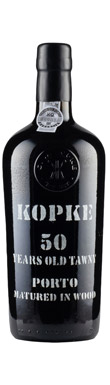
Lovely deep red-tinged mahogany colour. Beautifully lifted and aromatic on the nose, just a touch of singed crocante with dried fruit, roasted chestnuts and toasted...
Kopke
