
Somontano: regional profile plus 10 top wines worth seeking out
Relatively young, and still in a hurry to show the world its potential for quality wine production, this mountain-influenced region in Spain’s north is keen to maintain its own individual identity, as Miquel Hudin discovers.


There’s a classic wine region profile, which always starts with the area’s history. Producers once made wines that were highly regarded and sought-after. Then, people stopped drinking the wines. Or a plague arrived. Or a war. But just before the region slipped off into the brink of oblivion it was rescued by some far-sighted individuals, and now its future looks bright…
DO Somontano, the most northerly of the four Denominaciones de Origen in Spain’s Aragón region, definitely ticks all of these boxes – except it hasn’t done them in the usual order. And most importantly, the story of Somontano is by no means finished.
Scroll down for Miquel Hudin’s tasting notes and scores for 10 top Somontano wines
Vineyards and wine production in the Iberian peninsula flourished in the lead-up to the Roman era. As the fertile banks of the Ebro river led people further inland from the Mediterranean, vines followed. Once civilisation reached the confluence of the Cinca and Vero rivers, the Roman town of Barbastrum was founded. Eventual Christian dominion over the region by Peter I of Aragón led to the establishment of countless monasteries and a rebirth of viticulture across Spain, especially in Somontano.
Barbastrum, or Barbastro as the town became known in Spanish, became established as the capital of its region, Somontano de Barbastro, and became an important economic centre. And viticulture boomed due to its open geography of rolling hills, as well as a continental/Mediterranean climate, which provided a long autumn for optimal ripening.
French influence
While the phylloxera plague started in the Rhône Valley in the 1860s, it spread quickly. A Bordeaux winemaker, François Lalanne Merlet, could see the writing on the wall and, along with his wife, Jeanne Félicia Lataste, moved south of the Pyrenees to eventually establish Bodegas Lalanne in 1894.
‘This is New World in the Old World’ – José Javier Echandi, Sommos
This was to prove a significant event that defined the ‘modern era’ of Somontano – albeit back in the 19th century. Lalanne was very aware of phylloxera’s inevitable spread, so he planted his new vineyards in the Finca San Marcos grafted to American rootstock. Once phylloxera did arrive in the region in the very early 1900s, he was well prepared.
But the other key aspect to Lalanne’s arrival was the fact that, in addition to making use of the Spanish varieties Tempranillo and Macabeo, he planted Cabernet Sauvignon, Merlot, Syrah, Pinot Noir and Chardonnay.
These varieties wouldn’t be seen in great quantity in the rest of Spain until a half-century later, but they adapted to the region. In a similar way, the owners adopted Spanish versions of their names, Francisco and Juana Felicia, and established a family winery which continues six generations later.
Somontano: at a glance
Wineries: 29
Area planted: 4,000ha
Annual production: 16m bottles
DO founded: 1984
Main town: Barbastro
Main red grapes: Cabernet Sauvignon, Garnacha, Tempranillo, Merlot, Syrah, Pinot Noir, Moristel, Parraleta
Main white grapes: Chardonnay, Garnacha Blanca, Gewürztraminer, Macabeu, Riesling, Sauvignon Blanc, Alcañó
Somontano wines: know your vintages
2020 Large (18%) drop in production compared to the average figure due to frost issues in the spring and a historically high quantity of white grapes. The resulting wines are showing a wealth of acidity and aromatic potential with the ability to age.
2019 Classified as Excellent due to having a fine balance of ripening paired with a disease-free harvest that was 11% larger than 2018. White wines are showing exceptionally well currently and the vintage appears to have the markings of a classic year.
2018 A more moderate year classified as Very Good. Wines are currently drinking well, especially the reds, but not showing the length needed for longer ageing.This vintage favours drinking inthe near term.
2017 A hotter year classified as Excellent. Wines are very much ready to drink and showing well. Despite the heat, wines are generally balanced, but the native varieties such as Garnacha or heat-friendly imports such as Syrah show the best. Great body to the wines and while perhaps not with the overall depth of 2016, these wines will hold up for some time to come.
2016 While classified as Very Good and not Excellent, there are wines in this vintage that lean more towards the lengthy complexity seen further east in Catalonia and southern France. Wines are drinking well now, but in terms of the reds, an older style of heavier cellar work has left some of the wines far too weighty, when it wasn’t necessary.
2015 Classified as a Very Good year as, while there’s good ripeness to the wines, those that are still around are lacking in acidity and starting to fall off. Fruit profile can be rich at times, but there’s a lot of heft to these wines that’s hard to get around.
The DO for Somontano was officially approved in 1984 and from the start the French varieties, which by now had been in the region for nearly a century, were included.
At the time, the region was still known for being dominated by red and rosé. Indeed, 20th-century Somontano looked much more like nearby Navarra than Alsace, so it was curious that the use of Gewürztraminer (in 1997) and Riesling (in 2009) – two varieties from the most northern reaches of France – was eventually approved.
In 1992, Somontano became established on the Spanish wine scene. This was the year in which Viñas del Vero (see ‘Names to know’ below) opened its new, modern cellar. Founded in 1986, it was originally part of the Lalanne estate just north of Barbastro and neighboured several other estates that also expanded during this period. These include Enate, which opened in 1992, and Bodegas de Pirineos, which was originally launched in 1964 but was modernised in 1993, when the current winery was built, rounding out this important focus of production in Somontano.
As Viñas del Vero’s current winery director José Ferrer puts it: ‘We are at the centre of Somontano.’

On the edge
Compared with the other DOs in Aragón – Calatayud, Campo de Borja and Cariñena – Somontano is quite a curiosity. The other DOs share a similar profile, with wines typically based upon Grenache blended with a bit of Tempranillo and Carignan. Meanwhile, Somontano has a broad selection of 15 different permitted varieties, nearly half of which are white. Its wines also have a unique profile, with a driven, thriving acidity, especially in the whites.
Located 90 minutes from Zaragoza, the individual nature of Somontano is abundantly clear when driving in via the highway. Directly to the north are the gleaming snow-capped peaks of the Pyrenees, with Somontano sitting in the dead centre of the foothills. Acting as both a rain buffer and a built-in refrigeration system to keep the region cooler in the summer evenings, the mountains are a defining aspect of the region.
Don’t think of Somontano as a ‘high altitude’ region, though – at least not in an Andean sense. Barbastro, home to many of the region’s vineyards, is at 371m, sitting where the mountains start to climb, or as the name originally states in Aragonese: ‘beneath the mountain’. José Javier Echandi, technical director for Bodega Sommos, just south of Barbastro, also worked until 2017 for Errazuriz in Chile. ‘There I had the Andes, here I have the Pyrenees,’ he says. ‘This is New World in the Old World.’
Echandi’s comments sum up what it is that makes the region unique; the air has a harsh, blunt quality that speaks to the extremes found in continental regions, but there’s just enough freshness from the mountains to soften it and imbue a pliable quality to the wines.
Whites to discover
What’s more, the buffer of the Pyrenees is very similar to that of the Vosges mountains in Alsace, which goes a long way to explain why Riesling and Gewürztraminer have thrived here. It’s also why the region has been focusing on blending the appeal of mountain tourism with enotourism, with great success.
And this is why it must be said that Somontano’s story is still being written. Unlike Rioja or Ribera del Duero in the northwest, where Tempranillo has long been the leading grape, the concept of what works best in Somontano is in flux, yet coming into focus.
The refined emphasis on local red grapes such as Moristel and Parraleta is showing great promise. But it’s impossible to ignore just how great the Riesling, Gewürztraminer, and especially Chardonnay are (and I’ve long been doubtful of high-quality Chardonnay being produced south of the Pyrenees). The success of these white varieties hasn’t been lost on producers, as evidenced by the most recent harvest in 2020, which saw white production increase to 44% of the total yield.
Somontano may not be a Spanish DO with which many wine lovers are familiar, given that it only has about 30 wineries and exports just 19% of its production.
But if its recent history and the rapid pace of change are any indication, it’s an excellent moment to get to know the region and see this very, very different side to Spanish wines.
Somontano: eight names to know
Blecua
While owned by and right next to Viñas del Vero, this is a wholly different project. The property was first recorded in the 11th century; the 19th-century house on the estate is an anachronism, modelled on an Italian estate. The focus here is on just one wine, with the intention of creating a single, long-aged reserve style, similar to Rioja but with a marked signature of Somontano.
Enate
Despite only starting to make wines in 1992, Enate now owns 450ha of vineyards, has a 4,000-barrel cellar and produces at least 15 different wines, which are exported to more than 50 countries. It also owns Bodega Laus. Very much open for enotourism visits, it has also curated an art gallery for visitors to view.
Fabregas
Established in what was a distillery from the early 20th century, this is one of the newer wineries to have embraced local varieties such as Moristel, as well as Garnacha in both red and white variants. As one of the wineries embracing enotourism, it offers a unique ‘Moristel Experience’ so that visitors can better understand this recuperated variety
Lalanne
One of the original wineries upon which modern Somontano is based, it is owned by the same Lalanne family that originally came from Bordeaux in the late 19th century. They’re still making a classic style of wines, with a focus on long ageing for the top expressions. These reflect their respective origins by blending French grapes with the region’s local grapes.
Obergo
A very different project, with vineyards located in the higher altitude region of Secastilla. While it makes use of as many different grape varieties as other wineries in the region, its main focus is on Garnacha and making wine from smaller, singular parcels found around the region, especially with old vines.
Otto Bestue
The family lays claim to a long history as viticulturists in the region, all the way back to 1640, in fact. In 1990, the father-and-son team (both named Lorenzo) created the modern winery. The focus drifts towards a sturdier, more tannic style of wine, and theirs is one of the few cellars in Somontano that pulls this off quite well.
Sommos
This winery is unmissable when you approach Barbastro, thanks to its very modern architecture, jutting out of the rolling hills covered in neat rows of vines. In six short years, Sommos has gone from basically nothing to become one of the four main wineries in the region, taking in 3,000 tonnes of grapes annually and producing 20 different wines.
Vinas del Vero
With an annual production of six million bottles (the largest in Somontano) and a dizzying array of wine categories and types, Viñas del Vero truly has something for everyone. Its ability to produce styles ranging from approachable rosés or whites to delicate Garnachas from higher altitude vineyards around Secastilla has made it a leader in the region.
Hudin’s pick: 10 top Somontano wines
You might also like:
Spanish wine in 2021: Top trends and the 10 bottles worth seeking out
10 great Spanish winemakers you need to know
Aldahara, Rasé Chardonnay, Somontano, Aragón, Spain, 2018
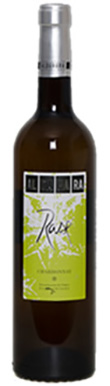

Fresh orange peel, potpourri, heady orange blossoms, green peppercorns, and a wealth of perfumed aromatics. Structured on the palate, but not overwhelming, with a nice...
2018
AldaharaSomontano

Viñas del Vero, La Miranda Secastilla Garnacha Blanca, Somontano, Aragón, Spain, 2018
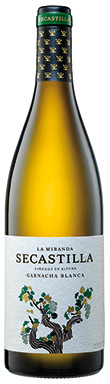
Light white pear and pear, bitter melon, minor grapey notes and juicy lime on the nose. Very crisp acidity on the palate with continued green...
2018
Viñas del VeroSomontano
El Grillo y La Luna, El Canto del Grillo, Somontano, Aragón, Spain, 2016
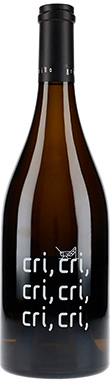
A rather subdued aromatic profile: light lemon peel and floral touches with some minor hints of dried apricot. Crisp and zesty on the palate, lighter...
2016
El Grillo y La LunaSomontano
Bodegas Meler, 15 Meses, Somontano, Aragón, Spain, 2012
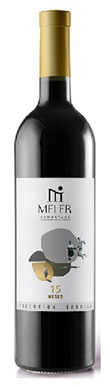
Soft, evolved red fruits, with crisp red cherry notes still hanging in there, but getting more tertiary, dusty and sinewy with earthy notes developing and...
2012
Bodegas MelerSomontano
Bodegas Sers, Singular Parraleta, Somontano, Aragón, Spain, 2018
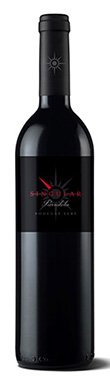
Dried strawberry with crunchy cranberry, wild rosemary, a touch of garrigue, a crunchy mineral aspect and a backbone of toasted notes. Nicely balanced on the...
2018
Bodegas SersSomontano
Otto Bastué, Viñadores, Somontano, Aragón, Spain, 2016
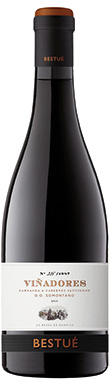
Big, plump boysenberry and blackberry notes, but with lots of subtle character despite the initial weight; streaks of vanilla, light toasted notes, chopped fennel and...
2016
Otto BastuéSomontano
Viñas del Vero, Blecua, Somontano, Aragón, Spain, 2011
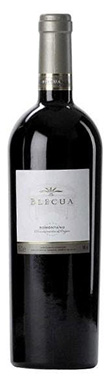
Ripe red fruits – cherry, strawberry – with a touch of garrigue on top of some light reductive notes, dried peppercorns and red bell pepper....
2011
Viñas del VeroSomontano
Obergo, Expression Garnacha, Somontano, Aragón, Spain, 2017
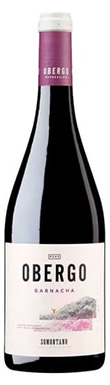
Powdery dried red cherries, cracked black pepper, chalky notes, dried lemon peel and a touch of plum on the nose. Fresh, crisp, very engaging and...
2017
ObergoSomontano
Fábregas, Familia Moristel, Somontano, Aragón, Spain, 2018
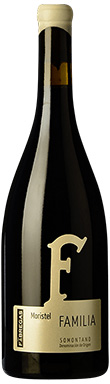
Ripe strawberry and red fruit notes, wet forest herbs and earth with a light touch of toasted notes. Fruity and crisp on the palate with...
2018
FábregasSomontano
Sommos, Colección Syrah, Somontano, Aragón, Spain, 2017
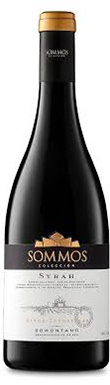
Ripe dark fruit with a light touch of baked red strawberry and forest fruits, fennel, rosemary, touch of graphite, plum, and dried orange peel. Rather...
2017
SommosSomontano
