A drink with… Pierre Mansour
The Wine Society’s wine director takes stock of the importer-retailer’s landmark 150th anniversary ahead of the final release of its celebratory Generation Series – and looks back at 20 transformative years.


The Wine Society has been celebrating its 150th anniversary throughout 2024, with a jam-packed programme of events, special bottlings and producer-facing initiatives. One of the highlights has been the quarterly release of the different tranches of the Generation Series. We sat down with wine director Pierre Mansour ahead of the fourth and final launch.
Decanter: These last few years have been extremely challenging – particularly for the wine sector. Any lessons learned?
Pierre Mansour: The businesses that have kept their heads above water are the ones that emphasised the things that make them stand out. Being a mutual without external shareholders, that was exactly our strategy. However, two important challenges that will have an ongoing impact on the wine sector: climate change and a general loss of confidence in en primeur (EP) campaigns. There are older, fully-matured vintages available significantly cheaper than new releases. It’s a really hard case to make for a fine wine consumer.
D: The Society released a celebratory fine wine Anniversary range – it reflects interesting changes in the understanding and geography of fine wine.
PM: The quality and breadth of fine wines is greater than ever. Last year we started a new proposition, called First Release, alongside EP. We are selling as much Australian and Spanish wine through First Release as we are French (which, for context, makes up 60% of our turnover overall). There is definitely an exciting shift here – and incredible opportunity for off-the-beaten-track fine wines to emerge.
Scroll down for tasting notes and scores for the wines in the final release of The Wine Society’s Generation Series
D: The Society has invested a lot on a sustainability programme. What have you achieved so far and what are the main goals moving forward?
PM: It’s a massive holistic approach. The first thing we did was complete an audit of our carbon footprint. It showed us that the highest contributing factor is glass bottles. We’re now at just over 40% of our range using bottles weighing less than 420g – our goal is 60% by 2025 and 100% by 2027. We are on our journey to being carbon neutral and carbon zero. But instead of offsetting, we are insetting: rather than buying offsetting credits we are providing funds to our suppliers for initiatives that will help create a more resilient vineyard and carbon reduction in the long term .
We’ve been running seminars for our suppliers, focused on regenerative agriculture. We bring in keynote speakers and also producers that already implement regenerative practices. And we will be soon announcing the winners of our Climate and Nature programme, through which we directly fund a number of our growers so they can develop sustainability practices.
D: One of the most exciting initiatives of the 150th has been the release, throughout the year, of the different tranches of the Generation Series, each focused on half a century of The Society’s history. There were some really interesting discoveries in the early releases.
PM: It was almost like going into a time machine. There were three surprises that really stood out for me in the first release [1974-1824]: the fact that Portuguese still red wines were popular – I was expecting to see Port only; the Wachenheimer Riesling, which was much drier than the benchmark German Rieslings of today; and, finally, the red Rioja, which tastes like what most of us consider as a modern, or future Rioja. Learning all these things and creating these new wines has been so fascinating.
D: The fourth and final release, which looks at the future of wine, is now available. How did you develop it?
PM: We started by identifying the biggest trends that will shape the wine industry over the next 50 years. The most important of which will no doubt be climate change and the [consequent] emergence of lesser-known and resistant grapes – the series includes a Burgundy Aligoté and a Sauvignac. We’ve also bottled our first still English Chardonnay as part of the Series. We’ve included two wines from our ‘Sustainability Champions’: Symington’s in Portugal (Farming Champion) and Simonsig in South Africa (All-rounder Champion).
We also wanted to provocatively question the lack of innovation in the wine industry. So we worked with Chapoutier to create a blend from the Southern and Northern Hemispheres – Syrah from the Rhône and Shiraz from Victoria.
Not all the trends we identified – wines produced north of the UK or alcohol-free, for example – are represented in the range because we couldn’t find examples that offered good quality/value. On the other hand, we’ve included a botanical brew as a non-alcoholic alternative – they definitely have the wine drinker in mind and we think there’s potential there.
D: You’ve been at TWS for over 20 years. What are the most important changes you’ve witnessed in the wine industry? And what were your most pleasant discoveries?
PM: The big thing is that wine quality has stepped up across the board. On a more personal and philosophical level, what I think is really important [in wine] has changed. As a novice I focused on variety, sense of terroir, climate soil… When what actually makes wine so special is people; the product is directly shaped by the producers’ decisions and philosophy and is also designed to connect people.
In terms of discoveries, I must mention Spain. I bought Spain for 15 years and my word, within that timespan that country went from being a good to an outstanding producer. Another country that constantly excites me is Greece, especially Xinomavro which I think is a real ‘future fine wine’.
The Wine Society’s Generation Series – 4th Release:
Related articles
- A drink with… Rex & Cat Rosales
- A drink with… Abrie Beeslaar of Beeslaar Wines
- A drink with… Amber Mihna & Phil Robertson
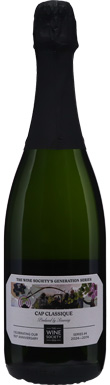
Simonsig, The Wine Society's Generation Series Cap Classique, Stellenbosch, South Africa, 2022
91
A very enjoyable, subtly complex Chardonnay-based fizz, produced by Simonsig for The Wine Society. It is both a celebration of the producer's enduring commitment to social sustainability and of the anticipated growing popularity of South African bubbles in years to come. A core of yellow apple, ripe pear, apple strudel and frangipane, lifted by vibrant acid and elegant bubbles, fills the mouth, leaving a refreshing tail of creamy citrus.
2022
Simonsig
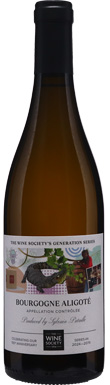
Domaine Sylvain Pataille, The Wine Society's Generation Series Bourgogne Aligoté, Bourgogne, Aligoté, Burgundy, France, 2022
91
Aligoté has long been overlooked and underestimated, seen merely as a poorer alternative to the reigning Chardonnay. Many Burgundy producers have preservedered in championing the grape and - with a little help from climate change - are beginning to see consumer demand fall into pace. Hence the inclusion oif this iteration, produced by Sylvain Pataille in the forth release of The Wine Society's Generation Series. Elegant and poised, its firm acidity carries the fleshy citrus, blanched almonds and green apple flavours. Delicious finish, mineral yet unctuous.
2022
Domaine Sylvain PatailleBourgogne
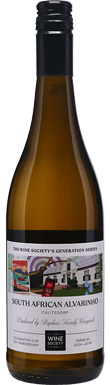
Boplaas, The Wine Society's Generation Series South African Alvarinho, Western Cape, South Africa, 2024
89
The small town of Calitzdorp is mostly known for the production of fortified port-like wines, but local producer Boplaas has instead specialised in table wines from Portuguese grapes, leveraging their ability to withstand hit and restraint acidity. In this expression of Alvarinho, of Vinho Verde and Galicia fame, a creamy layer of key lime pie, lemon curd and pear sorbet is lifted by crunchy green apple and white grapefruit zest. There's a fine reductive veil that adds subtle smokiness and mineral freshness.
2024
Boplaas
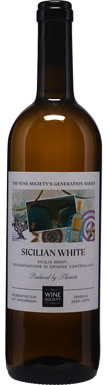
Planeta, The Wine Society's Generation Series Sicilian White, Menfi, Sicily, Italy, 2023
89
<p>Sicilian powerhouse Planeta has made this blend of Grecanico, Moscato Giallo and Grillo for The Wine Society's celebratory series, which showcases the Italian island's ability to deliver lively, acid-driven wines that marry fruit forwardness and elegant salinity. This is a superb everyday drinker, easily paired with a variety of dishes. Lemon zest and orange blossom lead the nose, followed on the palate by wild fennel, melon and preserved lemon. Simple and delicious.</p>
2023
PlanetaMenfi
Château Thieuley, The Wine Society's Generation Series Sauvignac, Vin de France, Bordeaux, France, 2022
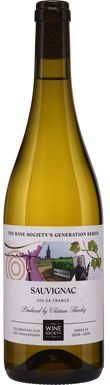
88
Hybrid varieties will have an ever more important role in viticulture, not least in classic regions, such as Bordeaux, where climate change is having considerable impact. Château Thieuley has an experimental vineyard of Sauvignac, a crossing of Riesling, Sauvignon Blanc and a resistant hybrid, and The Wine SOciety turned to them to produce a wine that could show the variety's potential. The result is vibrant and highly enjoyable with firm acid, zesty grip and wet stone freshness. Juicy passion fruit, melon and crunchy pineapple at the core.
2022
Château ThieuleyVin de France
Simpsons Wine Estate, The Wine Society's Generation Series English Chardonnay, Kent, England, United Kingdom, 2023
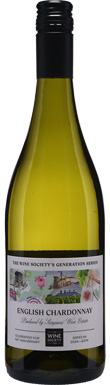
88
An unoaked Chardonnay, bright and focused, with a saline lining to the intense citrus fruit, pear peel and gooseberry fruit. The acid is robust, unapologetically English, but there's also a more solar side to this wine with crunchy nectarine and pineapple playing in the back palate.
2023
Simpsons Wine EstateKent
El Escocés Volante, The Wine Society's Generation Series Vino de Altura Garnacha, Aragón, Spain, 2023
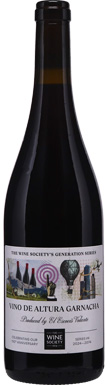
92
Talented and Garnacha-obsessed British winemaker Norrel Robertson MW was summoned to produce this Garnacha that showcases one of Spain's most exciting trends: high-altitude Garnacha, defined by elegance, freshness and poise. Bursting with crunchy black cherry, plum and bramble, topped with dried violets and rose petals. Vibrant, crunchy with mineral tannins and a refreshing savoury veil. Lingering thyme, oregon and white and black pepper. Best enjoyed slightly chilled.
2023
El Escocés Volante
Symington Family Estates, The Wine Society's Generation Series Douro, Douro, Douro Valley, Portugal, 2019
91
Intense, luscious fruit dominates this blend of Touriga Nacional, Touriga Franca and Alicante Bouschet produced by the Symington family for The Wine Society. The dark plum, bramble and blueberry rest on a fresh, earthy layer of forest floor and wet tobacco leaves. With a nod to traditional Douro, there's a pleasant rusticity here, in counterpoint to the perfumed depth. Enveloping, lingering mote of petrichor.
2019
Symington Family EstatesDouro
Despagne, The Wine Society's Generation Series Claret, Bordeaux, France, 2022
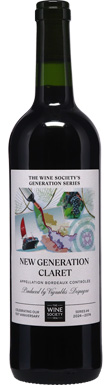
89
As Bordeaux winemakers learn lessons from climate change and shifting consumer demands, different viticulture and winemaking approaches are coming into focus. For this Merlot-based claret, Despagne used fruit planted on fresher, north-facing slopes, delivering crunchy bramble and raspberry fruit, with Cabernet Franc adding herbal nuance. Firm, savoury tannins.
2022
Despagne
