What could the ‘Supermoon’ do to wine?

Get our daily fine wine reviews, latest wine ratings, news and travel guides delivered straight to your inbox.
You are now subscribed
Your newsletter sign-up was successful
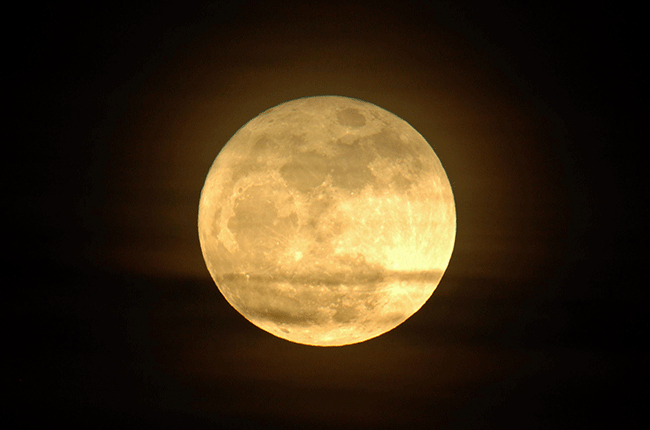
The Supermoon could affect the taste of wines and development of vines around the world, but it's coming at a good time for vineyards, according to proponents of biodynamics.
The so-called ‘Supermoon’ will appear 14 percent larger and 30 percent brighter in the sky tonight (14 November), the biggest of its kind for 48 years.
What effect could this natural phenomenon have on the wines being made this year? Followers of biodynamic principles offer some insight below.
‘Wines most likely to show any kind of lunar effect will be those farmed biodynamically, because this is the only farming system which actively considers the the vines as part of a wider celestial sphere,’ said Monty Waldin, a biodynamic wine consultant and writer.
Waldin suggested two ways in which the Supermoon could change this year’s wines:
- The Moon’s closeness to the Earth brings a ‘winter mood’ to plants, as plant sap is said to concentrate in the vine roots. This could make white wines taste less fruity and smell less aromatic, and could make reds taste more tannic than usual.
- The Moon being full brings a ‘summer mood’ to plants by reflecting sunlight back to Earth which otherwise would be ‘lost’. This could make wines taste more fruity and small more aromatic and could make reds taste rounder, plumper.
‘The Supermoon could be beneficial for the living force of our 2016s, which are going through malolactic fermentation. It may also help bacteria become particularly active,’ said Thomas Duroux CEO of Château Palmer, which follows biodynamic practices in its vineyards.
‘It would have been very different in spring time, because it would cause real increase in mildew pressure.’
Get our daily fine wine reviews, latest wine ratings, news and travel guides delivered straight to your inbox.
Bérénice Lurton, of the biodynamically farmed Château Climens in Barsac, also said that it was lucky the Supermoon didn’t arrive in spring.
‘If it had been in the spring, we would have been clearly under pressure by mildew, as the combination of full moon and lunar perigee impact the rise of water into the earth and plants — to which vine is especially sensitive,’ she told Decanter.com.
‘We would have then made a horsetail spraying before. But now, we can sleep soundly and enjoy the beauty of the phenomenon, if ever the clouds let us see something.’
According to the biodynamic calendar, 14 November began as a ‘fruit day’, which is the best for tasting wine. But, this was set to merge into a root day following by two more root days on 15 and 16 November. Root days are believed to have a negative effect on wine flavour.
Of course, there is much division in the wine world over biodynamic principles, and even some followers of biodynamics disagree on the extent to which the calendar and lunar cycles physically affect the taste and development of wine.
Written by Laura Seal for Decanter.com
Updated 15/11/16

Laura Seal is a freelance food, wine and travel writer based in London, but travelling regularly to Spain.
Besides writing travel guides, learning content and news stories for Decanter, she has also contributed to Country Life and US-based Food&Wine Magazine.
After graduating from UCL with an English Literature & Language degree in 2016, she joined Decanter as editorial and digital assistant. In 2017 she was promoted to the role of content creator on the digital team.
She worked with the Decanter design team to produce the much-loved ‘Tasting Notes Decoded’ series, which is published on Decanter.com and serialised in the magazine.
In addition, she compiles the 'A month in wine' feature for Decanter Magazine and formerly worked on MarketWatch.