
Chateau Batailley: A pillar of value in Pauillac
For a lesson in definitive Pauillac style without breaking the bank, you need look no further than fifth growth Château Batailley, which inspires a devoted following with its power and consistency.
In the heart of Pauillac, where iconic Bordeaux estates often dominate headlines with soaring prices and strong marketing, Château Batailley stands as a quiet counterpoint.
This fifth growth property, as ranked in the 1855 classification, delivers consistent quality at prices that remain accessible, making it a beacon for value in a region frequently criticised for rising prices.
Owned by the Castéja family since 1961, Batailley forms part of its broader Borie-Manoux group, which spans Left and Right Bank properties alongside a sizeable négociant business.
Yet the estate shuns the spotlight – no flashy tasting rooms, tourist facilities or polished press releases; instead just a commitment to quality, rooted in decades of experience and knowhow.
As Frédéric Castéja, who oversees broad business operations alongside his father Philippe, puts it: ‘We don’t shout, we’re not flashy. That’s not our style.’
Instead it’s the wines that speak, through their structure, longevity and reliability – even in challenging vintages.
This humility, combined with family control over distribution through the négociant business, ensures Batailley offers real value both for consumer and investor: wines with long drinking windows and en primeur releases that will generally appreciate modestly and reliably over time, rewarding buyers without great speculation.
Get our daily fine wine reviews, latest wine ratings, news and travel guides delivered straight to your inbox.
Spanning 63ha mostly on the flat Pauillac plateau – ‘tractors can do 1km without turning,’ Frédéric points out – the vineyards are planted on deep, ancient Günz gravel soils blended with silica and sand.
Impressive ageing potential
This landscape helps to imbue the wines with firm structures and impressive ageing potential.
Plantings follow classic proportions for the Pauillac region: 70%-80% Cabernet Sauvignon and much of the rest Merlot, with smaller amounts of Petit Verdot and Cabernet Franc (1%-4% in all).
‘We’ve always had four grape varieties,’ Frédéric explains, noting that the varieties help to build the second wine – Lions de Batailley, sourced from the younger vines of the vineyard – which means an estate signature is retained without diluting quality.
Yields average 45-50hl/ha, with recent lows in challenging years around 30hl/ha due to adverse weather.
Viticulture at Batailley is meticulous yet pragmatic. Replanting targets parcels more than 50 years old, allowing for fallow periods of three to four years.
No herbicides are used, and working methods combine modern practicality and biodynamic influences – treatments have followed moon cycles since 2005 on the Right Bank and since 2010 on the Left Bank.
Five hectares – half of a plot shared with neighbouring sister property Château Lynch-Moussas – have been under organic trial since 2016, informed by the family’s fully certified organic 75ha Provence estate Château Bas (acquired in 2020), which produces reds, rosés and whites – but there are no plans for certification here in Pauillac.
‘We need to be careful in Bordeaux – it’s not the best appellation for organics, because of the climate conditions,’ Castéja cautions, underscoring a philosophy that marries respect for nature with realism.
Biodiversity benefits enormously, however, from the 200ha or more of forests surrounding Lynch-Moussas – one of the largest wooded buffers in Pauillac and nearby St-Julien.
Lengthy tradition
The Batailley estate ranks among the Médoc’s oldest, with vines cultivated since the 17th century on land named after the 1453 Battle of Castillon, a decisive clash in the Hundred Years’ War in which French forces finally wrested control of Gascony from the English.
Documented ownership begins in the 18th century with the Saint-Martin family of Pauillac, then in 1791 shares passed to merchant Guillaume Pécholier.
A transformative phase arrived in 1816 when Daniel Guestier bought it, expanding vineyards, upgrading facilities and boosting quality, ultimately earning classification status in the 1855 official ranking.
Subsequent owners included Guestier’s son (1847) and banker Constant Halphen (1866). The Borie era started in 1924, with the purchase by brothers Marcel and Francis, which led to the 1941 division into two separate properties, Château Batailley (Marcel) and Château Haut-Batailley (Francis).
Denise Borie and Emile Castéja took the reins in 1961, with Emile guiding things for four decades, embracing innovations such as early picking machines, though these were rarely used.
A heart attack in 2001 shifted control to Frédéric’s father Philippe, beginning ‘just in time for harvest picking’, Frédéric recalls.
Philippe, along with consultant at the time Denis Dubourdieu, prioritised meticulous vineyard mapping and planting before an expansion of the vat house in 2006 to 62 stainless steel vats (about one per hectare, spanning 50hl-200hl in capacity), which enabled plot-by-plot vinification.
‘It took them at least 10-12 years to understand the vineyard,’ Frédéric adds.
Winemaking is classic, slowly moving with the times to include cooler fermentations for greater fruit purity, but there are no radical processes here.
Growing the range
Technical director Didier Chadourne (since 2013), vineyard manager Olivier Gourdin (since 2022), and cellar master Hugues Mathieu (since 2023) collaborate with consultants Axel Marchal (recipient of the Decanter Rising Star award in 2021) and Valérie Lavigne.
Fermentation is at low temperatures: ‘Never above 28 degrees,’ Mathieu notes, down from 30°-31°C a decade ago, with the aim of attaining ‘more freshness and more fruit at the end’.
Early picking preserves quality, especially in the Merlot: ‘There’s a peak with this grape and then quality goes down – it’s easier to pick before that point than just after.’
Until 2014, the estate produced only a grand vin, but that year saw the inaugural vintage of a second wine, Lions de Batailley, and this was followed by a third wine, Pauillac de Batailley, in 2018.
Between them they have broadened consumer access, while ensuring the best fruit goes to preserve the quality of the flagship wine.
Production typically divides roughly two-thirds to the grand vin, with the remainder split between the second and third wines.
The grand vin sees the longest ageing in French oak – 16-18 months, with 55%-60% new barrels – imparting structure and complexity, suitable for long cellaring.
In contrast, Lions de Batailley and Pauillac de Batailley use significantly less new oak (typically 40%-45% for Lions, 20%-30% for the third wine) and shorter ageing, resulting in wines that are more approachable in their youth: softer, fruit-forward and ready to enjoy sooner, making them ideal for earlier drinking without sacrificing the estate’s signature character.
Value package
Frédéric Castéja
The grand vin’s style is distinctly its own: a beautiful underlying strength that captures classic Pauillac power – cassis, blackcurrant, minty freshness, graphite and soft cedar spice – yet tempered with a certain delicacy and finesse.
It is never overly heavy or extracted; instead, it offers silky tannins, vibrant fruit and a pronounced mineral backbone that leads to an unmistakable gravelly, flinty finish.
This balance – potent yet beguiling, structured yet graceful – makes Château Batailley particularly rewarding when given time in bottle, which allows the muscular frame to integrate and the elegance to shine through.
It excels also in so-called ‘off vintages’, when it still maintains precision, focus and above all drinkability.
The value that Batailley offers is informed by the négociant side of the family business.
Borie-Manoux handles 30 million bottles annually (1-1.3 million coming from the family-owned estates alone, involving three dedicated bottling lines), granting the company insight into the overall context of the market as a whole.
‘We control our distribution and our pricing direction, but also, as négociants selling neighbours’ wines, inflation is restrained,’ says Frédéric.
‘If we raise our price, we can’t tell other people to be reasonable with their prices.’ When someone buys Batailley en primeur (while the wines are still being aged in casks before bottling and release) ‘they know two or three years later the price will be higher naturally’, Frédéric says.
‘We want people to know they’ve done a good deal.’
Sizing up a legacy
Future plans at Batailley include a vat room refurbishment, though ‘only if it’s actually going to add value to the wine – there’s no point otherwise’, Frédéric says resolutely.
Heritage is preserved in tangible ways. The estate maintains an extraordinary library cellar with some 65,000 bottles stretching back to 1881 – the oldest vintage still held in quantity.
Whole racks are dedicated to legendary years such as 1961, 1949 and others – in large-format bottles, too – allowing the family or occasionally special clients to buy a birth-year bottle or a milestone vintage from well-preserved stock.
Few estates retain such an extensive collection in-house, a testament to meticulous storage and the family’s reverence for its history.
‘It’s a library for everybody, for my children and grandchildren,’ Frédéric says, capturing the intergenerational spirit.
Large formats play a special role in this legacy. The estate regularly takes orders for magnums, double magnums, imperials and even larger sizes up to 27L, catering to collectors and special occasions.
In 2024, to mark the centenary of Borie-Castéja ownership, the family reintroduced the MarieJeanne format at 2.25L (three 75cl bottles) – a historical Bordeaux vessel somewhat forgotten since the mid-20th century.
Frédéric describes it as offering ‘the best exchange between wine and oxygen’ – optimal for ageing and development.
Presented in elegant wooden cases with a commemorative red label (£131-£137 Justerini & Brooks, Mann Fine Wine, Uncorked), it has become a keeper format, available alongside traditional sizes (75cl, £35 Cru Wine, Fine Wine Direct, Mr Wheeler) and underscoring the estate’s blend of tradition and thoughtful innovation.
Enduring appeal
The Castéjas champion their own estates; Philippe, 77 (who was flying to Hong Kong at the time of our meeting and impressive vertical tasting), still travels relentlessly, while Frédéric logs three months yearly abroad.
But they also fly the flag for the region more broadly. ‘I hope I’m a good ambassador... we need to be good ambassadors for Bordeaux.’
With 17 children among the family’s eight shareholders (three of whom work in the wine business), continuity seems assured, though Frédéric emphasises choice: ‘There’s no pressure on the next generation; they must do what they want.’
In fact, he’d rather they worked elsewhere before joining the family business if they wish, as he did.
Château Batailley’s enduring appeal lies in this quiet confidence – deep roots, precise craft, unwavering value – proving that exceptional Pauillac can remain approachable and rewarding.
Pauillac paradigm: a taste of Château Batailley in 12 vintages
Related articles
10 of the best value grand cru classé estates in Bordeaux
Bordeaux 2023 retasted in bottle: 30 of the finest wines from this excellent vintage
A St-Emilion story: Château Pavie profile
Château Batailley, Pauillac, 5ème Cru Classé, Bordeaux, France, 2000
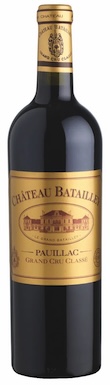
Warming dried herbs, intense florals and savoury charm define the nose of this 69% Cabernet Sauvignon, 26% Merlot, 3% Petit Verdot and 2% Cabernet Franc...
2000
BordeauxFrance
Château BatailleyPauillac
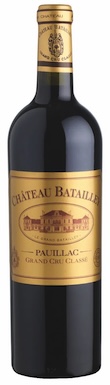
Château Batailley, Pauillac, 5ème Cru Classé, Bordeaux, France 2010

This 78% Cabernet Sauvignon, 19% Merlot, 2% Petit Verdot and 1% Cabernet Franc blend is fragrant with dried herbs, dark chocolate, violets and warm baking...
2010
BordeauxFrance
Château BatailleyPauillac
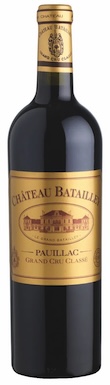
Château Batailley, Pauillac, 5ème Cru Classé, Bordeaux, France 2016

Dark black fruits with cool, unsunned energy open this 85% Cabernet Sauvignon, 12% Merlot and 3% Petit Verdot blend. Fragrant rose and violet petals give...
2016
BordeauxFrance
Château BatailleyPauillac
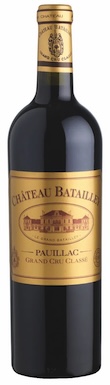
Château Batailley, Pauillac, 5ème Cru Classé, 2009

The nose of this 74% Cabernet Sauvignon, 22% Merlot, 2% Petit Verdot and 2% Cabernet Franc blend is wonderfully fragrant, spiced and herbal with floral...
2009
BordeauxFrance
Château BatailleyPauillac
Château Batailley, Pauillac, 5ème Cru Classé, Bordeaux, France, 2015

Tobacco, dark chocolate, leather and liquorice spice make for a heady nose on this 77% Cabernet Sauvignon, 20% Merlot and 3% Petit Verdot blend. Juicy...
2015
BordeauxFrance
Château BatailleyPauillac
Château Batailley, Pauillac 5ème Cru Classé, Bordeaux, France 2005

From the hot, dry 2005 vintage, this Cabernet Sauvignon-led blend (73% Cabernet Sauvignon) shows coffee, cinder toffee, burnt caramel, toast and cedar on the nose,...
2005
BordeauxFrance
Château BatailleyPauillac
Château Batailley, Pauillac, 5ème Cru Classé, Bordeaux, France, 2018

Dark purple in colour, this 74% Cabernet Sauvignon, 23% Merlot and 3% Petit Verdot blend shows dried tobacco, fragrant dried flowers and purple fruit on...
2018
BordeauxFrance
Château BatailleyPauillac
Château Batailley, Pauillac, 5ème Cru Classé, Bordeaux, France, 2006

Burnt caramel, toasted coffee beans and cedar notes open this 70% Cabernet Sauvignon, 26% Merlot, 2% Cabernet Franc and 2% Petit Verdot blend. Great acidity...
2006
BordeauxFrance
Château BatailleyPauillac
hâteau Batailley, Pauillac, 5ème Cru Classé, Bordeaux, France, 2002

Dried rose petals, fragrant dried tobacco, chocolate and cedar make for an expressive nose on this 70% Cabernet Sauvignon, 25% Merlot, 3% Cabernet Franc and...
2002
BordeauxFrance
Château BatailleyPauillac
Château Batailley, Pauillac, 5ème Cru Classé, Bordeaux, France, 2003

Mature coffee, cedar, tobacco and burnt toffee aromas lead this 72% Cabernet Sauvignon, 24% Merlot, 2% Cabernet Franc and 2% Petit Verdot blend. Sleek and...
2003
BordeauxFrance
Château BatailleyPauillac
Château Batailley, Pauillac, 5ème Cru Classé, 2017

Charcoal, liquorice and blue fruit with a cool minty edge and pencil lead define the nose of this 80% Cabernet Sauvignon, 17% Merlot and 3%...
2017
BordeauxFrance
Château BatailleyPauillac
Château Batailley, Pauillac, 5ème Cru Classé, Bordeaux, France, 2008

Dried flowers, mint, tobacco, crushed earth and Chinese five-spice leap from the nose of this 75% Cabernet Sauvignon, 22% Merlot, 2% Cabernet Franc and 1%...
2008
BordeauxFrance
Château BatailleyPauillac
Château Batailley, Pauillac, 5ème Cru Classé, Bordeaux, France, 2000

Warming dried herbs, intense florals and savoury charm define the nose of this 69% Cabernet Sauvignon, 26% Merlot, 3% Petit Verdot and 2% Cabernet Franc...
2000
BordeauxFrance
Château BatailleyPauillac
Château Batailley, Pauillac, 5ème Cru Classé, Bordeaux, France 2010
This 78% Cabernet Sauvignon, 19% Merlot, 2% Petit Verdot and 1% Cabernet Franc blend is fragrant with dried herbs, dark chocolate, violets and warm baking...
2010
BordeauxFrance
Château BatailleyPauillac
Château Batailley, Pauillac, 5ème Cru Classé, Bordeaux, France 2016
Dark black fruits with cool, unsunned energy open this 85% Cabernet Sauvignon, 12% Merlot and 3% Petit Verdot blend. Fragrant rose and violet petals give...
2016
BordeauxFrance
Château BatailleyPauillac
Château Batailley, Pauillac, 5ème Cru Classé, 2009
The nose of this 74% Cabernet Sauvignon, 22% Merlot, 2% Petit Verdot and 2% Cabernet Franc blend is wonderfully fragrant, spiced and herbal with floral...
2009
BordeauxFrance
Château BatailleyPauillac
Château Batailley, Pauillac, 5ème Cru Classé, Bordeaux, France, 2015
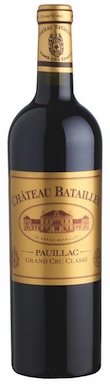
Tobacco, dark chocolate, leather and liquorice spice make for a heady nose on this 77% Cabernet Sauvignon, 20% Merlot and 3% Petit Verdot blend. Juicy...
2015
BordeauxFrance
Château BatailleyPauillac
Château Batailley, Pauillac 5ème Cru Classé, Bordeaux, France 2005
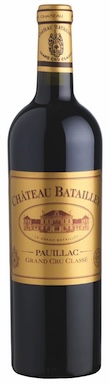
From the hot, dry 2005 vintage, this Cabernet Sauvignon-led blend (73% Cabernet Sauvignon) shows coffee, cinder toffee, burnt caramel, toast and cedar on the nose,...
2005
BordeauxFrance
Château BatailleyPauillac
Château Batailley, Pauillac, 5ème Cru Classé, Bordeaux, France, 2018
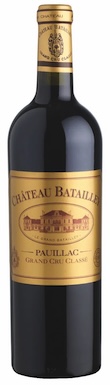
Dark purple in colour, this 74% Cabernet Sauvignon, 23% Merlot and 3% Petit Verdot blend shows dried tobacco, fragrant dried flowers and purple fruit on...
2018
BordeauxFrance
Château BatailleyPauillac
Château Batailley, Pauillac, 5ème Cru Classé, Bordeaux, France, 2006
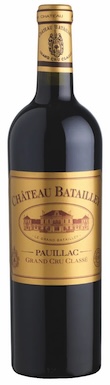
Burnt caramel, toasted coffee beans and cedar notes open this 70% Cabernet Sauvignon, 26% Merlot, 2% Cabernet Franc and 2% Petit Verdot blend. Great acidity...
2006
BordeauxFrance
Château BatailleyPauillac
hâteau Batailley, Pauillac, 5ème Cru Classé, Bordeaux, France, 2002
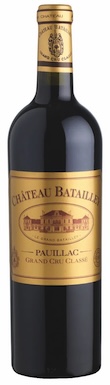
Dried rose petals, fragrant dried tobacco, chocolate and cedar make for an expressive nose on this 70% Cabernet Sauvignon, 25% Merlot, 3% Cabernet Franc and...
2002
BordeauxFrance
Château BatailleyPauillac
Château Batailley, Pauillac, 5ème Cru Classé, Bordeaux, France, 2003
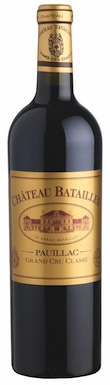
Mature coffee, cedar, tobacco and burnt toffee aromas lead this 72% Cabernet Sauvignon, 24% Merlot, 2% Cabernet Franc and 2% Petit Verdot blend. Sleek and...
2003
BordeauxFrance
Château BatailleyPauillac
Château Batailley, Pauillac, 5ème Cru Classé, 2017
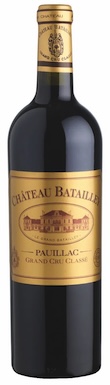
Charcoal, liquorice and blue fruit with a cool minty edge and pencil lead define the nose of this 80% Cabernet Sauvignon, 17% Merlot and 3%...
2017
BordeauxFrance
Château BatailleyPauillac
Château Batailley, Pauillac, 5ème Cru Classé, Bordeaux, France, 2008
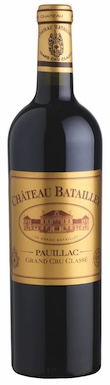
Dried flowers, mint, tobacco, crushed earth and Chinese five-spice leap from the nose of this 75% Cabernet Sauvignon, 22% Merlot, 2% Cabernet Franc and 1%...
2008
BordeauxFrance
Château BatailleyPauillac

After studying multi-media journalism at university, Georgie started her wine career at Decanter as deputy editor of Decanter.com in 2011 where she stayed for several years covering wine news and events whilst learning about everything the wine world has to offer.
She now lives in Bordeaux in southwest France where she writes about and tastes the region's wines for Decanter. She is also editor of Decanter Premium.