Get our daily fine wine reviews, latest wine ratings, news and travel guides delivered straight to your inbox.
You are now subscribed
Your newsletter sign-up was successful
An account already exists for this email address, please log in.
10 of the best value grand cru classé estates in Bordeaux
One Bordeaux expert combs the top echelons of Médoc cru classé wines in search of that holiest and most satisfying of grails – excellent claret without the inflated price tag.
What makes value so central to enjoying wine? I once opened a bottle of Petrus for my father, and at his request no less.
Yet, he broke the silence with: ‘Excellent, but it’s not very good value, is it?’
In contrast to that, there’s something inescapably appealing about a wine that grabs your attention, that provokes thought and stimulates conversation – all while leaving you with the feeling that you got more than you paid for. A value wine.
By virtue of that feeling, value wines tend to be drunk more often and are, I think, better understood as a result.
I’ve always loved the late Michael Broadbent’s tasting notes, referencing his numerous encounters with a particular wine in all sorts of settings over the years.
For most passionate amateurs, it’s the value wines – the great wines we don’t feel shy about opening – that we get to know with that sort of intimacy. They keep us coming back, vintage after vintage.
Value Bordeaux wines have never been so widely available, and the 1855 Grand Cru Classé estates have led the way.
Decanter newsletter
Get our daily fine wine reviews, latest wine ratings, news and travel guides delivered straight to your inbox.
More vintages per decade, and more châteaux per appellation, excel now than ever before, with value for money often hiding in plain sight on the secondary market and (as unfashionable as it may be to say at the moment) even en primeur.
Here is my selection of 10. Others that could easily be included here are featured elsewhere in this guide (for example, Batailley, Giscours, Lagrange and Langoa Barton).
Value wines are nourishing to the palate, mind and heart. Bordeaux is full of them.
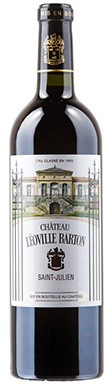
Léoville Barton
(Image credit: Château Léoville Barton)
St-Julien second growth
Léoville Barton just might be Bordeaux’s best-value wine. Particularly since 2015, the property’s increases in quality simply haven’t been matched by commensurate increases in price – in stark contrast to some of its peers.
Château Léoville Barton was established in 1826 following Hugh Barton’s purchase of plots of the Léoville vineyard a few years before and in 1826.
Barton had purchased the adjacent Château Langoa in 1821, so separate facilities have never been needed. The 50ha vineyard is divided into three main plots, currently planted with 77% Cabernet Sauvignon, 20% Merlot and 3% Cabernet Franc.
The soil is mainly deep gravel which is purest and deepest closest to the Gironde estuary, growing sandier and shallower moving to the west. A strategy of minimal intervention in the vineyard lets the terroir do the talking and biodiversity has long been of interest.
A new winery and cellars have been in use since the 2021 vintage. Here both Léoville and Langoa Barton wines are vinified and matured.
The number of vats has doubled, allowing for the ability to pick and vinify each plot according to its own needs; in turn, the vineyard is better understood than ever before.
Work in the winery is more precise and more delicate, with pumping over and use of R-pulse decreasing as fermentation progresses, in order to avoid extracting harsh tannin (in use here since 2018, the R-pulse technique uses inert gas to stir fermenting berries, favouring a gentle extraction). This results in a broader (not shorter) drinking window.
‘Léoville Barton’s increases in quality simply haven’t been matched by increases in price’
Multi-generational excellence
What do you get for your money? Léoville Barton usually offers variations on themes of intense cassis, blackberry, pencil shavings, coals, ink, lavender and liquorice.
Powerful depth is a given; the percentage of Cabernet Sauvignon in the grand vin’s blend has usually been a little higher than its proportion in the vineyard, but it’s Léoville Barton’s paradoxically elegant rendition of that power that makes it so engaging.
The Barton Sartorius family has had a multi-generational commitment to excellence at a fair price, with value for money now better than ever.
The 2015, 2018, 2019 and 2020 can all be found in bond for £55-£60. It’s one to buy every year, with superb wines even in less glamorous vintages (such as the 2017 and 2021, each available for about £40 in bond).
Even from generally expensive vintages like 2022, prices remain reasonable at Léoville Barton – it can still be found in bond for under £60, and it is absolutely worth the small premium.
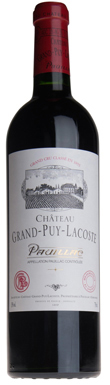
Grand-Puy-Lacoste
(Image credit: Serge Chapuis)
Pauillac fifth growth
Grand-Puy-Lacoste delivers a wine of character every year, conveying its place and vintage of origin clearly.
Quality is consistently high from this quintessential Pauillac estate, which has been shepherded by the Borie family since 1978.
Its name, Grand-Puy (roughly translated as ‘big hill’), can be a bit confusing when approaching across the plateau from Pauillac. Viewed from the west of the château, though, the abrupt 10m rise from marshy lowlands onto the plateau of Grand-Puy clarifies things.
The 60ha vineyard is planted with 75% Cabernet Sauvignon, 20% Merlot and 5% Cabernet Franc.
Replanting is now done via massal selection (propagation from the best cuttings of a selection of existing vines) from parcels planted in the 1950s, with the influence of subterranean biodiversity on soil structure and micronutrient balance closely observed.
Between 2016 and 2018, detailed studies of the vineyard’s plots were undertaken, both to tailor viticultural practices and to better understand their trajectory of maturation across the growing season.
A new winery was completed in summer 2025, with the number of vats increased to mirror these better-defined vineyard plots, allowing for each plot to be picked at the optimal moment and vinified according to its needs.
Nowadays, most winemaking interventions are employed during the early stage of fermentation, when alcohol (a natural solvent) remains low, thus allowing for extraction with a refined tannic structure.
‘Grand-Puy-Lacoste conveys the character of Pauillac with distinction and fresh, medium-bodied equilibrium’
Mature classic
What comes of all this? One of Bordeaux’s classic wines, conveying the character of Pauillac with distinction and fresh, medium-bodied equilibrium, the wines often showing a core of cassis, blackberry and pencil shaving notes.
Both recent releases and fully mature vintages of Grand-Puy-Lacoste represent excellent value for money.
Mature classics such the 1995 and 1996 can still be purchased for around £110 in bond, while superb recent vintages such as the 2019, 2020 and 2022 are available for £35-£45 per bottle.
While exceedingly reasonable prices would be enough to recommend purchasing Grand-Puy-Lacoste en primeur, the château offers a novel format as a further incentive. A case, equivalent in volume to 12 standard bottles, but instead containing one double magnum, two magnums and four 75cl bottles.
This brilliant idea by Pierre-Antoine Borie offers the opportunity to weave Grand-Puy-Lacoste into life’s events easily – it’s perfect for those who regularly host gatherings of various sizes or who want to lay something special down for a child.
Few of these cases are released after en primeur.
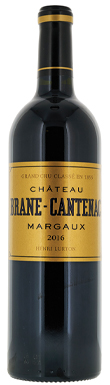
Brane-Cantenac
(Image credit: Francois Poincet)
Margaux second growth
There’s something uniquely disarming about great Margaux, with its violetty fragrance, and synthesis of intensity and delicacy.
Brane-Cantenac not only offers that Margaux archetype, but provides the best value for money in the appellation while doing it.
The 72ha vineyard is located in the Margaux commune of Cantenac. Though there are three parcels (Carabin, Le Plateau and Derrière le Parc, located on Terraces 3, 4 and 5, respectively), the crop of Le Plateau on Terrace 4 is the source of the grand vin.
Here, a half-metre of sandy gravel sits atop an admixture of 60%-70% gravel and 10%-20% clay, running several metres deep before reaching a limestone-marl substratum.
This geology confers an advantageous combination of elegance, derived from sandy gravel, and generosity of fruit, derived from the clay subsoil, which also helps to mitigate hydric stress.
I visited at harvest in September 2022 and can attest to this; despite the hot and dry conditions that had prevailed for a long period, the vineyard was in perfect health.
The overall distribution of plantings is 55% Cabernet Sauvignon, 40% Merlot and 5% dedicated to a mix of Carmenère, Petit Verdot, Cabernet Franc and Malbec.
But it’s the 60-year-old Cabernet Sauvignon on Terrace 4 that, for the property’s fourth-generation proprietor Henri Lurton, is the core of Brane-Cantenac’s identity.
‘Brane-Cantenac provides the best value for money in the Margaux appellation’
Attractive value
Since 2002, the grand vin’s blend has included more Cabernet Sauvignon than Merlot, and since 2012 it has included a markedly higher proportion of Cabernet Sauvignon than the distribution of plantings might suggest.
This went up to 84% in 2013 before settling into a reliable 70%-74% between 2015-2022 (and, specifically, 74% in the pristine 2022 that I watched come in, blended with 23% Merlot, 1% Cabernet Franc, 1% Carmenère and 1% Petit Verdot).
In Brane-Cantenac, I usually find fruit in the purple and blue spectrum accented by violet, pencil shavings and coffee beans.
In bigger vintages, it can take a little time for its charm to unfold fully, but that lovability is usually obvious earlier on in less-lauded vintages like 2021, which shouldn’t be overlooked.
Despite the improvements the estate has made over the past 20 years, prices remain very reasonable en primeur and on the secondary market.
The 2022 is available for around £75 per bottle in bond, with the 2019 and 2020 looking particularly good value to lay down at £40-£50.
The 2005 and 2010, which are entering early maturity, offer attractive value at about £100 and £120, respectively.
Branaire-Ducru
François-Xavier Maroteaux, co-owner of Château Branaire-Ducru and current president of the Union des Grands Crus de Bordeaux.
(Image credit: Jerome Mondiere)
St-Julien fourth growth
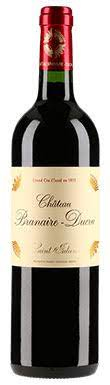
It can take a long time for the market to catch on when substantive changes are made at a château, even if those changes redefine its standing among its peers.
For the past 20 years, that’s exactly what has been happening at Branaire-Ducru. General manager Jean-Dominique Videau and co-owner François-Xavier Maroteaux have been quietly crafting a wonderfully elegant rendition of southern St-Julien.
Value here has been excellent from 2005 on and the 2022 has reached a new level at Branaire-Ducru.
The property’s 61ha are strung across southern St-Julien, running from the southeast to just north of the hamlet of Beychevelle, continuing along the northern edges of Châteaux Gruaud-Larose and Lagrange, ending with plots west of Château Talbot that run into St-Laurent commune.
Temperatures between the 70 distinct parcels can differ up to 2°C and the geological range includes 15 soil types, with more sand and clay near the château, well-drained gravel on Terrace 3 farther inland and thinner gravel in the west of the appellation on clay-limestone subsoil.
This diversity of terroir confers advantages and poses challenges. The key to Branaire-Ducru’s recent success has been the ability to maximise the former and adapt to the latter.
Videau keeps a close watch on the needs and maturity of each parcel, with his constant presence in the vineyard augmented by aerial photography in late summer.
Branaire-Ducru’s vineyard comprises 65% Cabernet Sauvignon, 28% Merlot, 4% Petit Verdot and 3% Cabernet Franc, though there have been changes in which grape varieties (and which clonal or massal selections) are planted where, and on which rootstocks.
‘It can take a long time for the market to catch on when substantive changes are made at a château’
Natural opulence and density
Completed in time for the 2022 harvest, Branaire-Ducru’s new gravity-fed winery houses 75 vats to allow each of the 70 plots to be picked at just the right time and vinified according to its needs.
What results from all of this? A wine of ‘natural opulence and density,’ as Videau says. This beguiling texture is just the vehicle for the mixed red, blue and black berry fruit that’s nearly always on show, inflected with a floral perfume.
Owing to its distribution of plots, Branaire-Ducru has a lot to say about southern St-Julien (it’s worth listening).
The superb 2022 is easily found in UK bond for £40 and those looking for an example that’s ready to drink will find the 2016 at a similar price. The 2005 and 2010, both drinking now, are available for around £55-£60.
Gruaud-Larose
(Image credit: Nigel Blythe/Cephas)
St-Julien second growth
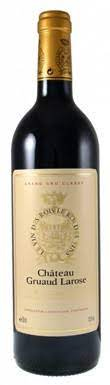
The renaissance of Château Gruaud-Larose remains a bit under the radar. Well remembered by many claret lovers for its monumental 1982 and 1986, the estate’s relative position among its peers declined through the 1990s and 2000s.
Over the past 15 or so years, that trajectory has changed definitively.
Almost all of the young and talented current team at Gruaud-Larose has been recruited over the past decade.
Replanting, fine-tuned vineyard work and vinification, and mitigation of the spoilage yeast brettanomyces, have led to a real revolution at the property.
Yet, prices haven’t kept up with quality. Recent vintages are attractive on the secondary market and en primeur prices are very fair.
The vineyard spans 82ha in one single block around the château, sitting at the eastern edge of Terrace 3. Soil studies in 2013 helped to characterise Gruaud-Larose’s three outcrops of gravel, which comprise about 75% of the vineyard, and the veins of clay running between them.
The current grape mix is 60% Cabernet Sauvignon and 35% Merlot, with Petit Verdot and Cabernet Franc making up the remainder.
One of the first investments made by Jean Merlaut, owner since 1997, was to replant several plots with varieties better suited to their geology and exposure.
By 2010, those changes were starting to pay off. Since 2018, replanting has been done with a massal selection from the property’s own vines and the proportion of Gruaud-Larose comprised by Cabernet Sauvignon will reach 80% by 2030.
Vineyard work has evolved remarkably with thought-provoking adaptations to climate change, including the use of clay-based sunscreen for the grapes and retention of cover crops during the growing season, following recognition that they can reduce radiant heat around the clusters by up to 7°C.
‘Replanting and fine-tuned vineyard work and vinification have led to a real revolution at Gruaud-Larose’
Quality-aligned changes
The team feels that the château’s organic certification in 2022 has helped to revitalise the vineyard ecosystem and to focus closer attention on everything that happens within.
Yields are now at a more quality-aligned 35-40hl/ha compared with 50-60hl/ha 25 years ago.
Lower fermentation temperatures (usually 25°C-26°C, from up to 34°C during the 1980s-2000s) and more tailored extraction have helped to refine Gruaud’s power.
Brettanomyces has been greatly mitigated by eliminating colonies in the cellar, close monitoring during maturation, and via co-inoculation, a process of simultaneously adding the yeast and bacteria which facilitate the alcoholic and malolactic fermentations, respectively (if performed consecutively, brettanomyces can proliferate during the interval between them).
This is a cool, classic, thrillingly powerful expression of St-Julien, tempered by good manners.
The 2020 and 2022, arguably the best Gruauds since 1986, can be found for £60-£70 in bond, with the excellent 2010 no more expensive.
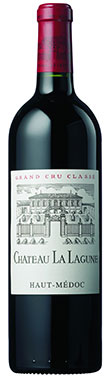
La Lagune
(Image credit: Château La Lagune)
Haut-Médoc third growth
Viticulture dates back to the latter half of the 16th century at La Lagune, one of the oldest vineyards in the Médoc.
The name refers to the 80ha property’s 15 springs and a 34ha marsh adjacent to the vineyard reinforces the point.
This is the southernmost of the 1855 Médoc Grand Cru Classé properties, located between the city of Bordeaux and the Margaux appellation just to its north.
Since 2000, the château has been owned by the Frey family, who are also the proprietors of Domaine de la Chapelle in Hermitage.
The property is 110ha in total with most of its plots around the château. An outcrop of deep gravel cuts through the centre of the vineyard, bordered on both sides by sandy gravel transitioning to gravel 1m-2m above the water table. Another parcel close by contains compact gravel and sandy soils. T
he distribution of plantings corresponds to this, with 60% Cabernet Sauvignon planted on the gravelliest areas, 30% Merlot on sandy gravels and 10% Petit Verdot on a cross-section of the two.
Small plots of Cabernet Franc, Castet, Malbec, Semillon and Sauvignon Blanc can also be found.
‘Usually showing dark red fruit, mineral and leather, La Lagune is a wine that’s easy to like’
Bespoke tailoring
A massal selection was started in the mid-2010s for the property’s Petit Verdot, a project which has now extended to the other two principal varieties.
Organic certification in 2016 was quickly followed by biodynamic certification in 2021.
The winery has benefited from the Frey family’s investments, with vats tailored in number and size to the plots to be accommodated. Maturation is relatively short for a Grand Cru Classé, lasting 12-14 months in 50% new oak.
I’ve had good experiences with La Lagune as old as the 1970, tasted in 2018. Usually showing dark red fruit, mineral and leather, it’s a wine that’s easy to like.
Pertinent to this list, it’s a wine that’s also easy to afford. The 2019, which I thought represented excellent value when I tasted it at the Union des Grands Crus tasting in 2022, is widely available in UK bond for around £35.
Even older vintages from 1982-1990 can often be found priced at less than £100 and, though I have not tasted it in a decade, the 1986 then seemed like it had a long life ahead.
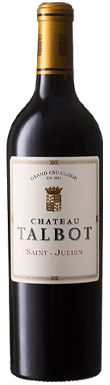
Talbot
(Image credit: Château Talbot)
St-Julien fourth growth
Vintages such as the 1982, 1985 and 1986 made Talbot a favourite for many Bordeaux lovers, with their characterfully St-Julien notes rendered in a satisfyingly fleshy and fragrant, yet often rustic, frame.
Quality softened through the 1990s-2010s – the wines didn’t have their old density or vim – but since 2015 things have been on the right track, particularly since the arrival of general manager Jean-Michel Laporte in 2018.
I’ve been hugely impressed with Talbots between 1924-1961, and I think that Laporte has his sights set on that level of quality.
The trajectory of the wines made under his aegis has certainly suggested that he’s capable of fulfilling his ambitions for the property.
Talbot’s vineyard comprises 110ha in a single block in northwestern St-Julien, 94ha of which are planted with vines.
Sitting on the western edge of Terrace 3, mainly comprised of gravel 50-70cm deep over clay and sandstone, the vineyard is planted to 68% Cabernet Sauvignon, 28% Merlot and 4% Petit Verdot.
A programme of replanting began in 2007, with vines now grafted to 101-14 and occasionally 3309 rootstocks, replacing the higher-yielding, drought-susceptible SO4 rootstock, which was once so common to the region.
Modulating the leaf surface area (beyond canopy height alone) has helped to optimise ripeness.
‘Since 2015 things have been on the right track for Château Talbot’
Talbot terroir
In the winery, the extraction strategy has shifted toward a lighter touch to avoid coarse tannins.
Talbot is free of brettanomyces’ influence nowadays, owing to a combination of co-inoculation and, on occasion, reverse osmosis during maturation if the brett-attuned nose of cellar master Jean-Max Drouilhet detects it.
This has allowed the current team’s wonderful work, and Talbot’s terroir, to shine through unobscured.
Since 2016, I’ve found Talbot full of reliably lush yet fresh fruit, delicately spicy, subtly minty, inflected by unsmoked tobacco, sometimes with exotic wood accents.
It’s a wonderful era for the property and it would be wise to capitalise on this iconic St-Julien while prices remain favourable.
Vintages since 2018 are widely available in UK bond for £35-£45 per bottle. This offers excellent value as these will drink well reasonably young, though they possess the substance and balance to allow them to develop interestingly over coming decades.
Among mature vintages, the 1986 is a particularly good value, available for between £140-£180.
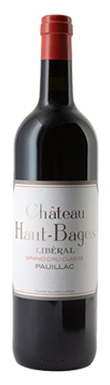
Haut-Bages Libéral
Claire Villars-Lurton
(Image credit: Sam Sargeant)
Pauillac fifth growth
The static nature of the 1855 Médoc Classification can make it hard to notice recent changes among the classified growths, even when they’re dramatic.
Such is the case at Haut-Bages Libéral, a fifth growth Pauillac now greatly overperforming.
I’d enjoyed encounters with the château’s wines, but they generally weren’t attention-grabbing – until seeing what technical director Thomas Bontemps has been up to since 2018.
The property is comprised of 30ha in three plots which run along the northern boundaries of Châteaux Latour, Pichon Baron and Pichon Comtesse.
The easternmost, just north of the Enclos of Latour, is gravelly with a high content of clay and limestone, conferring power and facilitating water retention in periods of hydric stress.
Moving to the west, plots are more typical to the gravel-rich plateau of Bages. The distribution of plantings has been about 70% Cabernet Sauvignon (with replanting nowadays from massal selection) and 30% Merlot; though now a little bit of Cabernet Franc and Petit Verdot are being planted – and, with an eye toward its potential in the era of climate change, a bit of Carmenère, too.
Bontemps’ goal is for the vines to self-regulate as much as possible, with the use of soft pruning techniques and avoidance of trimming in periods of vine stress, even if tendrils creep higher than the desired canopy height (1.4m, soil to top).
‘Haut-Bages Libéral is a fifth growth Pauillac now greatly over-performing’
New farming approaches
Farming methods are a central part of owner Claire Villars-Lurton’s philosophy, and the property has been certified organic since 2019 and biodynamic since 2021.
A recent study identified 25 types of plant life per square metre among the vines, promoting micronutrient balance and soil aeration.
Four sheep help to regulate cover crops when they compete excessively with the vine.
This is one of the few estates to have plots with fruit trees interspersed among the vines, with influences on water consumption, water mobilisation, competition with the vine and biodiversity studied closely.
I am not a partisan for any particular viticultural approach, be it lutte raisonnée (where chemical treatments are only applied when absolutely necessary), organic or biodynamic, but whatever Thomas Bontemps and Claire Villars-Lurton are doing has clearly made the wines of Haut-Bages Libéral much more interesting and, in turn, excellent value.
The wines since 2018 have shown real power and depth. They are big yet balanced, full of deep raspberry and blackberry nuances and often freshened with a beautiful violet note.
Despite their excellence, vintages from 2018 on are easy to find in UK bond for £25-£30 per bottle.
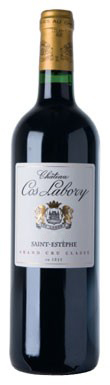
Cos Labory
(Image credit: Château Cos Labory)
St-Estèphe fifth growth
In blind tastings of the five 1855 Grands Crus Classés of St-Estèphe, it’s usually obvious which two originate on the hill of Cos: Cos d’Estournel and Cos Labory often share an aromatic profile – the terroir has a real voice.
With no Audoy heirs ready to assume the reins at the château, Cos Labory was sold to Cos d’Estournel’s owner Michel Reybier in March 2023.
It is the first time since 1860 that the two properties have been united under the same ownership (their plots and wines will remain separate).
Conversations with technical director Angélique Vigouroux and her mentor Dominique Arangoïts at Cos d’Estournel have me more excited about Cos Labory than ever.
The hill of Cos is a geological layer-cake, with gravel on clay over limestone. Cos Labory has 35ha, with four of its five plots located on the gravelly top of the hill or its south, west and northern slopes, where the clay-limestone elements are closer to the surface and the exposure promotes slower ripening than among plots belonging to Cos d’Estournel.
‘Cos Labory offers real personality and a quality that has surpassed its price’
Personality and quality
The mix of vines is currently 55% Cabernet Sauvignon, 35% Merlot, 5% Cabernet Franc and 5% Petit Verdot, though those numbers may shift, likewise which varieties are planted in which plots following recently completed soil studies.
A massal selection is planned from some of Cos Labory’s excellent Cabernet Franc, while Cabernet Sauvignon and Petit Verdot from Cos d’Estournel’s massal selection may be planted.
Cos Labory is in the process of transitioning to organic viticulture. Vigouroux has also brought a lighter touch to vinification, with moderate fermentation temperatures (usually 26°-27°C) and pumping-over regimes adjusted such that extraction is lightened further. Like La Lagune, Cos Labory employs one of the shorter maturation periods seen among the 1855 Grands Crus Classés, usually 12-14 months in 25%-30% new oak.
Typically offering a combination of plum, pomegranate, blue/blackberries and floral potpourri, there’s a lot to like in Cos Labory.
While traditionally the property’s wines haven’t been as profound as those of its neighbour on the hill, they shouldn’t be discounted – Cos Labory offers real personality and a quality (particularly since 2010) that has surpassed its price.
The 2010 can still be found for £30 in bond, with vintages since 2016 available for between £25-£30 per bottle.
Léoville Poyferré
(Image credit: Rodolphe Escher)
St-Julien second growth
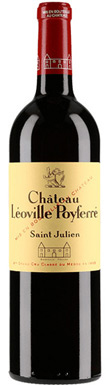
The list has come full circle, back to northern St-Julien, and back to another Léoville.
A gentler touch has been the rule here, under the guidance of Sara Lecompte Cuvelier (managing director since 2018), with no reverse osmosis in the cellar, less de-leafing in the vineyard and increased viticultural precision overall.
The Cuvelier family’s holdings in St-Julien total 80ha, though 20ha are now entirely dedicated to Château Moulin Riche. Leoville Poyferré’s plots are mainly west of the village of St-Julien, running on a southeast-northwest axis.
The easternmost plots sit on rich Terrace 4 gravel, but moving progressively west, sandy gravel, sand and sandy clay are found. The distribution of plantings is 63% Cabernet Sauvignon, 25% Merlot, 7% Petit Verdot and 5% Cabernet Franc, though Merlot is often more highly represented in the grand vin’s blend.
Much has changed in recent years. Between 2006 and 2015, both sides of the vine were regularly de-leafed, which could exaggerate ripeness in vintages such as 2009.
A return to a more moderate de-leafing strategy and targeting moderate yields (around 45hl/ha) have helped Léoville Poyferré to retain equilibrium in hot vintages (Poyferré’s 2018 notably contrasts with its 2009, for example).
‘Poyferré tends to be the most plush of the three Léovilles after a few years of bottle age’
Decadently elegant
Work in the winery has favoured increasing delicacy also; reverse osmosis is no longer performed (the Merlot still often has a saignée – ‘bleeding off’ some of the juice from the skins to increase concentration).
Similarly, an R-pulsehas replaced délestage (an oxygenating cap management technique also known as ‘rack and return’), perhaps refining the quality of Poyferré’s tannins.
An optical sorter has been in use since 2009 and the new winery, constructed in 2010, increased the number of vats from 35 to 57 to allow for individual plot selection.
The wines show the aromatic spectrum typical to the Léovilles, with mixed blue, black and red berries complemented by a potpourri perfume, but Poyferré tends to be the roundest, most plush of the three after a few years of bottle age.
While this differentiating characteristic can be emphasised by various interventions, the majority of its distinction from Léoville Las Cases and Léoville Barton lies in its terroir.
Take 1982 and 1990, for example, when the grape mix was similar, and different outside consultants were not yet involved – Poyferré’s place as the most decadently elegant of the three was just as assured as it is now.
While Léoville Poyferré is one of the more expensive wines on this list, it’s actually an excellent value en primeurand the secondary market is also full of value, with vintages such as 2005 and 2010 drinking well and trading at around £90 in bond.
Château Branaire-Ducru, St-Julien, 4ème Cru Classé, 2022
My wines
This is a special, and perhaps pivotal vintage for Branaire-Ducru. While quality has been regularly high over the past 20 years, the 2022 shows extra...
Château Gruaud-Larose, St-Julien, 2ème Cru Classé, Bordeaux, 2020
My wines
Explosively fragrant, the 2020 Gruaud-Larose is packed full of fig, cassis, boysenberry and plum, with lavender potpourri, pencil and liquorice notes emerging with air. This...
Château Léoville Poyferré, St-Julien, 2ème Cru Classé, Bordeaux, 2005
My wines
When last tasted in January 2024, the 2005 Léoville Poyferré seemed to be entering early maturity. It is a classic, superb Poyferré, packed with blueberry...
Château Brane-Cantenac, Margaux, 2ème Cru Classé, Bordeaux, France 2016
My wines
It’s reassuring to see the 2016 Brane-Cantenac following the positive trajectory that it promised when I last tasted it seven years ago. Fruity and effusive,...
Château Grand-Puy-Lacoste, Pauillac, 5ème Cru Classé, Bordeaux 2022
My wines
The nose of the 2022 Grand-Puy-Lacoste shows such engaging density as soon as the cork is pulled, full of concentrated cassis and raspberry alongside ink,...
Château Haut-Bages Libéral, Pauillac, 5ème Cru Classé, Bordeaux, 2020
My wines
General manager Thomas Bontemps and owner Claire Villars-Lurton have crafted a wonderful 2020 at Haut-Bages Libéral, showcasing the estate’s new signatures in its voluminous, Chambord-like...
Château Cos-Labory, St-Estèphe, 5ème Cru Classé, 2016
My wines
The deliciously fragrant 2016 Cos Labory shows a panoply of aromas typical to the hill of Cos, most notably pomegranate, plum and violet. The palate...
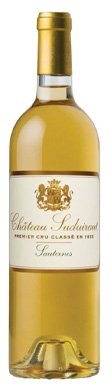
Château Suduiraut, Sauternes, 1er Grand Cru Classé, Bordeaux, France, 2009
My wines
Tasted blind, the 2009 Suduiraut offers a head-turning nose, full of clementine, baked apricot and clover honey. Captivating and enveloping on both the nose and...
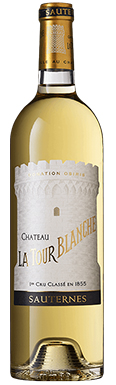
Château La Tour Blanche, Sauternes, 1er Grand Cru Classé, Bordeaux, France, 2018
My wines
The 2018 La Tour Blanche shows a delightfully aromatic nose, brimming with honeysuckle, lemon, honey, frangipane, fresh sugar and a little pineapple. This is a...