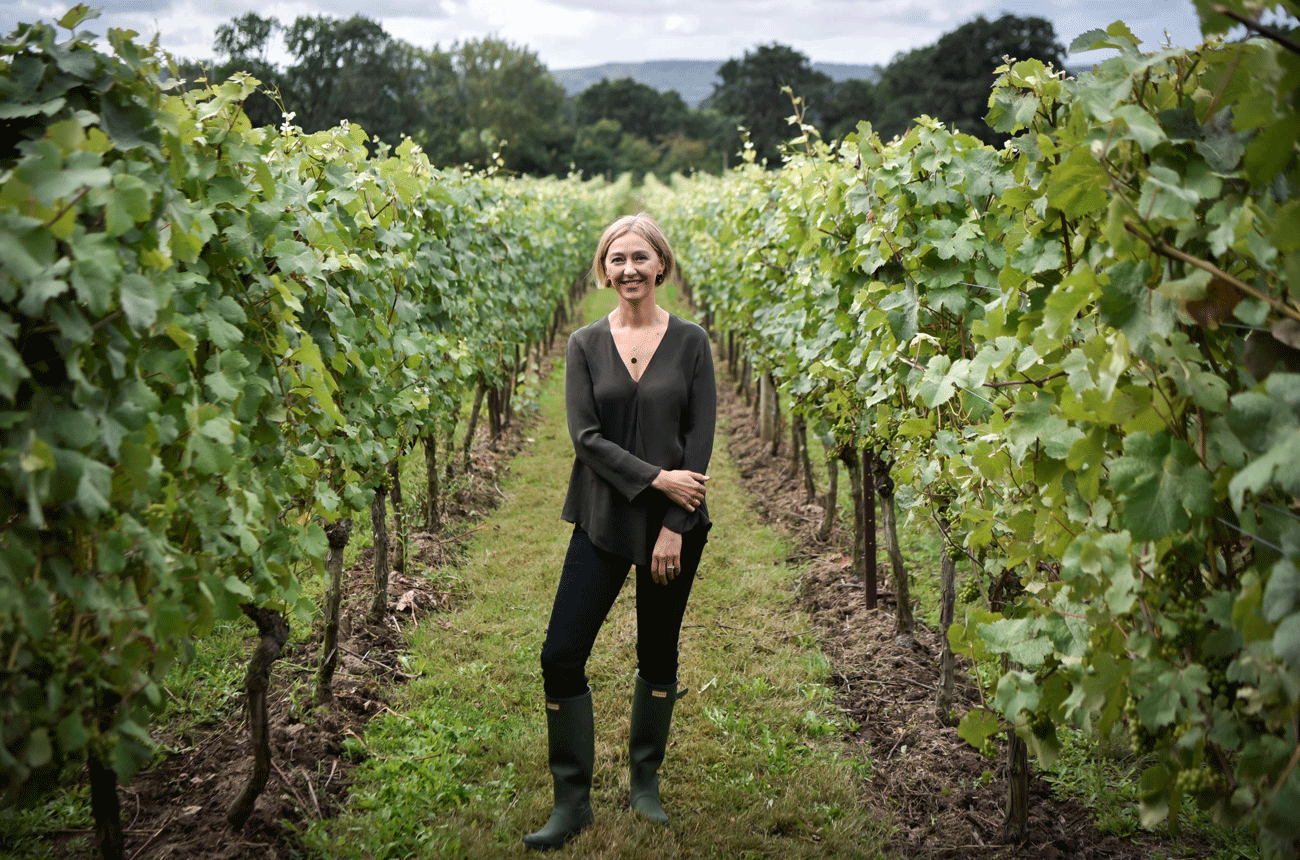
A drink with...Stephen Scarnato of Long Island Vine Care
Grower-winemaker Stephen Scarnato talks about designing and managing micro-vineyards for homeowners in upstate New York, and why Petit Verdot has a bright future on Long Island.


As co-owner of Long Island Vine Care with his wife, Sarah, this grower-winemaker creates and manages micro-vineyards for homeowners across the East End, Westchester County and upstate New York.
Working with plots as small as 0.04 hectares (yielding about 100 bottles), he handles everything from planting to making custom-labelled wine for his clients. The couple also runs New Roots Wine Club, creating a community of wine lovers by bringing members into these private vineyards for education, harvest events and tastings.
Their own small-lot wines range from sparkling Riesling to Albariño to more typical Long Island Bordeaux-style blends.
A drink with Stephen Scarnato
‘Our Long Island vine care business is mostly word of mouth, because we want to be able to build relationships. These are intense, long-term relationships.
‘[Our clients] understand that we’re getting connected to the dirt and there’s something larger to it and that this is a vehicle for connectedness with other people. That’s being lost in the whole no-alcohol movement. When you can connect with people in the place that you’re growing the vines while drinking wine from those vines, that’s the bullseye in terms of conviviality and connecting with other people.
‘Probably 75% to 85% of our customers call me first. I design the layout. We integrate the vineyard with the yard. We have customers that have a bocce ball court in the middle or a pavilion for seating so that people are out among the vines. That’s very important in the design.
‘Then we have 15% to 25% of people who planted a vineyard and reached out when they realised they really need a professional to take care of it because they’re finicky plants.
‘If you’re going to get to the finish line and have a harvest, you need a professional touch. You can’t set it and forget it. I do have a knack for bringing vines back to life. I pride myself on that.
‘One of the most challenging parts of my job isn’t even growing the grapes. Working with customers in the beginning, I say, "You’re going to tell me everything you know about what you like to drink, and we’re going try and get as close as possible to that."
‘If they tell me they like Burgundian Pinot Noir, I may not plant Pinot Noir; based on where their house is or the lay of their land, it may not be right. I might pick Malbec because, based on the types of Burgundies they like, I can make a lighter style that’s going to be really pleasing to them.
‘Most likely, I’m going to plant three different varieties, and one or two of them are going to be hybrids. I tell [clients] from the beginning: No matter what I plant, it’s not going to exactly taste like anything you have had.
‘My mother’s side of the family is from Spain. We vacationed a bunch in Spain as I was growing up. I love all the Spanish varieties. That’s why I’m fooling around with Mencía and Albariño here. There’s a lot of tie-over to Rías Baixas. Here, we have more in common with that region than we do with Bordeaux.
‘We do plant a lot of Merlot because people want something they know grows well and has a familiar name. If the Merlot is going in a certain direction, we don’t try to steer it towards somewhere else. Just let the Merlot be Merlot, and let it be the best expression that it can.
‘Maybe in the past people were doing that with the Bordeaux varieties or even with Chardonnay and Sauvignon Blanc – trying to steer them in the winery. When they’re in the winery, it’s too late. The grapes are what they are.
‘On Long Island, our microclimates are so particular that, if you and I are neighbours, and I have a vineyard in the front of my house and you have a vineyard in the back of your house with the same grape varieties planted, they are worlds apart.
‘Because we plant by hand, we’re digging holes for each of the vines. So I know the soil here and the soil 20 yards over there are completely different – sand and rock on one side, heavy topsoil on the other side.
‘When I worked for a fertiliser company, during the winter, when there was nothing else for me to do, my boss would send me to the fields and I would poke holes in the ground. I probably soil sampled 4,000 to 8,000 fields on the North Fork. So I know these soils so well.
‘Petit Verdot is the future of Long Island viticulture. I know it’s a blending grape, but everybody out here has a delicious Petit Verdot. It’s difficult to grow, but it’s productive and a little bit more disease-resistant than some of the other Bordeaux varieties – its high acid insulates it from the rot we get later in the season in a rainy year.
‘So year in, year out, this is a great grape, either on its own or for a reverse Bordeaux blend. Here, it really develops a finesse that is somewhere on the spectrum between Pinot and Cab. It’s a crowd pleaser.'
Related articles