
Regional profile: Puglia plus the 12 bottles worth looking out for
Italy’s sunshine-filled heel has seen a quality revolution in its winemaking, as the region’s leading producers abandon old-style, jammy reds for elegant and balanced, terroir-focused wines.


The heel of Italy’s boot, Puglia stretches between the Ionian and Adriatic seas, its easternmost point at Otranto almost touching Albania. With its long coastline (commonly measured at 865km) covering approximately 12% of Italy’s as a whole, this region is a prime tourist destination: according to Regione Puglia, in the summer months more than 10 million visitors flock to its awe-inspiring beaches and rocky bays, picturesque white towns and charming masserie (fortified rural houses).
Gastronomy is another source of attraction: with a warm Mediterranean climate and a flat or gently sloping terrain, Puglia’s vast culinary tradition has its roots in the region’s historical focus on agriculture. Popular dishes range from vegetarian recipes such as orecchiette con cime di rapa (ear-shaped pasta with turnip greens) and ciceri e tria (pasta with chickpeas and fried pasta crumbs) to hearty meat dishes such as cheese-stuffed bombette (pork rolls) and some of Italy’s best seafood.
Scroll down to see tasting notes and scores for Mosca’s 12 excellent Puglian wines
Viticulture in Puglia dates back to before the Phoenician period (20th to 15th centuries BC) and has been prospering ever since. Claiming 91,740ha under vine, which produced 10.8 million hl in 2022 (ISTAT), Puglia ranks third among the Italian regions by planted surface area, and second by total volume produced. Quality, however, has long been uneven: hoards of notoriously ‘jammy’ reds – often used for blending – have always shaped the perception of the region’s wines.
A quality revolution has been slowly taking place over the past 60 years, yet roughly 60% of the production continues to be table wine, while DOC wines often enjoy success in the lower segment of the market, their alcohol-derived heartiness pleasing the crowds.
Puglia at a glance
Key grapes: Primitivo, Negroamaro, Malvasia Nera, Nero/Uva di Troia, Verdeca, Fiano, Minutolo, Aglianico, Bombino Bianco, Bombino Nero, Susumaniello
Key denominations: Primitivo di Manduria DOC, Gioia del Colle Primitivo DOC, Negroamaro del Salento IGT, Salice Salentino DOC, Rosato Salento IGT, Castel del Monte DOC (and associated DOCGs)
Viticultural sub-regions: The Tavoliere area in the northern province of Foggia; the karst (typically limestone formation with ravines, sinkholes and caves) plateaux stretching from the Lucanian Apennines to the central coast; and the Salento peninsula at the bottom of the ‘heel’

Getting there: Puglia is served by the Brindisi and Bari international airports. Direct trains run from Roma Termini to Bari (about 4 hours) and Lecce (just over 5h 30 mins)
Nonetheless, top Puglian wines offer a radically different take on the region’s sun-kissed terroirs, boasting captivating exuberance without falling out of balance, and often delivering terrific value. While southern Puglia is most frequently associated with wine production, in the north the Tavoliere plain yields the largest share of total volumes in the region: expanses of pergola-trained vineyards on mostly alluvial soils, stretching from the Daunian mountains to the Gargano Peninsula, are a key source of bulk wine.
The native Bombino Bianco and Uva di Troia (also known as Nero di Troia) inevitably suffer a reputation as workhorse grapes, yet the former’s high acidity enables it to produce outstanding sparkling wines – such as those made by d’Araprì – while the latter’s ability to produce easy-drinking reds is only exploited by a few emerging growers.
Puglian plateaux
Moving to the Murge plateaux, white rocks (limestone, chalk or tufa) take centre stage, defining architecture in charming towns such as Trani, and also shaping viticulture. ‘White calcareous soils, with almost no clay, limit yields in Alta Murgia, encouraging producers to focus on quality rather than quantity,’ explains Vito Farella, sales manager at the Bocca di Lupo estate.
The octagonal manor built by Emperor Frederick II gives its name to the Castel del Monte DOC, the wines of which are worlds apart from the richer styles of the south. With the extinct Monte Vulture volcano often in sight, it’s no surprise that this area produces top-notch Aglianico – the well-rated Aglianico del Vulture DOC (DOCG for Superiore) lies just across the regional border to the west, in Basilicata. Nero di Troia also gives complex reds, while Bombino Nero is used to make bright rosato; lightly oaked Chardonnay stands out among the whites.

Similar geology characterises the Gioia del Colle denomination in the heart of the plateau. Although it was the first place where Primitivo – closely related to Croatian Crljenak and, therefore, to Zinfandel – started spreading after crossing the Adriatic sea, this area enjoyed little recognition for many years, only to surge in popularity in recent times thanks to several quality producers who emphasise drinkability.
‘Whereas in other areas you struggle to downplay ripeness, in Gioia del Colle, Primitivo normally displays high acidity and restrained, even floral aromatics, and this is due to soils consisting of crushed limestone and significant altitude – 250m to 500m – favouring diurnal shifts,’ explains Matteo Esposito, winemaker at Leone de Castris, a well-established name from Salento that recently started making Gioia del Colle Primitivo as part of its Donna Coletta range.
Tufa limestone is also traditionally used to construct the trulli – the round whitewashed buildings with conical stone roofs, traditionally used to store grain – in the tourist-thronged Valle d’Itria, the picture-perfect southern outpost of the Murge. Considerable elevations by regional standards (usually above 400m) allow white grapes to retain excellent acidity in this area: simple and gluggable Locorotondo Bianco [local white blend, usually with majority Verdeca] may have lost momentum, yet single-varietal Verdeca is gaining prominence, pairing delightfully with the traditional crudi di mare (raw seafood).
Land of Negroamaro
Continuing south, gentle slopes give way to vast plains in Salento, famous for Maldives-like beaches and the baroque architecture of its main town Lecce. Local slogan lu sule, lu mare, lu ientu (the sun, the sea, the wind) synthesises the features of this peculiar terroir: maritime winds mitigate the scorching heat during summer.

Negroamaro and Malvasia Nera thrive in the more clay-rich soils of the peninsula. Leone de Castris paved the way for the rise of Salento rosato by launching Italy’s first bottled rosé, Five Roses (first produced in 1943). Traditionally, these wines were dark and full-bodied, but the upsurge of Provençal-style rosé in Italy has caused many wineries to shift from salasso (bleeding, as in the French ‘saignée’) to brief maceration, shaping slightly paler and fresher styles. Rosato wines from grapes other than Negroamaro and Malvasia Nera – such as Primitivo and Susumaniello – have also become increasingly popular.
Negroamaro-based reds range from rustic and gluggable to complex and ageworthy. ‘Negroamaro is less muscular than Primitivo, but also more tannic,’ explains Gianni Cantele, winemaker at Cantele winery. Regional IGT examples such as Graticciaia and Patriglione, made from air-dried or late-harvested grapes, first garnered international attention in the 1990s and continue to impress with their Amarone-like concentration. The Salice Salentino DOC is also on the qualitative rise, offering elegant examples with good cellaring potential.
Cradle of Primitivo
Vineyards lying on a patchwork of ferrous red clay and white sands set the scene when approaching the Manduria denomination in northwestern Salento. While being planted across the entire region, Primitivo is at home in this area extending towards the gulf of Taranto, producing wines that boast massive fruit weight, alcohol regularly exceeding 16 degrees, and a smoothing touch of residual sugar. The arid climate and Primitivo’s tendency for some berries to begin drying out naturally while still on the vine are the main factors behind this sheer sense of opulence, fostering its international success.
‘Primitivo suffers from millerandage [uneven ripening in bunches on the vine], so in Manduria it happens frequently that some berries turn overripe by the time the entire cluster reaches full maturity,’ says Esposito.

Typically big, bold Primitivos – either rustic and inexpensive or ambitious and oak-accented – dominate production, but the best examples combine varietal power with finesse. Villa Santera by Leone de Castris is a case in point, undergoing relatively short macerations (8-10 days) and ageing in large oak casks.
Some producers rely on low-yielding alberello (bush-trained) vines to make outstanding small-production wines, often declassifying them to Salento IGT. ‘I would upgrade my Primitivos to Manduria DOC if they were to establish a separate denomination for wines produced from the historical alberelli with lower maximum yields,’ states Gaetano Morella, who makes three different bone-dry, single-vineyard Primitivos.
Gianfranco Fino also sources fruit from alberelli vines that are more than 60 years old to make his top-shelf Primitivo Es, often compared to garage wines from Bordeaux for the cult following it developed in a relatively short time. Low fermentation temperatures favouring gentle extraction contribute to shaping his unique style, which combines mouthfilling concentration with mind-boggling finesse. The wine expresses the potential of the Manduria terroir at full power without mentioning its name on the label – should we call it ‘SuperPuglian’?
Eight names to know in Puglia
Caiaffa
This organic producer shines a light on the unexploited potential of the Tavoliere area, making delicious low-intervention wines.
Cantele
The Cantele family owns 50ha and manages 150ha more in northern Salento. Besides fine Salice Salentino, it produces one of southern Italy’s most distinctive Chardonnays, Teresa Manara Vendemmia Tardiva.
D’Araprì
Southern Italy’s longest-running sparkling wine producer has been ageing metodo classico in tunnels beneath San Severo since 1979. D’Araprì’s style combines enticing creaminess evoking southern latitude with Bombino Bianco’s typical vibrancy.
Gianfranco Fino
Founded by the namesake winemaker and his wife Simona Natale in 2004, this world-famous boutique winery revolutionised the perception of Primitivo, with ‘Es’ regularly featuring among Italy’s most critically acclaimed wines. The couple recently opened a wine resort annexed to the new cellar in Manduria.
Giovanni Aiello
Trained as a winemaker in Australia, California and northeastern Italy before founding his own winery, Giovanni Aiello crafts cutting-edge wines in the Gioia del Colle area.
Leone de Castris
This aristocratic dynasty pioneered quality wine production in Salento. The cellar in Salice Salentino houses a wine hotel.
Morella
Gaetano Morella and Lisa Gilbee rescued some of the oldest alberelli in Manduria. They farm 13ha on biodynamic principles.
Tormaresca/Bocca di Lupo
Located in Salento (Tormaresca) and Castel del Monte (Bocca di Lupo), the two estates of the Antinori family are known for traditional wines and groundbreaking experiments.
Mosca’s mixed dozen excellent Puglian wines to try
Related articles
- Expert’s Choice: Puglia Wines
- Long Read: Extreme weather in Italy’s vineyards
- Italy’s finest white wines: 20 top bottles, region by region
D’Araprí, Riserva Nobile Spumante Metodo Classico Brut, Puglia, Italy, 2018
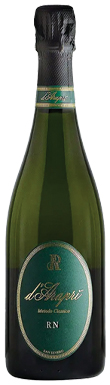

A single-varietal sparkling Bombino Bianco undergoing 36 months of bottle fermentation, Riserva Nobile boasts exuberant aromas of apricot and acacia honey followed by flint, menthol...
2018
D’Araprí

Cantele, Teresa Manara Vendemmia Tardiva, Salento, Puglia, Italy, 2021
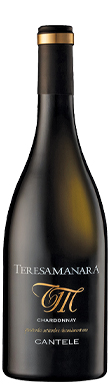
This unmistakably Mediterranean white is made from late-harvest Chardonnay grapes which spend about six months in barrel (one-third new). Lemon curd, pineapple, capers and broom...
2021
CanteleSalento
Giovanni Aiello, Chakra Verde, Valle d'Itria, Puglia, Italy, 2022
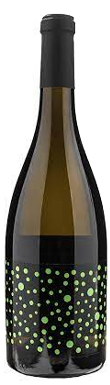
From vineyards lying on a carsic sinkhole, this Verdeca matures for around six months in stainless steel on the lees. It sports a vivid straw...
2022
Giovanni AielloValle d'Itria
Leone de Castris, Five Roses, Salento, Puglia, Italy, 2022
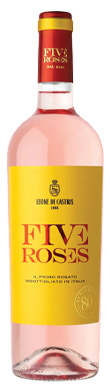
Puglia’s most iconic rosé, Five Roses unveils a luminous salmon colour anticipating pretty aromas of wild strawberries and peony, with a briny touch in the...
2022
Leone de CastrisSalento
Gianfranco Fino, Es Primitivo, Salento, Puglia, Italy, 2021
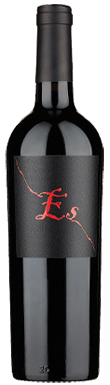
Undergoing a four-week maceration followed by approximately nine months in French oak (50% new), Es is intoxicating: wafts of incense, sandalwood and clove superimpose syrupy...
2021
Gianfranco FinoSalento
Morella, Old Vines Primitivo, Salento, Puglia, Italy, 2019
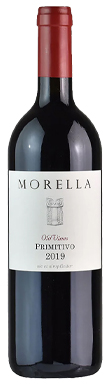
From a 95-year-old parcel of Primitivo, vinified spontaneously in stainless steel and aged for 15 months in mostly used tonneaux, then a further year or...
2019
MorellaSalento
Bocca di Lupo, Aglianico, Castel del Monte, Puglia, Italy, 2019
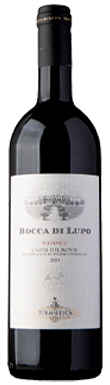
This terrific Aglianico rivals the best expressions from Campania and Basilicata. Seductive aromas of red roses and dark cherries mingle with roasted coffee, botanical herbs...
2019
Bocca di LupoCastel del Monte
Giovanni Aiello, Chakra Rosso, Gioia del Colle, Puglia, Italy, 2020
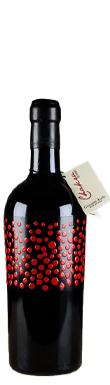
Burgundian-inspired whole cluster fermentation shapes a gentle and restrained Primitivo, sporting a translucent ruby colour that anticipates alluring aromas of violets, incense, clove and creme...
2020
Giovanni AielloGioia del Colle
Leone de Castris, Per Lui Riserva, Salice Salentino, Puglia, Italy, 2017
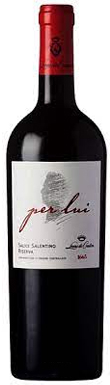
Made from late-harvested Negroamaro, Per Lui Riserva exhibits a rich and complex nose: toasted oak and appassimento-derived cherry jam give way to dried fruits, damp...
2017
Leone de CastrisSalice Salentino
Cantele, Riserva, Salice Salentino, Puglia, Italy, 2019
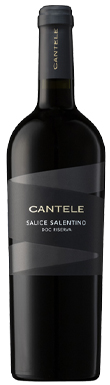
Splending around eight months in French oak barrels, this mid-weight expression of Negroamaro displays exotic nuances of incense and tapenade intermixed with pomegranate and dark...
2019
CanteleSalice Salentino
Leone de Castris, Villa Santera, Primitivo di Manduria, Puglia, Italy, 2021
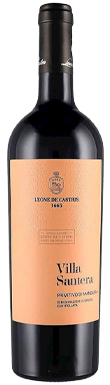
Juniper berries, grilled herbs, liquorice and walnuts frame the sweet bramble fruits at the core of this refined Primitivo. Smooth and pliant – but by...
2021
Leone de CastrisPrimitivo di Manduria
Caiaffa, Nero di Troia, Puglia, Italy, 2022
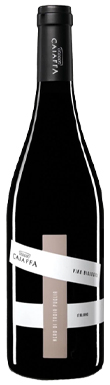
Spontaneous fermentation and brief ageing result in this plump Nero di Troia, offering aromas of sour cherries intertwined with pepper and smoke. The easygoing palate...
2022
Caiaffa
