Garnacha is on a roll in Rioja: 10 wines to try
Spain has never had so many exciting Garnacha wines and the trend has spread to Rioja, where the grape variety is not only performing well on its own but also capturing the distinctive character of the region’s terroirs.


Garnacha is an increasingly popular choice for ambitious winemakers in Rioja.
‘It reflects the specific character of an area better than Tempranillo,’ says Juan Bautista García, of Bodegas Paco García, who discovered that most of the old vineyards in Murillo de Río Leza – the village southeast of Logroño where he is based – were planted with Garnacha.
‘Tempranillo is fairly homogenous; Garnacha is prone to coulure [poor fruit set after flowering] and production can vary widely, but it offers far more diversity and fun,’ adds García.
He produces a varietal wine from a two-hectare (ha) plot with alluvial soils and has also purchased an old vineyard dating from 1880 to make a wine conforming to the Viñedo Singular, Rioja’s new single-vineyard category.
Never has Garnacha held such a privileged status in Rioja. In the past, it was mainly used to make claretes (the popular style of local rosés) or simple, affordable reds generally sourced from Rioja Oriental – the drier, warmer part of the appellation.
But, by and large, it faded anonymously into blends. A notable exception was a varietal reserva produced between 1987 and 2000 by Bodegas Valdemar at a time when no one appreciated the variety’s ageing qualities.
Garnacha’s rebirth
Judging by its phenomenal clonal diversity, Spain is considered to be the homeland of Garnacha.
From Aragón in the northeast, the variety spread rapidly across the country in the middle of the 19th century, thanks to its resistance to powdery mildew. Its low pH and drought resistance are also now precious assets for growers in the context of climate change.
Yet, leaving aside rancio (the prized Catalonian style of oxidative wines), Garnacha was mostly transformed into ordinary or bulk wines.
Even though the rise in the 1990s of Priorat, in Catalonia further to the east, changed this poor image, red Garnacha was subject to large-scale uprooting all over Spain during the last 30 years; its decline is only comparable to the meteoric rise of Tempranillo.
In the 1980s and 1990s, Tempranillo was Spain’s most fashionable grape variety, expanding rapidly across the country. A significant part of its success was at the expense of Garnacha – and Rioja was no exception.
The new millennium saw an increased demand for greater diversity, however – a shift towards lighter styles and a generation of enthusiastic winemakers willing to explore different terroirs and grape varieties.
All these factors helped producers to see Garnacha in a new light. As a result, there have never been so many exciting Garnachas across Spain – and Rioja has plenty of names to add to the list.
Despite the extensive uprooting, with 4,513ha planted (source: DOCa Rioja, 2020), Garnacha is still more widely grown in the region than Tempranillo’s two other traditional red partners, Graciano (1,344ha) and Mazuelo (1,199ha).
While these require specific growing conditions and may not achieve full ripeness in cold areas, Garnacha is far more versatile and is grown across the DOCa at various elevations and in almost all types of soils.
If not properly ripe, Graciano can feel green and tannic, while Mazuelo can taste rustic or sharp. But with its varied planting, Garnacha has a greater chance of success and showing off its beautifully scented aromas, sweet fruit character and gentle texture.
As researcher and producer Juan Carlos Sancha likes to put it: ‘Garnacha is one of the grapes that best synthesises sugar.’

Garnacha geography in Rioja
Sancha, who played a key role in the recovery of minority grape varieties in the Rioja region – together with Professor Fernando Martínez de Toda – has made a name for himself with his Garnachas from Baños del Río Tobía.
This village is part of the Alto Najerilla valley, a distinctive cold spot in the southwest of Rioja Alta that lies close to the Sierra de la Demanda mountain range.
Until recently, Garnacha was blended with Viura here to produce clarete but, thanks in part to climate change, it is now thriving on its own. Even though Tempranillo remains the most widely planted variety, a precious heritage of old Garnacha vines has been preserved in the area.
Other prized villages in the Alto Najerilla valley include Cárdenas and Badarán, where Proelio, the Rioja red division of Palacios Vinos de Finca, owns 20ha and buys the equivalent of another 20ha from nearby growers.
After studying the area’s soils in detail with Chilean expert Pedro Parra, winemaker Raúl Tamayo has found that silt and ferrous sand outweigh clay in many areas, meaning that the style of the wines is often lighter.
He also highlights the continental climate of the valley which contributes to late budding and picking, meaning the wines are crisp and nuanced.
To a certain extent, the most distinctive spots for Garnacha in the Ebro valley are linked to the Iberian System, the structure of mountain ranges and massifs that runs parallel to the southern bank of the river and continues through Navarra, Aragón and southern Catalonia (all Garnacha-growing areas) to meet the Mediterranean.
Thus, as the climate warms in Rioja Oriental [its eastern section], elevated areas are particularly well suited to Garnacha.
Two of the hottest spots are Tudelilla and Monte Yerga. Tudelilla is an old acquaintance of many historic Rioja producers, who have traditionally bought grapes from this locality for their blends.
La Rioja Alta, for instance, now owns vineyards in La Pedriza, the village’s most famed site featuring stony soils, thus securing supplies of Garnacha for its well-known Viña Ardanza Reserva.
Mayte Calvo de la Banda from Bodegas Bilbaínas, who also buys grapes there, believes that the freshness and consistency of old vines from Tudelilla is comparable to those grown in the past in the producer’s Haro vineyards.
Further south, at Monte Yerga, Priorat superstar Alvaro Palacios has set new standards for Garnacha since he took over the family winery.
Having removed Tempranillo from its blends, Palacios Remondo can be credited as the only private cellar of a certain size to rely almost exclusively on Garnacha.
The choice runs from the affordable, highly available La Montesa to the super-premium single-vineyard Quiñón de Valmira. With recent vintages retailing at above €400 in Spain (£350 or more), this wine stands among Rioja’s – and Spain’s – most expensive offerings.

Going from strength to strength
Garnacha can also be found in almost every other corner of Rioja.
There are limestone plots sheltered by the Sierra de Cantabria on the left bank of the Ebro up to 700m, such as the old vineyards tended by rising star Sandra Bravo in Rivas de Tereso, northeast of Haro.
There are also alluvial soils at barely 400m in the central part of the valley, including those at Finca Valpiedra and CVNE’s Contino, along the river heading to Logroño.
When Aragonese Garnacha specialist Jorge Navascués took over winemaking at Contino, he was blown away by the grape’s high quality.
‘With lower pH and higher acidity than in my homeland, the grape here has the ability to age. Despite being less explosive and a bit austere, Garnacha can produce fresh, fine, delicate wines,’ he says.
According to Navascués, latitude – as well as altitude – is a key factor in terms of performance. In Rioja, this means ‘a slower, more balanced grape-ripening process’.
Garnacha often features among the premium wines of Rioja’s bodegas, particularly when sourced from old vines or specific plots. From just over 30 red Viñedos Singulares selected by the Rioja consejo’s tasting committee, eight are made from Garnacha; three more have applied for the category in 2021. Demand is growing.
What’s more, according to Mayte Calvo, prices for top Garnacha grapes are matching Tempranillo.
In terms of quality and drinkability, Garnacha has made a U-turn in Spain. Oxidation is certainly a thing of the past.
At present, the main challenges are how to deal with oak and when to pick the grapes: too early and the wine will taste green; wait too long and it will lose its complexity. There is a clear shift towards larger, seasoned casks.
Since most Garnacha wines are labelled as generic Rioja, producers do not have to use the standard 225-litre barrels required to label their wines as crianza, reserva or gran reserva.
Instead, 500-litre casks are becoming increasingly common; concrete vats and foudres are also being introduced. At Contino, for instance, Navascués combines all three. In contrast, Bravo thinks that amphorae are better at preserving Garnacha’s delicate, floral notes.

Garnacha for rosé, sparkling & white
A mutation of Garnacha Tinta, Garnacha Blanca played a discreet role in Rioja until very recently. Although total plantings have increased from 63ha in 1990 to 223ha today, Garnacha Blanca is a minor crop and still lags behind newcomers such as Tempranillo Blanco (more than 750ha) or, most strikingly, Rueda-imported Verdejo (330ha).
Abel Mendoza has been making a varietal Garnacha Blanca since the 1990s, but production never exceeded 1,000 bottles.
Basilio Izquierdo, CVNE’s former winemaker, was the first to give the grape a prominent role in a blend, following experiments carried out at CVNE in the 2000s which showed that Garnacha Blanca performed better after a few years in bottle.
Now, respected white blends such as Vivanco’s 4 Varietales Blanco de Guarda, Sierra Cantabria’s Organza, Predicador and Qué Bonito Cacareaba from Benjamín Romeo, or Valenciso routinely include between 30%-60% Garnacha Blanca.
Current plantings of Garnacha Blanca have been mainly driven by interest from high-quality producers. Varietal wines are on the rise, thanks to producers such as Exeo (a solo Garnacha venture in Labastida), Lacus, Barón de Ley, Vivanco (with its white La Maldita) and Izadi.
In fact, Izadi has come up with a full range of Garnachas, as it produces red, white and rosé versions, as does La Maldita.
Bodegas Bilbaínas, which has just released a new white to join its single-variety range, goes further still and also makes a sparkling wine called Lumen – a refreshing Garnacha Blanc de Noirs that has been relabelled as Rioja under recent regulation changes.
Elsewhere, Palacios Vinos de Finca used the grape to produce its first, summer-friendly pét-nat rosé – even if this cannot be sold as Rioja.
Garnacha Tinta is increasingly popular for pale rosés. With higher acidity than Tempranillo, it can also display delicate floral aromas. Following this style, Muga buys grapes in the Najerilla valley for its new Flor de Muga, while Izadi prefers to get supplies from Tudelilla for the Larrosa rosé.
Finca Lalinde, Ramón Bilbao’s top rosé made from grapes grown on Monte Yerga, now features as part of Lalomba, the company’s new single-vineyard venture, with fermentation in concrete vats.
Appreciation for Garnacha in top rosés is not new in the region – in fact this variety accounts for roughly half the blend in the iconic, long-lived Viña Tondonia Gran Reserva Rosado.
While the rise of Garnacha is a general trend across Spain, the diversity Rioja is starting to offer suggests that the true potential of the region has yet to be fully realised.
With more wines in the pipeline, Rioja’s love affair with Garnacha is far from over.
Cervera’s pick: 10 Rioja Garnacha wines to seek out
Related articles
Investing in Rioja: a fine wine market taking off
How does Rioja age? Comparing wines from 2001 and 2010
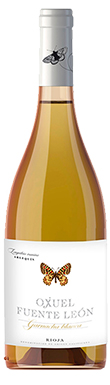
Bodegas Ojuel, Oxuel Fuente de León Garnacha Blanca, Rioja, Northern Spain, Spain, 2019
91
After recovering supurao, a traditional sweet wine made from dehydrated grapes, Miguel Martínez has continued to explore the high-altitude vineyards of Sierra de Moncalvillo. This limited release (just over 600 bottles from a single 500-litre barrel) sourced from clay-dominant soils was fermented with 30% skins. There is something wild about the wine, with dried herbs, white fruit and a nice tension on the palate.
2019
Bodegas OjuelRioja
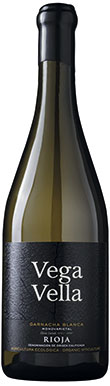
Cornelio Dinastía, Vega Vella Garnacha Blanca Fermentada en Huevo de Hormigón, Rioja, Oriental, Northern Spain, Spain, 2020
90
An organic wine sourced from vineyards grown on lime/clay soils in Rioja Oriental. The style is opulent and fruit-driven (pear, peach), probably due to the fact that the wine has been aged in egg-shaped concrete vats, with smoke notes in the background. A rich, crowd-pleasing Garnacha Blanca. 2,500 bottles produced.
2020
Cornelio DinastíaRioja
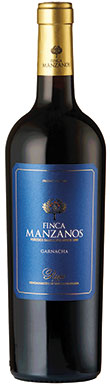
Bodegas Manzanos, Finca Manzanos Garnacha, Rioja, Northern Spain, Spain, 2020
92
This young, inexpensive red with barely six months of ageing in American oak performed really well when tasted blind. Grapes are sourced from a mechanically harvested, 80ha vineyard in San Adrián, Navarra. It delivered lots of flowers and blueberry aromas on the nose, while the palate was fresh and delicious. A great example of how Garnacha can bring endless pleasure.
2020
Bodegas ManzanosRioja
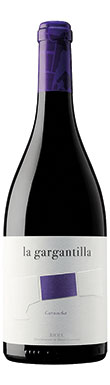
Bodegas Valdemar, La Gargantilla, Rioja, Oriental, Northern Spain, Spain, 2016
92
Bodegas Valdemar boasts a long-standing passion for Garnacha dating back to the innovative release of a varietal reserva from grapes grown at El Marquesado in the Ocón Valley (Rioja Oriental) during the 1980s. This lush 21st-century version focuses on La Gargantilla, a plot located at 580m. Aromas of ripe strawberries, crème caramel and violets; a round palate with well-integrated oak, and a long, expressive finish. 5,000 bottles in total.
2016
Bodegas ValdemarRioja
Contino, Garnacha, Rioja, Northern Spain, Spain, 2019
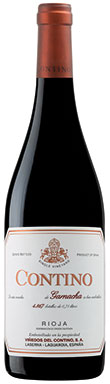
92
Garnacha specialist Jorge Navascués, who took over winemaking at Contino in 2017, has left his mark with this red, which displays herbal, sarsaparilla and kirsch aromas. There is full ripeness here – as might be expected from this beautiful property, rich in alluvial soils stretching along a meander of the Ebro River just 10 minutes’ drive from Logroño. Yet the palate is subtle and round, with a lovely floral character. A beautiful expression of Garnacha.
2019
ContinoRioja
Bodegas Bilbaínas, Viña Pomal Viñedos Singulares de Garnacha, Rioja, Oriental, Northern Spain, Spain, 2017
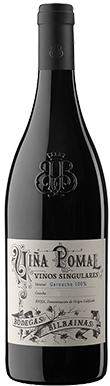
91
A 100-year-old winery in the iconic Barrio de la Estación in Haro, Bodegas Bilbaínas sources its Garnacha from Tudelilla in Rioja Oriental. Coming from old vines grown on the stony soils of La Pedriza, the best grapes are destined for this ambitious, rather powerful red which, nevertheless, manages to convey the variety’s most charming expression of liqueur fruit, violets and wild herbs. Around 3,000 bottles in total.
2017
Bodegas BilbaínasRioja
Miguel Merino, La Insula, Rioja, Northern Spain, Spain, 2019
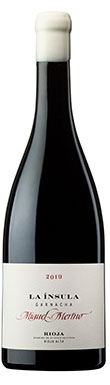
91
This new release comes from an ungrafted 1,000m2 plot planted on sandy soils next to the Ebro River in Briones – the chances are that it is pre-phylloxera. The wine has herbal, peppery aromas and a fragrant, almost ethereal palate. Despite the slightly warm finish, this is a beautiful, pure Garnacha. Unfortunately, production is limited to the 500-litre cask where it was aged.
2019
Miguel MerinoRioja
Palacios Vinos de Finca, Proelio Viñedos Viejos, Rioja, Alta, Northern Spain, Spain, 2019
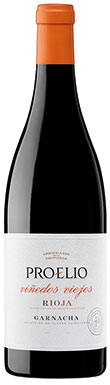
91
The cold, continental climate of the Alto Najerilla Valley results in a lighter style of Garnacha. Grapes are sourced from very old vines grown in the villages of Cárdenas and Badarán, fermented with roughly 20% of stems and aged in foudres for 12 months so the fruit comes through beautifully. Still very young, but pure, crisp and really enjoyable.
2019
Palacios Vinos de FincaRioja
Arizcuren, Solo Garnacha Amphora, Rioja, Oriental, Northern Spain, Spain, 2019
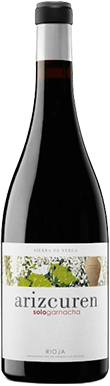
90
Javier Arizcuren, an architect-turned-winemaker, makes this Garnacha from two vineyards grown on sandy soils at 550m and 600m on the slopes of Mount Yerga in Rioja. The wine is aged in two amphorae, resulting in barely 700 bottles. The 2019 vintage was a low-yielding harvest, so the fruit feels very ripe but the palate is fresh and light to medium-bodied, with smooth tannins.
2019
ArizcurenRioja
Paco García, Garnacha, Rioja, Oriental, Northern Spain, Spain, 2018
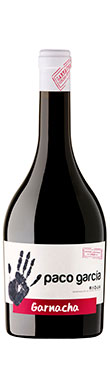
90
Together with his wife Ana, Juan Bautista García redirected the wine business founded by his father to reach young consumers. Since then, they have been experimenting with different styles and grape varieties. This Garnacha, grown on alluvial soils in the western end of Rioja Oriental, offers appealing strawberry and dairy aromas. The palate is lively and well-made, with bright acidity, and the oak goes unnoticed.
2018
Paco GarcíaRioja
