
Lugana: Lake Garda’s dry white wine secret


Straddling two administrative regions in central north Italy, this still developing DOC’s dry whites are already proving a versatile food-matching choice in the restaurant trade. Stephen Brook gets to the heart of Lugana’s identity, and recommends a dozen of its best wines...
Along the southern shores of the shimmering expanse of Lake Garda lie the towns of Desenzano, Peschiera and Sirmione, which for decades have welcomed hordes of tourists and the establishments catering to them: hotels, bars, pizzerias and all-you-can-eat sushi emporia.
The best of them lay within the Lugana DOC, which struggled to gain recognition, especially given the vast plantations of Soave not that far away.
Scroll down for Stephen Brook’s top Lugana dry white wines
Moreover, the main grape was a Trebbiano, though not related to the poorly regarded Tuscan Trebbiano. It was called Trebbiano di Soave or Trebbiano di Lugana, until marketing wizardry transformed it into ‘Turbiana’. Now Lugana had its own identity. It also benefits from a genetic connection – a kind of cousin – to the well-regarded Verdicchio grape of the Marche region.
Lugana’s local catchment area contains thousands of thirsty tourists requiring aperitif wines, or something appetising and not too expensive to wash down their platters of lake fish.Lugana fits the bill perfectly: easy to pronounce and infused, when properly vinified, with refreshing acidity.
‘Some years ago,’ explains Luca Formentini, president of the Lugana consorzio, ‘Lake Garda restaurants wouldn’t really feature the Lugana wines. Sommeliers and bar owners were rather sniffy about them.
‘But that’s all changed, and most restaurants will lead their wine lists with a dozen different wines from here. That contributes to a growing recognition of the quality of Lugana wines, which is why the area under vine has expanded considerably.’
The opening of a golf course among the vineyards has also provided a welcome boost, as thirsty golfers visit the burgeoning number of tasting rooms at nearby wineries.
Lugana at a glance
DOC Since 1967
Location Hinterland of the southern shore of Lake Garda; vineyards mostly in Lombardy, but around 300ha in Veneto
Area in production (2016) 1,873ha – more planted but not yet in production; 130 producers produce about 16m bottles
Grapes Until the 1960s much of the region was planted not with Trebbiano di Lugana but with Tocai (later known as Friulano or Tuki). Friulano vines are still present, but the wine is produced under the San Martino della Battaglia DOC, created in 1970 and covering essentially the same territory as Lugana DOC.
Grapes Principal variety Turbiana (named Trebbiano di Lugana up to 2005); a wine may contain up to 10% of other nonaromatic varieties such as Chardonnay, Incrocio Manzoni or Pinot Bianco
Styles Lugana Brut, Lugana, Lugana Superiore, Lugana Riserva, Lugana Vendemmia Tardiva
Across the divide
In 2009, there were 900ha under vine; today 2,400ha have been planted, with some 1,900ha in production. Most of the vineyards lie within the province of Lombardy, but there are 300ha within the Veneto.
Some prestigious newcomers have been purchasing land or vines here; Allegrini from Valpolicella, for instance, has acquired 40ha, a substantial commitment. There is no significant difference in terms of character or quality between the vineyards in either province, although it can lead to bureaucratic tangles.
With wry amusement, the shrewd consorzio director Carlo Veronese explains: ‘Having vineyards in two provinces means there are two regulatory regimes, and slightly different tax regulations and rules concerning which products are acceptable in the vineyards. There are also two provincial ministers of agriculture, who are in the same political party but not on good terms. But we manage!’
The vines are planted on deep clay soils, and in some places morainic slopes deposited by glacial activity descending from the Alps. Producer Nunzio Ghiraldi is not alone in asserting: ‘Clay is the key to Lugana, as it gives the acidity.’ So the crucial factors for quality are the soils and the proximity to the lake, which has a moderating influence. It also delivers a lot of humidity, requiring many growers to use anti-botrytis sprays and discouraging organic farming. There are some exceptions, such as Pasini and Marangona.

Stylistic freedom
The vibrancy of a good Lugana is best tasted in the simple Lugana DOC wines, such as Selva Capuzza’s San Vigilio. Almost invariably aged in steel tanks, they are intended to be enjoyed young, although they can age surprisingly well. Many wines do have some residual sugar, but it is rarely detectable; its role, as in German Rieslings, is to balance the wine’s natural acidity that might otherwise seem too strident. And in some cases, there is a simple preference for a rounder style of wine that won’t challenge the palate.
There are also some single-vineyard wines, which tend to be based on yields lower than the generous maximum for Lugana, and may be given longer ageing before release. Then there are superiore wines from lower yields that require at least 12 months of ageing, and the more ambitious riservas, which are aged for two years, of which at least six months must be in bottle.
Some producers shun oak barrels; others treat their superiores or riservas to a spell in large or small oak for part of the production. There are no rules. A judicious use of oak can accentuate the nuttiness of flavour and add some structure, as with the Fabio Contato from Cà Maiol, although there are some wines, such as the barrique-aged riserva Sergio Zenato from Zenato, in which the palate, in my view, is flattened and thickened by the oak.
To complete the offering there are a few vendemmia tardiva (late-harvest) wines at the low end of the sweetness spectrum, and some metodo classico sparkling wines. Some of the latter are routine, but there are some superb examples, such as Perla del Garda’s Brut 2011.

Cellaring option
Average quality is high, but there is a lot of stylistic variation. There are assertive, bracing styles with pungent acidity, and softer styles that can often verge on flabbiness. It does appear that in the southern part of the appellation, away from the lakeside, the morainic deposits in the clay-dominated soils can result in a broader, fleshier style, exemplified in the range from Perla del Garda, wines with ample fruit but little bite or cut. But they clearly have a following.
What’s impressive about Lugana is its capacity to age. The young wines quaffed in the lakeside bars are zesty and often delicious, but they have little aroma and can lack complexity. My tasting of more than 100 Luganas included a few wines that were about 20 years old. They were fully ready to drink, but only a few were flagging. It’s entirely understandable that most Lugana is drunk within a year of release, but I find it’s a wine often at its best at around four or five years, when a range of aromas begins to develop, and more complexity on the palate.
I don’t think excessive claims should be made for Lugana. It doesn’t rise to the greatest heights, nor claims to do so. It’s a wine for the terrace or the dinner table, rather than for competitions. Think of it as a sensibly priced alternative to good-quality Soave Classico, but with a mineral character of its own.
Lugana: six names to watch
Cà dei Frati
The Dal Cero family is a major player in Lugana, and not only here: it also produces red and sparkling wines from a total of more than 200ha. The basic Lugana here is the fruit-driven I Frati. The single-vineyard Brolettino bottling has a strong following and is made in substantial quantities – it’s a barrique-aged style and the oak is evident on the palate yet rarely dominates it. However, there is an occasional riserva from I Frati, which is unoaked and often shows a greater vibrancy than Brolettino. But it’s question of style rather than quality, which has always been very consistent.
Cà Maiol
Driving past this large property at Desenzano, you can’t miss the large structure boldly identified as ‘Showroom’. Cà Maiol produces one million bottles annually, and eagerly reaches out to visitors keen to purchase this very reliable wine. The somewhat misleadingly labelled Prestige is the basic bottling, while Molin comes from older vines, receives some skin contact, and is aged longer on the lees. The oaked Lugana Fabio Contato spends six months in barriques and is probably the best of the barrique-aged wines from Lugana. The winery was acquired by the large Santa Margherita group in 2017, but for the moment the Contato family remains in place.
Citari
Founded in 1975 by Francesco Gettuli and passed on to his daughter Giovanna, Citari is today run primarily by her son Francesco Mascini with the help of his father Ugo. It’s a moderate-sized estate, with 25ha of vineyards planted. Unlike most properties in Lugana, Citari employs a relatively high density of 3,800 vines per hectare. Some red wines are made here too, but the main focus is on Lugana. Sorgente is the basic wine and sees no oak, and neither does the Conchiglia bottling, which is made from riper fruit. The top Lugana is Torre, which is partly aged in tonneaux, but contains some late-harvested grapes, giving the wine a softer and broader profile at the expense of the raciness that marks the outstanding Conchiglia.
Le Morette
Two brothers, Fabio and Paolo Zenato, run this 35ha property, which also produces some Bardolino in the Veneto region. Fabio Zenato wrote his university dissertation on Turbiana, and the property is still involved in viticultural research. Decades ago Le Morette began its existence as a vine nursery. An immense new winery was built in 2013, featuring solar panels for heating and other technological innovations. As well as a basic Lugana for drinking young there is a bottling called Benedictus, part of which is fermented in small oak barrels. There’s a touch of oak too on the excellent riserva, which is made from late-harvested grapes and limited to around 5,000 bottles.
Montonale
Although the Girelli family has been farming in the Lake Garda area for more than a century, it was only in 2010 that Roberto Girelli and his two brothers established this winery to vinify white and red wines from their 25ha. Their top Lugana, Orestilla, comes from a 2ha vineyard, from which only the free-run juice is vinified, and the wine receives extended ageing on the lees and in bottle. It’s a wine that has won a Platinum in the 2017 Decanter World Wine Awards. Even the basic Lugana bottling Montunal is of very good quality, if without the richness and texture of the Orestilla.
Nunzio Ghiraldi
Motorcycling enthusiast Ghiraldi bears the same name as his grandfather, who acquired the estate in the 1950s. Today it extends over 32ha, with an average vine age of 30 years. The wines are not that well known, but are of consistently high quality. Il Gruccione, which takes its name from the bee-eating bird that visits each summer from North Africa, is the basic wine, but is made only from free-run juice and has exemplary clarity of fruit. Sant’Onorata comes from 60-year vines that are picked late, giving a wine of greater viscosity and power.
See Stephen Brook’s top Lugana dry white wines
You might also like:
Soave revival: Producers to know
Tom Hyland’s dream dozen Italian white wines
Great white wines for summer
Le Morette, Benedictus, Lugana, Lombardy, Italy, 2016
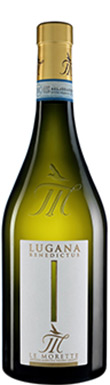

The nose is still tight and inexpressive, and this is mirrored on the palate, which is firm, concentrated and stony. There’s high acidity here, so...
2016
Le MoretteLugana

Montonale, Orestilla, Lugana, Lombardy, Italy, 2013
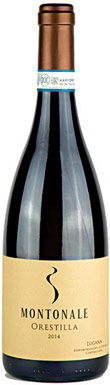
Complex nose with lush stone fruits and ripe quince aromas. The attack is firm, and the palate concentrated, still showing a slight austerity, but it’s...
2013
MontonaleLugana
Cà dei Frati, Brolettino, Lugana, Lombardy, Italy, 2016
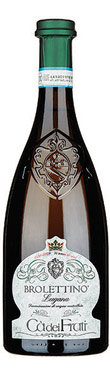
There’s a reticence on the nose with apricot aromas emerging. Rich and creamy, this is full-bodied and concentrated, and the oak is apparent on the...
2016
Cà dei FratiLugana
Cà Maiol, Fabio Contato, Lugana, Lombardy, Italy, 2014
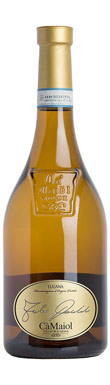
The oak is clearly evident on the nose, without being overpowering. Indeed, the palate is fresh and crisp, lean and almost racy. It may lack...
2014
Cà MaiolLugana
Nunzio Ghiraldi, Il Gruccione, Lugana, Lombardy, Italy, 2016
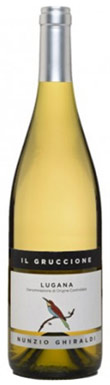
The mild, apple-like nose is a gentle prelude to this rich, full-bodied and concentrated wine. The fruit quality is delicious, with its nutty complexity, and...
2016
Nunzio GhiraldiLugana
Avanzi, Sirmione, Lugana, Lombardy, Italy, 2017
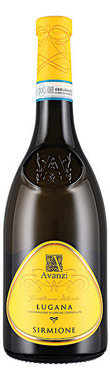
There’s plenty of mild citrus fruit on the nose, then on the palate the attack is fresh and delicate, with light minerality and even austerity,...
2017
AvanziLugana
Cà Lojera, Riserva del Lupo, Lugana, Lombardy, Italy, 2015
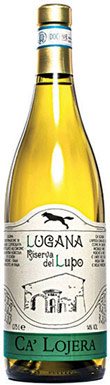
Subdued apricot aromas mark the nose, but the palate is rich and ripe with just a hint of sweetness. This is a big, fleshy, concentrated...
2015
Cà LojeraLugana
Citari, La Conchiglia, Lugana, Lombardy, Italy, 2017
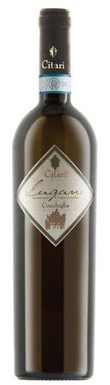
With a ripe, appley nose, this is rich and full-bodied with good weight of fruit. It’s supple and rounded on the palate without being heavy...
2017
CitariLugana
Feliciana, Sercè Riserva, Lugana, Lombardy, Italy, 2015
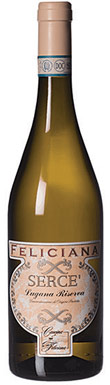
Vinified with partly dried grapes, this has a rich, lightly toasty nose. It’s juicy, full-bodied and concentrated, with good depth and weight. Perhaps lacks a...
2015
FelicianaLugana
Ottella, Le Creete, Lugana, Lombardy, Italy, 2017
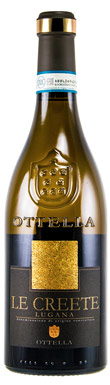
Reticent apple and apricot nose. Fresh and sleek, this is quite concentrated and shows a mineral tone and some salinity. A tangy Lugana with a...
2017
OttellaLugana
Selva Capuzza, Selva, Lugana, Lombardy, Italy, 2016
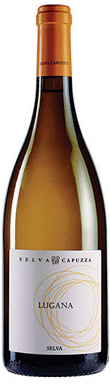
Ripe and appley on the nose. There’s a fresh, spicy attack leading onto a palate that is fairly concentrated and shows moderate acidity with a...
2016
Selva CapuzzaLugana
Zenato, San Benedetto, Lugana, Lombardy, Italy, 2017
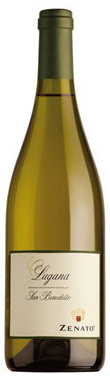
Mild apple and apricot nose. Broad and juicy, ample fruit and moderate acidity, a touch soft and lacking a little verve on the fairly long...
2017
ZenatoLugana
