Style shift in St-Emilion plus 10 wines to seek out
Does a region as highly reputed as St-Emilion need to change? There’s a growing band of producers who seem to think so, as ownerships, technology, climate and consumer tastes shift around them. Here, James Lawther MW reveals the latest developments on Bordeaux’s Right Bank, and picks 10 recent-release wines that illustrate the point.


Something intriguing is happening in St-Emilion. Call it a quiet mutation, but since the latter part of the last decade a stylistic change has become steadily more apparent.
Fruit, freshness and drinkability have become the new mantra, while overripeness, heavy extraction and the imprint of oak are being toned down or even eliminated.
Finesse is what’s required, driven by a desire to rein in excess, promote terroir and advance the demands of a new era.
Scroll down for James Lawther MW’s tasting notes and scores for 10 top picks showing a new St-Emilion wine style
It’s not yet systematic among the region’s 600-odd growers, but there’s plenty of thought and discussion on the topic.
A new generation and certain oenologists are advancing the cause and, now the word of Robert Parker is no longer absolute, there’s greater liberty in the way wines can be made.
Some producers, though, are still being cautious, warning that the pendulum should not swing too far in the other direction. Come what may, wines from vintages from 2014 onwards have progressively shown greater purity and precision.
Moving with the times
As examples of the new flow of things, Châteaux Canon and Figeac are often cited as role models, having always embodied elegance, even when fashion dictated otherwise.
Other premiers grands crus classés, such as Château Ausone, have an ingrained finesse which has been fine-tuned by, for instance, improving fruit selection and tweaking the ageing process. Then there are those, like Châteaux Beau-Séjour Bécot and Troplong Mondot, that have opted for radical and wholesale change.
Certainly, it’s the classed growths that have driven the move towards fruit and freshness, but a lighter touch has also filtered down through the food chain.
Time, perhaps, for a brief historical recap just to put all this into perspective. Thirty-odd years ago, global warming was still not on the agenda and Bordeaux had difficulty bringing grapes to full ripeness.
As a remedy, new viticultural and winemaking practices emerged, with St-Emilion at the cutting edge. Later harvesting and reduced yields were encouraged, advocated by oenologists such as Michel Rolland, while in the cellar, concentration became an obsession and new oak barrels the panacea for texture and flavour.
All this came to a head with the emergence of what became known as ‘garage’ wines (rich, concentrated, deeply coloured, small-volume offerings from, at the time, little-known vineyards), a phenomenon that had its heyday in the 1990s.
Undoubtedly, the new practices had some positive, long-term effects – in particular, improved ripeness and the realisation that good vineyard management was the key to success. But the race to harvest ever later, reduce yields further and max out on new oak barrels (200% at a time: fermenting and maturing for a period in new oak, then transferring to fresh new barrels for further ageing) led to huge exaggeration and some pretty undrinkable wine.
This was, or is, the extreme end of a winemaking fad, but the present desire for fruit and freshness is in part a reaction to this, coupled with a desire to write a new page, express terroir and adapt to the flux in climate.
Generational change
This was certainly the case at Château Beau-Séjour Bécot, where a change in style has been evident since 2017. ‘There was a lot of reflection and discussion with family and friends about the change in climate, the picking dates and how they relate to our limestone plateau terroir and ultimately the type of wine I wanted to produce, which is one of precision and authentic flavour and less of power,’ explains Juliette Bécot, who now heads the family-owned estate.
In order to bring about change, she sought the advice of a like-minded specialist and was advised to approach consultant oenologist Thomas Duclos of Oenoteam laboratory. ‘Thomas started with us at our Castillon property, Château Joanin Bécot, and then came on board fully at Beau-Séjour Bécot from 2018,’ she says. It was not an easy step as it meant dissolving an association with Michel Rolland, a close friend of her father Gérard, that had lasted for many years.
If subtle revision began here in 2017, the 2018 vintage really underlines the change. The bouquet is floral and refined, the fruit lifted and there’s not a hint of the overripeness and muscle that some older Beau-Séjour Bécot vintages display.
So, in concrete terms, what has changed? Well, the picking dates have been brought forward by sometimes up to a week (they started picking the Merlot in 2018 on 12 September). Yields have increased (46hl/ha in 2018, when previously they were about 30hl/ha). And in the cellar, extraction is now done more by infusion and at lower temperatures, while for maturation amphorae and larger wooden foudres have been introduced to lessen the impact of oak.
Precise practice
On the opposite side of the limestone plateau, where the clay content is heavier, Château Troplong Mondot has also been undergoing its own revolution. Purchased in 2017 by the insurance company SCOR, the property has been something of a building site since, with a new cellar project and renovation of the restaurant and château. No less eye-catching has been the change in style of the wine, once known for power and concentration and now with a fresher, more saline edge. ‘It’s not just a change of style, but a choice in the way we interpret the terroir,’ explains managing director Aymeric de Gironde.
Picking dates have again been brought forward and, from being one of the last to harvest, Troplong Mondot is now one of the first. ‘The dates are dictated by the optimum moment of ripeness in each parcel and it’s that which provides the complexity,’ de Gironde says. Abandoning anti-botrytis sprays has been another factor that has helped advance maturity. The second wine, Mondot, has also been remodelled and is now produced from 100% Merlot grown on pure limestone parcels at Troplong Mondot and another recently purchased vineyard, the 4.5ha Clos Labarde.
In the cellar, gentle extraction is the name of the game. ‘With our dense clay and silex [flinty] soils, the power for the grand vin comes free of charge, so we don’t need to look for it,’ says de Gironde. New oak barrels for ageing have been reduced to 60% and, contraryto prior practices, the malolactic fermentation is now done in tank and the blend completed early, by January following the harvest. The transformation has been considerable, and this before the new cellar with its 40 stainless steel tanks (there were 20 previously) has come into operation. ‘We can only get more precise,’ concludes de Gironde.
Troplong Mondot has also engaged the services of Thomas Duclos as consultant, and clearly the young oenologist has become something of a motivating force when it comes to the new trend. ‘It’s thanks to all the work done by the previous generation that we can operate the way we do today,’ Duclos expounds.‘We now have the right grapes in the right place and there’s so much precision regarding the identity of each parcel that we can be more precise in the harvest date, which helps create the identity of the wine.
‘Before, we needed oenology for correction; now, if everything is right in the vineyard, intervention in the cellar is more measured.’
Drive for finesse
On a practical note, Duclos also makes a few pointers about consumer demand and wine in general which help identify his modus operandi: ‘Today’s consumer wants wine to be accessible earlier as well as having the capacityto age. It’s also a drink, so it should be thirst-quenching.’ And fresher aromatics, he continues, help disguise the perception of high alcohol, still an issue in St-Emilion and Bordeaux even with earlier harvesting.
Other properties in the Duclos consulting stable include Château Canon, grands crus classés Berliquet, Bellefont-Belcier, Couvent des Jacobins, Franc Mayne, Petit Faurie de Soutard and Soutard, as well as grands crus La Grave Figeac and Mangot. Château Soutard is one of the longest-running consultancies, having begun in 2012, the year Château Cadet-Piola (purchased in 2009) was incorporated into the vineyard.
A change in harvest date and greater liberty and certitude for Soutard cellarmaster Véronique Corporandy, and the wine’s profile has definitely changed. The 2018 is one of the finest produced at this estate, and there’s more to come as the vineyard restructuring is only partially complete.
Looking around at other ongoing projects outside the Duclos sphere, the drive for finesse reoccurs. Château La Clotte, a grand cru classé, was acquired by the Vauthiers of Château Ausone in 2014 and is undergoing something of a metamorphosis. The vineyard is being steadily replanted, but already a regime of earlier harvest dates and less extraction have given the wine greater refinement.
At Château Angélus, the addition of four 30hl foudres for ageing the old-vine Cabernet Franc has added another touch of purity to the grand vin. But it’s in the development of the second label, Carillon d’Angélus, where the stylistic choice is perhaps more emphatic. Now produced from grapes cultivated in three separate locations in St-Emilion and vinified (since 2019) in a new winery, the freshness and lift come almost as a statement.
Would a project of this magnitude have had the same expression 15 years ago? Probably not, but in taking a contemporary line, Stéphanie de Boüard-Rivoal, who now heads up the estate, has definitively made her mark.
Happy medium
Further east at St-Christophe-des-Bardes, David Suire, the manager and winemaker of grand cru classé Château Laroque, is on a mission to improve finesse, but voices caution. ‘Tannin is part of Bordeaux’s DNA, but terroirs vary with regard to maturity, and the quality of tannin is refined during the ripening process. I agree that harvest dates and concentration have been exaggerated in the past, but we mustn’t go too far in the opposite direction,’ he warns.
On arrival at Laroque in May 2015, he found that his predecessor, Bruno Sainson, had left the vineyard in impeccable condition. But to understand the predominantly limestone configuration and hence decide on picking dates and work practices, he first instituted a study of the soils. Thereafter, there have been changes in the cellar: the period of maceration is now longer but themethod of extraction less robust, the press wine is no longer used in the grand vin, and oak foudres have been introduced for ageing a percentage of the wine. ‘It’s a double challenge as the wines from the eastern side of St-Emilion generally have a reputation for being less refined,’ he adds.
Clearly, recent vintages such as 2018 and 2019 with their fruit and freshness have contributed to the new tendency. Limestone soils and Cabernet Franc (and occasionally Cabernet Sauvignon) in the blend with Merlot will also have an impact. But a gentler hand is definitely being exerted and the extremes of the 1990s and 2000s swept away.
It’s good news for those who enjoy a refreshing libation, but as Suire comments, practices shouldn’t swing from one extreme to another. Green, after all, is still a no-go.
Shift in St-Emilion wine style: James Lawther MW’s top 10
You may also like
Top St-Emilion 2018 wines: Re-tasted in bottleAnson: What’s new in Bordeaux in 2021?Château Angélus wines tasted from 2000 to 2019Anson: Taking advantage of Bordeaux’s ‘off vintages’
Château Troplong Mondot, St-Émilion, 1er Grand Cru Classé, Bordeaux, France, 2018
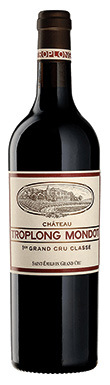

This is a dense and profound wine, but it’s a little shy aromatically at present. The palate is juicy and well constituted with attractive volume, beautiful texture, silky tannins and an unreserved but unaggressive power behind. The finish is firm and persistent. Despite the alcohol, everything is balanced and contained. Aged in 60% new oak barrels
2018
Château Troplong MondotSt-Émilion

Château Beau-Séjour Bécot, St-Émilion, 1er Grand Cru Classé, Bordeaux, France, 2018
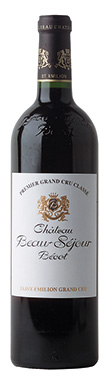
The bouquet is so pure and refined, with floral and dark fruit notes. This alone denotes the change in style. The palate is digestible and fresh with a lovely pitch of fruit and mouthwatering acidity. Minerally firmness of the chalky terroir, and the tannins give plenty of drive on the finish. It’s appealing already but will stay the pace. Harvest dates were 12-25 September for the Merlot and 4, 5, 10 October for the Cabernets.
2018
Château Beau-Séjour BécotSt-Émilion
Château Soutard, St-Émilion, Grand Cru Classé, Bordeaux, France, 2018
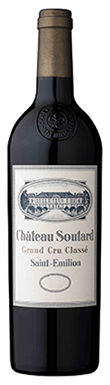
<p>From aromas to palate, this vintage exudes brightness and sparkle that is missing in the 2015. Ripe red and black fruits (plenty of juicy plum), crushed mint and wet stone enchant. As does the well digested oak extraction (with 10% less new oak, and one month less of oak ageing) and beguilingly fresh orange on the long finish that beckons further drinking. The first vintage where Thomas Duclos is the only consultant, and a frank success. Clearly better than the 2015, which has a similar vintage profile. Another difference with the 2015: earlier harvesting, from 20 September to 12 October, compared with 30 September to 15 October in 2015. In some ways like the 2016 but more opulent. That 82% of the harvest was used for the first wine reflects a successful vintage.</p>
2018
Château SoutardSt-Émilion
Château Angélus, Carillon d’Angélus, St-Émilion, Grand Cru, Bordeaux, France, 2018
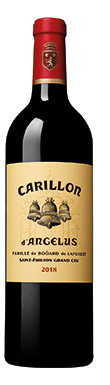
Lifted and spicy on the nose with a splash of dark fruit, the wine affirms its style with freshness, clean lines and a lightness of touch. Nonetheless, there’s plenty of depth and the tannins have been finely worked, the 60% new oak well integrated. It has early appeal but will age. Produced from fruit from three separate parcels: close to Angélus, behind Figeac and at St-Christophe-des-Bardes.
2018
Château AngélusSt-Émilion
Château Laroque, St-Émilion, Grand Cru Classé, Bordeaux, France, 2018
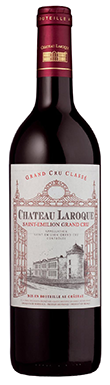
The colour is deep and bright, the nose a little restrained but the pitch is fresh and there’s a good density of fruit. The signature of the limestone soils is clearly marked on the palate but the finesse of the tannins has been reinforced. It’s still a little closed but there’s good length on the finish. 41% of the production was selected for the grand vin.
2018
Château LaroqueSt-Émilion
Château Bellefont Belcier, St-Émilion, Grand Cru Classé, Bordeaux, France, 2018
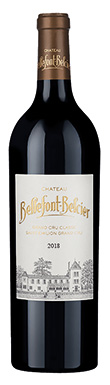
The colour is a deep purple-black. There’s dark fruit on the nose with a slight leafy edge. The fruit is more evident than in the past, the mid-palate juicy and round. But there’s lift as well and more precision, the tannins finely honed. First vintage for Thomas Duclos as consultant oenologist.
2018
Château Bellefont BelcierSt-Émilion
Château Berliquet, St-Émilion, Grand Cru Classé, Bordeaux, France, 2018
Dark fruit is the signature of this wine and cru. There’s medium intensity and a bright, digestible nature, more so than in the past. The oak is well integrated. It’s still a work in progress as the new ownership (2017) and team from Château Canon ring the changes.
2018
Château BerliquetSt-Émilion
Château Franc Mayne, St-Émilion, Grand Cru Classé, Bordeaux, France, 2018
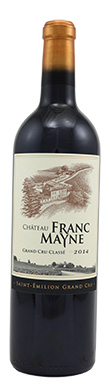
The colour is a deep purple-black and the fruit dark, fresh and spicy. The mid-palate is juicy and fresh, the chalkiness of the limestone soils evident. The tannins are refined and the finish is firm and dry. This is the first vintage under new ownership and the first with Thomas Duclos consulting.
2018
Château Franc MayneSt-Émilion
Château Mangot, St-Émilion, Grand Cru Classé, Bordeaux, France, 2018
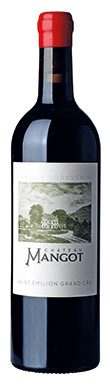
Lifted, aromatic nose with spice and red berry-raspberry notes. There’s a sweet ripeness to the fruit but freshness as well. The oak perhaps sits in a little at present but is integrated. Firm and dry finish. The property is located in the far east of the appellation.
2018
Château MangotSt-Émilion
Château La Grave Figeac, St-Émilion, Grand Cru, Bordeaux, France, 2018
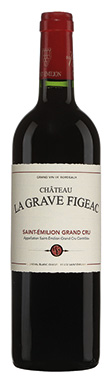
This organic wine from sand and gravel soils is forward in style with summer-fruit aromatics and a palate that is fresh, juicy and open. The structure is light and the tannins show a touch of green, leading to a slightly pinched finish. Freshness is there but the tannic finesse needs to be worked on.
2018
Château La Grave FigeacSt-Émilion
