
Anson: How the Bordeaux 2008 first growths taste now
Jane Anson tastes Bordeaux first growths from a vintage that was released into a wine market dealing with the global financial crisis but also enjoying new demand from Asia.


For at least one part of wine, there was a before and after 2008.
The world in general was suffering from the financial crisis that kicked off with Lehman Brothers’ bankruptcy at midnight on Monday 15 September, just as the red grapes in Bordeaux were reaching their final moments on the vines.
Scroll down to see Jane Anson’s tasting notes and scores for the Bordeaux 2008 first growths
Couple that with the fact that 2008 was not the easiest of years during the growing season, and it was enough to spook even the Bordelais.
The châteaux owners responded by releasing their wines at some of the lowest prices of the decade, with the first growths leading the pack.
Lafite Rothschild kicked things off with a €110 per bottle ex-château release, applied to around 50% of the production the estate confirmed at the time. Margaux and Latour followed closely behind at the same level.
Mouton Rothschild went even lower at €100 ex-château, also on 50% of production. Baroness Philippine told Decanter at the time, ‘It has nothing to do with quality and everything to do with the world market, which is in a very bad situation.’
Haut-Brion was the only one to go the other way, releasing at €125 ex-château.
Anyone who bought at these prices was looking even smarter 12 months later, when 2009 and (in particular) 2010 rolled around.
By the end of those two years, the firsts headed up as high as €1,000 per bottle – rewarding for the châteaux at the time, no doubt, but both of these stellar vintages have struggled to regain the level of their release prices.
Bordeaux 2008 prices versus release
Contrast that with 2008 first growths, which have all, without exception, increased in price by more than 100% since release, outperforming the market at every stage.
By their ’10 years on’ point in 2018, Liv-ex reported that Lafite had risen by 298% since release, with Haut-Brion the ‘worst performer’ at 101%.
The second wines of the first growths had done even better, with Pavillon Rouge heading the pack with a rise of 442%.
Part of the reason for the rise – apart from critic Robert Parker’s more-enthusiastic-than-expected assessment of the wines – was that on 27 February 2008, Hong Kong’s government stripped away wine taxes and duties, with the intention of making the city a global wine hub.
It meant that a new generation of Chinese collectors began buying the first growths, and prices soared.
The situation was helped by the fact that controls at the time on wine going into mainland China were far less strict than they are today.
First growths look east
The first growths took note of this in several ways. Mouton Rothschild 2008 featured a label showing the Mouton ram standing between two halves of the moon, created by Chinese artist Xu Lei, then artistic director of Today Art Museum in Beijing.
Lafite Rothschild went one better, engraving the neck of all bottles and magnums with the Chinese symbol for the number eight.
Both events moved the market – with Mouton prices going from £1,800 to £2,200 per case when the rumours of the artist first emerged in late 2009. It went up to £6,000 per case when the wine was released with the label.
Lafite 2008 saw a rise of 20% overnight on the back of the announcement. It was trading at £10,000 per case at the time of the bottle’s release, and had hit more than £13,000 one month later (a 67% increase in 30 days).
That is far higher than the current price of £7,300 per case in bond, although that figure is significantly more than the wine’s price of £2,000 per case on release.
It’s also worth noting that in 2010, the year when the 2008 vintage was released in-bottle, Château Margaux appointed an Asian ambassador in the shape of Paul Pontallier’s son, Thibault. He moved out to Hong Kong to reflect the fact that, by this point, China had become Château Margaux’s second largest market.
Tasting the Bordeaux 2008 first growths now
I last tasted the first growths from this vintage at the 2008 ’10 Years On’ tasting in London, hosted by Bordeaux Index three years ago now, and was happy to revisit them a few weeks ago.
First growths almost always have a slower ageing trajectory than most wines in Bordeaux, and checking back in at 13, 14 or 15 years often gives a more accurate picture.
Bordeaux 2008 was a late harvest, that started over on the Left Bank on 1 October – necessary because the good autumn weather saved what had been a pretty miserable summer.
I have a clear memory of the Haut-Brion 2008 setting the benchmark for me in terms of successful wines in the vintage, and it has really begun to blossom over the past few years.
The Lafite was the most subdued at this point for me, with my score revised downwards from the 10 Years On tasting. However, I would never count out this estate as having the ability to roar back.
This is not a vintage that will keep its structure for as long as more concentrated years, like 2010. But these five wines have produced excellent bottles.
These challenging years are when it is worth going to the best estates that you can. Part of the deal with first growths is that they deliver consistency and excellence in return for your cash, and with these wines they are proving their worth.
Bordeaux 2008 first growths: Anson’s tasting notes and scores
You may also like:
Petrus 2000 aged in space: How does it taste?
Collector’s guide: Left Bank Bordeaux
Anson: Tasting the Bordeaux 1990 first growths
Château Margaux, Margaux, 1er Cru Classé, Bordeaux, France, 2008
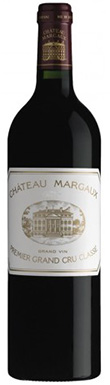

This stood out immediately among the five first growth wines for its floral hit right off the first nose. The epitome of elegance, as I...
2008
Château MargauxMargaux

Château Haut-Brion, Pessac-Léognan, 1er Cru Classé, Bordeaux, France, 2008
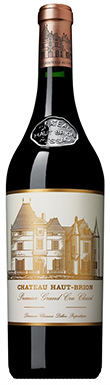
I loved this vintage of Haut Brion en primeur and am so happy that it has more than lived up to expectations now that it...
2008
Château Haut-BrionPessac-Léognan
Château Mouton Rothschild, Pauillac, 1er Cru Classé, Bordeaux, France, 2008
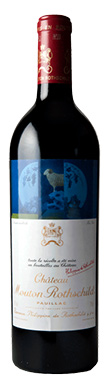
Starting to really come into its own, this is packed full of savoury blackberry, redcurrant and blueberry fruit with layers of liquorice, black chocolate, grilled...
2008
Château Mouton RothschildPauillac
Château Latour, Pauillac, 1er Cru Classé, Bordeaux, France, 2008
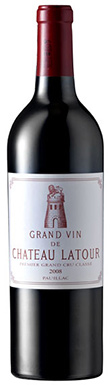
A little subdued, as with the Lafite right now, but this is built to last and is layered and structured. Liquorice, cassis and blueberry notes...
2008
Château LatourPauillac
Château Lafite Rothschild, Pauillac, 1er Cru Classé, Bordeaux, France, 2008
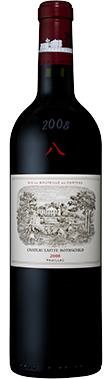
<p>Commemorating the advent of Lafite's Shandong project, the 2008 vintage carries the symbolic Chinese character ‘八’ (eight) on the bottle. A pronounced nose of menthol...
2008
Château Lafite RothschildPauillac
