
Anson: Comparing St-Julien 1986 and 1988
Jane Anson compares the 1986 and 1988 vintages in St-Julien, having lead a tasting at 67 Pall Mall of all five second growths...


St-Julien was always one of the most balanced appellations of the Médoc, with complexity, elegance and finesse. It covers just 5km north to south and, at 910ha, is one third of the size of Pauillac – though not so far off from Pomerol, which clocks in today at 800ha.
The appellation has just 19 winemakers, compared to 135 in Pomerol, giving you some idea of the difference in scale. They are almost all household names, and 11 are 1855 Crus Classés (five second growths, two third, four fourth), who collectively own around 90% of the appellations’ vines.
Tasting all five of the second growths over two vintages that are more than 30 years old was always going to be pretty special. To up the stakes, I picked one unquestionably stand-out vintage, the 1986, seen as the best in the decade on the Left Bank after 1982, and another year with a little less renown, the 1988 – still a fine vintage, but with less concentration of tannins and fruits. These are prestigious classified châteaux that we expect to age well, and that ask high prices for their bottles, so it seemed worth comparing how they have evolved in a richly tannic year against a more classic vintage.
The vintages
1986 is clearly the legendary vintage out of these two years, and to be honest in all examples it showed the most concentration of fruit. In terms of weather, the vintage started off cold, with vine development around a month late by the end of April, but from there the weather turned dry and warm, with August being particularly hot. The little rainfall in September was welcome rather than disruptive, at least in the Médoc where the grapes could continue to ripen through October.
It was also the biggest vintage since the Second World War, producing plenty of concentrated wines with power and tannins that were always going to age well, particularly in an appellation like St-Julien; the Bordeaux school of oenology cheerfully called it ‘a year that delivered both quantity and quality’. But even knowing this, it was absolutely a pleasure to see just how well they were all holding on.
Reading through the comments from the Bordeaux school of oenology for 1988, in contrast, is interesting for a different reason. It was a year that saw almost the whole average annual rainfall by the end of June, with 924mm of rain from November 1987 to June 1988, compared to average of 585mm, followed by a dry summer and a good harvest – factors that are extremely similar to the pattern that we saw in 2018.
Similarly to 2018, the weather meant extremely thick skins and grapes that were rich in tannins and colour compounds. But it also meant uneven ripening, some high acidities and the threat of rot – all of which were more difficult to cope with 30 years ago than in 2018. Particularly fascinating in the report were the lines praising the treatments available against rot, something that you would never see openly celebrated today, even if they continue to be widely used.
See also: Jane Anson’s verdict on St-Julien 2018 en primeur – exclusive to Decanter Premium members
The châteaux
There are just 14 1855 second growths in total, and five of them are in the commune of St-Julien – Gruaud Larose, Ducru Beaucaillou and the three Léovilles of Barton, Poyferré and Las Cases – showing just how impressively consistent this appellation is. The deep gravel soils and location grazing the river Garonne both help bring complexity and longevity to the wines.
Of the five estates tasted, four have the same owner today as they did back in 1986, so the Borie family at Ducru (although passing from Jean-Eugène to Bruno today), the Bartons at Léoville Barton (from Anthony in 1986 to Lilian, Damian and Melanie today), the Delon family at Las Cases (then Michel Delon, now Jean-Hubert) and the Cuveliers at Poyferré (Didier at the time, only just handing over to Sara Lecompte-Cuvelier last year).
Only Gruaud Larose has seen a change of ownership from the Cordiers to the Merlauts – although Gruaud Larose, in contrast, has remained the same size, at 82ha of vines, while all the others have all expanded. Ducru is up from 50ha to 75ha, Barton from 40ha to 51ha, Las Cases from 85ha to 98ha and Poyferré from 60ha to 80ha.
These were years when things were still pretty traditional in vineyard and cellar, even for second growths, but starting to change. Huge planting programmes were underway, particularly at Poyferré, as money started to flow back into the prestigious Bordeaux estates after the difficult years of the 1970s. Modern techniques for sorting and vinification were appearing, with Las Cases leading the way in green harvesting, and Poyferré in malolactic in barrel. Levels of new oak were edging upwards and modern techniques, such as sorting tables, were becoming the rule rather than the exception.
Investments take time to come through of course, and it was clear that some estates had less depth and concentration than similar vintages would see today – but what really stood out from these ten bottles was just how drinkable they were. They more than stood up to 30 years of ageing, and although they had softened, none were past it (although there were two corked bottles that had to be replaced).
One clear 100 point wine, and two others that stood as absolutely exceptional at 97 points, but even the gentler ones had the savoury-fruit and mouthwatering finish that makes St-Julien such a sure bet.
The (actual) glasses of the 1988 Léoville Barton and the 1986 Léoville Las Cases with a freshly-made 67 Pall Mall burger after the tasting had finished more than underlined the point.
Comparing St-Julien 1986 and 1988: The wines
Château Léoville Las Cases, St-Julien, 2ème Cru Classé, Bordeaux, France, 1986
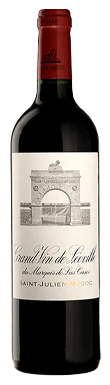

For the last two decades I have been perplexed by this wine. In that time it has not moved an inch. It is a wine...
1986
Château Léoville Las CasesSt-Julien

Château Léoville Las Cases, St-Julien, 2ème Cru Classé, Bordeaux, France, 1988
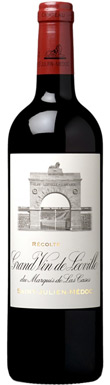
This 1988 is still youthful with chewy tannins and a menthol send off. It's full of rich, concentrated spice, cloves and cinnamon touches and is...
1988
Château Léoville Las CasesSt-Julien
Château Gruaud-Larose, St-Julien, 2ème Cru Classé, Bordeaux, France, 1986
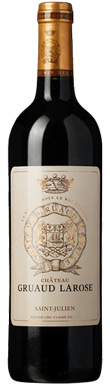
I've always loved this wine. In the past I have found it combines the beautiful opulence of old Gruaud-Larose with the structure of the vintage....
1986
Château Gruaud-LaroseSt-Julien
Château Gruaud-Larose, St-Julien, 2ème Cru Classé, Bordeaux, France, 1988
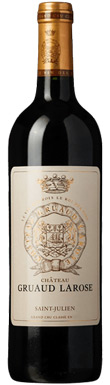
A lovely wine that's medium-bodied, well balanced and effortlessly drinkable. It's less exuberant and concentrated than the 1986, showing instead plenty of eucalyptus, blackberry and...
1988
Château Gruaud-LaroseSt-Julien
Château Ducru-Beaucaillou, St-Julien, 2ème Cru Classé, Bordeaux, France, 1986
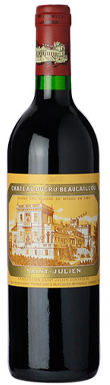
The 1986 Ducru-Beaucaillou is another wine produced during the troubled period for the estate, and the wine seems to be tainted by TCA. However, it...
1986
Château Ducru-BeaucaillouSt-Julien
Château Ducru-Beaucaillou, St-Julien, 2ème Cru Classé, Bordeaux, France, 1988
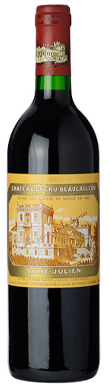
I have been able to taste this vintage on several occasions, and each time I have had the impression that something is amiss, either due...
1988
Château Ducru-BeaucaillouSt-Julien
Château Léoville Barton, St-Julien, 2ème Cru Classé, Bordeaux, France, 1986
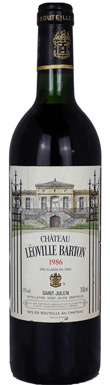
Anthony Barton had been running Léoville Barton for three years at this point, but in 1986 - the year that his uncle Ronald died (after...
1986
Château Léoville BartonSt-Julien
Château Léoville Barton, St-Julien, 2ème Cru Classé, Bordeaux, France, 1988
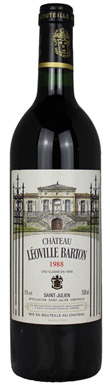
Jancis Robinson wrote of this wine in 2018: 'This is what claret is all about,' and I have to absolutely agree. It's so easy to...
1988
Château Léoville BartonSt-Julien
Château Léoville Poyferré, St-Julien, 2ème Cru Classé, Bordeaux, France, 1986
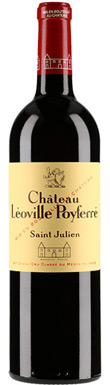
Didier Cuvelier had taken over in 1979 and was undertaking a huge replanting programme, so the 1980s at this estate were a time of serious...
1986
Château Léoville PoyferréSt-Julien
Château Léoville Poyferré, St-Julien, 2ème Cru Classé, Bordeaux, France, 1988
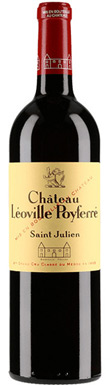
There is often a touch more Merlot in the blend at Poyferré than at the other two Léovilles, and you feel this in the soft...
1988
Château Léoville PoyferréSt-Julien
