
Aragón: Exploring Spain’s wild frontier plus the wines to seek out
This dramatically beautiful, often challenging region is enjoying a quiet revival, with producers in the DOs of Cariñena, Campo de Borja and Calatayud drawing on a rich viticultural heritage and exploring indigenous varieties to produce some exciting wines.


Bigas Luna’s cult 1992 film Jamón Jamón opens with the pink and golden hues of a summer’s evening across Aragón’s vast plains and rugged barren mountains. We then see a close-up of crevices cut deep into hard dry land, empty and desolate.
The start of the shot is framed by a rusting Osborne bull, one of the iconic iron silhouettes dotted throughout the Spanish countryside, and it is closed by a young Javier Bardem busting out some bullfighting moves, a friend circling him with bull horns attached to a strange, trolley-like contraption.
Scroll down to see Beth Willard’s top 15 wines from Aragón
A stunning, sweeping vista bookended by decay and absurdity, capturing the beautiful, wild and untamed nature of the region, as well as its idiosyncrasies, improbabilities and renegades.
The film was set near Zaragoza, a grand city whose history spans the great empires of the Romans to the Moors, from medieval kings and queens to Napoleon. It is perched on top of the remnants of these cultures, with every new building site churning up more archaeological finds.
Crossed by the river Ebro, Zaragoza is the capital of Aragón and home to more than half of the region’s population. It’s buzzy, full of lively bars and restaurants, and as Spain’s fifth biggest city it is very well connected to Madrid and Barcelona by modern high-speed trains.
But a short, 30-minute drive from Zaragoza’s city centre will lead you into the depths of España profunda, deep Spain, where the countryside is at times flat, covered in cereal crops, its distant horizons punctuated with wind turbines, and then suddenly rugged and rocky with dramatic red and brown peaks looming over dusty plains.
This sparsely populated region has big skies, is scorching hot in summer, bitterly cold in winter, and nearly always very windy.

Overcoming challenges
For close to 15 years, I have been driving around this part of Spain and have encountered the challenges thrown up by the region. I’ve driven through snowstorms, been battered by gale-force winds, held up by herds of sheep crossing so-called main roads and I’ve punctured two tyres (yes, at the same time) trying to reach a vineyard so remote there’s no road access. I’ve seen a colleague almost come to a messy end when he crossed paths with a bull wandering the streets of a small town, and I’ve had my car impounded for a problematic parking incident. For all these misadventures, I love this wild, dramatically beautiful, and often challenging region.
Within this corner of Aragón, from the northwest to the southwest of Zaragoza, there is a triangle that covers a remote area producing a huge volume of wine: Campo de Borja in the northern tip of this triangle, Calatayud in its bottom left, and Cariñena to its east make up the triumvirate of DOs. This is the kingdom of Garnacha, in all its forms – perhaps even its birthplace. Garnacha Tinta and Blanca make up 35% of the production in Cariñena, 60% in Campo de Borja and an even bigger 70% in Calatayud.
It’s a region dominated by cooperatives, to an extent not seen in other parts of Spain, and it has flitted between winemaking fashions. But slowly things are changing and, as in other parts of Spain, there is a return to its past, to its rich viticultural heritage: a small but exciting revival.
A complicated history
To understand the changing trends within this part of Aragón, we can turn to Mario López, who, since 1997, has made wine at some of the most established wineries in the region.
He now produces wines from his own family vineyards in the Valdejalón VdT region, a small area right in between the three DOs. He is also the winemaker for Fernando Mora MW’s Bodegas Frontonio, also in Valdejalón, as well as the collaborative project Cuevas de Arom, which spans DOs. López explains that in the 1950s and ’60s, wines from the area generally had less alcohol.
He has seen bottles labelled at 12.5%-13% due to ‘more rain and less heat than now, and [Garnacha] being a variety with a long growing season, so the wines took longer to mature’. He goes on to explain that in many parts of the region, particularly in Cariñena, there was a big change in the 1980s, when producers could earn more money by selling bulk wines that were, as López puts it, ‘high in alcohol and colour, and with intense structure’.
Towards the end of the 1990s and early 2000s many old Garnacha vineyards were ripped up and international varieties planted in their place. At the time it was thought that foreign varieties would improve the wines and they would be easier to manage as they could be planted on trellis to allow for mechanisation.
These young vines of varieties such as Cabernet Sauvignon, Merlot and Syrah would go on to produce a large volume of wine, bigger than the old vine Garnachas they had replaced. But these international grapes didn’t always adapt well to the conditions and what was lost in the wines was a sense of place and unique character.
In the more recent past, growers have been replanting indigenous varieties, returning to the region’s traditions, but López says it’s not as simple as that. ‘We have lost many years… there was no sense in ripping up bush-vine Garnacha of 50 years and even older, of very high quality, just to plant Garnacha on trellising and from much lower-quality clones 20 years later,’ he explains.
It is certainly a difficult situation: a region trying to make up for lost time, knowing it has already lost so much. However, bit by bit, pockets of abandoned old vines have been recuperated and old terroirs are being rediscovered. There are some exciting things happening here as part of a quiet resurgence.
Cariñena

So how is Cariñena, the region most dominated by large-scale production, adapting to changing times? Cooperatives produce 85% of the wine made within the DO, so it makes sense to ask some of these big wineries.
Juan Manuel Gonzalvo, winemaker at Bodegas Covinca in Longares, explains that large and commercially successful co-ops are responsible for positioning the region in the market. Wineries face a lot of pressure to sell at low prices to compete with the biggest players and to sell the large volumes of wine produced.
To combat this race to the bottom, Gonzalvo explains that Covinca has focused on ‘the selection of old vines and use of native grape varieties (Garnacha, Mazuelo, Macabeo) to create a more prestigious range of mid-priced wines with their own personality’. Being able to sell these wines at higher prices will, Gonzalvo believes, ‘allow for the consolidation of the winery, the future of the winery – and the region’.

This is a trend echoed by other cooperatives in the area, one of the largest being Bodegas San Valero, which represents nearly 26% of the total vineyard area of the Cariñena DO. It makes a lot of wines from international varieties (13% of its production is Cabernet Sauvignon and 13% Syrah) but it has developed a line of wines under the Particular brand, focusing mostly on Garnacha and Cariñena. Winemaker Javier Domeque, more accustomed to producing traditional, heavily oaked styles of wines, is trying to make ‘unique wines, with an elegant and fresh profile’.
But the most interesting and authentic styles of wine are coming from a handful of small producers who are more focused on specific vineyard sites and, therefore, limited and quality production. Mas de Mancuso is the family project of Jorge and Jesús Navascués, the former being head winemaker at Contino in Rioja and consultant to Viña Zorzal in Navarra.
The project is located in Almonacid de la Sierra, where they work with indigenous varieties and make four wines from old-vine Garnacha, Macabeo and Cariñena. As Jorge states, they are ‘proud of their roots [and] have enormous faith in the possibilities of the region’.
Yet how does a small project such as Mas de Mancuso stand out among the sea of more industrial wines from Aragón? Jorge respects the marketing actions carried out by the denominación de origen authorities but prefers to operate outside these, attending ‘events with wineries who share the same philosophy’, as he explains. An example of this marketing approach is Mondo Garnacha, a collaboration with Bodegas Frontonio and El Escocés Volante, both smaller producers from neighbouring regions, also focused on indigenous varieties, high-quality wines and specific terroirs.
Campo de Borja

While Campo de Borja has suffered from similar problems to those of Cariñena – low prices, a focus on bulk over bottle – its path is a little different.
Producers here started bottling and valuing their Garnacha wines earlier and with a greater focus on quality than their neighbours further south. And while vines were also ripped up here in the 1990s, fewer old vines were destroyed.
Someone who has actively sought out old Garnacha vines and unspoilt terrain is Javier Gil Pejenaute. For 23 years Pejenaute worked at Palacios Remondo in Rioja Oriental, an experience that deepened his knowledge and love of Garnacha. His search for an untouched site to make an exceptional varietal wine led him to the village of Tabuenca in the Moncayo natural park.
He was looking for a place ‘where the last 30 to 40 years of viticulture had not transformed the landscape too much, and where the old ways of cultivating the vines were still followed’. He was specifically searching for bush vines and altitude, as he states, ‘to mitigate the effects of climate change and to make balanced wines’. In Tabuenca he found his home.
Pejenaute’s wines offer all the character of Campo de Borja with intense red fruits, spice and mountain herbs, but in a way that’s not often encountered here. He lets natural acidity drive his wines and offers a gentle touch when it comes to extraction and oak influence. As he explains, the region is capable of producing ‘unique wine with great potential to age’.
Another winemaker who has sought out the old vines and altitude that Campo de Borja offers is California-born Michael Cooper of Vinos del Viento. A Garnacha lover, Cooper says that ‘some of the best Garnachas I’ve ever tasted come from Campo de Borja’. Like Pejenaute, Cooper sees the region’s altitude as an advantage in dealing with climate change, although he is now wondering if he should have built a winery even further north in the Pyrenean foothills of Somontano, Aragón’s other DO, to combat recent heat events.
He is also focusing on indigenous varieties more adapted to the drought conditions often experienced here. To this end he is planting Ambrosina, Olivana and Parrel, three local varieties that have been recovered from the brink of extinction. According to Cooper, these three grape varieties produce lower-alcohol wines, again turning the clock back on wine styles in this part of Spain.
Calatayud

In Calatayud we can again turn to guiris, foreigners, who have made the region their home. Norrel Robertson MW and Sharon Wade arrived in the region from the UK 20 years ago. ‘Continental climate, high altitude, diverse soils, very low disease pressure and the possibility to make vivid wines not found anywhere else on the planet,’ lists Robertson as the reasons for establishing their project, El Escocés Volante, in the wilds of Calatayud.
Again, climate change is a big issue here with high temperatures, droughts and an increase in severe hail and storms. ‘Garnacha is already a par excellence variety to deal with drought and heat stress,’ says Robertson. In Calatayud there are ‘many villages that were marginal when we arrived but are now producing some of the best wines’, he adds.
The altitude of the region is a big advantage in allowing producers to move to fresher areas. Robertson’s 36ha of vineyards sit between 700m and 950m, and he is focusing on making wines from single-vineyard sites.
With a total production of 12.5 million kilos in 2022, Calatayud is the smallest of the DOs in this part of Aragón, but it is very large in area and sparsely populated. Earlier this year, Calatayud Noticias reported that the population of Calatayud city alone had shrunk by 2,000 since 2010, close to a 10% reduction.
Is there enough incentive for younger generations to stay in the region and work the vines? Outsiders like Robertson and Wade are employing locals and training them in new sustainable farming methods. But there are also others coming back to their family roots.
Jorge Temprado is making just one wine, Cuquero, but has plans for more as he continues to develop the vines that his grandparents cultivated in his mother’s village of La Vilueña. When I first tasted this wine I was struck by its freshness and elegance while still displaying the power and wild character of mountain Garnacha. ‘In my family, my parents’ generation didn’t follow the path of working the land but I have come back to it,’ says Temprado. His wine reflects the potential that he sees in his native region: ‘Quality, personality, altitude, diversity of soils and a great patrimony of varieties,’ he explains. It is exciting to see younger local winemakers such as Temprado returning to their origins to create their futures.
What next?
Some producers are classifying their wines outside the DO. They don’t want the same appellation on the labels of their high-quality, terroir-focused wines as the cheaper wines sitting on the shelves of large retailers. Other producers are making wines with a sense of origin but without the restrictions that DO rules can place on growers.
Robertson believes more thought needs to be given to ‘defining and explaining wine differences and qualities’. He suggests that the area ‘should be broken down into separate valleys and villages, much in the same way as the Bierzo DO has done’.
For now, one of the biggest challenges for most of the producers at the vanguard of this movement is how to communicate their message of authenticity, quality and heritage. López explains that they are trying once again to position Aragón as somewhere great wines are made. ‘We knew from the very beginning that we were making wine in a special place; now all that’s left is to tell the rest of the world.’
Walk on the wild side: Willard’s 15 wines from Aragón worth seeking out
Related articles
- Sherry and tapas: A pairing guide
- Top Seville restaurants and wine bars
- Spanish Mencía: Panel tasting results
Vinos López, La Bodegaza Garnacha Blanca en Secano, Valdejalón, Aragón, Spain, 2020
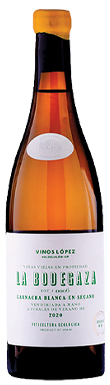

100% Garnacha Blanca from 50-year-old vines. Pure elegance yet voluminous; complex but approachable. Intense citrus and stone fruits on the nose with inviting toasty notes...
2020
Vinos LópezValdejalón

El Escocés Volante, Manda Huevos Blanco, Calatayud, Aragón, Spain, 2020
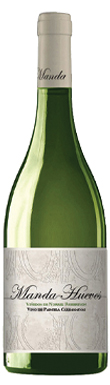
An opulent yet elegant wine from the single vineyard of Carramainas at 850m, directly below the red, rocky peak of Pingorote de la Zorra outside...
2020
El Escocés VolanteCalatayud
Vinos del Viento, Amber, Vino de Mesa, Aragón, Spain, 2021
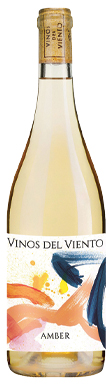
Summery and fresh – a great example of a skin-contact wine that can equally be enjoyed with food or on its own in the sun....
2021
Vinos del VientoVino de Mesa
Gil Pejenaute Viticultor, Las Paradas, Campo de Borja, Aragón, Spain, 2019
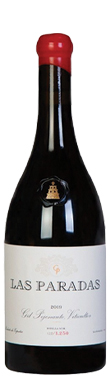
An effortless, elegant and pure Garnacha, made with grapes from only 1.2ha of old vines in Tabuenca, this is a heady combination of Mediterranean wild...
2019
Gil Pejenaute ViticultorCampo de Borja
El Escocés Volante, El Cismático, Calatayud, Aragón, Spain, 2020
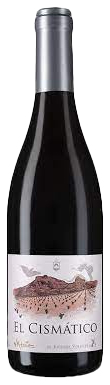
An intense and complex wine reflecting its old vine provenance from a single site above Cervera de la Cañada. Spending 13 months in old, 500-litre...
2020
El Escocés VolanteCalatayud
Bodegas Frontonio, Las Alas de Frontonio La Tejera, Valdejalón, Aragón, Spain, 2020
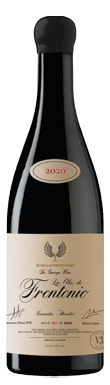
Fernando Mora MW and Mario López make this wine from a single vineyard with an average age of 80 years. A field blend of mostly...
2020
Bodegas FrontonioValdejalón
Cuevas de Arom, As Ladieras, Calatayud, Aragón, Spain, 2020
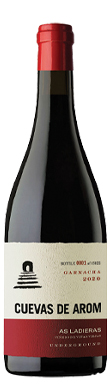
A 100% Garnacha of a more delicate, ethereal nature from the Cuevas de Arom collaborative project between Bodegas Frontonio and San Alejandro. Pretty and refreshing,...
2020
Cuevas de AromCalatayud
Gil Pejenaute Viticultor, Tabuca, Campo de Borja, Aragón, Spain, 2021
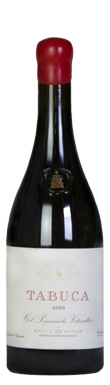
Javier Gil Pejenaute’s second wine is more intense and wild than Las Paradas but with the same signature herbal aromas, sotobosque and forest berry fruit....
2021
Gil Pejenaute ViticultorCampo de Borja
Vinos López, La Bodegaza Tinto Garnacha en Secano, Valdejalón, Aragón, Spain, 2020
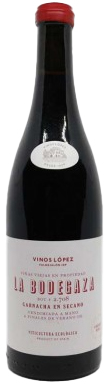
A wonderful expression of old vine Garnacha. Wild strawberry fruit with garrigue and rosemary aromas speak to the region. The wine spends 8-10 months in...
2020
Vinos LópezValdejalón
Cuevas de Arom, Tuca Negra, Campo de Borja, Aragón, Spain, 2017
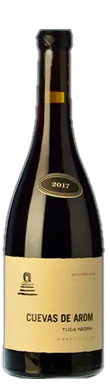
This is a ripe and juicy Garnacha. Very bright red cherry and rhubarb fruit with some peppery spice on the nose. Fresh acidity with firm...
2017
Cuevas de AromCampo de Borja
Gallina de Piel, Mimetic by David Seijas, Calatayud, Aragón, Spain, 2021
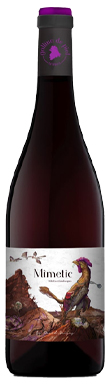
From David Seijas, former head sommelier at El Bulli, whose project focuses on vineyards across the north of Spain. This is a joyous and juicy...
2021
Gallina de PielCalatayud
Mas de Mancuso, Mancuso Garnacha, Cariñena, Aragón, Spain, 2019
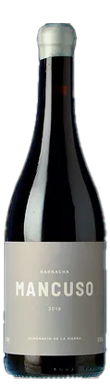
A powerful but elegant wine with lots of energy. The old-vine Garnacha here offers aromatic mountain herbs and spice as well as a fresh green...
2019
Mas de MancusoCariñena
Proyecto Garnachas de España, La Garnacha Salvaje del Moncayo, Vino de la Tierra de Ribera del Queiles, Aragón, Spain, 2020
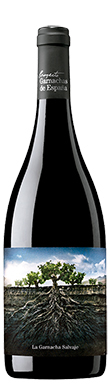
From the Ribera del Queiles area that spreads across both Aragón and Navarra. A joyous expression of the variety with bright raspberry fruit, soft and...
2020
Proyecto Garnachas de EspañaVino de la Tierra de Ribera del Queiles
Bodegas Breca, Brega, Calatayud, Aragón, Spain, 2019
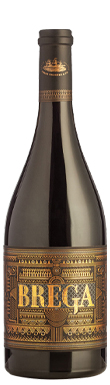
An unashamedly big and powerful wine, appealing to those who prefer their wines rich and oaky. This is from the Jorge Ordónez-owned Bodegas Breca, from...
2019
Bodegas BrecaCalatayud
Vinos del Viento, Ermita de Santa Bárbara, Campo de Borja, Aragón, Spain, 2018
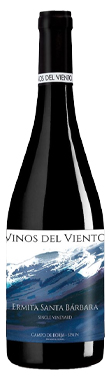
Michael Cooper has turned to a single vineyard in Tabuenca at 800m, near the Santa Bárbara hermitage, to make this intense and fruity Garnacha. Very...
2018
Vinos del VientoCampo de Borja
