
Barolo and Brunello vintages to drink now
Patience is most certainly a virtue when it comes to pulling the cork on back vintages of prime Piedmont and Tuscan flagship reds quietly gathering dust in your cellar. But if you can’t wait any longer, Michaela Morris highlights the best vintages to open and enjoy right now.


When it comes to Italian wine, Barolo and Brunello di Montalcino are two of the most likely candidates for cellaring. Their respective grape varieties, Nebbiolo and Sangiovese, are undoubtedly the country’s noblest and, in their most prestigious denominations, there is no question of their pedigree for long and beneficial ageing.
In decades past, both typically took years to come round in the bottle, but modern-day production can result in more immediately accessible wines.
Some producers point to the warming climate and greater resulting ripeness. Evolution in winemaking also plays a part. Crucially though, Barolo and Brunello haven’t lost their ability to transform slowly over the years as they rest, especially in great vintages.
Scroll down to see tasting notes and scores for six top Barolo and Brunello wines to drink now
Barolo
Barolo is the reference for the most powerful, longest-lived Nebbiolo. DOCG regulations require more than three years of ageing (five for Riserva) before release, with at least 18 months spent in barrel, although many producers mature their wines for longer to mollify Nebbiolo’s long, dry tannins. Even then, Barolo can still be a daunting prospect upon release. But it isn’t just Barolo’s structure that needs time – Nebbiolo reveals its haunting complexities gradually.
During much of the 20th century, ripening Nebbiolo on the vine was difficult. Conversely, since the great 2001 vintage, only 2002 has been a washout. Even the rainy 2014 was salvaged by improved weather in September. Moreover, Piedmont has seen more warm than cool years; 2003 was the first year of extreme heat, across all of Europe, and producers learned from it, enabling them to better manage subsequent hot vintages such as 2007, 2009, 2011 and 2017.
Nevertheless, in the best vintages, cool nights pre-harvest generally allow for slow ripening to mature tannins and develop nuanced flavours. All three of the vintages I have selected have this in common, yet are equally marked by other influences to give them distinct personalities.
2013
Despite success, 2013 was not particularly easy in Barolo. Mildew attacks and slow vegetative growth meant the vines had difficulty catching up. The mild summer transitioned into a cool autumn and ripening occurred at a snail’s pace. A late harvest, from mid-October to early November, made for classic, scented beauties.
I was charmed upon first tasting the 2013s. While restrained, they demonstrated finesse and precision. The trend toward gentler extractions highlighted the loveliness of the vintage. Eight years on, the wines are really starting to shine. It’s not too early to start opening these, and they will captivate for another 10-12 years.
2006
Like the juxtaposition of 1996 and 1997, 2006 was initially eclipsed by the flashier and fleshier 2007. The year was erratic in 2006 with temperatures alternating between warmer than average and unseasonably cool. Even when it warmed up towards the end of August, nights remained chilly and mid-September saw abundant downpours.
Sternly tannic and bracing in acidity, the wines were not easy to taste when first released. I revisited a handful when they reached 10 years old and still thought it best to wait. Then in 2020, the wines started turning a corner. Admittedly, some wines were languishing – either due to imposing oak regimes or over-extraction – nevertheless, it was apparent that the gulf between traditional and modern approaches was diminishing.
Above all, the greatest producers stand out by showing their skill in balancing this muscular year. Thrillingly intense and vertical with sculpted tannins, these wines will continue to drink well over the next 10 years and more.
2001
The 2001 vintage began with some drama – higher than average temperatures led to early bud break then mid-April frost, and some areas were hit by localised heavy hail. August and early September were fairly hot, then cooler temperatures with intermittent rainfall slowed ripening.
Moderate sugar levels made for balanced alcohol and the resulting wines showed intricate flavours, mature ample tannins and the stuffing to last. At the start of this century, the divide between modernists (characterised by techniques such as short macerations and barrique ageing) and traditionalists (long macerations and large casks) was still prevalent.
Both came out with impressive 2001s. Most of those I have tried recently fall into the traditional camp and are holding on strong – in fact, Giacomo Conterno’s Monfortino Riserva was still positively youthful two years ago. Tasted more recently, Bruno Giacosa’s Le Rocche del Falletto is hitting a beautiful stride.
See also: Barolo 2017 vintage report plus 120 wines tasted
Brunello di Montalcino
The only grape allowed in Brunello, Sangiovese achieves a formidable expression in Montalcino. These Tuscan wines possess substantial, textured tannins. Aged even longer than Barolo, Brunello can’t be released until the fifth January following harvest (an extra year for Riserva) and must include at least two years in barrel.
The Brunello consorzio assigns every vintage a ranking out of five stars. Over the last four decades, five-star years have increased from two in the 1980s to three in both the 1990s and 2000s, and a whopping five vintages in the last decade (2010, ’12, ’15, ’16 and ’19). Furthermore, only one vintage, 2014, was given three stars while the remaining years were awarded four.
Superficially, the changing climate seems to have been relatively favourable for Montalcino to date. But quality has also been driven by investments in new cellars, thoughtful viticulture and research, particularly regarding clones.
Hot, dry vintages are becoming more common and two of the vintages I have selected here – 2012 and 2007 – were exceedingly warm. Both were awarded five stars. The 1999, for which I have particular affection, was ‘only’ given four stars, but has proven to be a tireless long-distance runner.

2012
The 2012 vintage was even hotter than 2007 had been, and considerably drier. Drought stressed the vines and the heat decelerated photosynthesis. Crucially, rain in early September refreshed the plants, and the growing season concluded with sunny days and fresh nights.Modest quantities of small grapes with thick skins gave dense wines, concentrated in all elements: fruit, tannins, acidity and alcohol, which needed a few years to come together.
Recent tastings have reiterated that 2012 is strikingly balanced in its proportions. Some wines from warmer expositions are showing their heat and slightly drying tannins. Overall, however, the wines don’t necessarily present as being from a hot year and in some cases are positively racy. Many are appealing now – not the sophistication and potential of 2010, but ripe, textured and packed with personality.
2007
A decidedly warm summer with intermittent rains giving balance, 2007 saw a rather precocious harvest, starting on 10 September. It yielded concentrated grapes with lots of sugar, ripe tannins and flavours, though moderate acidities. Trying the wines shortly after release, I appreciated producer Laura Brunelli’s analogy of a wild young horse and the vintage’s almost unruly yet fascinating nature. Forward, round and supple, the wines were approachable early on.Ten years later, that youthful vigour has subsided. They still offer the pleasure of the vintage but are at their peak. Top wines, especially those from cooler sites, will continue to give maximum gratification over the next five years or so.
1999
Upon release, 1999 was overshadowed by 1997, which was considered the vintage of the decade. Both were very warm years, but nights in 1999 were cooler. A relatively early harvest from mid- to end-September gave powerfully structured wines. Less obvious and less sumptuous than 1997, 1999 was austere and unyielding for many years. The wines finally came around and are outliving 1997 in my opinion; they have aged harmoniously in terms of both structure and flavours. There is no need to keep these in the cellar any longer, and yet they are not on the verge of falling apart. They represent classic Brunello from a bygone era.
See also:
Brunello di Montalcino 2017 vintage report and top-scoring wines
Brunello di Montalcino 2017 score table
See Michaela Morris’ tasting notes and scores for top Barolo and Brunello vintages to drink now:
Related content:
Barolo vs Brunello vs Barbaresco: What’s the difference?
Barolo & Barbaresco: 10 high-flying vineyard sites
Brunello di Montalcino: The 10 must-know estates
Bruno Giacosa, Rocche del Falletto Riserva, Barolo, Serralunga d’Alba, Piedmont, Italy, 2001
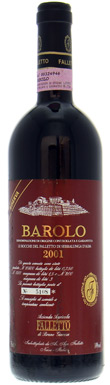

From the first parcels acquired by Bruno Giacosa in the 1980s, the iconic red label is made only in years the family deems truly perfect....
2001
Bruno GiacosaBarolo

Fratelli Alessandria, Monvigliero, Barolo, Verduno, Piedmont, Italy, 2006
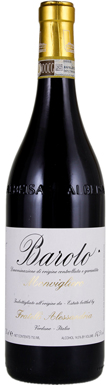
Vittore Alessandria says his 2006 (along with 2010) has the most substantial polyphenolic structure since 2000. It is certainly dense and compact. Still youthful ruby,...
2006
Fratelli AlessandriaBarolo
Cavallotto, Barolo Bricco Boschis, Castiglione Falletto, Piedmont, Italy, 2013
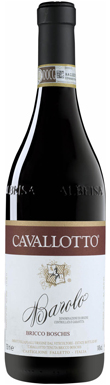
Harvested in the second half of October at modest yields of 38hL/ha, the 2013 is gorgeously perfumed with pressed rose and incense escaping gradually from...
2013
CavallottoBarolo Bricco Boschis
Fuligni, Riserva, Brunello di Montalcino, Tuscany, Italy, 2007
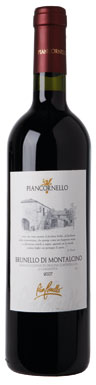
Roberto Fuligni says 2007 was highly suitable for making a Riserva given the considerable concentration of polyphenols. A standout of the vintage, this is seductively...
2007
FuligniBrunello di Montalcino
Le Chiuse, Riserva, Brunello di Montalcino, Tuscany, Italy, 1999
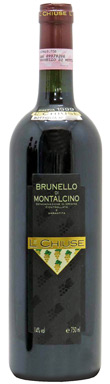
Since 1999, winemaking has passed from owners Simonetta Valiani and Nicolò Magnelli to their son, Lorenzo Magnelli who has continued with spontaneous fermentations and long...
1999
Le ChiuseBrunello di Montalcino
Fattoi, Brunello di Montalcino, Tuscany, Italy, 2012
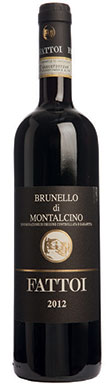
The Fattoi estate is located in Tavernelle, in Montalcino’s southwest. It’s a warm zone with lots of sun but the clay-based soil helped mitigate severe...
2012
FattoiBrunello di Montalcino
