
Barolo & Barbaresco: 10 high-flying vineyard sites
As the number of single-vineyard wines produced in Piedmont proliferated over the past half-century, so the level of confusion for consumers increased. A local consorzio project has helped to create some order, defining the different wine-growing areas. Stephen Brook highlights 10 of these ‘MGA’ vineyards, capable of producing some of the very finest wines.

The notion of single-vineyard wines, commonplace in other regions such as Burgundy and Germany, is relatively recent in Piedmont.
Until the 1960s, Barolo and Barbaresco were blended wines, using fruit from different vineyards and sectors. Some producers, such as Bartolo Mascarello, still believe this is the best approach. The estate owns vines in Cannubi, so could theoretically produce a single-vineyard wine from this great site, but Maria Teresa Mascarello believes the blend is superior to the wine she could make from this single vineyard.
Scroll down for Stephen Brook’s tasting notes and scores for MGA wines
In the 1960s, Beppe Colla and a few other growers began identifying the vineyard source on the label. Over the decades, the number of single-vineyard wines proliferated as more and more growers began vinifying and commercialising their wines rather than selling the crop to a cooperative or merchant.
Label confusion
It started to become increasingly difficult for even the most avid aficionado to keep up with all of the new labels, and although some sites, such as Asili in Barbaresco or Cannubi in Barolo, enjoyed widespread recognition, others were obscure, to put it mildly.
Moreover, many labels displayed ‘fantasy names’ rather than a specific vineyard identity. One example is Chiara Boschis’ excellent Via Nuova, which is a blend of different sites. Gaja’s ‘cru’ wines also fall into this category: labels such as the Sorì San Lorenzo refer to specific parcels that lie within a recognised site. Gaja and many others were establishing brands rather than validating those individual sites.
All this was leaving consumers confused, so the powerful local consorzio embarked on a project to identify sites that could be designated as MGA (Menzione Geografica Aggiuntiva) – in short, single vineyards with clearly defined boundaries.
However, it was left to each commune to decide which vineyards qualified. And while some did an excellent job, identifying historical sites that had long been recognised locally, others were browbeaten by local growers who wanted their wines associated with a famous name.
Cannubi in the commune of Barolo was expanded, leading to lawsuits and counter- suits. The most notorious example is that of Monforte, which seemed to register any place where a blade of grass could grow: the renowned Bussia site was expanded hugely to about 300ha, thus making a nonsense of the whole project; and the Perno and Bricco San Pietro sites were not far behind.
Top producers, such as Aldo Conterno,, added parcel names such as Romirasco to assert that their wines came from the historic sector.
The MGA project went hand in hand with superb cartographical work by the wine writer Alessandro Masnaghetti who, on the basis of lengthy interviews with growers and merchants, compiled detailed vineyard maps for all the communes of Barolo and Barbaresco, establishing – where possible – the boundaries between each site.

Geography matters
In Barbaresco, the consorzio declared 66 MGAs in 2007; Barolo followed with 181 MGAs declared in 2010.
Unlike the Burgundian cru hierarchy or the recent German and Austrian attempts to establish ‘first growths’, there is no such hierarchy in Piedmont – they are simply geographical entities, with no implicit assertion of exceptional quality. It’s hard to see how there could be.
In Burgundy, practically all the best vineyards lie along a single slope with a similar exposition. However, in Barolo and Barbaresco, a site may look like a uniform piece of land on a map, but there will be many expositions and elevations, not to mention soil types and microclimates and varying clones of vines. One sector of a vineyard may yield superb Nebbiolo; another, with a different exposition, may be indifferent for Nebbiolo but outstanding for Barbera or Dolcetto.
Nor is topography static: global warming may mean that some parcels previously considered too cool for quality Nebbiolo may now be well placed to produce fresher, more elegant wines than a parcel across the valley that is now regarded as far too hot.
Much depends on the producer, too. A great grower and winemaker can validate a site that may not be fabulous, while a humdrum grower can make a hash of a great vineyard. For some, a blended Barolo is bottled leftovers; for others it’s commercially their most important wine and is consequently produced from high-quality grapes, including some from MGAs.
It would be easy to point to 20 or so vineyards that could aspire to grand cru status (were such a thing to exist here). The 10 selected below are a personal choice, and not intended to offer a seal of approval on potential grands crus. But I believe few would dispute that all these vineyards – when farmed well and vinified with expertise – are capable of producing some of the very finest Barolos and Barbarescos in existence.
Barbaresco
Asili
Located at 200m-270m, the 14ha Asili vineyard lines the slopes of a hill with complex soils of silty loam, clay and sand. Its wines are known for their finesse, charm and intensity. It was first validated by the excellent small cooperative Produttori del Barbaresco in 1971. The site was also championed by Ceretto and, most famously, Bruno Giacosa.
Top producers: Bruno Giacosa, Ca’ del Baio, Ceretto, Luisin, Michele Chiarlo, Produttori del Barbaresco, Roagna
Montestefano
This steep site produces some of Barbaresco’s strongest and most structured wines and they can be very long lived. Its high calcium content gives the wine its robust tannins. It was the late Beppe Colla of Prunotto, in 1961, who first identified Montestefano on the label as an exceptional vineyard. The wine delivers a weighty yet classic style of Nebbiolo that, with time, develops secondary aromas of leather and tobacco. Aldo Vacca, the long-term director of Produttori del Barbaresco, believes this vineyard gives the most Barolo-like wine from Barbaresco.
Top producers: La Cà Növa, Luigi Giordano, Produttori del Barbaresco, Prunotto
Rabajà
Another MGA that has excited controversy, as many believe its boundaries have been excessively extended. Part of it has been added to Asili, meaning the same rows of vines have supplied wine for two appellations. The 20ha vineyard, which faces south and southwest, slopes down to the top of Martinenga, while it borders Asili to the east. The soil is limestone with sand and clay. It delivers elegant yet muscular wines that age well, although they can certainly be appreciated when young.
Top producers: Barale, Bera, Bruno Rocca, Castello di Verduno, Giuseppe Cortese, Luisin, Produttori del Barbaresco

Barolo – Monforte (commune)
Bussia
Most agree that, with a surface of almost 300ha, far too large a swathe of Bussia’s vineyards is entitled to the MGA, rather than just the core historic sectors such as Bussia Soprana and Bussia Sottana. The former consists of an amphitheatre of vines, with complex expositions. Long-established producers such as Aldo Conterno name their top parcels, such as Cicala and Colonnello, on the label. Conterno’s most celebrated and costly bottling is labelled ‘Gran Bussia’, which is a fantasy name, but one protected by its longevity and renown. Less-prized sectors include Munie, but some producers do identify it on the label, and the wine can indeed be of very good quality.
Top producers: Aldo Conterno, Barale, Ceretto, Monti, Prunotto, Poderi Colla, Silvano Bolmida, Stroppiana
Barolo – Serralunga
Lazzarito
Fontanafredda is the principal owner and thus producer of wines from this elevated 8ha site. The best sector is sheltered and faces south and southwest, and there is a marked limestone content. The lower part of the vineyard is known as Lazzairasco and can be of comparable quality and longevity.
Top producers: Ettore Germano, Fontanafredda, Gagliardo, Guido Porro (Lazzairasco), Vietti
Vigna Rionda
This 10ha site on the western slopes delivers quintessential Serralunga wines that are powerful and structured, even austere, and need time to reveal their true complexity. The soil is calcareous, the exposition south-facing and the vines are planted at an elevation of about 330m.
Top producers: Arnaldo Rivera, Giacomo Anselma, Luigi Pira, Massolino, Oddero

Barolo – La Morra
Brunate
Like Cerequio, which is arguably of comparable quality, the 25ha Brunate vineyard straddles the border with the commune of Barolo, facing south and southeast on sandstone soils. The wines tend to be both aromatic and structured, with firm tannins that confer long cellaring potential.
Top producers: Altare, Batasiolo, Boglietti, Ceretto, Francesco Rinaldi, Giuseppe Rinaldi, Marcarini, Marengo, Oddero, Roberto Voerzio, Vietti
Rocche dell’Annunziata
Barolo’s chronicler Renato Ratti considered Rocche dell’Annunziata to be its ‘first growth’, and few would disagree. It extends over some 30ha on blue marl and sandy soils, but is divided into two sectors, one facing southeast, the other more sheltered and facing south and southwest. With its perfume, richness and finesse, it is quintessential La Morra.
Top producers: Aurelio Settimo, Franco Molino, Fratelli Revello, Mario Gagliasso, Mauro Veglio, Paolo Scavino, Ratti, Roberto Voerzio, Rocche Costamagna, Trediberri
Barolo – Castiglione Falletto
Monprivato
This southwest-facing 6ha vineyard has complex soils of clay, marl and limestone. It is 93% owned by Mauro Mascarello, who first mentioned the site on the label in 1970. Monprivato is planted with the Nebbiolo Michet clone, found in only 5% of Barolo’s vineyards. It is less productive than others and more prone to disease, but Mascarello believes it gives more structure and complexity to the wines. Any replanting is done with massal selections from the site (using cuttings from the best existing, mature vines). In top years, Mascarello also releases a special selection from Monprivato called Cà d’Morissio. Both wines are highly traditional and among the outstanding examples of this style.
Top producer: Giuseppe Mascarello
Barolo
Cannubi
One of the most historic vineyards in the region, having first been mentioned on a label in 1752. Its wines are prized for their elegance rather than for their power. The soil is grey-blue limestone marl with a high proportion of sand, which is an advantage in wet years as it drains well. The elevation ranges from 250m-320m, and being a south- facing site, it can become very hot in summer.
The problem is that there is a 34ha cluster of five sites that contain the name Cannubi, whereas the historic core of the site is a mere 15ha in the centre of the vineyard. The MGA proposals suggested that only the historic core should be entitled to the name of Cannubi on its own, whereas other parcels, such as Cannubi Boschis, should bear their full name.
Court cases ensued, as some producers outside the classic zones argued that their wines, while different from central Cannubi, were of equal quality – one example being the Cannubi Boschis from Sandrone. The decision to expand was reversed in 2012, and then reversed again in 2013.
Top producers: Altare, Brezza, Burlotto, Carretta, Damilano, Einaudi, E Pira, L’Astemia Pentita, Paolo Scavino, Réva, Sandrone, S&B Borgogno
The challengers
Canvass local opinion and you’ll find other top Barolo and Barbaresco sites will be mentioned, often thanks to one or two producers that have validated the exceptional quality of those sites. They include:
Castiglione Falletto (commune) Rocche di Castiglione
La Morra Cerequio
Novello Ravera
Serralunga Cerretta, Falletto, Francia
Verduno Monvigliero
Barbaresco Martinenga
10 MGA wines tasted: Stephen Brook’s scores and tasting notes
(listed following geographical outline above)
You may also like:
Nebbiolo Prima 2019 and 2020: Producer focus
Prunotto Secondine: Producer profile and new Barbaresco tasting
Vietti: Producer profile
Produttori del Barbaresco, Asili Riserva, Barbaresco, Piedmont, Italy, 2015
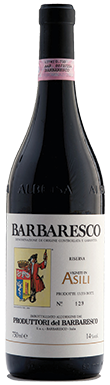

Asili has a warmer microclimate than most vineyards in its area. It was first produced by Produttori as a single- vineyard wine in 1967. The...
2015
Produttori del BarbarescoBarbaresco

Giuseppe Cortese, Rabajà, Barbaresco, Piedmont, Italy, 2016
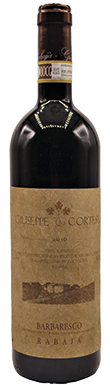
The Cortese brothers are among the finest producers of this great cru, and this 2016 is outstanding. The nose is rich and vibrant, with raspberry...
2016
Giuseppe CorteseBarbaresco
Luigi Giordano, Montestefano, Barbaresco, Piedmont, Italy, 2013
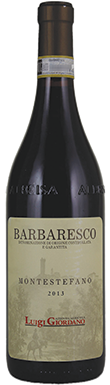
Montestefano is a celebrated cru in the commune of Barbaresco. This 2013 shows a lean strawberry and orange peel nose that’s elegant and poised. The...
2013
Luigi GiordanoBarbaresco
Aldo Conterno, Romirasco Bussia, Barolo, Monforte d’Alba, Piedmont, Italy, 2015
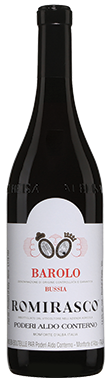
Romirasco is a 3.8ha site in the Bussia cru, located on a hilltop overlooking the Conterno winery in Monforte, and it usually delivers the most...
2015
Aldo ConternoBarolo
Vietti, Lazzarito, Barolo, Serralunga d’Alba, Piedmont, Italy, 2015
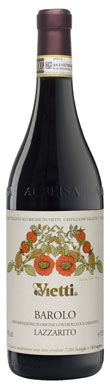
Although Vietti was bought by an American company in 2016, the long-standing family winemaker Luca Currado remains in place. This powerful expression of an important...
2015
ViettiBarolo
Giovanni Rosso, Ester Canale, Barolo Vigna Rionda, Serralunga d’Alba, Piedmont, Italy, 2015
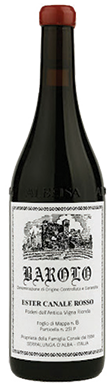
If there is a village which has benefitted from the warm vintage in 2015, it is Serralunga. Within it, Vigna Rionda is a cult cru...
2015
Giovanni RossoBarolo Vigna Rionda
Paolo Scavino, Rocche dell’Annunziata Riserva, Barolo, La Morra, Piedmont, Italy, 2013
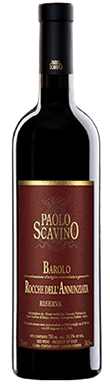
Scavino bought a 0.5ha parcel in this celebrated La Morra vineyard in 1990 and liked the wine so much he decided to produce it solely...
2013
Paolo ScavinoBarolo
Ceretto, Bricco Rocche, Brunate, Barolo, La Morra, Piedmont, Italy, 1996
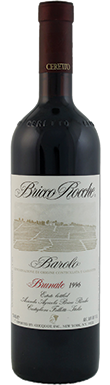
Ceretto owns 5.5ha on the La Morra side of Brunate. It was vinified separately for the first time in 1978. During the 1990s, oenologist Marcello...
1996
CerettoBarolo
Giovanni Sordo, Monprivato, Barolo, Castiglione Falletto, Piedmont, Italy, 2014
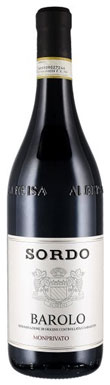
Sordo’s Monprivato is produced in smaller quantities than Mascarello’s. This 2014 is reticent and delicate on the nose, with sour cherry aromas. The attack is...
2014
Giovanni SordoBarolo
Poderi Luigi Einaudi, Cannubi, Barolo, Piedmont, Italy, 2016
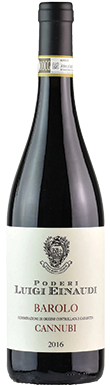
Einaudi has a 2.4ha holding in Cannubi at an elevation of 220m. The fruit receives a long maceration before traditional ageing. It’s still reserved, especially...
2016
Poderi Luigi EinaudiBarolo
