
Barolo in depth: Serralunga plus 10 wines worth seeking out
Many of Barolo's most esteemed producers own vineyards in Serralunga. Michaela Morris investigates what makes the village such a magnet and unearths some of its top wines in the process.


In Barolo’s tradition of blending from different zones, Serralunga d’Alba is prized for providing tannic backbone. It has a reputation for stern and muscular wines yet, as commanding as they can be, they are not without finesse.
Scroll down to see Michela’s tasting notes and scores for 10 top Serralunga wines
Lay of the Land
The township stretches out over Barolo’s easternmost ridge, running approximately two-thirds the length of the denomination. In its northern reaches, Serralunga borders Castiglione Falletto to the west and Diano d’Alba to the east. Making its way south, it looks across to Monforte d’Alba in the west.
Bisected by a road that runs atop the ridge, Serralunga can be divided into a more expansive, luminous western flank and a narrower eastern side. It is further convoluted by secondary ridges that extend westward from the main one, making for changes in exposure as the hills twist and turn.
From the north, slopes rise like a series of waves that become progressively higher. Starting at 200m, Serralunga reaches its highest altitude of 440m at Cascina Badarina and Cascina Francia in the south.

Terroir
Serralunga sits on Barolo’s oldest soil which hails from the Serravallian era (11 to 13 million years ago). Known as the Lequio Formation, compacted sand alternates with layers of gray silty marls. Intensely white in colour, it is high in calcium carbonates and, in some areas, iron oxides which lend a reddish hue. In the northern part of Serralunga, the younger Tortonian era Sant’Agata fossil marl and Diano sandstone creep in.
With 352ha, Serralunga boasts the third largest extension of Barolo vineyards (after La Morra and Monforte d’Alba). Beyond the 29 producers headquartered in the township, many more from neighbouring communes have plots here, often bottling them under one of Serralunga’s 39 Menzioni Geografiche Aggiuntive (MGA). However, not every vineyard is associated with an MGA. ‘While Barolo and Monforte established crus that essentially encompass the entire communes, Serralunga and Castiglione Falletto worked out the best single sites within their borders,’ says cartographer Alessandro Masnaghetti.
Fontanafredda is at the northern gateway into Serralunaga. This 58.42ha MGA is the township’s largest, consisting of several hills. It belongs exclusively to the historical Fontanafredda estate which crafts its excellent flagship La Rosa label from a south to southwest-facing amphitheatre at the cru’s highest elevations.
All points of the compass
Continuing south, San Rocco then Baudana straddle Serralunga’s main ridge with the best plots located on the western flank. Directly to the east is the hill of Cerretta. The 360 degrees of exposure, varying gradients and mix of soil make for subtle differences. Overall, the wines tend to be sturdy, though they are often immediate and generous in florals reminiscent of Castiglione Falletto. More imposing in structure are the wines of the Prapò MGA, a well-exposed amphitheatre on the south side of Cerretta.
The next westerly ridge takes in the highly regarded Gabutti, Parafada and Lazzarito MGAs. The latter, which is largely comprised of twin southwest oriented amphitheatres, has a reputation for particularly austere Barolo with an iron grip that doesn’t yield willingly. The wines are exceptionally cellar worthy, exhibiting wonderful earthy intricacies. Among the many fine names in Lazzarito are Fontanafredda’s Casa E. di Mirafiore, Famiglia Anselma, Vietti, Ettore Germano and up-and-comer Guido Porro.
On the eastern side lies Brea. Its 11ha are solely owned by Brovia who has forged a reputation with the estate’s refined Ca’ Mia bottling. Rising above Brea from 370 to 405m, Bricco Voghera gives plusher wines. It is from this MGA that Azelia selects its only Riserva.
Reaching the town of Serralunga itself, the elegant 14th century castle gives magnificent bird’s-eye views of the whole region. The western ridge extending from the village encompasses the west to south-facing swath of Margheria, Marenca and Rivette. The last two provide Gaja’s intensely concentrated Sperss.
Just around the next corner is the famed 10ha Vignarionda (also spelt Vigna Rionda). Though not included as a top site in Renato Ratti’s seminal map of 1976, today it is one of Barolo’s most revered. Vignarionda is best viewed from Monforte’s Castelletto MGA to the west. Long after the aforementioned has fallen into shade, Vignarionda’s south through west oriented vineyards are bathed in the warm afternoon sun. On classic calcareous Serralunga soil, Vignarionda gives perfumed, powerful, textured wines that require patience – hence Massolino and Oddero releasing a Riserva up to 10 years after the harvest. Other esteemed names include Luigi Oddero, Luigi Pira and Ettore Germano.
The stellar south
The southern reaches of Serralunga include some of its most illustrious sites. On yet another western ridge, the predominantly south-facing Ornato yields chewy, robust, hearty wines. While it is most famously associated with Pio Cesare, the lesser-known Palladino estate is well worth seeking out.
Adjacent to Ornato, the similarly exposed Falletto rises steeply to 420m. Bruno Giacosa purchased this 9ha cru in its entirety in 1982. Notwithstanding any ups and downs at the estate over the years, Falletto remains one of Serralunga’s superlative MGAs and in its greatest years Rocche del Falletto Riserva is the epitome of self-assured grace.
Last on this tour is Francia, which reaches Serralunga’s highest heights. Facing mostly west to southwest, it is generously lit with sunshine which allows ripening in cooler vintages. Conversely, breezes and altitude help mitigate excessive temperatures in hot ones. Solely owned by the Giacomo Conterno estate, Francia has been the source for Monfortino since 1978, although from 2015 it also includes fruit from neighbouring Arione.
Serralunga’s is an embarrassment of MGA riches. It is as unfeasible for producers to make separate labels of each as it is to describe them all. As such, Serralunga is one of Barolo’s most prolific in terms of commune bottlings. Identified as Barolo del Comune di Serralunga d’Alba, these wines knit together multiple sites for magnificent panoramas of the township.
It is equally privileged when it comes to vintages. ‘The fortune of Serralunga is its protected position and elongated shape which favours all exposures,’ says Veronica Santero at Palladino. Besides being a top performer in 2016 and 2015, Serralunga’s best wines demonstrate freshness and balance despite the arid heat in 2017, and beautiful ripeness in the cooler 2013 vintage. Even in soggy 2014, some of the region’s most iconic wines were justifiably bottled.
See tasting notes and scores for 10 top Serralunga wines
Related content
Barolo and Brunello vintages to drink nowBarolo 2017 vintage report: 120 wines tastedExploring Monferrato plus six wines worth seeking out
Azelia, Barolo Bricco Voghera, Serralunga d’Alba, Piedmont, Italy, 2009
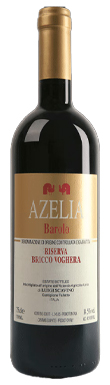

Long ageing in botte and bottle gives a mature, autumnal expression. It is perfumed and nuanced with tobacco, bitter chocolate, spice and balsamic herbs weaving...
2009
AzeliaBarolo Bricco Voghera

Ettore Germano, Barolo, Prapò, Piedmont, Italy, 2017
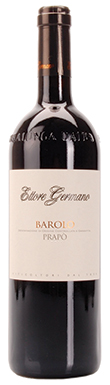
The 2017 is particularly spicy upfront. Clove, nutmeg and pepper infuse warm red berries while truffle notes waft in the background. The palate pulls together...
2017
Ettore GermanoBarolo
Giovanni Rosso, Barolo, La Serra, Piedmont, Italy, 2016
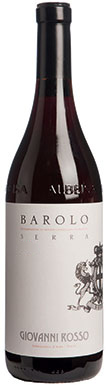
Coming from east to southeast facing plots, the 2016 is dark and dense on the nose - all deliciously wet autumn forest, mulch and slight...
2016
Giovanni RossoBarolo
Guido Porro, Vigna Lazzairasco, Barolo, Piedmont, Italy, 2016
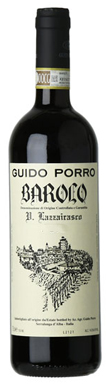
Distinguished by nuances of compost, iron, undergrowth and wet woodlands. Aloof and austere, the palate shows rigid tannins and bracing acidity. Nevertheless, there is flesh...
2016
Guido PorroBarolo
Luigi Baudana, Barolo, Cerretta, Piedmont, Italy, 2017
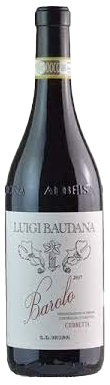
Classically ‘Serralunga’ in character, the 2017 is still backward. Aromas suggest tobacco, tea leaf, hazelnut and mossy undergrowth. A steely, irony structure grips the tight,...
2017
Luigi BaudanaBarolo
Luigi Pira, Barolo, Margheria, Piedmont, Italy, 2017
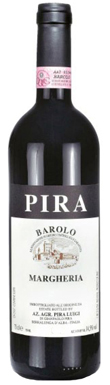
While Luigi Pira’s Margheria plot is not as steep as holdings in Marenca or as high as those in Vignarionda, it boasts the estate's oldest...
2017
Luigi PiraBarolo
Massolino, Barolo Vignarionda, Serralunga d’Alba, Piedmont, Italy, 2014
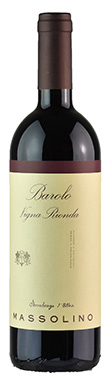
Immediately expressive, this reveals enticing aromas of autumn leaves, cherry, liquorice, truffle and smoke. Mouth-filling yet buoyant, it carries a surprising tannic load for the...
2014
MassolinoBarolo Vignarionda
Oddero, Barolo Vignarionda, Serralunga d’Alba, Piedmont, Italy, 2013
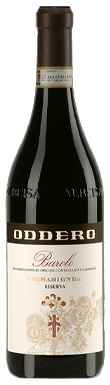
Scents of mint, earthy sage and rosemary make way for heady spring blossoms. Linear and sinewy, this is a salivary mouthful of stone and orange...
2013
OdderoBarolo Vignarionda
Palladino, Barolo, Ornato, Piedmont, Italy, 2017
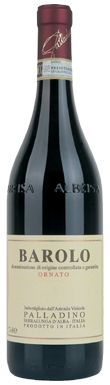
Scents of rose amplify slowly but there are also darker lashings of tar and freshly turned soil. Herbal tea, iron and chocolate orange nuance the...
2017
PalladinoBarolo
Pio Cesare, Barolo, Ornato, Piedmont, Italy, 2016
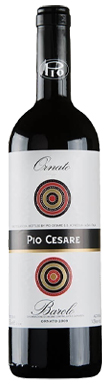
An understated toastiness gives way to dark cocoa, mint and rosemary, then liquorice and wet leaves. The palate is racy with steely firm tannins, tactile...
2016
Pio CesareBarolo
