Baudains: A rosy future for Ciliegiolo
Richard Baudains discovers renewed interest in an indigenous and characterful central Italian variety, the charmingly named, Ciliegiolo.

Get our daily fine wine reviews, latest wine ratings, news and travel guides delivered straight to your inbox.
You are now subscribed
Your newsletter sign-up was successful
Ciliegiolo is the diminutive form of ‘ciliegia’ (cherry), and never was a name more apt than for this native grape of central Italy, because fresh red cherry is exactly the way the wine tastes. There might be a hint of other red fruits and there is often a gentle spicy note, sometimes even some rose petal – but cherry is its signature.
For a long time, it was thought that the grape had been brought to Italy by pilgrims returning from Santa Maria de Compostela in Galicia, but Ian d’Agata, in his erudite tome Native Wine Grapes of Italy (2014), cites DNA analysis which dispels this myth by demonstrating that Ciliegiolo is in fact a crossing of Sangiovese and Moscato Violetto.
Interestingly, the leaf and the bunches of Ciliegiolo are very similar in appearance to those of Sangiovese, and in the traditional mixed-variety vineyards the two were often not distinguished. Additionally, the former was rarely vinified alone but rather used in blends with Sangiovese.
Scroll down for 10 scintillating Ciliegiolo to try
Tiny plantings
Ciliegiolo is moderately tannic with medium to rich alcohol and low acidity, which make for a soft, smooth texture on the palate. The potential weak spot is the low acidity. If the alcohol goes up further than the acidity can cope with, the result can be a certain flabbiness, but when everything is in the right place, Ciliegiolo is a delicious and very original wine.
ISTAT data shows that the surface area planted to Ciliegiolo nationally has plummeted from just over 6,000 hectares in the early 1980s, to the current figure of 1,195ha. Almost half of this is in Tuscany (551ha) and of this, more than half is in the province of Grosseto (309ha). Umbria has 130ha and Lazio just over 115ha.
When you consider that in Tuscany, the region with the biggest production, Ciliegiolo represents less than 1% of the total vineyard area, it is clear that we are talking about a niche variety.
Renewed interest
However, there are signs of a revival. The consorzio of the Maremma Toscana DOC puts the current production of Ciliegiolo in the denomination at around 400,000 bottles a year, and reports an increase in plantings of the variety.
Get our daily fine wine reviews, latest wine ratings, news and travel guides delivered straight to your inbox.
Something is moving behind the scenes too: figures from the National Grape Vine Register show a steady up-turn in the number of grafted Ciliegiolo plants produced over the last four years.
According to the same source, nurseries turned out a total of 461,662 vines in 2022. If these were all planted ex novo, it would translate into around 92ha of new vineyard – definitely a sign of interest in the variety.
Another sign of changing attitudes is the Ciliegiolo di Maremma e d’Italia event, created in 2023 and now in its second edition. Over the past two years, the show has brought together around 125 wines from the current vintage releases, and about the same number in single-producer, vertical tastings.
I am very happy to have followed both editions, held in the village of Sorano in the Maremma (incidentally, a real gem), and these are my thoughts on Ciliegiolo gained so far:
Ageability: I am open to be persuaded otherwise, but my impression is that Ciliegiolo drinks best in one to four years. Tasting verticals back to 2012, my experience is that older wines perform unevenly and often dry out. I am also not convinced of the relevance of a Riserva category for Ciliegiolo.
Vinification: Around half of the producers on show vinify and age their wines in stainless steel and/or cement vats, and this maintains the integrity of the fruit. Used with discretion, barrel ageing brings out another dimension, but too much new oak adds a layer which Ciliegiolo does not need.
Vintages: The 2023s are fresh and direct, a little light but very enjoyable. Wines from 2022 are more structured, and drier. The best of the current vintages is 2021, with all the aromas of the variety and a touch more concentration in the fruit. The 2020s are more tannic, with sometimes overripe fruit. Despite my comments above about older wines, in the vertical tastings the 2016s showed very well – head and shoulders above the other older vintages.
Sites: The focus of production is the mid-to-higher slopes of the Maremma, around the villages of Magliano, Manciano and Scansano, where Ciliegiolo thrives in the same soils as the Sangiovese of the Morellino di Scansano DOCG. The tuffaceous soils at Pitilgiano have long been recognised for generously full-bodied wines. In Umbria, the Narni IGT makes – on the basis of limited experience of a small production – refined wines with a marked floral-herby character.
Ciliegiolo’s future
Like Vermentino, which has exploded over the past 10 years on the Tuscan coast, Ciliegiolo is a quintessentially Mediterranean variety, perfectly in its element in the Maremma where international varieties are suffering the effects of climate change.
If Ciliegiolo is going to take off on a larger scale – and there are signs that the ambition is not lacking – the Tuscan coast is going to be the launch pad.
Ciliegiolo: 10 to try
Related articles
- Baudains: Italy’s frizzante tradition returns
- Poggio Valente: Creation of a Tuscan Sangiovese cru
- Vernaccia di San Gimignano: Tuscany’s supreme white wine territory
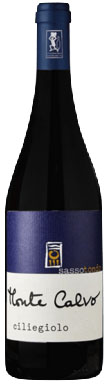
Sassotondo, Monte Calvo Ciliegiolo, Maremma Toscana, Tuscany, Italy, 2022

A cru within a cru, Monte Calvo is an almost obsessive super-selection of a mere 800 bottles from the estate's San Lorenzo vineyard. It is...
2022
TuscanyItaly
SassotondoMaremma Toscana
Leonardo Bussoletti, 5035 Ciliegiolo, Narni, Umbria, Italy, 2023
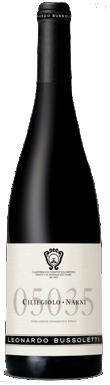
Leonardo Bussoletti, energetic champion of Ciliegiolo in Umbria, makes three selections from the variety. This one comes from sandy soils and ages exclusively in stainless...
2023
UmbriaItaly
Leonardo BussolettiNarni
Antonio Camillo, Ciliegiolo, Toscana, Tuscany, Italy, 2023
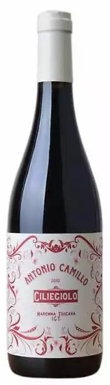
Antonio Camillo has made it his mission to seek out small plots of old vines in the interior of the Maremma, and to make wines...
2023
TuscanyItaly
Antonio CamilloToscana
Val delle Rose, Ciliegiolo, Maremma Toscana, Tuscany, Italy, 2020
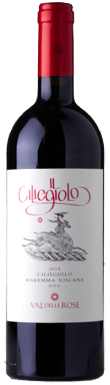
Owned by the Chianti-based Cecchi family, the Val delle Rose estate counts over 100ha of vineyard in the heart of the Morellino DOCG. Their Ciliegiolo...
2020
TuscanyItaly
Val delle RoseMaremma Toscana
Rascioni & Cecconello, Poggio Ciliegio Ciliegiolo, Toscana, Tuscany, Italy, 2021

Rascioni & Cecconello were pioneers of monovarietal Ciliegiolo in the late 1980s. This is their top selection, from a single hectare of old vines on...
2021
TuscanyItaly
Rascioni & CecconelloToscana
Fattoria Fibbiano, Ciliegiolo, Toscana, Tuscany, Italy, 2020
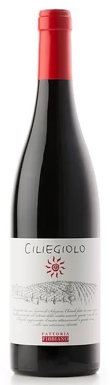
This 22ha organic estate from the Colline Pisane grows exclusively native varieties, fermenting using indigenous yeasts in cement vats and ageing in traditional Slavonian oak...
2020
TuscanyItaly
Fattoria FibbianoToscana
Pino Gino, Ciliegiolo, Golfo del Tigullio-Portofino, Liguria, Italy, 2023

This is a benchmark wine from the least likely quarters: a small family run estate in the woody interior of Liguria. The bright, saturated violet...
2023
LiguriaItaly
Pino GinoGolfo del Tigullio-Portofino
Tenuta Belguardo, Ciliegiolo, Maremma Toscana, Tuscany, Italy, 2023
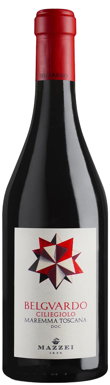
Tenuta Belguardo is the Maremma estate of the Mazzei family. Founded in the early 1990s, the original focus was on Super Tuscan styles but has...
2023
TuscanyItaly
Tenuta BelguardoMaremma Toscana
I Cavallini, Ciliegiolo, Maremma Toscana, Tuscany, Italy, 2021
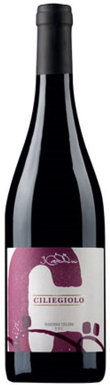
I Cavallini is a full-scale biodynamic farm with cattle and a range of crops, alongside a production of wines from the native varieties of the...
2021
TuscanyItaly
I CavalliniMaremma Toscana
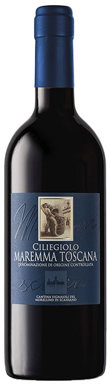
Cantina Vignaioli di Morellino di Scansano, Capoccia Ciliegiolo, Maremma Toscana, Tuscany, Italy, 2023

The majority of the production of this highly reliable cooperative consists of Morellino, but they are also by far the biggest single producers of Ciliegiolo...
2023
TuscanyItaly
Cantina Vignaioli di Morellino di ScansanoMaremma Toscana

Richard Baudains was born and bred in Jersey in the Channel Islands and trained to be a teacher of English as a foreign language. After several years in various foreign climes, Baudains settled down in beautiful Friuli-Venezia Giulia, having had the good fortune to reside previously in the winemaking regions of Piemonte, Tuscany, Liguria and Trentino-Alto Adige. Baudains wrote his first article for Decanter in 1989 and has been a regular contributor on Italian wines ever since. His day job as director of a language school conveniently leaves time for a range of wine-related activities including writing for the Slow wine guide, leading tastings and lecturing in wine journalism at L’Università degli Studi di Scienze Gastronomiche and for the web-based Wine Scholars’ Guild.