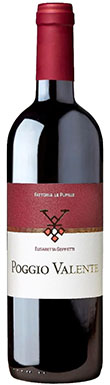
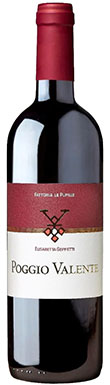
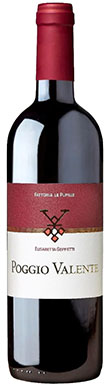
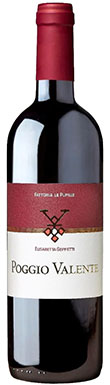
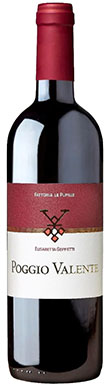
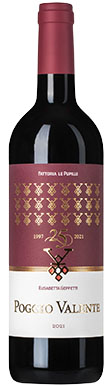
Poggio Valente: Creation of a Tuscan Sangiovese cru
A vertical tasting to mark the 25th vintage of Fattoria Le Pupille's single-vineyard wine, Poggio Valente.
Get our daily fine wine reviews, latest wine ratings, news and travel guides delivered straight to your inbox.
You are now subscribed
Your newsletter sign-up was successful
Le Pupille has been a leading name in the Maremma area of southern Tuscany since the mid-1980s, when Elisabetta Geppetti and her then-husband took over her family’s estate. The consultant enologist at the time was Giacomo Tachis (recipient of Decanter’s Hall of Fame award in 2011), a family friend.
Architect of a not-insignificant number of Super Tuscans, including Sassicaia, Tignanello and Solaia, Tachis encouraged Elisabetta to harness the popularity of these internationally-styled wines, and so Saffredi was born with the 1987 vintage. Fattoria Le Pupille soon found itself in front of a global audience.
The winery’s new-found international profile, as well as its devotion to the local Morellino di Scansano wines, led to Elisabetta being appointed as the first president of the Morellino di Scansano consorzio upon its foundation in 1992, making Elisabetta Italy’s first female president of a wine consortium. She was re-elected from 2011 to 2013.
Scroll down for tasting notes and scores for Poggio Valente
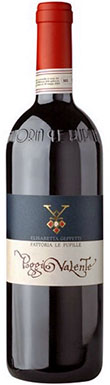
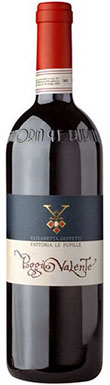
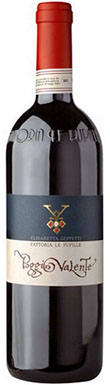
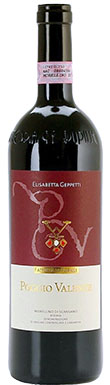
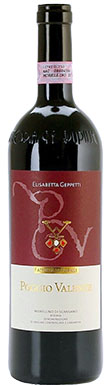
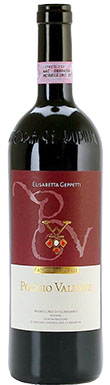
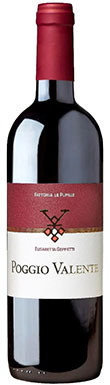
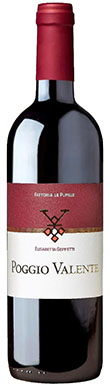
Poggio Valente
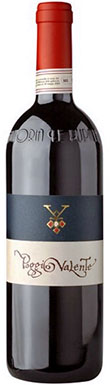
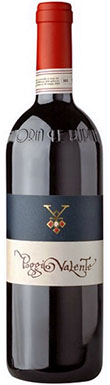
In 1996, Elisabetta purchased the four-hectare Poggio Valente vineyard in Peretta, between Scansano and Magliano. Facing southeast on sandy soils over quartz, sandstone and marl at around 280-300 metres above sea level, and planted with Sangiovese, it overlooks the nearby west-northwest-facing Saffredi vineyard.
The original section of Poggio Valente was replanted in 2000, and two new adjacent plots were subsequently planted in 2006, enlarging Poggio Valente to nine hectares in total.
Elisabetta’s son, Ettore Rizzi – today the estate’s winemaker – explained that the older vines in the original section have smaller, looser bunches, while those in the newer plots are ‘almost Sangiovese Grosso’ in character – the Sangiovese clone traditionally used for powerful, long-aged wines.
An enologist’s touch
The first vintage of Poggio Valente, 1997, was made just after the end of Giacomo Tachis’ long tenure consulting at the estate. Tachis was succeeded by another great enologist, Riccardo Cottarella, under whose guidance the Poggio Valente project got underway; however he only stayed for three years, from 1996 to 1998.
Get our daily fine wine reviews, latest wine ratings, news and travel guides delivered straight to your inbox.
And so it was Le Pupille’s third great enologist, Cristian Le Sommer, who was primarily responsible for shaping the first phase of the Poggio Valente project. A former technical director at Bordeaux first-growth Château Latour, Le Sommer worked with Le Pupille from 1998 to 2011.
Judging by the wines, his preference was for concentration and richness in the wines, largely achieved by heavily reducing yields and favouring 100% barrique ageing, while preserving all of Sangiovese’s innate energy.
Luca d’Attoma succeeded Le Sommer – the last in a star-studded lineup of consultants working with the Maremma estate. He and Elisabetta decided that Poggio Valente would be better served as a varietal Sangiovese.
Up to this point, it had always incorporated about 15% of Merlot, grown in a small plot adjacent to the Poggio Valente vineyard. D’Attoma swapped Le Sommer’s barriques for tonneaux, creating a more elegant profile with his signature precision and aromatic flair which better suited the new 100% Sangiovese expression.
Despite being one of Morellino di Scansano’s biggest advocates, Elisabetta made the decision to label Poggio Valente as Toscana IGT from the 2014 vintage. She explained that this decision was due to the lack of international recognition for the appellation (despite all her efforts), and it clearly demonstrates the ambition she held for this Tuscan cru Sangiovese.
Succession
D’Attomas’s last vintage at Le Pupille was 2018. That year Elisabetta decided the time was right to introduce her son Ettore, who studied viticulture and enology at the university of Pisa, to the business full time.
The 2019 vintage was Ettore’s first as agricultural and cellar manager, however he worked alongside D’Attoma in 2018 and calls Poggio Valente 2018 ‘a wine of transition.’
While Poggio Valente has always been vinified in stainless steel, today Ettore is today also using cocciopesto amphorae when the vintage demands it – perhaps a legacy of D’Attoma. Cocciopesto – known to the Romans as opus signium – is an interesting material. Denser and less porous than terracotta its use has been rising in recent years.
Asked whether they would consider fermentation in cement, Elisabetta replied: ‘Unfortunately we don’t have cement tanks…not yet.’
A fitting response from somebody who always has one eye on the future.
25 years of a cru Sangiovese: Poggio Valente
The wines are listed oldest to youngest
Related articles
- Morellino di Scansano: Names to know and wines to try
- The lesser-known Tuscany: 12 hidden gems to discover
- Capezzana’s Trefiano: Quintessential Carmignano
Fattoria Le Pupille, Poggio Valente, Morellino di Scansano, Tuscany, Italy, 1998

While 1997 was the first vintage of Poggio Valente, it was made in such small quantities that Le Pupille has no remaining stock. So 1998 was the first stop in this exploration of the evolution of the wine's style over the past 25 years. Under the guidance of Le Pupille's third consultant enologist, Cristian Le Sommer, Poggio Valente 1998 was created with a focus on concentration and energy. Today, the 1998 offers robust aromas of sous bois, tobacco, spice and roast chestnut. Still with good intensity and concentration, there's a spicy, mulchy character in the mouth too, reflecting its tertiary era. Hints of juicy blue fruits remain, balanced by good acidity and fine, resolved tannins.
1998
TuscanyItaly
Fattoria Le PupilleMorellino di Scansano
Fattoria Le Pupille, Poggio Valente, Morellino di Scansano, Tuscany, Italy, 1999

Poured from magnum, the 1999 has a much fresher nose of ripe fruits, graphite, flint and dark berries. Concentrated and spicy, there's plenty of fruit remaining; juicy black berries and pomegranate carried by good acidity and ending with a lovely soy and saline finish. A great example of the benefits of ageing in magnum.
1999
TuscanyItaly
Fattoria Le PupilleMorellino di Scansano
Fattoria Le Pupille, Poggio Valente, Morellino di Scansano, Tuscany, Italy, 2000

Again poured from magnum, the 2000 Poggio Valente features a minty, brambly nose, then fresh and peppery in the mouth with plenty of juice, refined and integrated tannins, and a lovely verticality. Menthol-infused dark fruits and spice are accompanied by herbs and a curranty touch on the long, vibrant and slightly umami finish.
2000
TuscanyItaly
Fattoria Le PupilleMorellino di Scansano
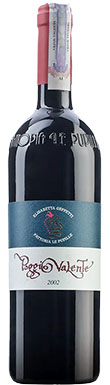
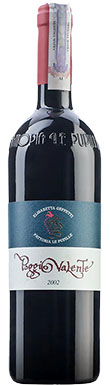
Fattoria Le Pupille, Poggio Valente, Morellino di Scansano, Tuscany, Italy, 2002

Mulchy and minty, the 2002 has more extraction and less succulence than the preceding 2000, but still with good acidity and retaining a vein of menthol running through it. The tannins are bolder and less refined, too.
2002
TuscanyItaly
Fattoria Le PupilleMorellino di Scansano
Fattoria Le Pupille, Poggio Valente, Morellino di Scansano, Tuscany, Italy, 2003

The infamously hot 2003 vintage is apparent in the character of this wine without dominating. Round and soft, it has spicy, mulchy aromas with a graphite note, grippy, sandy tannins, and plenty of dried curranty fruits in the mouth. There's some sweet juiciness on the finish, and pretty good acidity, too, and it's overall a good effort given the difficulties of the growing season.
2003
TuscanyItaly
Fattoria Le PupilleMorellino di Scansano
Fattoria Le Pupille, Poggio Valente, Morellino di Scansano, Tuscany, Italy, 2005

The 2005 Poggio Valente is sumptuous and voluptuous, with inviting hints of chocolate on the nose leading to a rich, broad and fleshy palate supported by grainy tannins and good acidity. It's a succulent, vibrant red that's drinking really nicely at the moment, but it lacks the complexity seen in other vintages of this wine. The finish is woody, spicy and chocolatey, and slightly drying, and shouts loudly about its 100% barrique ageing beloved by Le Sommer.
2005
TuscanyItaly
Fattoria Le PupilleMorellino di Scansano
Fattoria Le Pupille, Poggio Valente, Morellino di Scansano, Tuscany, Italy, 2006

2006 was one of my highlights of this vertical tasting. Although not the outright ‘best’ wine here, it's very appealing thanks to its cedary forest fruits and sous bois notes with touches of mint. Intense, vertical and sapid, the ripe, dark berries are supported by red fruited acidity which lends energy. The finish is long and lively, bringing out notes of chocolate and eucalyptus.
2006
TuscanyItaly
Fattoria Le PupilleMorellino di Scansano
Fattoria Le Pupille, Poggio Valente, Morellino di Scansano, Riserva, Tuscany, Italy, 2009

Labelled as Morellino di Scansano Riserva, to better reflect the quality and ageing of Poggio Valente, this 2009 is complex and well balanced. Mint, spice and sous bois scents lead into a concentrated palate with a spicy attack of red and black fruits, followed by a soft mid-palate with some emerging blue fruits. Succulent acidity and fine tannins provide lovely structure and elongate the zippy and spicy finish, which is full of savoury notes of black tea, forest floor, cedar and tobacco.
2009
TuscanyItaly
Fattoria Le PupilleMorellino di Scansano
Fattoria Le Pupille, Poggio Valente, Morellino di Scansano, Riserva, Tuscany, Italy, 2010

Although the first bottle was out of condition, the second bottle was much better, and in fact ended up being one of my top wines of the tasting. Ripe dark berry aromas with a hint of balsam introduce a rich, ripe, flinty palate with chocolate and spice notes. Light on its feet, fresh and balsamic, this is precise and vibrant, fleshy and poised, vertical and sapid. Lovely!
2010
TuscanyItaly
Fattoria Le PupilleMorellino di Scansano
Fattoria Le Pupille, Poggio Valente, Morellino di Scansano, Riserva, Tuscany, Italy, 2011

Poured from magnum, the 2011 – a moment of change at the estate as Luca d'Attoma replaced Cristian Le Sommer as consultant enologist – is intense and spicy, with a menthol fragrance and a verticality to the palate. Yet the concentrated fruit is dried out and slightly meaty, with chestnut and sous bois notes on the finish.
2011
TuscanyItaly
Fattoria Le PupilleMorellino di Scansano
Fattoria Le Pupille, Poggio Valente, Morellino di Scansano, Riserva, Tuscany, Italy, 2012

With the 2012 we begin to see the impact of Luca D'Attoma, who arrived in 2011. Major changes he introduced include swapping the barriques for tonneaux, and making Poggio Valente into a single-varietal wine, rather than a blend with Merlot as had been the case in the past. Fragrant red fruits and spice lead to a vertical and sapid palate; clean and bright with juicy cherry accompanied by soft, round tannins.
2012
TuscanyItaly
Fattoria Le PupilleMorellino di Scansano
Fattoria Le Pupille, Poggio Valente, Morellino di Scansano, Riserva, Tuscany, Italy, 2013

A slightly lighter wine with gentle menthol and forest floor aromas alongside floral fragrance, then an intensity of soft red fruit flavours and minty freshness on the vertical and saline palate. Poised and elegant, this is a lovely wine; although the slightly drying tannins on the finish count against it.
2013
TuscanyItaly
Fattoria Le PupilleMorellino di Scansano
Fattoria Le Pupille, Poggio Valente, Toscana, Tuscany, Italy, 2014

Fragrant, woody and peppery, this 2014 is full of cool, dark fruit aromas. The palate is intense and grippy, with verticality and sapidity underlined by beautiful poise and freshness. The mid-palate is succulent and juicy, with emerging notes of graphite and sous bois. Energetic and structured, the freshness here is beautifully woven into the fabric of the wine.
2014
TuscanyItaly
Fattoria Le PupilleToscana
Fattoria Le Pupille, Poggio Valente, Toscana, Tuscany, Italy, 2015

Dark, spicy fruits are accompanied by juicy cherry, menthol, mint and dried herbs in this 2015, with a lovely balance between ripe, grainy tannins and good acidity.
2015
TuscanyItaly
Fattoria Le PupilleToscana
Fattoria Le Pupille, Poggio Valente, Toscana, Tuscany, Italy, 2016

2016 is a highly regarded vintage across Italy, and Poggio Valente – poured from magnum – doesn't disappoint. It has a beautifully poised, vertical structure, with minty, spicy hedgerow fruit aromas interwoven with cool, fresh and tangy red fruit flavours, spicy cedar, and some mineral notes, then a slightly woody finish which should integrate with time. Class.
2016
TuscanyItaly
Fattoria Le PupilleToscana
Fattoria Le Pupille, Poggio Valente, Toscana, Tuscany, Italy, 2017

Poured from magnum, the precise and juicy 2017 features a reductive nose of toasted fenugreek seeds; ripe hedgerow berries and cocoa emerge with time in the glass. Soft pomegranate and raspberry align with very soft, round tannins followed by a gently balsamic finish. It feels like the team treated this wine very carefully in this notoriously hot and dry vintage, and as a result it just lacks a little bit of the character evident in other vintages.
2017
TuscanyItaly
Fattoria Le PupilleToscana
Fattoria Le Pupille, Poggio Valente, Toscana, Tuscany, Italy, 2019

Ettore's maiden vintage of Poggio Valente flying solo, he has taken Luca D'Attoma's model of elegance, aromatics and precision and run with it. This has an intense nose of spicy, brambly fruits with some dialled-back creaminess compared to recent vintages; then a fresh, vibrant and complex palate with hints of chocolate leading to a raspberry-rich finish.
2019
TuscanyItaly
Fattoria Le PupilleToscana
Fattoria Le Pupille, Poggio Valente, Toscana, Tuscany, Italy, 2020

2020 is markedly more dense and textured than 2019, with ripe and precise dark red fruits and a flinty edge over a background of cream and chocolate. Dense, textural and concentrated, it's nicely balanced by bright acidity, with a long finish of spice and berries.
2020
TuscanyItaly
Fattoria Le PupilleToscana
Fattoria Le Pupille, Poggio Valente, Toscana, Tuscany, Italy, 2021

2021 is ripe and silky, showcasing an intensity of soft, creamy red fruits with a delightful mineral streak. Pure, poised and precise, it's not quite as vertical as some of its predecessors but instead has an appealing roundness.
2021
TuscanyItaly
Fattoria Le PupilleToscana

James Button is Decanter’s regional editor for Italy, responsible for all of Decanter's Italian content in print and online.
Like many others, he started his wine career at Majestic Wine, giving him a strong grounding in the subject before successfully completing the WSET Level 4 Diploma in 2010. From 2014 to 2016 he managed the fine wine department of a startup wine company in London, before joining Decanter as digital sub-editor.
Outside of wine, James enjoys cooking, skiing, playing guitar and cycling.