
Meet the new guard at St-Emilion’s Beauséjour Duffau-Lagarrosse
Bidders were queuing up to buy this St-Emilion estate but young winemaker Joséphine Duffau-Lagarrosse recently won the day with help from the Clarins family. Jane Anson speaks to her about what comes next, and tastes the new 2020 vintage.


Turning into the drive at Château Pavie Macquin and heading up one of St-Emilion’s most vertiginous driveways (rivalled, surely, only by Ausone) is always an enjoyable en primeur moment.
This is where the Nicolas Thienpont wines are on display, a chance to retaste estates such as Laroque and Les Charmes-Godard, and to discuss the vintage with the team.
Scroll down to see Jane Anson’s Château Beauséjour Duffau-Lagarrosse 2020 en primeur tasting note and score
There was one wine missing this year though, and it was an important one – Château Beauséjour Duffau-Lagarrosse.
Although made by Thienpont every year since 2009, the 2020 vintage had been withdrawn from the en primeur tasting circuit under the direction of the new owners, a few days after they took possession on 12 April.
The few samples that had already been sent to critics would have to be replaced, as the initial blend, we were told, was being reworked.
The realisation that Thienpont had made his last vintage at Beauséjour Duffau-Lagarrosse was suddenly unavoidable.
Not for nothing is St-Emilion known as Dallas-on-Dordogne. There’s something about the ancient limestone walls and narrow cobbled streets that seems to stir the blood of its inhabitants.
Temperatures seem to rise even higher as the 10-yearly classification redrawing (due in 2022) rolls around.
Even so, the battle over the 6.24ha Beauséjour Duffau-Lagarrosse delivered more than your average drama, making headlines in every major newspaper in France, and spilling into the international press once a final twist appeared. The sale turned from a battle between two neighbouring wine giants – Matthieu Cuvelier of Clos Fourtet and Stéphanie de Boüard-Rivoal of Château Angélus, both within a few minutes’ walk from this spot on the limestone plateau – into a last-minute victory for 30-year-old Joséphine Duffau-Lagarrosse.
To add even more tension, the transaction was made possible only after an intervention by the French national land agency, Safer, under a programme that favours young winemakers.
The deal was also backed financially by one of France’s most striking young entrepreneurs, Prisca Courtin-Clarins, third generation of the family that founded Clarins cosmetics in 1954.
For an estate purchase to cause such a stir, only for it to end up in the hands of the original owner, might seem strange. But when this Premier Grand Cru Classé B property was put up for sale, Joséphine was one of 30 members of the family board of administration.
The estate’s full name is Beauséjour Héritiers Duffau-Lagarrosse, an important addition in this case as it means ‘heirs’ in French, and the majority of them wanted to sell. Joséphine had nowhere near the estimated €75 million price tag to stop it from happening.
‘I had stayed away from the family estate until this point,’ Joséphine tells me when I caught up with her at the Château this week, while finally tasting the 2020 vintage (tasting note below).
‘Because I knew that once you start working at a family property, you don’t leave again, and I wanted to get wider winemaking experience.’
Instead, after growing up at the rather more modest family estate of Château de Musset in Lalande-de-Pomerol, she studied wine production and commerce in both Bordeaux and Burgundy. From 2012, she worked alongside Philippe Bascaules at Inglenook in Napa, then in Hawke’s Bay in New Zealand and Chihuahua in Mexico alongside Stéphane Derenoncourt.
In 2016, Joséphine returned to Bordeaux and became technical director of Château du Taillan in the Médoc (‘on the Left Bank but dominant Merlot, a grape I am particularly used to working with’), before moving to Group Bernard Magrez at Château Les Grands Chênes.
‘I used to come to Beauséjour at weekends,’ she says, ‘and regularly worked in the vines when I was younger.’ Her father Vincent Duffau-Lagarrosse was one of the co-managers since 2006. ‘It wasn’t until we heard it was being sold that it became clear to me how much it meant to me. But it felt impossible to stop.’
Somebody must have understood how serious she was, because behind the scenes she was put in touch (‘by an intermediary’) with the Courtin-Clarins family, number 16 in the most recent Challenges list of France’s richest families, with €5.8billion in 2020.
The Clarins Group continues to be 100% family owned, founded in 1954 by Prisca’s grandfather Jacques, and the idea of trying to keep a long-term family enterprise going must have struck a chord.
Although this is their first step into the wine industry, the Courtin-Clarins family owns Domaine Clarins, described as an ‘open air laboratory’ in the Alps, a 22,000ha nature reserve where they grow plants for the production of their products. The matchup clearly worked, and as of April 2021, Joséphine and Prisca are co-directors at the St-Emilion Château, both in their early 30s and already making an impression.
‘The first thing I did,’ Joséphine says, ‘was taste through the different parcels that were ageing in barrel. I have great respect for what Nicolas Thienpont has achieved here, and I want to be clear that it was him and his team that made this vintage.
‘But at the same time I felt that the style was not exactly what I was looking for. I wanted to reflect the power and freshness of the vintage, and to make the most of the fully ripe Cabernet Franc that has done so well this year.’
In some ways, reworking the blend is a smart way to take control right from the beginning of her tenure. But it is also a risk, because Nicolas Thienpont had established a pretty much undisputed winning formula for this wine.
The dossier for reclassification in St-Emilion is due in at the end of June (as at many estates right now, they have one member of staff working full-time on completing it), and any change in ranking will be reflected as of the 2020 vintage. So the stakes are high.
Joséphine’s past experience working with Derenoncourt in Mexico, along with his experience working alongside Thienpont at Beauséjour in the past, means it is surely possible that he will have a role going forward, but it’s far from assured.
‘From here, I want to take the time to understand the terroir in depth; and how each part of the vineyard reflects to the different growing seasons,’ says Joséphine.
‘Similarly, I am not making any decisions about consultants before I myself know what I want and understand the vineyard – I don’t want it to be the other way round, implementing somebody else’s vision.
‘Certain things don’t need changing, such as ageing the wines in our underground cellars that keep things at the perfect natural temperature. Where we can keep intervention to a minimum, that is certainly my preference.’
And the neighbours? Her reply is charming but steely, giving a hint as far as I can see not only why the Clarins-Courtin family felt she was a pair of hands to invest in, but also why those of us who love this estate can rest easy.
‘This is an exceptional place,’ she says, ‘full of potential, and it’s easy to understand why we all tried to secure it. Perhaps I had a little more legitimacy – but I would welcome them here with pleasure.’
See the Château Beauséjour Duffau-Lagarrosse 2020 en primeur tasting note
You may also like
Anson: ‘Space vines’ take root on earth
Bordeaux 2020 wines: Our en primeur verdict
What’s new in Bordeaux in 2021?
Château Beauséjour Duffau-Lagarrosse, St-Émilion, 1er Grand Cru Classé B, Bordeaux, France, 2020
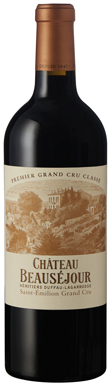

Dark and sultry, this is heady with ripe, perfumed fruits that dominate the palate giving vertical layers of freshness, acidity and fruit concentration. It has...
2020
Château Beauséjour Duffau-LagarrosseSt-Émilion

