
Behind Rasteau’s renaissance plus 10 ‘new look’ bottles to seek out
Thanks to changes in both consumer tastes and the climate, a gentler, more considered style of winemaking has led to a fresher, more elegant interpretation of this former powerhouse.


Imagine you went to a restaurant and ordered what you thought was a modest Burgundy, but it tasted like a great Bordeaux. Would you be disappointed? Even if what I received was technically a better wine, I think I would be. After all, quality isn’t the overriding criteria when I select a bottle of wine to drink; most of all, I’m thirsting for a specific style.
That’s why I’m sometimes wary when hearing about a change of direction in an appellation. Am I still going to find the wine I’m looking for in the bottle? Fortunately, the arrival of a fresher and finer interpretation of Rasteau is an entirely welcome development.
Scroll down to see tasting notes and scores for 12 ‘new-school’ Rasteaus to try
Too concentrated
Cairanne and Rasteau sit at the heart of the Côtes du Rhône growing area on the east bank of the Rhône river. They share the southern face of a huge clay limestone hill, 10km across: Cairanne on the western half, Rasteau on the east. But the wines are very different.
While the reds from both appellations exhibit that classic sun-drenched generosity of fruit and body, Cairanne tends towards elegance, and Rasteau chooses power. And it is, to some degree, a choice. Rasteau naturally delivers ripe and concentrated wines, but local winemakers often work to accentuate these assets. Because this is what so many people love about Rasteau: its potency, its bounteousness.
Winemakers have previously tried to pump up other southern Rhône appellations. Some tried to make massive Châteauneuf-style wines in Lirac, but the casting never felt convincing – like Jake Gyllenhaal playing the Terminator. Rasteau can do big, though – and it can do it well. A combination of a hot microclimate, water-retaining soils and old-vine Grenache can make for some naturally hearty, barrel-chested reds.
But as the climate has become hotter and drier, Rasteau’s wines have been getting ever more concentrated, muscular and higher in alcohol – bulked out like bodybuilders on steroids. That’s why the new school of fresher, more elegant expressions has recently come into its own.

The pioneer
Though this new lighter style of Rasteau has risen to prominence in the past five to 10 years, there was one forerunner who started pursuing a more elegant direction back in 2002. Frédéric Roméro joined his father André at the family estate Domaine la Soumade in 1996 after studying winemaking. ‘We had wines that were a little hard and over-extracted at the time’, he says.
In 2002, they decided to appoint a winemaking consultant, but instead of going local they looked to Bordeaux, and started working with Stéphane Derenoncourt (whose clients have included Clos Fourtet and Château Talbot in Bordeaux, and Inglenook in California, among many others). Derenoncourt helped them in a number of ways, including advice on winemaking, blending and viticulture. ‘A softer extraction for better-balanced wines,’ is one factor that Frédéric singles out.
For many years, Domaine la Soumade has stood out in Rasteau for its peerlessly elegant style. But a number of other estates have since joined the Roméros in making more sophisticated wines, and it represents a burgeoning renaissance for the appellation. Many have also benefited from outside influences when developing a style.
The new school

Julie Paolucci of Domaine La Luminaille spent years as a sommelier, travelling and tasting wines from all over the world, but when her father passed away unexpectedly in 2014, she returned to Rasteau to take over the family estate.
‘We have a new style of Rasteau right now, thanks to a new generation of wine-growers,’ she says. ‘We are looking for more freshness and delicacy, less concentration… we are doing less extraction in the cellar, more pumping over, less punching down, and for shorter amounts of time.’
Elodie Balme from Domaine Elodie Balme is another who embodies this new style of Rasteau. She says that her generation tends to have a gentler hand in the winery, but also a different approach in the vineyard: ‘Less extended ripening, no longer looking for exceptional phenolic ripeness, picking a bit less ripe.’ It adds up to a more approachable, drinkable wine.
When it comes to maturing the wines, the trend is toward neutral containers such as concrete and large old barrels. Domaine La Luminaille and Domaine Gramiller have also been experimenting with clay amphorae, which are popping up all over the southern Rhône now.
Frédéric Julien established Domaine Carignan in 2017, and he favours a fresh and fruity style of Rasteau. ‘It was when we started looking at the terroir that things changed,’ he says. Although Rasteau has long been associated with bold, concentrated wines, Julien is right that it need not necessarily be the case. As you travel up into the hills behind the village, a combination of altitude, woodland and different exposures makes for some cooler, fresher microclimates.
Refreshing change

There’s also a renewed appreciation for grape varieties that were once considered second-rate. Instead of more Grenache, Paolucci is planting ‘other grape varieties that bring freshness’, such as Carignan and Cinsault. Mikaël Boutin of Domaine Mikaël Boutin makes beautifully expressive wines in this more drinkable style, using 10% of each of these varieties in his blend to help balance out Grenache’s naturally high alcohol.
But it’s not just winemakers who are driving the change in style in Rasteau. ‘Consumers’ tastes have changed, too,’ says Balme, ‘towards lightness, suppleness and drinkability.’ Paolucci agrees. ‘People are asking for wines that they can drink immediately without having to wait 10 years,’ she says. Both estates’ wines can be drunk on release or cellared, depending on your taste.
Change in the southern Rhône has not always been for the better. Some techniques that were once considered progressive – such as cultured yeasts, new oak barriques and destemming – are no longer viewed entirely favourably. At the same time, some overlooked grape varieties and methods are being reintroduced.
What we’re seeing in Rasteau today, however, is real progress, driven partly by consumer tastes, partly by the winemakers themselves, but primarily by a change in the terroir itself. The increasingly hot, dry summers transformed a well-built style into something increasingly unwieldy and unmanageable. While winemakers are now keen to express their terroir, they are approaching it in a more sensitive way. The climate changed; to survive, winemakers had no choice but to adapt.
‘It’s historically a terroir that makes powerful wines. . . we can’t betray the terroir, but it needs to be channelled,’ says Balme. ‘We need to keep the structure and complexity, but have more freshness in the wines.’ And that is what she, and a growing band of local winemakers, have achieved.
Five key producers driving the Rasteau renaissance
Domaine Elodie Balme
After her studies and winemaking stages at two excellent producers, Domaine Beau Mistral (in Rasteau) and Domaine Richaud (Cairanne), Balme returned to the family estate in 2006. At this point, her father was still sending the fruit to the local cooperative, but after building a winery, Balme started to make and bottle the wine herself. The style here embodies the new school of Rasteau winemaking: immediate and fruit-drenched, but retaining a solid Rasteau framework. You can taste it in her dry Rasteau and her sweet Rasteau vin doux naturel, also in her excellent Côtes du Rhône Villages Roaix, the next appellation to the east. She is now converting her 17ha estate to organic.
Domaine Gramiller
Relatively new, set up in 2017, but Frédéric Julien has been working his 22ha of vines for more than 20 years, having previously delivered the fruit to the local cooperative. He’s been working organically for 15 of those years, and some of his parcels are more than 100 years old. He makes 14 different wines from numerous appellations, but his Rasteau bottlings are particularly fine, brimming with vivid red fruit and bright acidity.
Domaine La Luminaille
Though the leap from sommelier to winemaker came rather more suddenly than she had planned, Julie Paolucci has taken to her new calling with skill and sensitivity. The small family winery is based in lieu-dit La Luminaille, high in the hills to the north of the village of Rasteau, and surrounded by organically farmed bush vines – mostly old-vine Grenache, but also plenty of Syrah, Carignan, Cinsault and Mourvèdre. She grows white varieties, too, and makes white and rosé wines within the Rasteau appellation borders, but bottled as Côtes du Rhône or Vin de France. Whatever the colour, expect wines of freshness, vibrancy and detail.
Domaine Mikaël Boutin
Mikaël Boutin trained as a lorry mechanic, but his real love was food and drink. So he took to working in vineyards; at Domaine de la Vieille Julienne in Châteauneuf-du-Pape, Le Clos de Caveau in Vacqueyras, then with his uncle in Rasteau. When his uncle retired, Boutin took over his father’s 2.5ha of vines, converting them to organic. ‘The aim is to make bottles that are finished by the end of the meal,’ he says. He only makes one Rasteau cuvée, named MB: a savoury expression with freshness and salinity that gives it a great sense of drinkability.
Domaine Wilfried
Brother and sister Wilfried and Réjane Pouzoulas took over the family estate in 2007, converting it to organic and moving towards low-intervention. They have 36ha across Cairanne and Rasteau, mostly in the lower-lying vineyards of Rasteau. The Septentrion is a particularly fine and ageworthy expression of old-vine Grenache, but don’t overlook their cuvée classique Rasteau, too.

The fresh approach: Walls’ 12 ‘new-school’ Rasteaus to try
Related articles
- Exploring the Southern Rhône with Matt Walls
- Rasteau, Cairanne & Vinsobres 2020: report and top-scoring wines
- Rhône 2020: best-value wines
Domaine M Boutin, MB, Rasteau, Rhône, France, 2019
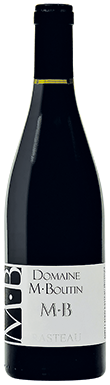

A savoury, leathery style that's medium- to full-bodied with great volume but piercing freshness. Rounded, juicy tannins, with remarkable salinity and cut - no sucrosité...
2019
Domaine M BoutinRasteau

Domaine La Luminaille, Luminaris, Rasteau, Rhône, France, 2020
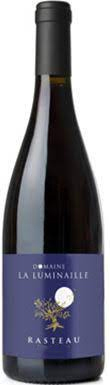
Juicy and well balanced with plenty of fine tannin, it finishes dry but not overly drying. This really delivers what you want from a Rasteau:...
2020
Domaine La LuminailleRasteau
Domaine des Amadieu, La Copado, Rasteau, Rhône, France, 2020
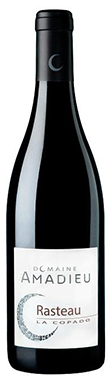
Only medium-bodied but with good concentration; violets, black cherries and blueberries. The tannins are fine and discrete, saturated in juice. A lovely modern Rasteau, more...
2020
Domaine des AmadieuRasteau
Domaine Elodie Balme, Rasteau, Rhône, France, 2020
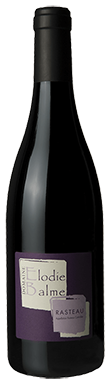
Spicy notes and flinty freshness over bramble and raspberry fruit. Generous, rounded and fruity without excessive weight, sweetness, alcohol or extraction. Good freshness, bright acidity...
2020
Domaine Elodie BalmeRasteau
Domaine Gramiller, Les Marcels, Rasteau, Rhône, France, 2019
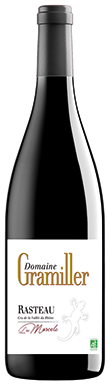
Well-defined red berry fruits, gentle and sweetly-fruited on the palate with good acidity. Fine, precise tannins, gently warming alcohol but good finesse. From a 2.2ha...
2019
Domaine GramillerRasteau
Domaine la Soumade, Cuvée Prestige, Rasteau, Rhône, France, 2019
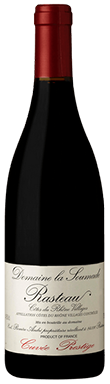
With raspberry, plum and blackberry notes, this is fresh but generous, with fine, ripe tannins and balanced acidity. Good sense of tension and finesse that...
2019
Domaine la SoumadeRasteau
Domaine Purviti, Raconte-moi, Rasteau, Rhône, France, 2021
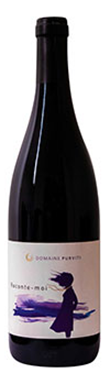
Bramble and blueberry fruit lead onto a full-bodied palate that’s generous but not heavy, filling the mouth with fruit. Good acidity, moderate alcohol and such...
2021
Domaine PurvitiRasteau
Domaine des Banquettes, Rasteau, Rhône, France, 2019
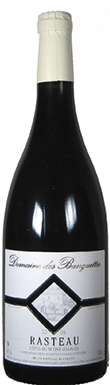
Lovely rich fruit on the nose and palate. The acidity is quite driving, it's a big, powerful wine with smooth tannins. Juicy and fine. The...
2019
Domaine des BanquettesRasteau
Domaine Notre Dame des Pallières, Les Ribes, Rasteau, Rhône, France, 2019
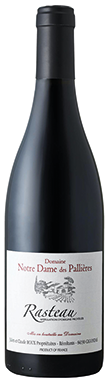
Fine, elegant Rasteau perfume. Cooling, juicy black and red berry fruits. Very fine tannins. Really shows the elegance of high-altitude Rasteau. Grippy finish, good acidity.
2019
Domaine Notre Dame des PallièresRasteau
Domaine Wilfried, Rasteau, Rhône, France, 2017
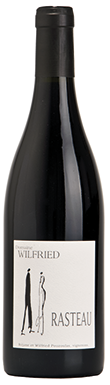
Lovely harmonious nose. Rounded and juicy, fruit coulis style. The tannins are present but buffed a little, and it ends fairly long. Black cherry yoghurt...
2017
Domaine WilfriedRasteau
Domaine Brusset, La Bastide, Rasteau, Rhône, France, 2020
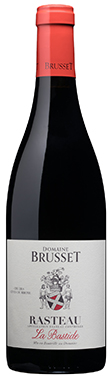
Gorgeous Mourvèdre violets on display, with strawberry and raspberry notes. Generous but not overly full or over-extracted. Chalky tannins, a touch green on the finish....
2020
Domaine BrussetRasteau
Domaine des Girasols, L'Arbre de Vie, Rasteau, Rhône, France, 2019
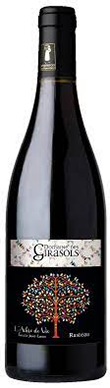
Forest berries, black cherry, tea leaves and a touch of menthol. Medium-bodied, not overly extracted. Crunchy cranberry fruit on the gently warming finish. Estate owned...
2019
Domaine des GirasolsRasteau
