
Best Cava sparkling wines from top producers


A new top-tier classification for Cava in 2017 has led to a renewed focus on quality for Spain’s premier sparkling wine producers. Here are ten names to know, with 20 wines to seek out...
Ten Cava producers to know…
Agustí Torelló Mata
Embodying much of Cava’s history, Agustí Torelló Mata is a nephew of the Torelló family of Cavas Torelló and the Mata family of Recaredo. He has previously managed some of the most traditional Cava wineries, and established the Cava Brotherhood. Also founder of the oenological lab in Penedès, Torelló Mata is something of an essential reference point for Cava. Despite having extensive knowledge of Champagne, he was one of the first Cava makers who chose not to imitate the French, but to produce wines with a distinctive Catalan profile. He’s both a fierce defender of native varieties and a proud apostle of the quality and diversity of Penedès terroirs. But perhaps his most remarkable contribution, back in 1979, was his pioneering effort to produce the first top-class Cava, Kripta, at a time when most other producers were making cheap and cheerful wines. ATM is a flagship for Catalan originality.
Scroll down for Ballesteros Torres MW’s top picks from 10 premium Cava producers
Cava Guilera
For many years, the méthode traditionnelle process was the cornerstone of Cava production, while vineyards were deemed a secondary aspect. Small growers, the payeses, could not make wine, since the required heavy investments in wineries and distribution, as well as the long time required to produce Cava, precluded them from vinifying their own grapes. Pere Guilera is the exception: a grower who uses someone else’s winemaking facilities to produce wines from his own vineyard. Here, winemaking serves to enhance vine growing. Guilera is aware that his Cavas will reveal the character of their terroir only after long bottle ageing. As a result, all of his wines are aged for a minimum of three years, and even his most basic wine is a gran reserva. This quest for identity is consistent not only with his wine philosophy, but also with his social commitment to the Penedès region, where the Guilera family is a leading player.
Codorníu
The house of Sr Raventós, the inventor of Cava, is one of the two behemoths of Cava expansion throughout the world. In tough competition with rival Freixenet, Codorníu created the image of Cava as easy-drinking, low-cost bubbles, thanks to a mix of winemaking efficiency and low grape prices in Penedès. But in the 21st century, Codorníu began to focus on fine wines, creating a micro-winery within its main winery, designed to deliver sparkling excellence. It succeeded. Experimentation with international and indigenous grapes, new understanding of terroirs and sustainable viticulture, extremely careful winemaking and the patience to age the best Cavas – essential conditions for top quality – result in amazingly delicate and particular wines. Volumes are minute now, but I’m confident that Codorníu can increase production at the same quality level. Let’s hope this search for excellence is endorsed by the winery’s proposed new majority shareholder, The Carlyle Group, once the deal announced in June is concluded.
Freixenet
A kind of brother-in-arms to its fiercest competitor, Codorníu. Both are old, multifamily companies that developed great viticultural and winemaking skills and exported their basic Cavas all over the world, then, seeing profits cut at the lower quality end, decided to focus on higher quality. What’s more, this year both companies have sought new international investment; in Freixenet’s case, Henkell & Co from Germany, which is now in 50% partnership with remaining family shareholders José Ferrer Sala and José Luis Bonet. Top-tier wines here are based around two pillars. First, the strict selection of the best grapes from traditional sites, with longer ageing on lees. Second, something both brand new and very old: the restoration of the winery’s foundational vineyard, La Freixeneda, and creation of a dedicated micro-winery – including an original 1900 Champagne press. Part of this artisan focus is Can Sala, a stellar Cava de Paraje Calificado (CPC) made under the supervision of Josep Buján, legendary chief winemaker at Freixenet for 41 years.
Gramona
Gramona defines itself as an artisan of time, though its decision to produce Cavas with lengthy bottle ageing began as a silver lining to the terrible clouds of the Spanish civil war. Following the war, sales were minute, with stocks left in the cellars for many years. On tasting these old bottles, the family realised that its sparkling wines were remarkably better after 10 years or more of ageing. Their vision only became a significant success in this century, when the market recognised the quality of these wines. Indeed, the previously mainstream idea that Cava is best enjoyed young is now obsolete. Great Cava needs long ageing. Gramona has also opted to use cork stoppers during bottle maturation for all its Cavas aged more than five years, meaning that all processes must be carried out by hand. The current generation has taken the ageing process to even further extremes, with the impressive Enoteca series that spends 15 years on lees. They have also focused on their Font de Jui estate, adopting a biodynamic approach and integrating the vines in an ecosystem with other plants and animals on the estate.
Juvé & Camps
The philosophy of Juvé & Camps is closer to that of a Bordeaux château than a Champagne house. Most of its production is sourced from the large 200ha Espiell estate, located in the heart of the Penedès region, where vines grow around the central winery. Two other estates, with different terroirs, provide additional grape varieties that are unsuited to Espiell. Juvé & Camps was the pioneer of what is now the norm for top-quality Cava: the brut nature style. It was also a forerunner in organic viticulture, achieving full certification in 2015. Juvé & Camps hit the market in the early 1980s, with its Reserva de la Familia, which was a resounding success in the US and became the most widely sold gran reserva brut nature Cava in the world. It produces only reserva and gran reserva Cavas, and is now aiming even higher with its extended ageing and CPC Cavas.
Pere Ventura
Most Cava producers start out by targeting the national market, but Pere Ventura is an exception to this rule. He launched his company in 1992 with the express intention of selling to international markets – and today exports to 51 countries accounting for more than 90% of production. Ventura was supposed to take over his family Cava business, Torreblanca, but preferred to start a winery of his own. He began by buying grapes and base wines to produce his traditional-method Cavas, but in 2011 he was able to acquire the historic Can Bas estate, including some plots of very old Xarel.lo vines. Ventura has endeavoured to reinstate the vineyards, so that now all of the grapes for his top wines come from the 60.5ha of vines at Can Bas.
Recaredo
Recaredo offers the purest expression of Cava from Alt Penedès, employing a number of self-imposed restrictions to create its unique wines. Production is focused entirely on vintage brut nature Cavas, with long ageing under cork, as the winery believes this type of closure lends character to long-aged wines. (Gramona also follows this practice.) At Recaredo, disgorgement is done by hand and without freezing the neck of the bottle: lees are expelled manually by highly skilled workers, a practice that’s considered key to the quality of the wines. All of this attention to detail in the winery would be merely interesting if it weren’t for Recaredo’s most important asset: its exceptional vineyards. A combination of poor limestone soils, old vines (mainly Xarel.lo), attentive biodynamic-certified viticulture and tiny yields result in a Burgundy-style grand cru surrounded by several premiers crus.
Sumarroca
The Sumarroca family is a relative newcomer to Penedès. After making their fortune in other businesses, in 1999 the Sumarrocas decided to invest in viticulture, acquiring a 400ha plot of land in the region. The newly christened Sumarroca vineyard, together with two smaller properties, now provides all of the grapes for the company’s Cavas and still wines – an impressive two million bottles in all. The estate is textbook Penedès, with limestone soils and a dry Mediterranean climate with some maritime influence. Vineyards are farmed organically. After initial success with its mid-range wines, Sumarroca has only recently jumped on the quality bandwagon, by selecting particular vineyard plots with older vines and lower yields for its top wine; while also raising standards for its gran reservas. Open-minded and innovative, Sumarroca brings a new energy to the Cava elite.
Vins El Cep
Vins El Cep is a very particular kind of cooperative. It was created in 1980, when four families owning neighbouring vineyards in Penedès decided to combine their efforts in a single enterprise to make Cava and still wines. The result is a company with 200ha of prime vineyards, some first planted in the 15th century. The families share a winemaking philosophy and mission. The environment was an early concern; so now vineyards are farmed organically, with the very best sites farmed biodynamically to make the co mpany’s top wine. Vins El Cep cultivates most of the varieties authorised for Cava, but favours the three traditional native grapes – Macabeo, Parellada and Xarel.lo – for its flagship wine Claror, a CPC which is marketed as the first biodynamic Cava. In the winery, small-batch vinification is used to highlight individual terroirs and varietal expressions.
Scroll down for Ballesteros Torres MW’s top picks from 10 premium Cava producers
Pedro Ballasteros Torres MW is the DWWA Regional co-Chair for Spain and is on the governing board of the Spanish Tasters’ Union.
You may also like:
Time to try South American sparkling wineFranciacorta: For those in the knowTop-rated Crémant from France
Agustí Torelló Mata, Kripta Gran Añada, Penedès, Spain, 2007
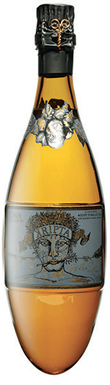

Great aromatic complexity, showing long ageing. Deliciously creamy texture on the palate, alongside a lengthy multilayered, finish. This could be the Cava equivalent to Dom...
2007
Agustí Torelló Mata

Agustí Torelló Mata, Gran Reserva Barrica, Penedès, Spain, 2012
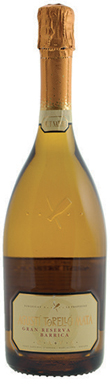
Made from 100% Macabeo grapes from three different organic vineyards, which are partially fermented and aged for six months in oak barrels, then aged in...
2012
Agustí Torelló Mata
Cava Guilera, Guilera Xarel.la, Penedès, Spain, 2012
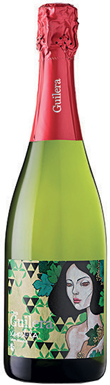
Intensely perfumed nose, with citrus, white fruit and fennel notes. The palate displays crisp acidity, typical of the best Xarel.lo, which gives an elegant, fruity...
2012
Cava Guilera
Cava Guilera, Musivari, Penedès, Spain, 2007
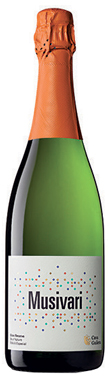
A classic style of Cava, with evidence of lees ageing on the nose and palate. It’s quite fruity, showing a slight but attractive development. The...
2007
Cava Guilera
Codorníu, Ars Collecta Paratge Qualificat La Fideuera, Cava de Paraje Calificado, Penedès, Spain, 2009
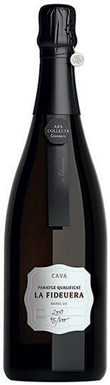
Pure Xarel.lo from poor limestone soils, aged for 90 months on its lees. A most delicate aromatic expression, nuanced but persistent. Subtle, it needs to...
2009
CodorníuCava de Paraje Calificado
Codorníu, Ars Collecta 456, Penedès, Spain, 2007
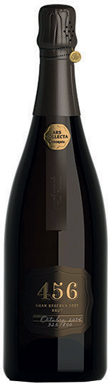
A master blender’s homage to the variety of origins and grape varieties in Catalonia: three different climates and soils, and three varieties, give a unique...
2007
Codorníu
Freixenet, Can Sala, Cava de Paraje Calificado, Penedès, Spain, 2007
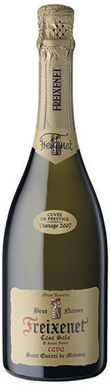
The highly drinkable proof that Parellada can give great wines. Amazing, discreet elegance and fresh expression, which benefit considerably from a long period of ageing....
2007
FreixenetCava de Paraje Calificado
Freixenet, Cuvée DS, Cuvée de Prestige Brut, Penedès, Spain, 2013
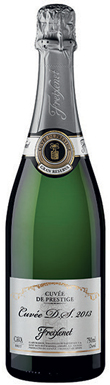
A special selection of indigenous grapes from various origins, which is then left for a longer period of ageing. Made only in good vintages, it’s...
2013
Freixenet
Gramona, Enoteca Brut Nature, Cava de Paraje, Penedès, Spain, 2002
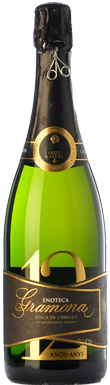
Surprisingly, given the quality, 2002 was an unpromising wet, cold year. This wine, among Spain's best Cavas, was aged on lees sur lattes for over...
2002
GramonaCava de Paraje
Gramona, Celler Batlle Paratge Qualificat Font de Jui, Cava de Paraje Calificado, Penedès, Spain, 2007
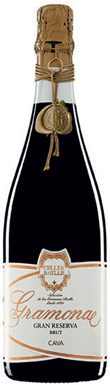
The ‘second’ wine by Gramona, which is aged for ‘only’ 120 months, but is sourced from the same biodynamic vineyard as the Enoteca. This is...
2007
GramonaCava de Paraje Calificado
Juvé y Camps, La Capella, Cava de Paraje Calificado, Penedès, Spain, 2010
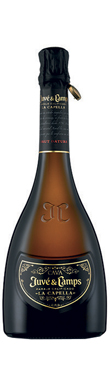
Pure organic Xarel.lo, aged for 108 months. Intense aromas, a hint of white fruit. Multi-layered, fresh, deep; a benchmark.
2010
Juvé y CampsCava de Paraje Calificado
Juvé y Camps, Gran Juvé & Camps, Penedès, Spain, 2013
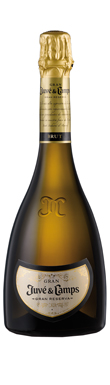
Intensely aromatic, with evidence of long ageing. Quite balanced; powerful and graceful. Organic and very well made.
2013
Juvé y Camps
Pere Ventura, Gran Vintage, Cava de Paraje Calificado, Penedès, Spain, 2014
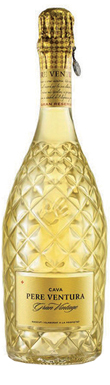
Understated and elegant aromas, subtle honey and herbal tones, with dried fruit hints. Quite firm and rich, with nice balancing acidity, and a slightly mineral...
2014
Pere VenturaCava de Paraje Calificado
Pere Ventura, Cuvée Maria del Mar, Penedès, Spain, 2014
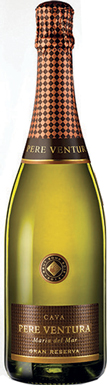
Rich and juicy, joyful and expressive. Peachy, spicy, hint of oak; velvety and suave with restraint. More charming than complex, but delicious.
2014
Pere Ventura
Recaredo, Turó d’en Mota, Cava de Paraje Calificado, Penedès, Spain, 2004
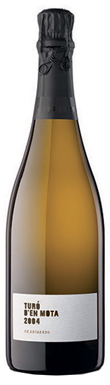
The Romanée-Conti of Penedès, coming from a tiny, very old Xarel.lo vineyard, and needing fermentation in oak vats and more than 12 years of bottle...
2004
RecaredoCava de Paraje Calificado
Recaredo, Serral del Vell, Cava de Paraje Calificado, Penedès, Spain, 2008
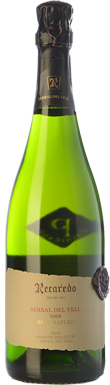
Great purity of expression: elegant structure and creaminess. Very persistent – the long ageing is barely apparent. Biodynamic.
2008
RecaredoCava de Paraje Calificado
Sumarroca, Núria Claverol Homenatge Finca Penetès, Penedès, Spain, 2014
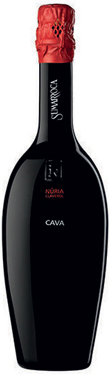
An intense style, showing evidence of extended lees contact. The balanced and savoury palate is multi-layered, with a lengthy finish. An unmistakably Mediterranean character: round...
2014
Sumarroca
Sumarroca, Brut Nature, Penedès, Spain, 2014
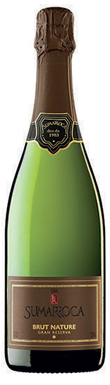
This is a textbook high-quality Cava, with its white fruit character and lees notes. Well structured on the palate, with quite a velvety texture that’s...
2014
Sumarroca
Vins El Cep, Claror Gran Reserva Paratge Qualificat Can Prats, Cava de Paraje Calificado, Penedès, Spain, 2012
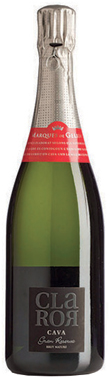
Restrained and charming aromatic expression, with a hint of Mediterranean herbs. Nice acidity; a feeling of authenticity and personality. Biodynamic.
2012
Vins El CepCava de Paraje Calificado
Vins El Cep, MIM Natura Blanc de Noirs, Penedès, Spain, 2012
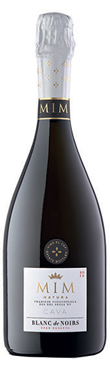
Clean, well-defined white fruit and grapefruit aromas. Easygoing, balanced, juicy, very well-made 100% Pinot Noir – a confirmation that this grape can deliver nice wines...
2012
Vins El Cep
