
Ten of the best Italian vineyards & terroirs


Ian D’Agata selects his star vineyard sites across Italy, and we include wine recommendations from Decanter's expert tasters.
Originally published in the May 2016 issue of Decanter magazine and now available for the first time online, only for Premium subscribers...
In ancient Roman times, many wines were distinguished by their place of growth on a slope or hill: hence, Gauranum (top), Faustianum (middle) and Falernum (foot).
Scroll down to see the top Italian vineyards and wine recommendations
Importance of site has continued into modern times: in Friuli, the best Picolit wines have always been associated with four specific places, not the whole region (as the hapless modern DOCG would have you believe).In Campania, the best Fiano wines are also made in four finite areas, and of course it’s not by chance that Panzano, in Chianti Classico, is nicknamed the ‘golden amphitheatre’.Even in Barolo and Barbaresco, where single-vineyard designations became commonplace only in the 1980s, négociants always looked to buy grapes from the same specific vineyards in practically every vintage.
I based the following list of Italy’s best vineyards and terroirs on historical fame, average price of the wines made there, and the all-important interaction between grape variety, geology and microclimate in expressing truly unique wines impossible to make anywhere else – wines that speak clearly of a specific place.

1. Asili
(Barbaresco, Piedmont)
Asili – three hectares at 200-280m – gives a true Barbaresco archetype: sleek yet profound, powerful yet graceful, mineral yet fleshy, and extremely ageworthy.
The site is roughly 40% silty loam, 30% clay and 30% sand, and though these numbers vary greatly depending on where the terrain is sampled, Asili’s relatively high sand content explains the amazing refinement and youthful rigidity of its wines.
Always highly thought of, it was the first vineyard the Ceretto family bought (in 1969), and Bruno Giacosa was bottling an Asili Barbaresco in 1967, buying land there in 1995. By contrast, the Grasso family of Ca’ del Baio has owned its Asili vines since the 1920s.
Picking just one great terroir from Barbaresco is nigh impossible: Pajorè, Santo Stefano or Rabajà would all have merited that same honour. But my choice goes to Asili because of the sheer number of outstanding producers who make great wines there, and because its wines seem less affected by the increasingly warm temperatures in times of climate change.
I’m splitting hairs, really: when it comes to wines made from these hallowed sites by equally competent producers – Bruno Giacosa, Ca’ del Baio, Ceretto, Produttori di Barbaresco, Bruno Rocca, Giuseppe Cortese, Sottimano ,Castello di Neive – they are first among equals.
2. Cannubi
(Barolo, Piedmont)
This is Italy’s most famous vineyard: its name first appearing on a wine label in 1752. The Cannubi hill is a long tongue of land extending north-east to south-west and running along the town of Barolo at 250-320m altitude.
Wines made from grapes grown in different sections of Cannubi are strikingly different. The sub-zones are, from north to south: Cannubi Boschis, Cannubi, Cannubi Valletta, Cannubi San Lorenzo and Cannubi Muscatel.
Even the less experienced will have no trouble recognising that a Barolo from the central portion of the Cannubi vineyard (Cannubi proper) has a completely different, much lighter, tannic framework than those made with grapes grown in Cannubi Boschis or Cannubi Muscatel, which give bigger, fleshier wines due to a much higher clay content in the soil (the Cannubi sub-zone is much sandier). This sand content explains why its wines are especially fine in rainy vintages, as water drainage is never a problem.
Many fine estates make wines from the various sub-zones of Cannubi, like Sandrone (Cannubi Boschis); Chiara Boschis, Serio e Battista Borgogno and Chiarlo, Damilano (Cannubi); Ceretto (Cannubi San Lorenzo); and Cascina Bruciata (Cannubi Muscatel).
Other fine examples include Marchesi di Barolo (a blend of sub-zones), Francesco Rinaldi and Giacomo Fenocchio (mainly Cannubi Boschis). Last but certainly not least, Cannubi is one of the sources of grapes for Bartolo Mascarello and Giuseppe Rinaldi, who make two of Barolo’s greatest wines but that don’t carry a specific vineyard designation.
3. Cartizze
(Veneto)
The greatest grand cru in the homeland of Prosecco is the 105ha of vineyards on the steep (especially in its higher portions) Cartizze hill, rising from about 250-310m in altitude in San Pietro, Barbozza, in the township of Valdobbiadene.
At roughly €1m/ha (£790,000/ha), Cartizze is also the most expensive vineyard in Italy.
It’s a very special site of marl-limestone and compacted sand that allows the grapes long hang times – harvest often occurs a month later here than in other parts of the Prosecco production zone – giving wines of piercingly intense white peach, flower and ripe citrus aromas and flavours.
Look for wines by Bisol (whose family documents demonstrate their ownership of a piece of ‘Chartice’ since 1542), Drusian, Fratelli Bortolin and Silvano Follador.
4. Rosazzo
(Friuli-Venezia Giulia)
The Abbey of Rosazzo has had a link with viticulture and winemaking for 1,000 years, so you know its must be special – the abbey’s entire production was once reserved for Venice’s Doge.
Rosazzo has long been considered a grand cru for the Ribolla Gialla, Picolit and Friulano varieties. Its viticulture developed mainly in four valleys spreading out like a fan and converging towards the abbey.
The freshest microclimate is that of the south-east exposed valley that juts out from the town of Dolegnano. The valleys of Oleis – with a western exposure – and San Giovanni al Natisone are slightly warmer; warmer still is the valley of Case di Manzano.
Rosazzo is warm by Friuli standards, explaining why these grape varieties have always thrived there. Soils are the same in all the valleys, layers of marl and compacted sand called locally ponca, though there are also rare patches of clay and iron-rich loam.
5. Panzano
(Chianti Classico, Tuscany)
Panzano is a charming town at the northern end of Chianti Classico, just half an hour from Florence. It sits on a hill dividing the Pesa valley from the Greve valley. The Pesa side is characterised by broad, sunlit amphitheatres historically known as the ‘golden amphitheatre’, as Sangiovese has no trouble ripening there. Greve’s scenery is one of steeper and tighter, cooler-climate slopes.
Climate change has contributed to the transformation of Greve-side wines that were once very sleek, mineral and almost lean into fleshier ones; while the Pesa side’s rather dark, concentrated and tactile wines can be almost jammy in very hot years.
Panzano’s vines lie at 350m-450m, their roots digging deep in the gravelly limestone and shale soil (galestro alberese) that Sangiovese loves best. Great estates are numerous here, from Fontodi to Castello dei Rampolla.
6. Sesta
(Montalcino, Tuscany)
Brunello di Montalcino’s overly generous 2,000ha of vineyards include top-quality sites such as the famous Montosoli sub-zone (on the northern flank of the Montalcino hill) and Sesta, in the much warmer southern section.
Sesta (160ha) is unique among Montalcino’s southern sub-zones for a variety of reasons, the most important being the wind currents blowing along the Orcia river bed that lead to high diurnal temperature variations. This accounts for the sleek frames and noteworthy perfume of these Brunellos, despite Sesta’s southerly location.
There are three sections to the Sesta area: the highest – 350-450m – is characterised by nutrient-poor galestro shale soil and gives the most graceful wines of all.
The second, at 200-350m, has a gravelly component but also a much warmer microclimate, leading to fleshier wines.
The third Sesta sub-zone, at 150m-250m, is the low-lying portion that almost reaches the Orcia river, with mainly reddish, iron-rich alluvial sandy soils.
Great wines made by Tenuta di Sesta, Sesta di Sopra and Collosorbo are typical of the highest and middle Sesta sub-zones, while Piancornello and Agostina Pieri make superb wines exhibiting the more tactile, chewy mouthfeels deriving from Sesta’s reddish soils.
7. Lapio, Montefredane & Summonte
(Campania)
The most famous Fiano DOC wine, Fiano di Avellino, covers 26 townships and more than 400ha. Good Fiano wines are made all over Campania, but the variety’s grand cru sites are those of Lapio, Montefredane and Summonte.
Lapio, with vineyards as high as 600m, showcases wines of pure minerality and refreshing acidity, with green apple and hazelnut notes.
Summonte, much warmer, produces more powerful and concentrated but less mineral wines, often characterised by early onset of diesel fuel notes.
Montefredane has marly-clay soils with wines similar to Lapio’s, but less juicy fruit.
None of the wines from these areas are especially smoky – a trait which, despite what many would like you to believe, has more to do with winemaking and hot microclimates than Fiano itself.
8. Tufo
(Campania)
Tufo is where the best Greco wines are made – it’s no accident the DOC area and wine are named Greco di Tufo.
The grand cru vineyards are located around the towns all on the right bank of the Sabato river: Tufo, Santa Paolina and Montefusco.
Tufo’s soils are very poor (mainly chalky-clay), and vineyards are steep and hard to work.
Soils in Santa Paolina and Montefusco are richer in clay and in nutrients, and tend to give fuller-bodied, less fruity wines. But sunlight hours are high in the whole production area – important given Greco’s late-ripening nature.
Benito Ferrara’s wines showcase the heights attained in the Tufo sub-zone, while Cantina Bambinuto exemplifies Santa Paolina and Montefusco’s potential.
9. Vulture
(Basilicata)
The Vulture is an extinct volcano in Basilicata on which Aglianico vines reach heights that propel their wines to the level of Italy’s greatest Barolos and Brunellos.
Aglianico takes to volcanic areas like a duck to water, so it’s no surprise that Campania’s Taurasi and Taburno areas (two more extinct volcanos) are also spectacular sources of Aglianico wines.
I find Aglianico del Vulture combines the refinement and power of Taurasi with the freshness and grace of Taburno, while throwing its own ripe, fleshy dark red fruit in for good measure.
The production area is very large, actually extending far beyond the reaches of the volcanic lava. The epicentre is around the towns of Barile, Rionero and Ripacandida, at 400-600m, where dark soils are about as volcanic as they can get.
The lower-lying vineyards around Venosa and Maschito are planted on reddish soils richer in clay; these wines offer impeccable balance and riper, soft red fruit aromas and flavours, if not quite the flintiness and refinement of wines made from the mountaintop vineyards.
10. Etna
(Sicily)
Combine a unique microclimate, volcanic soils of different geologic origins, two red grapes (Nerello Mascalese and Nerello Cappuccio) and one white (Carricante), all remarkably adapted to this specific terroir, and you understand why Etna Rosso and Etna Bianco are two of Italy’s hottest wines right now.
Terroir speaks loudly: Etna’s top white, Etna Bianco Superiore, can only be made with Carricante grown on the volcano’s eastern slope, where the most suitable growing conditions for the variety are found.
Clear-cut characteristics of individual vineyard sites also show in the reds. For example, Calderara Sottana yields mineral, flinty wines; Santo Spirito slightly softer, more accessible wines; and Feudo di Mezzo very fleshy, almost opulent wines.
Allowing Etna wine blends to be made with varieties such as Petit Verdot or Chardonnay – varieties that have no history on the volcano – was not the brightest of ideas.
Best Italian vineyards & terroirs – Ten wines to try:
You might also like:
Best Italian wines: A selection of the greatest
Off the beaten track: 10 hidden gems in Southern Italy
Piedmont new releases: Full report
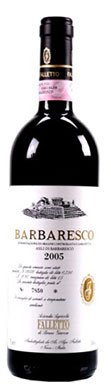
Bruno Giacosa, Asili, Barbaresco, Barbaresco, Piedmont, Italy, 2005
96
Rich and textured, but more austere than Giacosa’s Santo Stefano di Neive. Very long, with red cherry fruit, truffle and earthy tones.
2005
Bruno GiacosaBarbaresco
E Pira & Figli, Cannubi, Barolo, Barolo, Piedmont, Italy, 2013
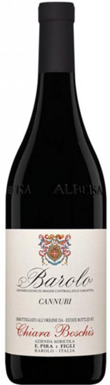

Chiara Boschis has united 26 producers across the Cannubi hill to create a bio-district. As of 2015, 80% of the vineyards are farmed organically. Boschis'...
2013
E Pira & FigliBarolo

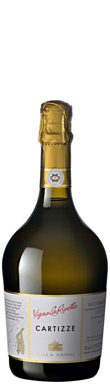
Villa Sandi, Vigna La Rivetta, Prosecco, Valdobbiadene Superiore di Cartizze, Veneto, Italy, 2016
93
One of the finest Proseccos around, this sells at Champagne prices – unsurprising, as it hails from Cartizze, Prosecco’s ‘grand cru’, where vineyard land costs even more on average than it does in Champagne. It’s a beautiful wine, bursting with golden apple and pear fruit, with white floral scents and a hint of fresh leafiness. It has a lovely linear style, and contains less residual sugar than most Cartizze wines (around 11g/l).
2016
Villa SandiProsecco
Livio Felluga, Terre Alte, Rosazzo, Friuli Venezia Giulia, Italy, 2015
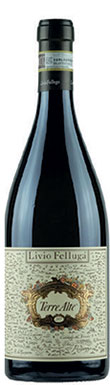
Signature wine from a legendary Friulian producer. It’s a blend of Friulano, Pinot Bianco and Sauvignon grapes, showing tremendous weight and persistence. Herbal notes of...
2015
Livio Felluga
Il Palagio di Panzano, Le Bambole, Chianti Classico, Tuscany, Italy, 2013
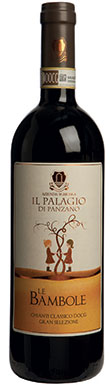
96
This certified organic estate is located in the Conca d’Oro (Golden Bowl) of Panzano, in the Chianti Classico appellation. Today it’s run by Monica Piccini, whose father and grandfather both grew grapes here. Vineyards are planted at an altitude of around 500m on galestro soil, and benefit from a unique microclimate. Almost all of the vines are Sangiovese, with 1ha of Merlot planted by Piccini’s father. Le Bambole takes its name from the Vigna delle Bambole vineyard, the source of the fruit used in this Gran Selezione. Andrea Briccarello: Clean yet rustic, with leather and cigar box aromas. On the palate the wine is very polished and super-sleek. Lots of red forest fruits flow into an intense body. Great personality here, and a long aftertaste. Susan Hulme MW: Dark fruit combines with tar, polish and black olive on the nose. A very richly compact and concentrated palate with refined, oak-coated tannins. A super-smart, sophisticated style that's slick, round, satisfying and deeply concentrated. Andrew Jefford: Understated yet very intricate and charming; sweet, perfumed and serene. The elements are brought together with magnificent subtlety and harmony. That grace is amply evident on the palate too, demonstrating seamless harmony and an accumulation of nuance with textural finesse. It has sap, freshness and richness, and an assured sense of being Tuscan.
2013
Il Palagio di PanzanoChianti Classico
Sesta di Sopra, Brunello di Montalcino, Tuscany, Italy, 2013
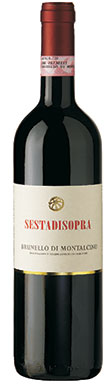
With just a single hectare of Brunello vineyards in the southern reaches between Sant'Angelo in Colle and Castelnuovo dell'Abate, Sesta di Sopra produces a mere...
2013
Sesta di SopraBrunello di Montalcino
Pietracupa, Cupo Bianco Montefredane, Fiano di Avellino, Campania, Italy, 2013
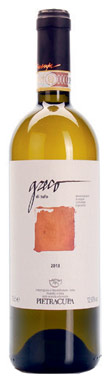
Maverick winemaker Sabino Loffredo, has helped revolutionise the image of Campanian white wines. Cupo is a single-vineyard Fiano di Avellino from Montefredane. The wine opens...
2013
PietracupaFiano di Avellino
Pietracupa, Greco di Tufo, Campania, Italy, 2015
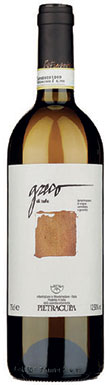
Textbook Greco: lemon zest, melon, white flower perfumes; outstanding complexity and persistence, and striking minerality. One of Italy’s finest white wines, every vintage; 2015 was...
2015
PietracupaGreco di Tufo
Paternoster, Don Anselmo, Aglianico del Vulture, Basilicata, Italy, 2010
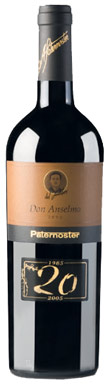
Established in 1925, Paternoster’s recent business alliance partner, Tommasi, describes it as ‘a little gem in the heart of Basilicata’. Don Anselmo, Paternoster’s flagship wine,...
2010
PaternosterAglianico del Vulture
Pietradolce, Archineri Carricante, Etna, Sicily, Italy, 2016
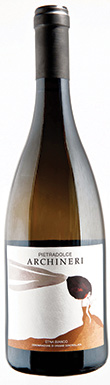
Located at 850m on the eastern slopes of Etna, 100-120 year old pre-phylloxera Carricante vines give precise, stony, mineral flavours from volcanic soils, freshened by...
2016
PietradolceEtna
