
Blue-chip Spain: Bottles on the Place de Bordeaux
It's been a long time coming, but Spain finally has an increasing presence on La Place de Bordeaux, the renowned marketplace for fine wines. Our expert explains why its top names were so late to the party, and highlights some of the best new releases to look out for, from Rioja, Ribera del Duero and beyond.


For centuries, the most complex and efficient fine wine market system has been La Place de Bordeaux. From its very inception, about 800 years ago, La Place was international, with Anglo-Saxon and Scandinavian players operating from a French hub, which for a time was English (from the 12th to 15th centuries).
La Place is a smart system with three tiers: producers, négociants (trade) and courtiers (middlemen who provide trusted reference – the most important feature in any efficient market). Indeed, it deals with the most impressive distribution network in the world, involving more than 10,000 importers in 170 countries.
Scroll down to see Pedro Ballesteros Torres MW’s pick of eight Spanish wines on the marketplace
For several centuries, La Place was focused on Bordeaux wines, to such an extent that nowadays it manages over 70% of Bordelais wine exports. In the 1990s, some Bordeaux top producers decided to make fine wines overseas. La Place was the obvious way to sell them, offering a win-win approach, as it could benefit négociants, too.
Foreign wines arrive
The pioneer was Philippine de Rothschild of Château Mouton-Rothschild, who in 1998 released her Chilean joint venture Almaviva on La Place. The initiative was discreetly positive. It was repeated some years later, in 2004, with a new joint venture led by Mouton-Rothschild, Opus One – this time with Mondavi. On this occasion, the négociants at La Place were also granted exclusive distribution rights for the Californian wine.
The results were so good that other producers, unrelated to Bordeaux, wanted a piece of the action. Tuscan Masseto achieved great success in 2009, leading to an increasing number of top wines from Italy, the Rhône and Champagne joining the club. In turn, this increased the allure of La Place and its distribution network, and piqued the interest of négociants looking for new avenues of revenue. As a result, La Place today is managing considerably more than the 110 foreign brands from 11 countries that were listed in 2022.
What about Spain?
You would expect Spain to be a major player in this scene. La Place favours brands, and prefers wines that show consistency over time rather than short-run marketing clout. Remember, it was created to deal with châteaux ‘brands’, originally classified according to the prestige associated with their name.
For wines outside France, négociants are open to considering new brand names from places whose terroirs are not yet very well known. They have had no problem in raising the profile of regions such as Sicily, Alto Maipo in Chile, California’s Paso Robles or Yunnan in China. Since appellations in Spain tend to be quite large, La Place should be an excellent trade opportunity for top Spanish wines, sold on their individual traits rather than generic origin names.
However, secondary fine wine markets are a key issue at La Place. Only those wines that grow in value with time are successful in this market. Most of the clout of the greatest Bordeaux classified growths relate to their increasing value with age. Until recently, Spaniards thought that their wines should be sold when ready to drink, and were not particularly interested in their ageing potential in-bottle. For this reason, the quota of Spanish wines in secondary markets for luxury wine is minute – despite the huge ageing potential of the best Rioja and Ribera del Duero wines.
Another issue for Spain is that its domestic fine wine market is quite limited, compared to that of countries such as France, Italy or the US, so Spain does need to export its best wines. It was a latecomer to La Place, however, with the first Spanish wines being traded there in only 2021. The main reasons for this lie in history.
The key Spanish players
Telmo Rodriquez
The Spanish pioneer on La Place is Telmo Rodríguez. Educated in France, he vividly remembers his efforts to raise awareness among his French peers on the quality of top Spanish wines. He finally succeeded in launching his Yjar on La Place in 2021,with great success. His approach is transparent: a single vineyard rendering amazing precision and delicacy.
Rodríguez is well aware that Spain needs to have a presence on La Place, with distinctive wines that express the country’s varied geography. For that reason his September 2023 campaign on La Place included three new wines. First, a wine from a top pago (plot) at Macharnudo, inspired by the most historic Spanish wine style – Sherry – made with special care for the vineyard, with no fortification: De La Riva. Second, a wine from one of the most beautiful regions on Earth, Ribeira Sacra, made by Algueira with native varieties. And finally, a wine made by Rodríguez himself in Ribera del Duero: Matallana.
Yllera
In the same year that Rodríguez listed Yjar, Marcos Yllera presented his wine Vivaltus on La Place. This is a selection from old-vine plots in Ribera del Duero. Yllera’s close ties to France were key to this move: Jean-Claude Berrouet, of Petrus fame, supervises winemaking and does the final blend. The winery also listed a second wine, La Fleur
Vivaltus, in 2021, following the Bordeaux châteaux model. Yllera is adamant in his determination to make an impressive qualitative leap. He sees La Place as ‘the most influential place to build prestige’.
CVNE
Two of Spain’s most historic wineries, CVNE and Riscal, arrived on La Place in 2022, both boasting a longstanding relationship with Bordeaux. They each took the same approach, endeavouring to make exclusive selections from their own vineyards, to create top-of-the- range wines for La Place. For CVNE this resulted in its most ambitious brand to date. Created by winemaker María Larrea, Real de Asúa is a very strict and clever selection of the best fruit from several vineyards in Rioja Alta.
Marqués de Riscal
Like CVNE, Rioja producer Marqués de Riscal also launched a new wine, to be distributed exclusively through La Place. This is named after the winery’s most unique vineyard, Finca Las Tapias, planted in 1968 on ferrous and calcareous clay soils. The wine is intended as a kind of Rioja grand cru, with a pure and deep expression of a very particular terroir, showing amazing refinement. Chief winemaker Francisco ‘Paco’ Hurtado de Amézaga, who was educated in Bordeaux, sees the launch of Tapias on La Place as ‘being back home, where the company was intellectually born’.
Exclusive distribution

Some of Spain’s most important wine regions owe much to Bordeaux. Rioja and Ribera del Duero became fine wine regions thanks to, among others, Manuel Quintano, the Marquises of Riscal and Murrieta, and Eloy Lecanda. Their Bordeaux know-how helped realise the potential of wines in those areas. Later, when phylloxera struck French vineyards, a group of French investors played a crucial role in developing Rioja’s fine wine industry, from 1870 to 1910.
Such cooperation came to an end because of the recovery of French vineyards, but perhaps more so because of the tense political relations between Spain and France throughout most of the 20th century. During the Francoist dictatorship, Spain became an isolated country, and the prestige of its wines plummeted. The renaissance of Spanish wine was first built upon more commercial wines; prestige brands started to gain international recognition only at the end of the 20th century (with the exception of Sherry). So, historically, French négociants would not even think about Spain when speaking of fine wine.
In addition, Bordeaux négociants tend to favour wines that they can distribute exclusively. The problem is that most of the best Spanish producers have already spent decades developing their own foreign distribution networks – which, to make matters worse, are likely to be in direct competition with the Bordeaux players.
As a result, Spanish producers have had to organise ad-hoc distribution arrangements with Bordeaux. For example, some wines, such as Yjar and Tapias, were created specifically for La Place. Meanwhile others are distributed with no intervention by La Place in certain markets (normally the domestic market).
This is a sensitive issue that may carry a lot of influence in market and price developments. CVNE’s CEO Víctor Urrutia reports that he has successfully managed to distribute Real de Asúa through La Place in most markets, while retaining agency Hatch Mansfield for the UK.
The future
More wines will likely join the selected club of Spanish players on La Place de Bordeaux – but probably not many. Reasons for this are twofold. On the one hand, while the quality of La Place wines I’ve tasted is, overall, impressively high, there are few wineries producing wines at that level. At the same time, there are many other stupendous Spanish wines being distributed through other networks, with excellent results, that would get little value from Bordeaux.
Results to date are good, but insufficient to make a sound judgement. So far, prices for Yjar and Tapias have increased a lot, while for the other wines they keep well. However, only time will tell if those wines are, in the long term, sound business for négociants and good value for fine wine collectors. I would nonetheless bet that the best ones are likely to become icons.
Pick of La Place: Eight Spanish wines on the marketplace
Related articles
- September fine wine releases on La Place de Bordeaux 2023
- Place de Bordeaux March 2023 releases: from 100-point Napa to Italian gems
- September releases on the Place de Bordeaux 2022
Telmo Rodriguez, Yjar, Rioja, Alavesa, Northern Spain, Spain, 2019


Single-vineyard wine, from a 3.8 ha plot with a field blend of Tempranillo, Garnacha, Graciano, Granegro and Rojal, on a loam-calcareous soil, selected after several...
2019
Telmo RodriguezRioja

Adega Algueira, Dolio, Ribeira Sacra, Spain, 2019
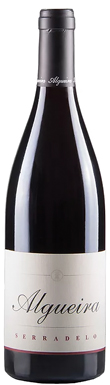
Simply, unique. It needs a lot of aeration before tasting, otherwise it can show some rusticity due to some reduction. After one hour, the wines...
2019
Adega Algueira
Marqués de Riscal, Tapias de Marqués de Riscal, Northern Spain, Spain, 2020
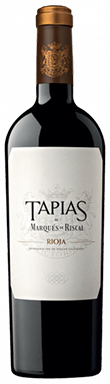
The new top wine by Marqués de Riscal, from a selected plot that has been patiently recovered by them for ensuring top fruit quality and...
2020
Marqués de Riscal
CVNE, Real de Asúa Carromaza, Rioja, Northern Spain, Spain, 2020
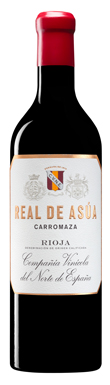
A re-creation of the former Real de Asúa by CVNE, the wine that provides homage to the region and the family tradition. A selection from...
2020
CVNERioja
Viñedos de Matallana, Ribera del Duero, Spain, 2020
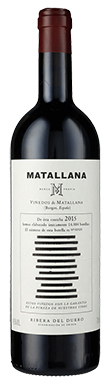
The best Matallana I have ever tasted, developing the best and most elusive quality in top Ribera: tightly grained finesse. Delicate aromas, with blackberry fruit...
2020
Viñedos de Matallana
Vivaltus, Vivaltus, Ribera del Duero, Spain, 2018
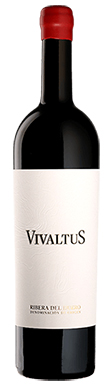
Intensely fragrant, amazingly balanced, with the right freshness for the very ripe fruit expression. Abundant tannins, already quite approachable; it is a wine of power...
2018
Vivaltus
Vivaltus, La Fleur Vivaltus, Ribera del Duero, Spain, 2018
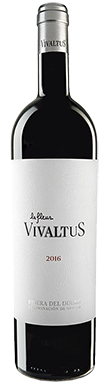
Classic high-end ribera, with deep colour and very ripe fruit and French oak in nose. A bit restrained, it needs vibrant aeration, the wine opens...
2018
Vivaltus
Bodegas de la Riva, San Cayetano, Jerez, Spain, 2022
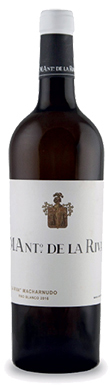
This wine should confirm the deepest revolution in Jerez. It is a wine singing a particular terroir, while allowing the flor (the second slow fermentation...
2022
Bodegas de la Riva
