
Bordeaux 2005 second wines: Tasting six of the best
Now is the time to make the most of these brilliant Bordeaux 2005 second wines, from Château Mouton Rothschild's Petit Mouton to Cos d'Estournel's 'Les Pagodes de Cos', says Jane Anson, who also charts the history of the concept back to the time of the French Revolution.


March 1792 was a fiery one in France, with the Legislative Council in Paris approving the use of the guillotine on 20 March and five days later, on 25 March, King Louis XVI approving the decree. Within a year, he himself would be led to the scaffold.
Scroll down for Jane Anson’s tasting notes and scores on Bordeaux 2005 second wines
Add in wars being declared against Austria and increasingly fierce reprisals against the kind of aristocrats and nobles who owned most Médoc châteaux, and you can imagine that temperatures were rising in Bordeaux.
I’ve regularly thought about this while reading the archives of Bordeaux châteaux from the Revolution years, which are often surprisingly normal. Joseph de Fumel, at Haut-Brion, was carefully noting down the usual practices in the vineyard and cellar as he was led to prison.
And while that might put 2020 into perspective, this year has certainly given us all an understanding that in moments of extreme stress, one of the best ways to cope is to simply to get your head down and focus on work.
The long history of second wines
It adds a layer of poignancy to the estate diary of Château Latour manager Marc-Antoine Domenger, who on 25 March 1792 noted that he was planting a new plot of vines which ‘should certainly give eight tonneaux of a good second wine within seven to eight years’.
His words also give us clear proof that second wines have a long history in Bordeaux.
Domenger was also owner of Domaine de Marbuzet in St-Estèphe at the time, so we can reasonably expect that he was dividing his crop into first and second wines there also – as he had been at Lafite a good decade earlier, where he also worked.
Similar archives at Margaux and Haut-Brion tell you the same thing; production split into different quality levels depending on several factors, such as the age of the vines – as with Latour – or their location, or vintage quality, or simply by taste at the moment of blending.
In the early years of the 20th century second wines got another boost, largely because of the new vines being planted post-phylloxera.
Things at Latour were made official in 1906 with the arrival of Les Forts de Latour, albeit under a different name, and Pavillon Rouge over at Château Margaux.
The trend faded away. By the middle of the 20th century, the aftermath of wars and economic crises meant that even first wines at these estates were lucky to be bottled with a vintage attached.
Bordeaux second wines reborn
The modern iteration, which we can date to the 1980s, is often a form of brand extension. Second wines have one after another been tweaked to ensure a clear link to the big sibling; Petit Mouton arrived in 1993, Carruades de Lafite (changing from Moulin de Carruades) in 1986.
Even over the past few years we have seen Réserve de la Comtesse become Pichon Comtesse Réserve, and La Croix Beaucaillou become La Croix Ducru-Beaucaillou. It has unquestionably helped the prices of second wines to rise. Haut-Bages Averous won’t attract the same attention as Echo de Lynch Bages.
This closer link to the first wine has also meant that quality has had to keep pace, because the pressure to not reflect badly on the elder sibling can’t be ignored.
Greater selection in the vineyard and cellar has helped both sides, such as by leading to more concentration in the main estate bottling, and grapes that would once have gone into the first wine heading into the second.
As a result, the exact split between a first and second wine often varies by vintage. In 2013, Lafite Rothschild splits is harvest into 30% Lafite and 50% Carruades, while in 2010 this was 40% Lafite and 55% Carruades. Neither adds up to 100% because there is a further declassification to keep the quality of Carruades high enough to deserve the price that it reaches on today’s market.
This tasting of Bordeaux 2005 wines
This tasting looks at six of the best second wines in the Bordeaux 2005 vintage, including three 1855 first growths and three second growths.
The price per 12-bottle case ranges from around £600 in bond for Pagodes de Cos 2005 – making it the outstanding value choice of the six tasted here – up to £4,000-a-case for the Petit Mouton.
Carruades de Lafite is not far behind, at something close to £3,000 per case in bond, with Pavillon Rouge around £2,000 in bond, and Croix de Beaucaillou and Reserve de la Comtesse both available for under £1,000 in bond.
Are they worth it? Even at 15 years old, the first wines of these six estates remain in their primary phase, with tightly curled tannins that need another few years to really reward opening. It means that 2005 is exactly the kind of year when these particular second wines come into their own.
You’re going to get more pleasure over the next few years from Carruades or Petit Mouton than you would if you went straight to their more expensive siblings.
This came into even starker focus in a recent blind tasting of 2015-vintage Right Bank wines, when the best first wines were so closed at fives years old as to be impenetrable. Duo de Conseillante was more rewarding than La Conseillante at the tasting, for instance.
It’s a feature of how tannin, fruit and acidity layer on top of each other in great Bordeaux vintages, and it’s why in lighter years you can go for the first wines far quicker, making second wines less useful.
In another 10 years, these 2005s will almost certainly be the other way round, so make the most of these brilliant second wines while they still have the upper hand.
Bordeaux 2005 second wines: Tasting notes and scores
You may also like
En primeur 2019: Best second labels
Tasting September releases: 50 world-beating wines set for the Bordeaux ‘Place’Behind the 14 new Cru Bourgeois Exceptionnel estatesAnson: Nature vs nurture in Bordeaux wine styles
Château Mouton Rothschild, Petit Mouton, Pauillac, Bordeaux, France, 2005
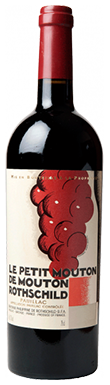

Rich, powerful, stylish and expressive. Petit Mouton is always the most exuberant of the First Growth second wines, and here it rewards with layers of...
2005
Château Mouton RothschildPauillac

Château Lafite Rothschild, Carruades de Lafite, Pauillac, Bordeaux, France, 2005
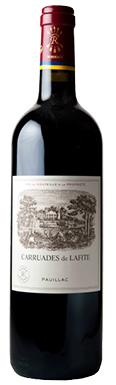
This has understated elegance on the attack, confident and quietly brilliant with flavours of cassis, bilberry, hedgerow and a basket full of darkly brambled fruits...
2005
Château Lafite RothschildPauillac
Château Margaux, Pavillon Rouge, Margaux, Bordeaux, France, 2005
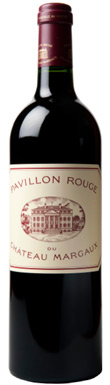
Silky textured, full of sweet tobacco, fleshy raspberry and red cherry notes,. A little more open than its Pauillac siblings at this point, with the...
2005
Château MargauxMargaux
Château Cos d'Estournel, Les Pagodes de Cos, St-Estèphe, Bordeaux, France, 2005
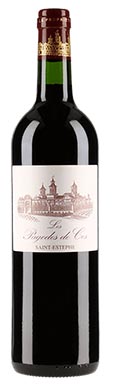
This over-delivers and stands out in the line up. A stunning second wine at 15 years old, impressively textured with soft tannins that are still...
2005
Château Cos d'EstournelSt-Estèphe
Château Ducru-Beaucaillou, La Croix de Beaucaillou, St-Julien, Bordeaux, France, 2005
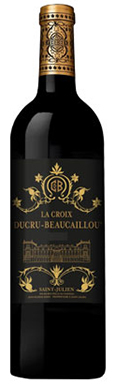
Open and sexy in its structure and sweet appeal, an excellent showcase to the vintage and to the estate. Still opulent although now fully open...
2005
Château Ducru-BeaucaillouSt-Julien
Château Pichon Longueville Comtesse de Lalande, Réserve de la Comtesse, Pauillac, Bordeaux, France, 2005
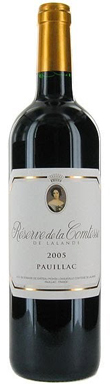
Chocolate, sweet black cherry fruit with strawberry puree, cinammon, fig and gentle menthol notes. This is ready to drink, in fact certainly heading towards tertiary...
2005
Château Pichon Longueville Comtesse de LalandePauillac
