
Brothers in arms: Champagne Pierre Paillard
Tom Hewson visits a brace of brothers who are taking their family's Champagne house, Pierre Paillard, to new heights, discovering its story and tasting 13 of its wines, including new releases from the 2019 vintage.


Champagne’s stories are often told by soloists – the legendary cellar master, the visionary grower, the lone rebel elevating a previously unremarkable village to cult status. It’s a little rare to find not only a genuine double act but, at a time when many of independent Champagne’s established names of the 1980s and 1990s are wondering if the next generation will take on the keys to the cellar, a sibling act.
Antoine and Quentin Paillard are just that, though. It would be easy to assume that Antoine and Quentin’s choice of estate vehicle – their father’s ancient but immaculately maintained Citroen 2CV van – was a spot of kitsch, something for the visitors and the Instagram feed. It quickly becomes clear, though, as we rattle along the chalky vineyard paths, that while there may be more than a touch of nostalgia behind the decision to keep the car they saw their father drive around the village of Bouzy as children – it wouldn’t have survived if it couldn’t do the work.
Scroll down to see notes and scores for 13 Pierre Paillard Champagnes
Perfect team
It sums up the feeling that buzzes around the estate, of deep affection for the history of this great Champagne village, yet also that no piece of the puzzle can be taken for granted. This is the heart of grand cru Champagne. It is a domaine whose vine-growing history goes back eight generations in the village. Yet Bouzy is arguably the canary in the coal mine for Champagne’s ability to cope with climate change: ‘Bouzy is the warmest terroir in the Marne. Even Aÿ is more diverse. It’s entirely south facing, and often one degree warmer than everywhere else,’ says Quentin. Is the village becoming too hot, the wines too powerful and alcoholic for Champagne?
The answer to the question – which appears to be a resounding no – reveals itself in a programme of single-minded, complete renewal that has been in place since the brothers assumed control in 2016. They seem to fit together perfectly as a team, Antoine on the front foot as we tour the vineyards, and Quentin, a little softer spoken and pensive, handling the cellar and the book (although such clear divisions of labour seem more apparent on paper than on the ground). It’s fair to say that not all siblings would be so comfortable taking on such a task in tandem.
‘2012 was the last great vintage we made with our father,’ says Quentin as we taste through the evolution of the single plot Les Mailerrettes, a parcel of Pinot Noir planted in 1970. The wines move through a period of transition – of finding a balance, with oak, with grape growing, with pressing, even with fermentations – into a landing place; 2019, and what Quentin believes is their best vintage yet.
What goes into this sense of cohesion, style and completeness that the wines now show? It’s a cliché to say that the work begins in the vineyard, but the Paillards go one step further; the work begins with the vines. The estate is now into its fourth decade of sourcing new plantings via selection of its own vineyard – massale selection – rather than relying on the commonly planted, high-yielding clones of Pinot Noir and Chardonnay that the Champagne authorities officially approve. ‘All the clones that were planted in the 1980s were quite productive. My father planted two vineyards with clones that were so-so, and he said “never again”. He started doing massale selection in the 1980s,’ Antoine explains.

Varied vines
The Paillards, though, advanced the programme, going to Burgundy to look for even more variation in their vine material in the search to populate their 11ha with diverse, low-yielding and high-quality vines. ‘You can work the soil how you want, you can use organics, whatever…but the grapes you have come from a certain sort of vine material and that’s where you have to start,’ Antoine explains. What began as a countermovement has now come full circle, with a partnership with Champagne’s governing body, the CIVC, and 38 winegrowers to grow a catalogue of massale selection ‘to propose to all the wineries of Champagne, and even abroad’.
It’s not only in vine selection that the Paillard’s vineyards stand out in Bouzy, though. Beneath the smart new cabin built as a refuge, and a focal point, among the mid-slope parcels, are some vines trained in a manner that would have seen their father fall foul of the strictest vine-growing regulations in the world.
Guyot training, the simple, annually-renewed cane pruning system used all over the world, was banned for grand cru villages in Champagne for producing too high yields. But, in typically open-minded fashion, the Paillards believe it actually leads to healthier vines. ‘You can control the flow of sap,’ explains Antoine, referring to the theory of gentle pruning popularised by Italian viticulturist Marco Simonit in response to a growing crisis in vine health among traditionally-pruned vineyards across the world. ‘This way, the vines can live for 50, 60, 70 years. It’s very productive if you have the wrong vine material, but not with the right massale selection.’
With very dense plantations, up to 14,000 plants per hectare, the vineyards appear to be going in the opposite direction to that touted by fans of Champagne’s newly proposed ‘vignes semi-larges’ planting system, which sees much lower densities planted in order to better conserve increasingly sparse water and slightly reduce crops (and vineyard costs) per hectare.
‘But here we have the chalk,’ Quentin points out, referring to its ability to store and regulate water, meaning the drought risk associated with dense plantations is lower. ‘And our yields are low anyway,’ he adds, pointing out that the house puts out an enormous team of ten people for two full weeks to de-bud the vines (thin out potential fruiting shoots) in spring and ensure the vines don’t overproduce.

Toujours Bouzy
There’s no doubt, though, that Bouzy remains at one extreme of Champagne’s scale as a village whose reputation for powerful, ripe Pinot Noir is more homogenous than many: ‘Bouzy is Bouzy!’ jokes Quentin.
The extreme heat and drought of 2020 was a test: ‘We said that if we were able to vinify 2020 we will be okay for the next 20 years…and then we had a vintage which was even warmer, even more concentrated, even more dry in 2022. It’s a little bit scary.
‘I think 2020 is the most challenging Champagne vintage of the last 10 years, which is insane because the grapes looked so beautiful!’
If Bouzy can still present challenges in hot years, then part of the answer appears to have come in a move which many top growers have made in Champagne; renouncing their official status as ‘grower’ Champagnes (récoltant-manipulants) in order to buy fruit from further afield and produce a wider range of cuvées (thus becoming houses, or négociant-manipulants).
As well as the cuvées from Bouzy (the entry level Les Parcelles, Les Terres Roses, the vintage grande récolte, the parcels Les Mottelettes for Chardonnay and Les Maillerettes for Pinot Noir, as well a still Bouzy Rouge), the Paillards now produce three cuvées from the cooler slopes of the northern face of the mountain, two Meuniers from Ludes and Taissy, and a Pinot Noir from Verzenay. There is also a blanc de blanc from Le Mesnil-sur-Oger in the pipeline.
What does unify all the wines, though, is the fact that they are now all vinified in oak, which ‘tames’ the fruit according to Quentin. The fact that the wines never seem overly oak-flavoured or vinous may have something to do with the choice of size: 600 and 350-litre barrels take precedence over smaller, Burgundy-sized barrels, with the Paillards preferring the lower ratio of wood-to-wine for Champagne’s delicate base wines.
Champagne Pierre Paillard at a glance
Date founded: 1946
Owners: The Paillard family
Vineyard holdings: 11ha
Viticulture: Organic (in certification)
Key vineyards/vineyard holdings: Bouzy
Key wines: Les Parcelles Bouzy Grand Cru, Les Maillerettes Bouzy Grand Cru, Verzenay Grand Cru
Vinous evolutions
Of course there are evolutions in the wines themselves; the Paillard’s still red Bouzy is making strides, with a sense that their interest in the style is only growing, whereas Chardonnay, which traditionally held relatively high status in the estate, is facing the end of its time thanks to the increasing warmth and tropical aromas which, according to Quentin, ‘make the wine difficult to blend’.
There are even experiments – so far under wraps – to adapt the second fermentation process itself to allow for higher natural alcohol levels at harvest.
But, as the journey from fine grower to exceptional small house turns a new page with the 2019 vintage releases, the Paillards are there to reassure us that Bouzy, despite Champagne’s pressing challenges of climate change, ecology and viticulture, is very much still Bouzy.
See notes and scores for 13 Pierre Paillard Champagnes:
Related articles
- First taste: Bollinger’s La Grande Année 2015
- Ageing Grower Champagne: The peaks and pitfalls
- Top rosé Champagne to try
Pierre Paillard, Les Maillerettes Bouzy Grand Cru Extra Brut, Champagne, France, 2019
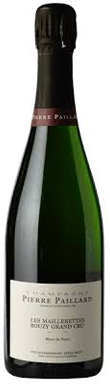

The most harmonious, vivid and polished vintage of this wine to date, this old-vine Pinot Noir from Bouzy comes alive with the perfect integration of...
2019
Pierre Paillard

Pierre Paillard, Verzenay Vieilles Vignes Grand Cru Extra Brut, Champagne, France, 2019
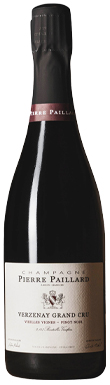
The second vintage of this wine, with fruit sourced from across the Montagne de Reims in north-facing Verzenay, could well be the Paillard's most impressive...
2019
Pierre Paillard
Pierre Paillard, Verzenay Grand Cru Brut Nature, Champagne, France, 2018
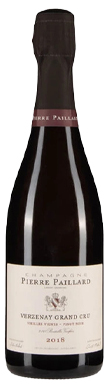
Such delicacy and focus. Beautifully rendered mirabelle and orange citrus fruit amplified by pale honey richness and spiced red apple, the oak usage bolstering but...
2018
Pierre Paillard
Pierre Paillard, Les Maillerettes Bouzy Grand Cru Extra Brut, Champagne, France, 2012
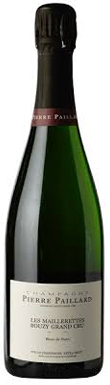
There's an explosive, fresh, crunchy energy from the vintage's concentration here, although the aromatics are smoothed out with tangy apricots, buttery apple tart, dried leaves...
2012
Pierre Paillard
Pierre Paillard, Les Mottelettes Bouzy Grand Cru Extra Brut, Champagne, France, 2019
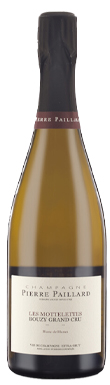
A fascinating Chardonnay that is very much of the Montagne de Reims with its sunny, orange fruit profile. There's a touch of heat here, almost...
2019
Pierre Paillard
Pierre Paillard, Les Maillerettes Bouzy Grand Cru Extra Brut, Champagne, France, 2018
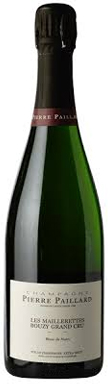
The ripe ease of the vintage plays out in notes of creamy peach, sweet yellow apple and a twist of fruit-skin bitterness on the palate,...
2018
Pierre Paillard
Pierre Paillard, Les Parcelles XIX Bouzy Grand Cru Extra Brut, Champagne, France
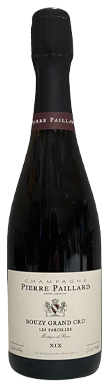
Based on the 2019 vintage, this blend of Pinot Noir and Chardonnay parcels in the Paillard's home village is a perfectly expressive and complete entry-level...
Pierre Paillard
Pierre Paillard, Ludes Premier Cru Extra Brut, Champagne, France, 2019
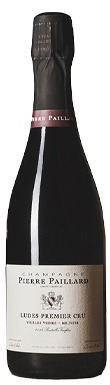
The Paillards have started to buy Meunier from two vineyards, one of which is in the fresh, north-facing village of Ludes across the Montagne de...
2019
Pierre Paillard
Pierre Paillard, Les Terres Roses Grand Cru Rosé Extra Brut, Champagne, France
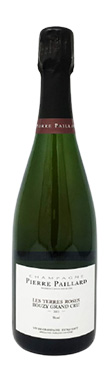
Bouzy's reputation for beautiful red fruit is even clearer in rosé, although this is heavily tempered by Chardonnay. Red grapefruit and pomegranate fruit are lifted...
Pierre Paillard
Pierre Paillard, Les Mignottes Bouzy Rouge, Coteaux Champenois, France, 2022
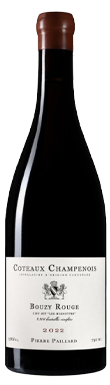
After the heat and drought of 2020, the Paillards have managed to tease an unexpectedly vivid, refined and fragrant Pinot Noir from the sweltering, early...
2022
Pierre Paillard
Pierre Paillard, Les Mignottes Bouzy Rouge, Coteaux Champenois, France, 2019
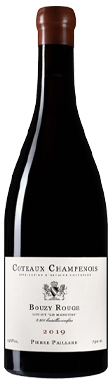
Next to the 2018, the 2019 Bouzy rouge is a step up at Pierre Paillard, with some of the angles ground down into a sense...
2019
Pierre Paillard
Pierre Paillard, Les Mignottes Bouzy Rouge, Coteaux Champenois, France, 2020
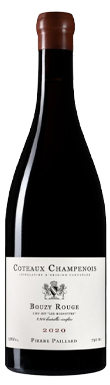
The density of 2020 is abundantly clear here, with the drought yielding a concentration of blueberry, juicier and inkier than previous vintages, jumping with a...
2020
Pierre Paillard
Pierre Paillard, Les Mignottes Bouzy Rouge, Coteaux Champenois, France, 2018
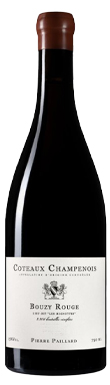
The Paillards were well on their way to finding their path with Bouzy rouge in 2018, and today this vintage plays with an intriguing, slightly...
2018
Pierre Paillard
