
Brunello di Montalcino 2018: full report plus top-scoring wines
Michaela Morris discovers a year full of surprises, including 'best yet' bottlings from some producers in this variable vintage which puts winemaking style first. Read her report below and see her tasting notes and scores for 100 recommended wines.


Brunello di Montalcino 2018 vintage rating: 3.5/5
Cooler than average with rain throughout and showers close to harvest. Quality and style vary but wines are generally mid-weight with slender structure offering near to midterm ageing. The best are elegant, fresh and expressive.
‘Although location was certainly a factor, the vintage really came down to producer.’
What a difference a year makes! Entering Montalcino’s medieval Sant’Agostino Cloister for Brunello’s annual release, my sense of déjà vu quickly disappeared as I tasted through the 2018s. These wines are nothing like the brawny 2017s – Brunellino (‘little Brunello’) was the expression being bandied around by the Italians.
2018 vintage explained
Conditions in 2018 are described as fresh. ‘Average temperatures were 5°C less than in 2017 and 2°C less than in 2019,’ according to Giacomo Bartolommei at Caprili. And there was no lack of water. Following the prolonged drought of 2017, winter rains and snowfall replenished depleted reserves. Spring was cool and wet, encouraging vigorous vegetation.
Though hot, July did not see extreme temperature peaks. Hailstorms hit the southwest mid-month, with Col d’Orcia and Argiano losing 20% and 25% of production respectively. Recurring showers marked the summer. ‘It was like a schedule – every afternoon in August, it rained for half an hour,’ recalled Gigliola Giannetti at Le Potazzine. August was significantly cooler, especially towards the end of the month.
September saw notable diurnal temperature differences, favourable for ripening Sangiovese. However, there were two periods of rain – one at the beginning, the other in the second half of the month which prompted picking.
The vintage’s humidity proved a breeding ground for both downy and powdery mildew and it was vital that producers stayed on top of treatments. ‘Having cover crops in alternating rows made it possible to actually enter the vineyards to apply them,’ noted Caparzo’s Massimo Bracalente. At Le Potazzine, Giannetti counted 17 treatments (using organic products) – five to six more than in 2017.
The once-common practice of de-leafing was revived in earnest, maximising the effects of sun and wind to keep bunches dry. Bunch thinning was also widespread to encourage ripening of the remaining grapes and to curb the spread of rot.
While rain was a leitmotif, it was not uniform throughout Montalcino. Producers with holdings in both the north and south generally noted more intense rainfall in the former. Even then, precipitation patterns were patchy and certain pockets more prone to humidity and rot.
Sara Rossi claimed it wasn’t particularly difficult at Padelletti. ‘We were concerned about mildew but the northern wind dried the grapes well.’ Conversely, Salicutti reported losing production of the estate’s Teatro vineyard, despite working ‘meticulously’.
Timing of the harvest in 2018 was crucial, but there wasn’t a single moment ideal for all. In the warmest corners, picking started around 14 September with harvest continuing through to mid-October. The challenge was balancing phenolic and sugar ripeness against the risk of rot. ‘You had to be brave. On 20th September, there was rain, but our grapes were not ready,’ recounted Tommaso Cortonesi, who waited until 25 September to start picking his northern vineyard.
See our Brunello 2018 & Brunello 2017 Riserva (plus late releases) score table
Cellar strategies
Even with strict selections to bring in healthy grapes, the vintage yielded thin-skinned berries requiring gentle handling. Strategies included lower fermentation temperatures, less and shorter pumpovers, as well as brief maceration periods.
‘The consistency of the skins would not have allowed for longer extractions,’ explained Bracalente, who kept macerations between eight to 12 days. Nevertheless, this was not the approach for all. ‘Ours were not significantly shorter than in other years as the skins, while thinner, were very healthy,’ stated Katia Nussbaum at San Polino.
To counter dilution, various winemakers carried out bleeding to increase polyphenol and colour concentration. The gentle character of the wine also persuaded some to reduce oak ageing. ‘We did not want to force the year with too much time in wood,’ explained Elena Pellegrini at Cerbaia.
Le Ragnaie’s Riccardo Campinotti bottled 2018 at the same time as his 2017s to maintain freshness. For similar reasons, Cecilia Leoneschi at Castiglion del Bosco opted for less racking during cask ageing. ‘In a year like 2018, this was fundamental,’ she declared.
Brunello 2018 for the cellar
San Filippo, La Lucère One of my top wines of the vintage, La Lucère has reached an extraordinary level of elegance without sacrificing substance and structure for ageing.
Castiglione del Bosco, Campo del Drago A rather brooding 2018, it is one of the few examples that will need a couple of years before it starts to unfold.
Cortonesi, Poggiarelli An impressive vintage for this bottling, Poggiarelli is among the most structured 2018s.
Gaja Pieve Santa Restituta Sugarille While not as dense and powerful as in other vintages, the 2018 Sugarille is still built to last.
Le Ragnaie, Casanovina Montosoli Closed and still relatively rigid and austere but with tons of promise.
Variable
When I tasted over 160 Brunello di Montalcino 2018 wines in November 2022, some were still shocked from recent bottling. Nevertheless, it was clear that style and quality varied considerably. The range was almost perplexing – from waif-like to midweight and more structured, as well as those that presented as if from a hot vintage, with overt ripeness and alcohol pushing 15.5%.
‘A lot depended on the moment of harvest and the style of vinification,’ explained Maurizio Castelli, who consults for several estates in Montalcino.
Read more of Michaela’s Brunello di Montalcino report 2023
Brunello Riserva 2017 & late releases: 17 wines to buy
Top-value Brunello di Montalcino 2018: the 10 to buy
The vintage’s least successful wines were already fully evolved and tired, over-extracted, or smothered slender fruit in excessive oak. A few exhibited distracting levels of volatile acidity – beyond just lifting aromas.
Variability aside, a critical mass offers a genuine and compelling portrayal of the vintage. Fine-framed structures balance slim textures and moderate concentration. The best are not lacking in purity of aromas and flavours. – they emphasise Sangiovese’s glorious lightness of being.

Concluding thoughts
Though 2018 has neither the sumptuousness of 2015 nor the profound depth of 2016, it is much more elegant than 2017. Comparisons with 2013 were common during the tastings. Despite climatic similarities, I find 2018 less rigid than 2013 and I believe the wines will show better earlier in their lifespans.
Some producers likened 2018 to 2008, another cool year which took time to reveal its potential, while others referenced vintages of the ‘80s and ‘90s. Regardless, 2018 is a vintage that should be enjoyed – rather than condemned – for its airiness; especially given that there are plenty of ripe, hot vintages coming down the pipeline.
While 2018 proposes a few fantastic wines to tuck away, it is not a vintage to seek out for long ageing. Most wines will be accessible immediately and be at their best within the next 10 to 12 years.
We will likely see very few 2018 Riserva, yet most estates came out with their ‘selection’ bottlings. Canalicchio di Sopra, Casanova di Neri and Sesta di Sopra even chose 2018 to release a completely new label. I also noticed a few new wineries – Gorelli and San Guglielmo are two to watch.
In 2018, I particularly appreciate the vintage’s lovely surprises. These include some of my ‘best yet’, such as Canalicchio di Sopra’s classic bottling, Cortonesi’s Poggerelli, San Filippo’s La Lucère, and Talenti’s Piero. Lesser-known estates Pietroso, La Fortuna and Col di Lamo also turned my head.
Although location was certainly a factor, the vintage really came down to producer. It was a challenge to maintain healthy fruit and bring it as close to complete and even ripeness as possible, then extract maximum substance without overdoing it. I applaud those who achieved this balance and were courageous enough to let the nature of the vintage shine through.
Standout Brunello 2018
Canalicchio di Sopra Despite a striking new bottling from Montosoli, it was the estate’s classic Brunello that I was particularly taken with.
Salicutti, Piaggione The third vintage under new ownership, Salicutti’s Piaggione still captures the spirit of former proprietor and founder Francesco Leanza.
Talenti, Piero With gorgeous purity and a deft interplay of concentration and lightness, this could be the best vintage of Piero so far.
Il Marroneto, Madonna delle Grazie Stunningly evocative of place, estate and vintage.
Lisini After tasting a few very mediocre flights, this wine jumped out, demonstrating a profundity and complexity that others lacked.
Brunello 2018 & Brunello 2017 Riserva (plus late releases) score table
Michaela’s top Brunello di Montalcino 2018 wines: 95 points & above
See our Brunello 2018 & Brunello 2017 Riserva (plus late releases) score table
Related articles
- Fuligni Brunello di Montalcino Riserva: vertical tasting
- Il Marroneto: Producer profile
- Bolgheri 2019: Vintage report plus 50 top wines
Canalicchio di Sopra, Vigna Montosoli, Brunello di Montalcino, Tuscany, Italy, 2018
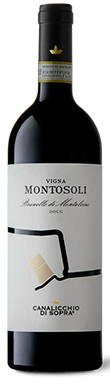

The first release of Canalicchio di Sopra’s Montosoli bottling comes from the estate’s Filari Lunghi vineyard, a pebbly, northwest-facing plot reaching 255 metres. This gives...
2018
Canalicchio di SopraBrunello di Montalcino

Fuligni, Brunello di Montalcino, Tuscany, Italy, 2018
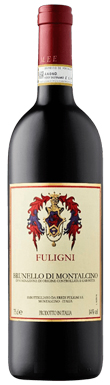
Under the leadership of Maria Flora Fuligni since 1971, along with her long-time right-hand Dr Daniela Perino - now the estate’s CEO - Fuligni is...
2018
FuligniBrunello di Montalcino
Il Marroneto, Madonna delle Grazie, Brunello di Montalcino, Tuscany, Italy, 2018
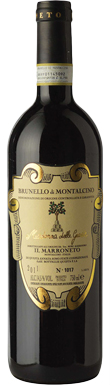
Il Marroneto’s single-vineyard bottling is a selection of small loose bunches, manifested in the density of fruit and assuredness of structure. Next to the estate’s...
2018
Il MarronetoBrunello di Montalcino
Salicutti, Piaggione, Brunello di Montalcino, Tuscany, Italy, 2018
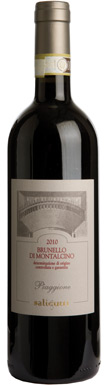
Salicutti is one of the few estates in Montalcino managed according to biodynamic principles. The must is fermented in stainless steel with indigenous yeasts and...
2018
SalicuttiBrunello di Montalcino
San Filippo, La Lucère, Brunello di Montalcino, Tuscany, Italy, 2018
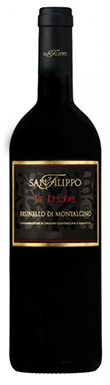
Planted in 1997, La Lucère is encircled by forest on three sides. The breezy, east-facing site is relatively cool and always the estate’s last to...
2018
San FilippoBrunello di Montalcino
Argiano, Vigna del Suolo, Brunello di Montalcino, Tuscany, Italy, 2018
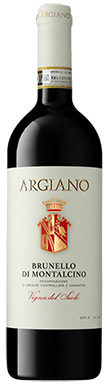
Winemaker Bernardino Sani describes Vigna del Suolo simply as the best fruit of the estate. It hails from the oldest plantings on a limestone-rich soil...
2018
ArgianoBrunello di Montalcino
Canalicchio di Sopra, Brunello di Montalcino, Tuscany, Italy, 2018
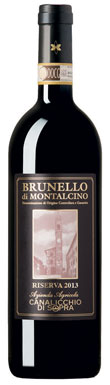
Canalicchio di Sopra has put out a strong set of Brunello from the 2018 vintage, including this particularly impressive 'classic' bottling. As is customary, it...
2018
Canalicchio di SopraBrunello di Montalcino
Castiglion del Bosco, Campo del Drago, Brunello di Montalcino, Tuscany, Italy, 2018
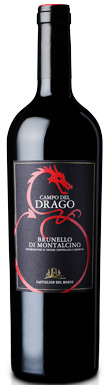
Facing southwest and sitting on Galestro soil at 450 metres above sea level, Campo del Drago is typically the estate’s last vineyard to be picked....
2018
Castiglion del BoscoBrunello di Montalcino
Gaja, Pieve Santa Restituta Sugarille, Brunello di Montalcino, Tuscany, Italy, 2018
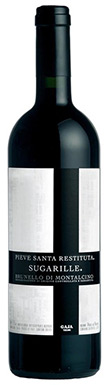
First produced in 1995, Sugarille is not made every vintage - after skipping 2017, this single-vineyard bottling returns. While it doesn’t have the sheer compactness...
2018
GajaBrunello di Montalcino
Il Marroneto, Brunello di Montalcino, Tuscany, Italy, 2018
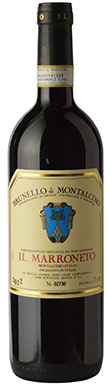
Il Marroneto’s 2018 Brunello personifies elegance, ease and prettiness without being banal or superficial. Harvested from 5 October, there's sweetness to the red berry core...
2018
Il MarronetoBrunello di Montalcino
Le Ragnaie, Casanovina Montosoli, Brunello di Montalcino, Tuscany, Italy, 2018
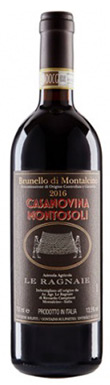
To preserve freshness, Riccardo Campinoti bottled all his Brunello a full year earlier than usual and reduced time in wood from 36 to 30 months....
2018
Le RagnaieBrunello di Montalcino
Lisini, Brunello di Montalcino, Tuscany, Italy, 2018
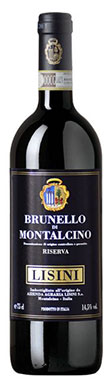
Near Sant'Angelo in Colle, on the road that leads to Castelnuovo dell’Abate, Lisini is within the zone of Sesta. The estate preference is to pick...
2018
LisiniBrunello di Montalcino
Poggio di Sotto, Brunello di Montalcino, Tuscany, Italy, 2018
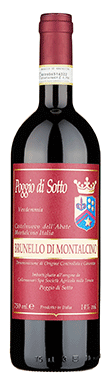
2018 was a tricky vintage, with summer rain, fog and mould, requiring selective harvesting and careful sorting. Yet estates with ample resources such as Poggio...
2018
Poggio di SottoBrunello di Montalcino
San Polino, Helichrysum, Brunello di Montalcino, Tuscany, Italy, 2018
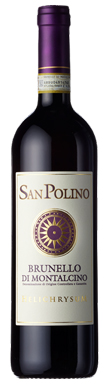
Helichrysum is crafted from vineyards around San Polino’s winery in Montalcino’s southeast. Harvested just after the estate Brunello, the grapes saw the same pre-fermentation maceration...
2018
San PolinoBrunello di Montalcino
